Lance Stroll Penalized for Daniel Ricciardo Collision at Chinese Grand Prix
The intense world of Formula 1 racing witnessed a significant incident at the Chinese Grand Prix, leading to penalties for Aston Martin driver Lance Stroll. Stroll was handed a 10-second penalty during the race and subsequently received two penalty points on his Super Licence for causing a collision with RB driver Daniel Ricciardo. This incident, which occurred during a Safety Car period, sparked considerable discussion among fans and experts, highlighting the critical importance of driver awareness and spatial judgment on track.
The Dramatic Collision: Unpacking the Incident at Turn 14
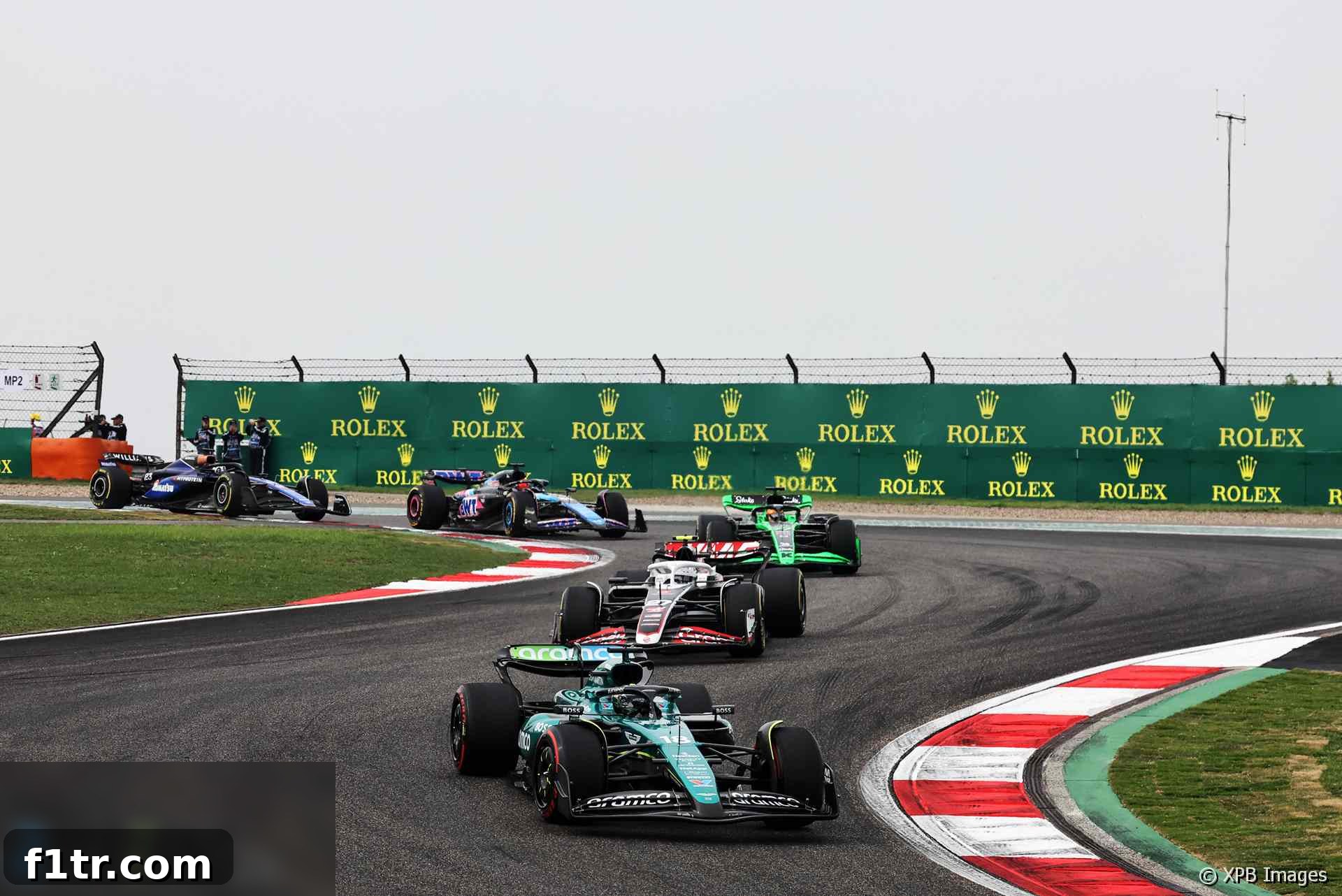
The pivotal moment unfolded as the cars approached the tight Turn 14 hairpin during the first Safety Car period of the race. With the field bunching up and drivers preparing for a potential restart, the pace of the cars ahead of Stroll significantly decreased. As the queue compressed, Stroll, driving Car 18, collided directly into the rear of Daniel Ricciardo’s Car 3, sending the RB machine into the back of Oscar Piastri’s McLaren, which was directly in front of Ricciardo. The impact was substantial, causing immediate and significant damage to Ricciardo’s diffuser and floor.
Safety Car periods are often fraught with tension and can be critical turning points in a race. Drivers must maintain exceptional focus, anticipating varying speeds and potential braking points as they navigate the track under controlled conditions. The incident at the Chinese Grand Prix served as a stark reminder of how quickly circumstances can change and the severe consequences of even a momentary lapse in concentration during these crucial phases of racing.
Stewards’ Ruling: A Clear Case of Anticipation Failure
Following a thorough review, the race stewards concluded that Lance Stroll was predominantly to blame for the collision. Their official report detailed the circumstances leading up to the impact, emphasizing the responsibility of each driver to anticipate the actions of those ahead, particularly during Safety Car restarts. The stewards noted, “The cars were all travelling slowly to set up for the restart of the race towards the end of a Safety Car period. The car in front of car 18 [Stroll] slowed down to take the corner and also to try to match the pace of the group of cars in front of it. Car 18 then collided with car three [Ricciardo].”
The core of their decision rested on Stroll’s failure to adequately anticipate the slowing pace of the cars ahead. “We determined that car 18 ought to have anticipated the pace of the cars in front, particularly car 3 and should have prepared to brake accordingly. Had it done that, it would have avoided the collision. Hence car 18 was predominantly to blame for the collision that ultimately led to car three having to retire from the race.” This ruling underscores the stringent expectations placed on Formula 1 drivers, who are expected to demonstrate exceptional foresight and judgment even under high-pressure scenarios. The penalty, a 10-second addition to his race time and two penalty points, reflects the seriousness with which such avoidable collisions are viewed within the sport’s regulatory framework.
Ricciardo’s Frustration: A Driver’s Perspective on Awareness
The incident left Daniel Ricciardo, known for his upbeat personality, visibly frustrated. Despite the significant damage to his car’s diffuser and floor, he initially remained on track for the restart. However, the loss of crucial downforce severely compromised his car’s rear-end grip, making it impossible to maintain competitive pace. He was quickly overtaken by a string of rivals before being forced to pit and retire from the race, a bitter end to his Chinese Grand Prix. Ricciardo’s comments after the race shed light on his belief that Stroll’s inattention was the primary cause.
“It’s a restart so we don’t know what the leader’s going to do,” Ricciardo explained to Sky Sports, highlighting the unpredictable nature of such moments. “So you have to be as vigilant as ever and be prepared for any situation. I could see it was obviously bunching up into the hairpin so everyone’s backing up.” He expressed disbelief at the force of the impact, stating, “But then obviously how hard he’s hit me and pretty much put half his car under mine, it wasn’t a judgement, he was miles off. That for me, there’s honestly no excuse.”
Ricciardo’s most damning observation came from reviewing Stroll’s onboard footage. “What’s frustrating is I watched his onboard and he’s not even looking at me. You can see his helmet, he’s looking at the apex of the corner. So I don’t know why he’s not looking at the car in front, unless his eyes are doing something funny. But it looked like he wasn’t looking at me and I think it shows [from] how hard he hit me, he was clearly focused on something else.” This perspective emphasizes the critical need for drivers to continuously monitor the cars directly in front of them, especially during congested periods like Safety Car restarts, where reacting to dynamic track conditions is paramount.
Accumulation of Penalty Points: Implications for Stroll
The two penalty points levied against Lance Stroll in Shanghai bring his current total to seven points on his Super Licence. This accumulation of penalty points is a significant concern for any Formula 1 driver, as the FIA’s regulations dictate a race ban for any driver who accrues 12 penalty points within a 12-month period. Stroll had previously collected two points at Silverstone and three in Las Vegas during the previous year. While seven points still leave him some margin, it places him under increased scrutiny for the remainder of the season.
Each penalty point remains on a driver’s licence for 12 months from the date of the offence, meaning past incidents continue to weigh on a driver’s record. This system is designed to promote consistent safe driving and penalize repeat offenders for dangerous or reckless actions on track. For Stroll, this latest incident adds pressure, reminding him and his Aston Martin team of the need for disciplined driving to avoid further infractions that could ultimately lead to a suspension. Following the collision, Stroll pitted for repairs and later served his 10-second penalty before the end of the race, adding to a challenging weekend for the Canadian driver.
A Weekend of Penalties: A Broader Look at Driver Conduct
Interestingly, Lance Stroll was not the only Aston Martin driver to incur penalty points during the Chinese Grand Prix weekend. His seasoned teammate, Fernando Alonso, also received three penalty points on his Super Licence for causing a collision with Carlos Sainz Jr. during the Sprint Race. Alonso’s incident, which occurred during a spirited battle for position, saw him make contact with Sainz, ultimately forcing him to retire from the Sprint Race with damage.
The fact that both Aston Martin drivers were penalized for avoidable collisions within the same weekend underscores the intensity and fine margins in modern Formula 1. It highlights the constant pressure on drivers to balance aggressive racing with maintaining control and respecting the space of their competitors. Such incidents often trigger broader discussions about driving standards, track limits, and the effectiveness of current penalty systems in promoting fair and safe competition. The scrutiny on driver conduct remains a central theme, with each incident serving as a reminder of the high stakes involved in F1 racing.
The Nuances of Safety Car Restarts: A Test of Skill and Discipline
Safety Car restarts are universally recognized as some of the most challenging and potentially dangerous moments in a Grand Prix. The unique dynamics – a compressed field, varying tire temperatures, and drivers attempting to gain an advantage while adhering to strict rules – create an environment ripe for misjudgment. Drivers must expertly manage brake temperatures, maintain optimal tire grip, and precisely time their reactions to the race leader’s restart decision, all while closely observing the cars immediately in front and behind. The incident involving Stroll and Ricciardo serves as a stark illustration of how a slight miscalculation or momentary distraction during this critical phase can unravel a race for multiple competitors.
For teams, Safety Car periods are a double-edged sword. They offer opportunities for strategic resets, tire changes, and for cars to close up to their rivals. However, they also expose drivers to increased risks of contact, as seen in Shanghai. The FIA and teams continually review these procedures to ensure maximum safety while preserving the excitement of F1 racing, but ultimately, a significant portion of the responsibility rests with the individual driver’s vigilance and disciplined execution under pressure.
Conclusion: Learning from Collisions on the Global Stage
The collision between Lance Stroll and Daniel Ricciardo at the Chinese Grand Prix was more than just a racing incident; it was a powerful reminder of the unforgiving nature of Formula 1. For Stroll, the penalties and accumulating points highlight the need for greater situational awareness, particularly during critical phases like Safety Car restarts. For Ricciardo, it was a frustrating and race-ending event, reinforcing the impact of another driver’s misjudgment on a competitor’s performance and championship aspirations.
As the Formula 1 season progresses, incidents like these contribute to the narrative of each driver’s campaign and shape the competitive landscape. The stewards’ clear explanation of their decision underscores the high standards of conduct expected from F1 drivers, emphasizing anticipation and responsible driving. The events in Shanghai will undoubtedly serve as a crucial lesson for all involved, reinforcing the paramount importance of vigilance, judgment, and respect among competitors on the world’s most demanding racetracks.
2024 Chinese Grand Prix Related Articles
- Alonso and Sainz incidents prompt changes to Formula 1’s rules
- Aston Martin fail in bid to have Alonso’s Shanghai penalty reviewed
- Mercedes cleared over Hamilton pit stop infraction as ‘nearly all teams in breach’
- Aston Martin petitions FIA to review Alonso’s penalty for Sainz collision
- “You need to be more on it”: 12 unheard radio exchanges from the Chinese GP
Browse all 2024 Chinese Grand Prix articles