Red Bull’s Surprising Straight-Line Speed Raises Eyebrows at Brazilian Grand Prix
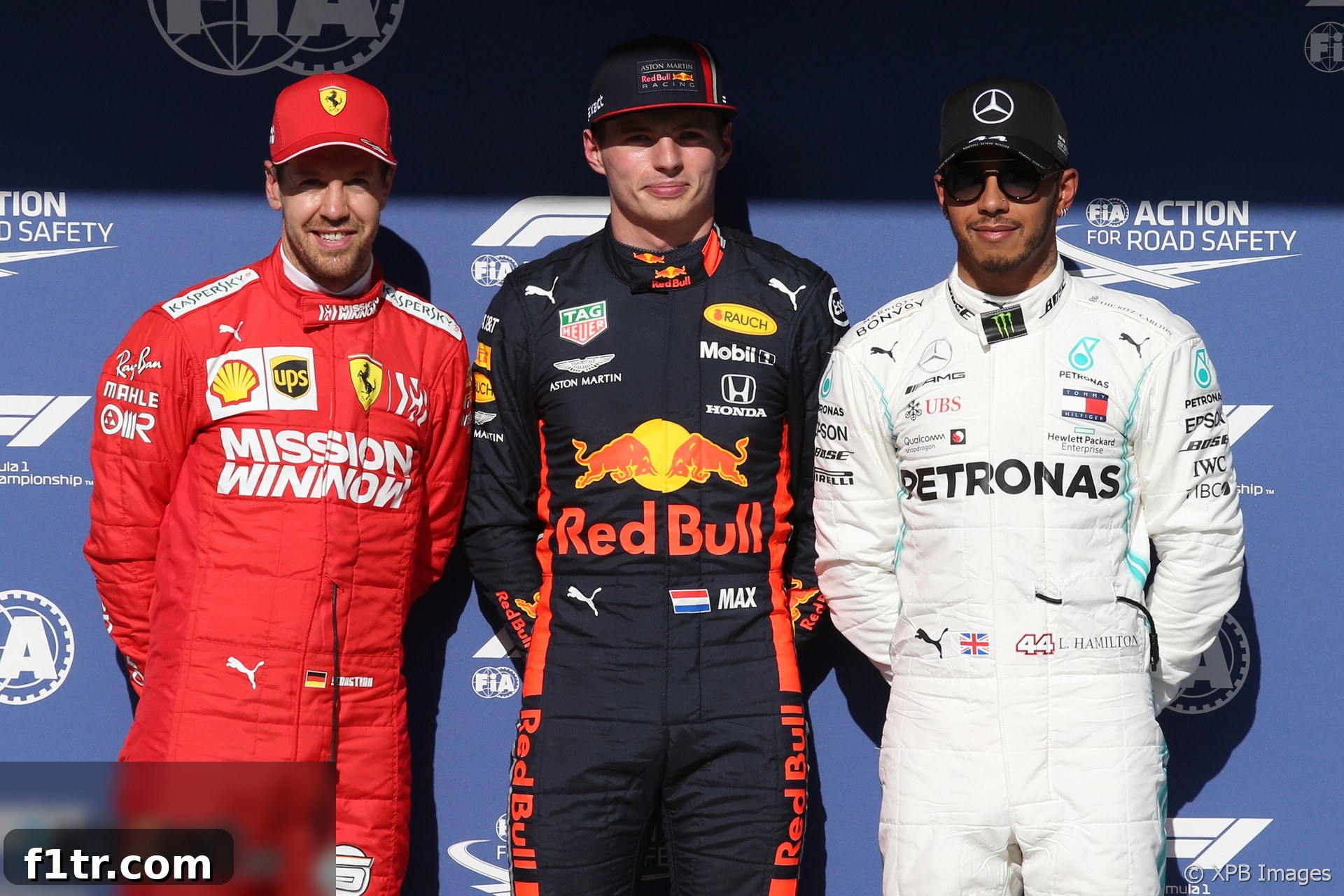
The Formula 1 paddock buzzed with intrigue and a hint of disbelief as Red Bull Racing showcased unexpectedly potent straight-line speed during qualifying for the Brazilian Grand Prix. This newfound performance was instrumental in Max Verstappen securing a dominant pole position at the iconic Interlagos circuit, leaving rivals scratching their heads and questioning the source of Red Bull’s sudden acceleration.
Typically known for their exceptional aerodynamic chassis and unparalleled cornering prowess, Red Bull’s ability to match or even surpass competitors on the long, flat-out sections of Interlagos marked a significant shift in their competitive profile. Verstappen’s blistering pace, particularly through the first and third sectors which feature the circuit’s main straights, demonstrated a substantial leap in performance that many had not anticipated from the Anglo-Austrian team, especially given the high-altitude nature of the track.
Rivals Puzzled: Vettel and Hamilton Scrutinize Red Bull’s Gains
Sebastian Vettel Expresses Disbelief
Sebastian Vettel, piloting the Ferrari SF90 – a car widely acknowledged for its formidable straight-line speed – openly admitted his profound surprise at Red Bull’s performance. The German driver voiced strong skepticism about any recent hardware upgrades to Red Bull’s Honda power unit, asserting that significant progress from one race to the next, without a new specification engine, seemed unlikely. His comments highlighted the general confusion and analytical challenge within the competitor camps.
“Obviously, there is no progress from one race to another because it’s the same engine,” Vettel remarked, reflecting the standard operational procedures of Formula 1 engine development, where major power unit upgrades are usually announced and limited by regulations. “I suppose – I don’t know, I haven’t checked, but I don’t think they have introduced a new spec. I think it was a bit of a surprise.”
Vettel further elaborated on Ferrari’s usual competitive advantage, stating, “We’ve seen a lot of qualifying sessions, and we were always a bit faster than everyone on the straight, losing a bit in the corners. But today we were as quick, or Max and Alex [Albon] were as fast on the straight as us. So that’s about it. I don’t know why. I know we didn’t do anything different.” His observations underscored the stark contrast to previous weekends, where Ferrari consistently held the upper hand in top-speed metrics. The fact that Red Bull could now match them on the straights, seemingly without any public engine changes, was a significant development that prompted deep analysis within the Maranello squad.
Lewis Hamilton Questions Red Bull’s Power Surge at Altitude
Reigning world champion Lewis Hamilton of Mercedes-AMG F1 also acknowledged Red Bull’s substantial step forward, particularly on the straights. Hamilton noted that Red Bull maintained their usual strength in the middle sector – the more technical, twisty part of the Interlagos track – suggesting they hadn’t compromised downforce levels. This led him to conclude that their gains must have come from an increase in power, or at least a significant improvement in power delivery.
“They’re quickest in the middle sector, so they’ve obviously still got the same amount of downforce, but obviously more power this weekend,” Hamilton observed. His statement implied a balanced development, where Red Bull hadn’t sacrificed crucial cornering grip for straight-line speed. What truly puzzled Hamilton, however, was the challenging context of the Interlagos circuit itself.
“And considering we’re at higher altitude, I have no idea where that stuff comes from,” he added, articulating a key factor. The Autódromo José Carlos Pace (Interlagos) is situated at approximately 800 meters (2,600 feet) above sea level. Higher altitudes lead to thinner air, which typically reduces engine power due to less oxygen for combustion and decreases aerodynamic drag and downforce. For Red Bull to exhibit such straight-line speed and maintain downforce at this altitude was perplexing, as it defied the usual performance penalties associated with such conditions and suggested an exceptional power unit efficiency or aero package.
Verstappen’s Perspective: A Holistic Approach to Year-Long Development
While rivals intently focused on the power unit aspect, Max Verstappen offered a more comprehensive explanation for Red Bull’s impressive performance. He emphasized that the team’s improvements throughout the entire 2019 season were not solely attributable to their Honda power unit but rather a result of continuous, integrated development across the entire car package, focusing on both chassis and engine.
“I was not the fastest in the last sector,” Verstappen clarified, directly addressing the concentrated focus on straight-line speed. “But we were the fastest in the second sector, which is where the most corners are.” This statement powerfully underpinned his argument: Red Bull’s traditional strength in corners remained intact, and their overall performance was a harmonious blend of both chassis and power unit enhancements working in tandem.
Verstappen highlighted the long-term, systematic approach taken by Red Bull and Honda since the start of their partnership. “Throughout the whole year, both from the chassis side and the engine side, we made good gains,” he stated, attributing their success to consistent, incremental effort rather than a sudden, unannounced upgrade. “We just continued to work like that and also experiment for next year. So I’m very happy, of course, with the progress throughout the season.” This explanation suggests that the Brazilian Grand Prix performance was not an anomaly but rather a culmination of months of dedicated development and optimization, potentially even incorporating components or strategies being rigorously tested for the upcoming 2020 season, signaling their aggressive pursuit of competitiveness.
Interlagos Circuit: A Unique Stage for Performance Dynamics
The Autódromo José Carlos Pace at Interlagos itself plays a significant role in understanding the intricate dynamics of this particular Grand Prix. Its unique figure-of-eight layout, combined with its challenging high altitude, presents distinct technical challenges and opportunities for car performance. The circuit features two long straights – the Reta Oposta leading into the Descida do Lago, and the long uphill start/finish straight – which heavily influence top speed and acceleration metrics. These are separated by the flowing, highly technical middle sector, packed with demanding corners like the Senna ‘S’, Curva do Sol, and the various turns leading through the infield section. A car that truly excels in both high-speed straight-line efficiency and high-downforce cornering, as Red Bull appeared to do in Brazil, demonstrates a remarkably well-rounded and optimized package.
The altitude factor, as prominently highlighted by Lewis Hamilton, typically means a noticeable reduction in engine power output due to thinner air and less oxygen for combustion. Furthermore, the thinner air reduces aerodynamic grip, meaning less downforce. Teams often have to run higher downforce wing settings to compensate for this effect, which in turn inevitably increases drag and reduces straight-line speed. Red Bull’s ability to generate impressive straight-line pace while simultaneously maintaining their customary exceptional cornering speed at Interlagos suggested an exceptional level of efficiency from their aerodynamic package and a highly competitive power output from the Honda engine. This combination effectively defied the common high-altitude performance trade-offs, making their performance all the more remarkable and perplexing for their rivals.
The Evolution of the Red Bull-Honda Partnership: A Formidable Force
The 2019 season marked a crucial and transformative period for the Red Bull-Honda partnership. After many years with Renault power units, during which the team often battled a perceived power deficit, the strategic switch to Honda brought renewed optimism and a clear sense of purpose. While the initial races showed promising signs, the latter half of the season, particularly culminating in standout performances like the one witnessed in Brazil, demonstrated a clear maturation and synergy within this collaboration. Honda’s relentless development, coupled with Red Bull’s engineering prowess and chassis expertise, began to yield a highly competitive package capable of challenging the established dominance of Mercedes and Ferrari on a much more consistent basis.
Verstappen’s insightful comments about “experimenting for next year” further illustrate the strategic depth and forward-thinking approach of their operation. Formula 1 teams are constantly developing, not just for the immediate race weekend but with an unwavering eye firmly on future seasons and championship campaigns. The significant gains observed at Interlagos were likely a direct result of ongoing optimizations and test components that could serve as a strong foundation for the fiercely contested 2020 championship, indicating Red Bull’s clear ambition to become consistent title contenders and a formidable force at the very front of the grid.
Conclusion: A New Era of Competitiveness for Red Bull in Formula 1
Max Verstappen’s spectacular pole position at the Brazilian Grand Prix, dramatically underpinned by Red Bull’s surprising and potent straight-line performance, sent an unmistakable message across the entire Formula 1 paddock. It signaled a significant and perhaps permanent evolution in their competitive package, moving decisively beyond their long-held reputation as purely cornering specialists. While formidable rivals Sebastian Vettel and Lewis Hamilton openly expressed their astonishment and sought answers regarding Red Bull’s apparent power surge, Verstappen himself attributed the team’s burgeoning success to a balanced, integrated, and continuous development effort across both chassis and power unit throughout the entire year.
This remarkable showing at Interlagos highlighted the growing strength and potential of the Red Bull-Honda partnership. It vividly demonstrated their enhanced capability to adapt to challenging circuit conditions, such as high altitude, and to extract maximum, optimized performance from their car package. The Brazilian Grand Prix qualifying served as a powerful testament to Red Bull’s comprehensive and holistic approach to car development, strongly hinting at a potentially new era of sustained competitiveness for the team as they looked ahead to the following seasons, firmly setting their sights on consistently challenging for race wins and, ultimately, world championships.
Related Articles from the 2019 F1 Season
Delve deeper into the key moments and captivating stories from the impactful 2019 Formula 1 season with these additional insights:
- Crying in the Melbourne car park at 2019 grand prix was my career low – Ocon
- McLaren Racing reports reduced £71 million loss in 2019
- Kvyat: Hockenheim podium last year was “my biggest achievement” so far
- How the FIA’s new encrypted fuel flow meter targets Ferrari’s suspected ‘aliasing’ trick
- “He smashed my office door”: 23 must-see moments from ‘Drive to Survive’ season two
Browse all 2019 F1 season articles