Formula One Management (FOM) has demonstrated a notable pattern of policy reversals and shifting stances over recent years, signaling a struggle for consistent vision within the pinnacle of motorsport. This tendency has become particularly evident through several high-profile decisions, ranging from grid expansion controversies to the implementation and subsequent removal of rule changes, and the ongoing debate surrounding sprint race formats. Such inconsistency raises questions about F1’s strategic direction and its responsiveness to both external pressures and the core values of the sport.
Advertisement
One of the most significant and recent examples of FOM’s about-face is the saga surrounding the proposed entry of an 11th team, Andretti Global. Initially, Formula One Management made its reluctance to expand the grid from 10 teams to 11 unequivocally clear. Despite the FIA, motorsport’s global governing body, approving Andretti’s application in October 2023 after a rigorous evaluation process, FOM remained staunchly opposed. Just three months later, the commercial rights holder outright rejected Andretti’s bid, stating that an expansion of F1’s 20-car grid “would not, in and of itself, provide value to the championship,” effectively closing the door on the American hopeful.
This rejection, coming from a sport actively trying to grow its presence in the United States, was met with considerable bewilderment and criticism. Andretti, led by motorsport legend Michael Andretti, had garnered significant support, notably bringing Cadillac, a major General Motors brand, on board as an engine partner even before FOM’s initial rebuff. This partnership was a powerful statement of intent and financial backing, seemingly addressing many of the concerns F1 typically raises about new entrants. Yet, FOM’s initial refusal persisted, leading to widespread speculation regarding the true motivations behind their decision.
However, in a dramatic shift, FOM eventually dropped its obstruction and, last week, confirmed an 11th team would indeed be allowed to join the grid. The precise reasons for this reversal remain a matter of considerable conjecture and highlight the opaque nature of some of F1’s governance. While FOM lauded the rebranding effort by General Motors, many observers found this explanation somewhat disingenuous, given Cadillac’s early commitment. The prevailing theories for this significant policy shift include potential personality clashes between influential figures such as former Liberty Media CEO Greg Maffei and Andretti team founder Michael Andretti, both of whom have since moved on from their direct roles. More compellingly, pressure from the United States Congress, at a time when Liberty Media faces other legislative headaches, is widely believed to have tipped the balance. The prospect of alienating a crucial growth market, coupled with political scrutiny, likely played a pivotal role in F1’s change of heart, underscoring the delicate balance between commercial interests and political realities.

Regardless of the underlying catalysts, this was a total about-face from F1, and it is far from the first on Liberty Media’s watch. And, like many of those which preceded it, this particular change is widely seen as a positive development for the sport, offering more opportunities for drivers and engineers, and potentially enriching the competitive landscape. However, the initial resistance and the manner in which the decision unfolded highlight a persistent challenge: a perceived disconnect between FOM’s decision-making processes and the broader interests of the sport’s fans and stakeholders.
The Rise and Fall of the Fastest Lap Point
Another classic illustration of FOM’s policy volatility is the short-lived bonus point for fastest lap. Introduced just six years ago and subsequently canned for this upcoming season, this rule was initially heralded by FOM as a critical component to achieving that hallowed goal to which all must be sacrificed: “Improve the show.” The idea was to award a point to the driver who set the fastest lap time in a race, provided they finished within the top 10. This, it was argued, would inject an extra layer of excitement and strategy into the closing stages of a Grand Prix, encouraging drivers to push harder even if out of contention for a podium.
Of course, as many astute observers and fans pointed out even before the rule’s reintroduction (it had a brief stint in F1’s early history), it was a triviality. It added little besides occasional confusion and rarely delivered the promised dramatic effect. For the most part, the bonus point was easily overlooked, a minor footnote in the grand scheme of a race weekend. However, its innocuous nature began to change. It eventually became a significant “bone of contention,” pointing towards a deeper problem within F1’s regulatory framework for which FOM didn’t seem to have a sustainable fix. Instances where drivers already out of the points would be sent out on fresh soft tyres purely to deny a competitor a point, often at the behest of a rival team, highlighted the unintended consequences. Getting rid of it, therefore, proved to be a sticking-plaster solution rather than a fundamental resolution to any perceived lack of ‘show’.
Advertisement

Perhaps the most objectionable aspect of the bonus point for fastest lap was not the rule itself, but the manner in which FOM handled its introduction and eventual demise. They went from proclaiming its revolutionary benefits and declaring it “enormously popular” – a decidedly doubtful claim given fan feedback – to suddenly dropping it without a single word of explanation for months. This lack of transparency and apparent disregard for fan and expert opinions was perceived as arrogant. Similarly, in blocking Andretti, and particularly by questioning their ‘lack of name recognition’ despite the esteemed Andretti legacy and Cadillac’s involvement, F1 demonstrated a dismaying lack of respect for the family of a 16th world champion. It also highlighted a fundamental failure to understand that F1’s appeal as a ‘show’ ultimately rests on its integrity as a true competition, not merely a closed commercial club.
Beyond the Major Reversals: Other Policy Shifts
These aren’t the only occasions FOM has reluctantly given up on one of its innovations or policies. Smaller, yet indicative, changes include the quiet abandonment of starting races 10 minutes past the hour – a minor adjustment intended to better align with television schedules that ultimately proved more confusing than beneficial. Similarly, two experimental attempts at pre-race driver introductions, designed to build atmosphere and connect fans with drivers, came and went without significant impact, the last of which was supposed to be the first of many. These minor U-turns further underscore a trial-and-error approach that, while sometimes necessary, can also signal a lack of foresight or consistent strategic planning.
Of course, not all the changes to F1 since Liberty Media arrived have been undesirable – far from it. The current custodians of Formula 1 have introduced some genuinely worthwhile innovations that have broadened the sport’s appeal significantly. Their embrace of new channels, such as the immensely successful Netflix documentary series “Drive to Survive,” has brought millions of new fans to the sport globally. Furthermore, a deeper engagement with digital media and the creation of its own live streaming service have made F1 more accessible than ever. Not to mention the commendable efforts in promoting women as competitors through initiatives like the F1 Academy, moving away from outdated practices that treated them as mere grid furniture. These progressive steps demonstrate Liberty Media’s capacity for positive transformation when a clear vision is coupled with effective execution.
Advertisement
The Enduring Flaws: Monaco and the Sprint Race Controversy
Despite these positive advancements, a few more U-turns would be unequivocally welcome, particularly concerning some of the more contentious recent policy decisions. The new rule forcing two mandatory tyre changes per driver at the iconic Monaco Grand Prix, for instance, introduced after F1 CEO Stefano Domenicali’s criticism of last year’s uneventful race in the principality, has all the hallmarks of a knee-jerk reaction. While the intention might be to inject more strategic intrigue into a notoriously processional race, such an arbitrary rule change often produces unforeseen and undesirable consequences, potentially detracting from the unique challenge of Monaco rather than enhancing it.
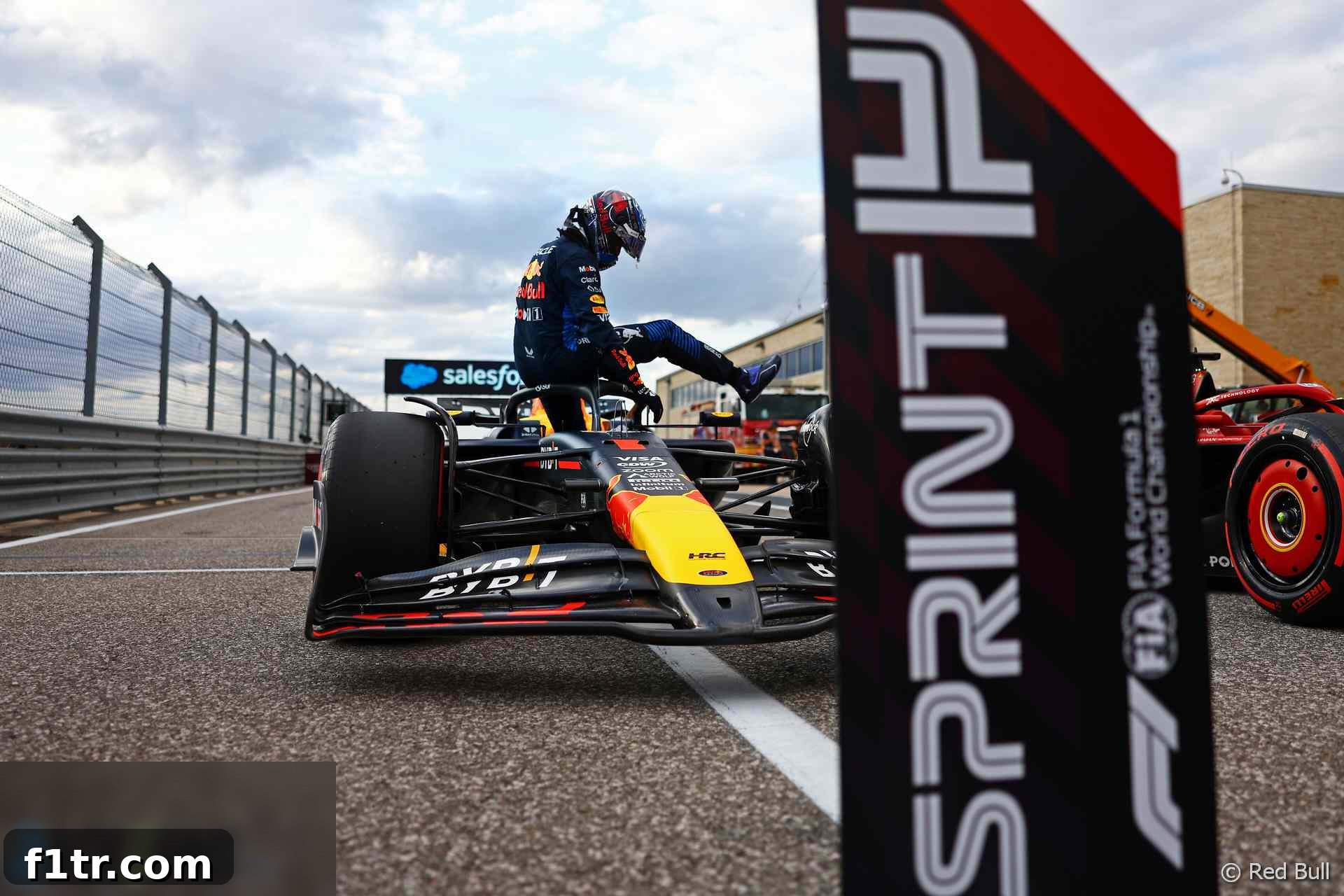
However, even the Monaco tyre rule pales in comparison to what many consider Liberty Media’s greatest folly: Sprint races. Or, as FOM insists on calling them, ‘sprints,’ despite the undeniable fact that drivers, by their own admission, do very little actual “sprinting” in them. These shorter Saturday races, intended to provide more competitive action and boost viewership, have instead become a source of widespread dissatisfaction among fans, teams, and critically, the competitors themselves. The format often reduces the main Grand Prix to a somewhat predictable event, as teams are hesitant to take risks that could jeopardize their Sunday race. The drivers frequently express their lack of enthusiasm, acknowledging that these forgettable sideshows are arbitrarily inflicted on a handful of rounds.
Competitors openly state they “don’t like them,” they “mean nothing” in the grand context of the championship, and often dismiss sprint pole positions as “not proper” triumphs and sprint race victories as “not real wins.” Max Verstappen, a multiple world champion, even suggested his run of sprint wins was “probably because I don’t like it,” highlighting a paradoxical detachment from the very competition he’s excelling in. This candid feedback from the very individuals whose efforts make F1 spectacular should be a stark warning. F1 is arguably deluding itself by pretending there will ever be great enthusiasm for a competition which the primary competitors themselves so obviously hold in such low regard. The integrity of the sport, and its competitive narrative, hinges on the drivers’ belief in the value of what they are fighting for.
The consistent pattern of FOM introducing policies with grand intentions, facing backlash, and then performing U-turns, suggests a need for more robust, consultative, and forward-thinking decision-making. The sport’s growth and appeal depend not just on commercial expansion, but on maintaining its competitive integrity and the respect of its core stakeholders – the fans and the drivers. Therefore, the message is clear: Make the abolition of Sprint Races the next, and perhaps most crucial, U-turn, please, FOM. It would be a definitive step towards reaffirming Formula 1 as a true, unadulterated competition, valued by all who participate and spectate.
Miss nothing from Formula 1 insights
Get a daily email with all our latest stories – and nothing else. No marketing, no ads. Sign up here:
Advertisement
Comment and Analysis
- The shadow of motorsport’s worst tragedy hangs over F1’s latest safety debate
- F1 got lucky three ways. But now it has a difficult and urgent problem to solve
- Verstappen’s overreaction shows he knows he cost himself the 2025 title
- F1’s sticking-plaster fix for Qatar tyre failures is an embarrassment
- The FIA’s stewards grabbed the chance to correct their mistake – unlike last time
Browse all comment articles