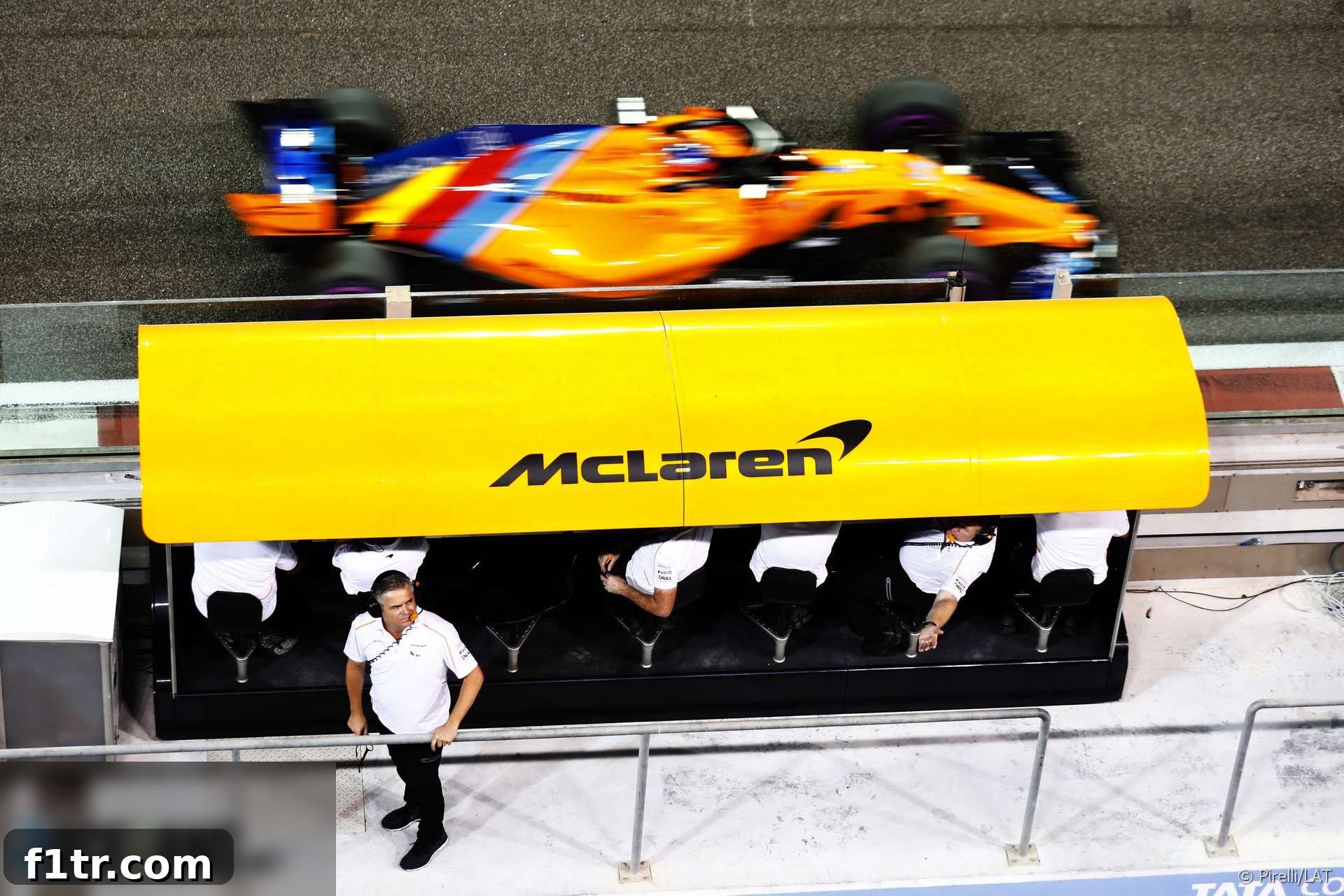
McLaren Racing has officially unveiled a significant multi-year partnership with British American Tobacco (BAT), marking a notable development in the dynamic world of Formula 1 sponsorships. This alliance, announced just ahead of the 2019 F1 season, positions McLaren at the forefront of a unique brand collaboration, carefully navigating the complex regulations surrounding tobacco industry involvement in global sports.
Advert | Become a Supporter & go ad-free
The core of this partnership, as detailed in a statement from McLaren, is exclusively centered on BAT’s range of “potentially reduced risk products.” The collaboration is explicitly defined by its focus on leveraging advanced technology and driving innovation, aligning with both companies’ forward-thinking strategies. This specific emphasis on next-generation products, rather than traditional tobacco, is crucial in framing the agreement within the current regulatory landscape and the broader ethical considerations of sports sponsorship.
The agreement emerges against a backdrop of strict global bans on tobacco advertising in sport, a policy that has profoundly reshaped Formula 1’s commercial ecosystem over the past two decades. As such, considerable anticipation surrounds how this partnership will be visibly represented, particularly on the livery of McLaren’s new car for the 2019 F1 season. The new machine, eagerly awaited by fans and competitors alike, was scheduled for its official launch on Thursday, leaving many to speculate on the creative solutions McLaren and BAT might employ to showcase their alliance without contravening advertising prohibitions.
Zak Brown, CEO of McLaren Racing, expressed enthusiasm for the new collaboration, highlighting the shared vision for innovation. “We warmly welcome BAT to the McLaren team and wholeheartedly support their ambition of delivering meaningful and lasting change through innovation,” Brown stated. He further emphasized the strategic alignment, adding, “BAT’s ambitious transformation agenda is central to this partnership, and we are delighted to share our technical experience and expertise to help accelerate this journey.” This statement underscores McLaren’s role not just as a marketing platform, but as a strategic partner contributing its engineering prowess and innovative spirit to BAT’s product development and communication goals.
This partnership also resonates with BAT’s rich, albeit complex, history within Formula 1. The British conglomerate once owned and operated its own F1 team, British American Racing (BAR), which competed in the pinnacle of motorsport from 1999 to 2004. During its tenure, BAR featured prominent drivers and achieved some notable results before eventually being acquired by Honda, which had been its engine supplier. This prior involvement provides BAT with a unique understanding of the sport’s global appeal and its potential as a platform for brand engagement, albeit now with a distinctly different product focus and regulatory environment.
Kingsley Wheaton, BAT’s chief marketing officer, articulated the company’s excitement and strategic rationale behind the partnership. “We are immensely proud and excited about this new partnership, which will further empower us to accelerate the pace at which we innovate and transform ourselves,” Wheaton commented. He further elaborated on the global reach and brand-building potential, stating, “It provides us with a truly global platform to drive greater resonance for our potentially reduced risk products, including our highly recognized Vype, Vuse, and glo brands. Ultimately, we believe that innovation and technology will be the bedrock for us in creating a better tomorrow for our consumers worldwide.” This perspective clarifies BAT’s objective to utilize Formula 1’s vast audience and high-tech image to promote a new category of products as part of its wider corporate transformation.
The McLaren-BAT agreement naturally draws comparisons with another high-profile, albeit controversial, partnership in Formula 1: Ferrari’s enduring association with Philip Morris International (PMI), the producers of Marlboro. Ferrari’s cars have for years carried the branding of PMI’s “Mission Winnow” initiative. This initiative, presented as a platform for science, technology, and innovation, has faced intense scrutiny, particularly from regulatory bodies. At the time of this announcement, Mission Winnow was under investigation in Australia regarding whether its branding subtly functions as a disguised form of tobacco promotion, despite PMI’s insistence on its non-tobacco marketing focus.
The Mission Winnow controversy highlights the delicate balance F1 teams and their partners must strike when dealing with brands historically associated with tobacco. The investigations into PMI’s initiative serve as a crucial precedent, underscoring the legal and ethical tightrope McLaren and BAT must walk. The emphasis on “potentially reduced risk products” and technology in the McLaren-BAT partnership appears to be a direct response to these regulatory challenges, aiming to create a clear distinction from traditional tobacco advertising and position the brands within a more acceptable, innovation-centric narrative.
This evolving landscape of F1 sponsorships reflects a broader trend within global sports, where teams and leagues are increasingly challenged to align with partners that resonate positively with a diverse and ethically conscious audience. For McLaren, a team undergoing a significant rebuilding phase, the partnership with BAT represents a crucial financial injection and a strategic alliance that could support its long-term ambitions both on and off the track. The emphasis on shared technological expertise suggests a deeper collaboration than a mere branding exercise, aiming to leverage McLaren’s engineering heritage to support BAT’s product development goals.
As the 2019 season progressed, the implementation of the McLaren-BAT partnership would be closely watched by competitors, regulators, and fans alike. The creativity in branding, the messaging around innovation, and the adherence to advertising regulations would all contribute to shaping public perception. The success of this collaboration could potentially pave the way for other industries seeking to transform their image through high-profile sports sponsorships, provided they navigate the complex ethical and regulatory frameworks with transparency and genuine commitment to their stated goals. The partnership thus stands as a significant case study in the ongoing evolution of sports marketing, particularly concerning industries with controversial histories.
Advert | Become a RaceFans supporter andgo ad-free
2019 F1 season
- Crying in the Melbourne car park at 2019 grand prix was my career low – Ocon
- McLaren Racing reports reduced £71 million loss in 2019
- Kvyat: Hockenheim podium last year was “my biggest achievement” so far
- How the FIA’s new encrypted fuel flow meter targets Ferrari’s suspected ‘aliasing’ trick
- “He smashed my office door”: 23 must-see moments from ‘Drive to Survive’ season two
Browse all 2019 F1 season articles