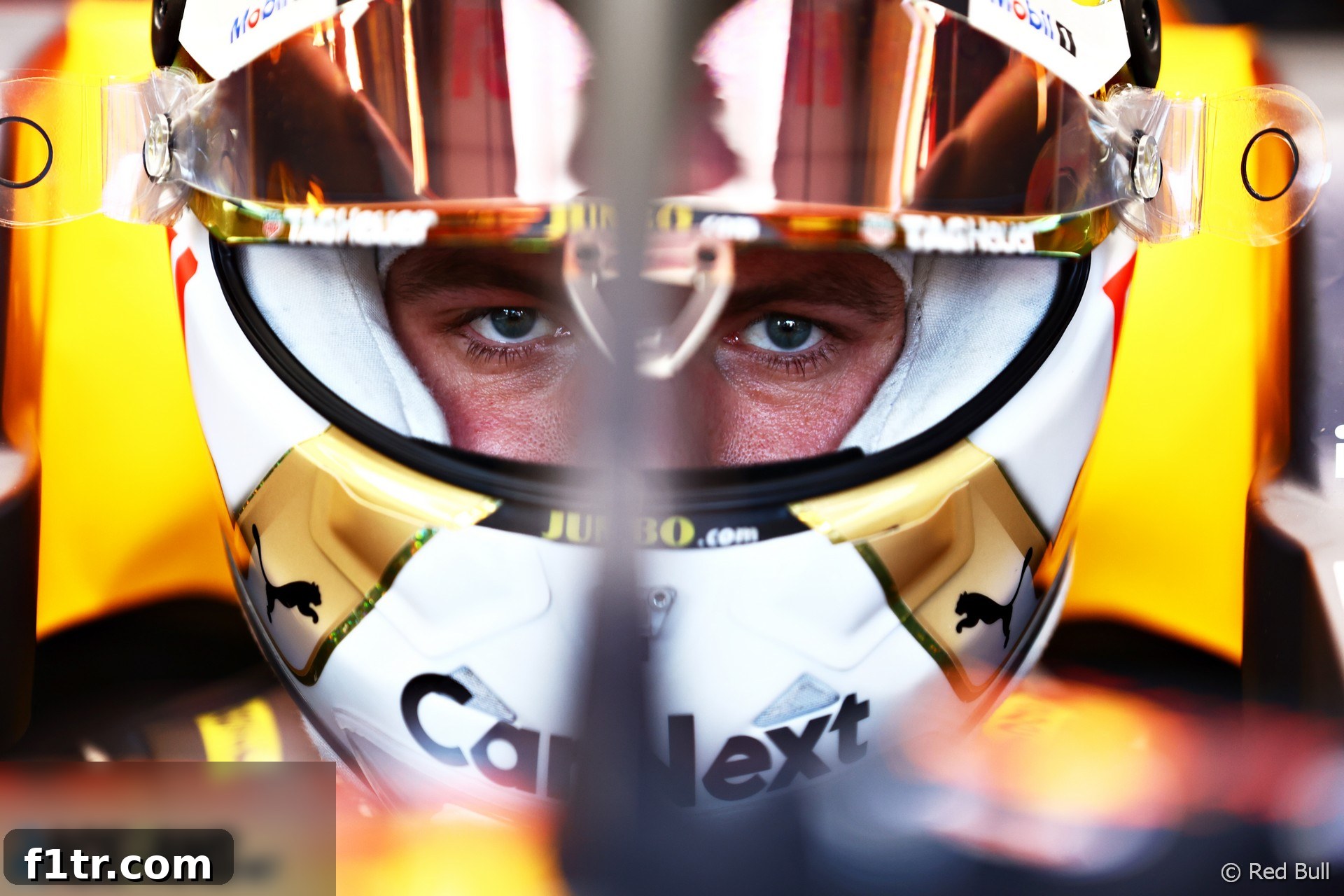
What began with the promise of a closely contested Formula 1 World Championship has emphatically shifted, transforming into an undeniable display of dominance by Red Bull Racing’s prodigious talent, Max Verstappen. His performance this season has not only distanced him from the competition but has positioned him on the cusp of securing his second consecutive world title with an unprecedented number of races still remaining on the calendar.
Verstappen’s relentless pursuit of victory means he could potentially clinch the championship at the upcoming Singapore Grand Prix, leaving five exhilarating rounds untouched. Such an early coronation would be remarkable in itself, yet it barely scratches the surface of the historical milestones he is poised to redefine. Beyond merely collecting a second championship, the Dutch driver is rapidly approaching several long-standing F1 records, threatening to etch his name even deeper into the annals of motorsport history.
This situation stands in stark contrast to the nail-biting conclusion of the previous season, where the championship battle extended all the way to the final lap of the final race. As the climax of the 2022 season draws near, the narrative has shifted dramatically from “who will win the title?” to “how comprehensively will Verstappen dominate and rewrite the record books?” His current trajectory suggests a season of unparalleled achievement, pushing the boundaries of what was previously thought possible in modern Formula 1.
Most Points in a Single Season
*Did not win championship
One of the most significant records within Max Verstappen’s reach is the highest points tally ever achieved by a driver in a single Formula 1 season. The current benchmark was set by Lewis Hamilton in 2019, when he amassed an impressive 413 points over a 21-race calendar. To surpass this monumental achievement, Verstappen needs to secure just over half of the available points from the remaining six rounds of the current season.
Considering his recent form, this target appears not just achievable, but highly probable. Verstappen has been on an incredible scoring spree, accumulating 127 out of a possible 130 points in the last five races alone, only missing out on a few bonus points for fastest laps. This consistent high-level performance underscores his formidable grip on the championship and his relentless pursuit of every possible point.
Several factors play into Verstappen’s advantage this season. While Hamilton’s 2019 record was achieved over 21 races, the current Formula 1 calendar features 22 rounds, providing additional opportunities for points. Furthermore, the inclusion of sprint races, which award points to the top eight finishers, significantly boosts the potential points haul. Verstappen has already maximized his points from the two sprint events held so far and has another opportunity at the Brazilian Grand Prix.
Looking ahead, the 2023 F1 calendar is anticipated to feature a record 24 races, with plans to introduce even more sprint events. While breaking the 500-point barrier this season might be a stretch – a flawless run in the final six races would see him finish on 499 points – this milestone is undoubtedly within sight for future seasons. Verstappen’s consistent ability to extract maximum performance from his Red Bull challenger makes him a prime candidate to rewrite the record books for total points scored.
Biggest Winning Margin
The history of Formula 1 has seen a significant evolution in its points system. For the first six decades, the value of a Grand Prix win gradually increased from eight points to nine, and then to 10. However, a seismic shift occurred in 2010 when the winning points leaped to 25. This change dramatically altered the landscape of championship battles, making much larger points hauls and, consequently, bigger winning margins possible.
Sebastian Vettel set the record for the most emphatic title victory in terms of raw points in 2013, concluding the season with an astonishing 155-point lead over runner-up Fernando Alonso. That particular season bears a striking resemblance to the current one. It commenced with a competitive flurry, seeing Vettel and three other drivers claim victories in the initial six races. Yet, following the summer break, Red Bull’s performance surged, and Vettel embarked on an unbeaten run that solidified his championship.
During that incredible streak, Vettel extended his lead from a modest 28 points to an insurmountable 155. Fast forward to the present, Max Verstappen currently holds a commanding 116-point advantage over Charles Leclerc. With several races remaining, Verstappen is in a prime position to significantly improve upon Vettel’s record. His consistent winning rate is a key factor, but equally important is the comparatively inconsistent performance of his closest rivals; Leclerc, for instance, has only managed two podium finishes in his last five starts, allowing Verstappen’s lead to swell rapidly.
The combination of Verstappen’s relentless performance and the fluctuating fortunes of his competitors creates a fertile ground for a truly historic winning margin. If he maintains his current form and continues to accumulate victories, the 2022 season could easily surpass the 2013 benchmark, cementing Verstappen’s name at the top of another prestigious F1 record.
Most Wins in a Single Season
The record for the most Grand Prix victories in a single Formula 1 season is a testament to sustained excellence and dominance. This formidable record was set by the legendary Michael Schumacher in 2004, when he claimed an astonishing 13 wins over an 18-race calendar. His season was a masterclass in consistency and speed, demonstrating a rarely seen synergy between driver and machine.
With the current F1 calendar featuring 22 races, Max Verstappen clearly has an enhanced opportunity to challenge and potentially surpass Schumacher’s long-standing record. The increased number of races inherently provides more chances for victory, a factor that drivers from earlier eras did not always benefit from.
Verstappen’s current win tally places him firmly on course. To merely equal Schumacher’s feat of 13 wins, Verstappen would need to secure victories in the next two races. Given his recent performances and the sheer pace of the Red Bull car, this is not an improbable scenario. Surpassing it, by achieving 14 or more wins, would further solidify his place in the pantheon of F1 greats and mark one of the most dominant individual seasons in the sport’s history.
The pursuit of this record adds another layer of intrigue to Verstappen’s already remarkable season. Every race becomes an opportunity not just to extend his championship lead, but to rewrite a significant chapter in Formula 1’s competitive legacy, putting his name alongside and potentially above one of the sport’s most iconic figures.
Most Fastest Laps in a Single Season
While Max Verstappen is poised to shatter multiple records, the one for the most fastest laps in a single season presents a particularly tough challenge. The current record is jointly held by Michael Schumacher (2004) and Kimi Raikkonen (2005, 2008), both of whom achieved an impressive 10 fastest laps in their respective seasons. Notably, Raikkonen accomplished this feat twice, and neither of those seasons were his championship-winning years, highlighting that fastest laps can often be a consequence of pushing hard even when not leading the race.
Verstappen currently has five fastest laps to his name, the highest tally among all drivers this year. However, to surpass or even equal the record, he would need to claim every single fastest lap in the remaining six races. This is a monumental ask in Formula 1, where strategic considerations often dictate which driver goes for the bonus point associated with the fastest lap.
The pursuit of the fastest lap point is a dynamic aspect of modern F1. Teams often pit a driver near the end of the race for fresh soft tires specifically to chase this bonus point, especially if their championship position is not under threat or if they are out of the points. This strategic element means that fastest laps are frequently shared among various drivers, making it exceptionally difficult for one driver to monopolize them throughout a season. Unless circumstances align perfectly for Verstappen, allowing him to consistently go for and achieve the fastest lap in every remaining round, this particular record is likely to remain in the hands of Schumacher and Raikkonen for now.
Longest Winning Streak
The record for the longest winning streak in Formula 1 is a rare and prestigious achievement, having been matched only once in over six decades. This incredible feat was first set by Alberto Ascari, who, driving for Ferrari, remained undefeated in every World Championship race he entered between the 1952 Belgian Grand Prix and the same event a year later. It’s important to note that he did not participate in the Indianapolis 500, which counted towards the World Championship during that period, making his streak in F1 races he actually competed in even more impressive. Ascari’s nine consecutive wins represented an era of profound dominance, a testament to his skill and Ferrari’s engineering prowess.
It took until 2013 for another driver to replicate this extraordinary achievement. Sebastian Vettel, during his dominant period with Red Bull, entered and won nine consecutive rounds, thereby tying Ascari’s long-standing record. This remarkable triumph also marked the closing chapter of F1’s V8 engine era. When the sport transitioned to the V6 hybrid turbo era, Vettel’s new Red Bull challenger proved less competitive, and he ended the subsequent season without a single victory, highlighting how quickly fortunes can change in Formula 1.
Today, Red Bull once again stands atop the motorsport world, and Max Verstappen is presenting a formidable challenge to both Ascari’s and Vettel’s records. His current form is a compelling argument for his ability to match and even surpass this legendary streak. A striking illustration of his versatility and command is demonstrated by his recent string of five victories. Only one of these was achieved from pole position, while the others came from as far down the grid as seventh, tenth, and even an incredible fourteenth place.
This season alone, Verstappen has already won from seven different starting positions, a record in itself. Such an ability to navigate through the field and still emerge victorious speaks volumes about his race craft, strategic acumen, and the sheer performance of his Red Bull car. This adaptability makes him a prime candidate to not just equal, but potentially establish a new benchmark for the longest winning streak in Formula 1 history.
Earliest Championship Win Record Out of Reach
While Max Verstappen is on course to rewrite several Formula 1 records, one significant milestone remains firmly out of his reach for the current season: the earliest conclusion to a championship. This particular record belongs unequivocally to Michael Schumacher, whose extraordinary achievement of locking down the drivers’ crown before the month of August began remains the unparalleled standard of early season dominance.
Two decades ago, in a season that showcased an unmatched combination of car performance and driver skill, Schumacher secured his fifth World Championship on July 21st, 2002, at the French Grand Prix. This was not only the earliest title victory by calendar date but also by the number of races remaining in the season, with an incredible six rounds still to be contested. This unique feat underscores a level of supremacy that has not been replicated since.
The structure of the modern Formula 1 calendar, with its extended length and later commencement compared to the 2002 season, makes it virtually impossible for any driver to clinch the title as early as July, regardless of their dominance. Even with Verstappen’s current staggering points lead and impending championship victory, the sheer timing of the races means he will inevitably be crowned later in the year, leaving Schumacher’s record as a testament to a specific era of calendar design and singular, early-season perfection.
Despite this one record being unattainable, Verstappen’s march towards his second title is shaping up to be one of the most statistically impressive campaigns in the sport’s history, solidifying his place among Formula 1’s most dominant figures.
Over to You
Max Verstappen’s incredible season has sparked conversations across the motorsport world. Which of these monumental records do you believe Verstappen has the most realistic chance of breaking? Furthermore, what does his and Red Bull’s overwhelming performance this year signify about the current state of Formula 1? We invite you to share your insights and predictions in the comments section below.
F1 Statistics
- When did F1 last have a mid-season break longer than five weeks? 1990
- Verstappen starts season with lowest score over three rounds since his debut in F1
- Lap time watch: 2026 Japanese Grand Prix
- Stats: Antonelli is 12th Formula 1 driver to score a ‘hat trick’ with his first win
- Hamilton took longer to score his first podium for Ferrari than any other driver
Browse all F1 statistics articles