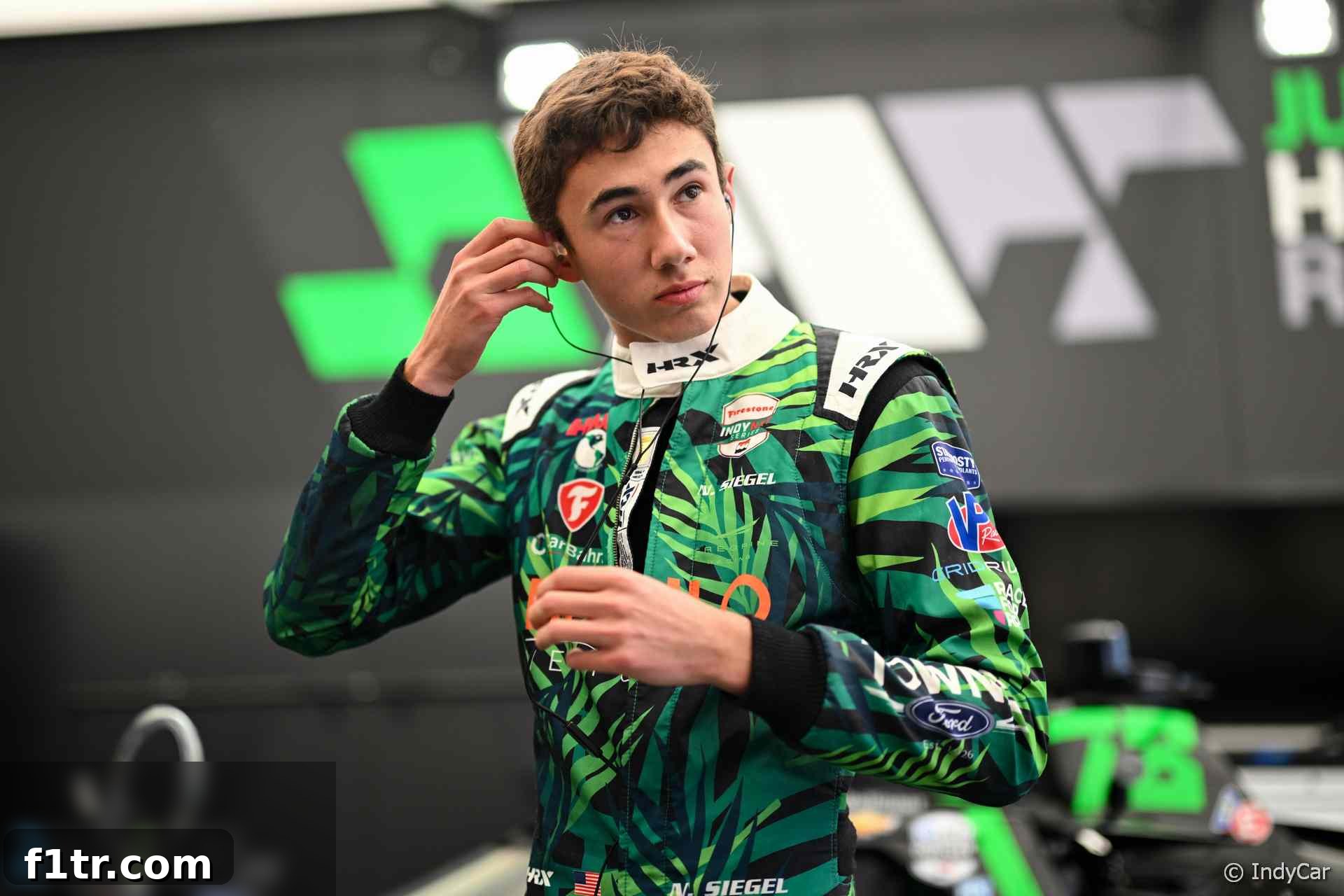
McLaren IndyCar Confirms Nolan Siegel in Long-Term Deal, Replaces Theo Pourchaire
In a surprising and immediate driver lineup change, McLaren Racing has officially announced the signing of young American talent Nolan Siegel to a multi-year deal for its NTT IndyCar Series program. Siegel, a promising 19-year-old, will take over the cockpit of the No. 6 Chevrolet, effectively replacing Theo Pourchaire, who had been deputizing for the injured David Malukas. This move underscores McLaren’s strategic vision for stability and long-term development within the fiercely competitive open-wheel racing series.
A Pivotal Shift for McLaren’s IndyCar Ambitions
The announcement sends a clear message about McLaren’s commitment to building a championship-contending team. With a deal spanning the remainder of the current season and extending well into 2025 and beyond, Siegel’s arrival signifies a foundational step in the team’s ongoing evolution. Team Principal Gavin Ward emphasized the importance of this decision, stating, “Stability and sustained growth are key to our long-term game plan here, and this is a significant step in that mission.” The search for consistency and a driver who can grow with the team appears to be a driving force behind this pivotal change, as McLaren aims to solidify its position among IndyCar’s elite.
Ward also acknowledged Pourchaire’s contributions during his tenure. “First, I want to thank Theo for his time filling in on the number six car with us in recent weeks,” he commented, highlighting the challenging circumstances under which Pourchaire joined the team. The motorsport world is often a dynamic environment, with driver changes frequently occurring due to a myriad of factors, from performance metrics to injury replacements. McLaren’s decision to bring in Siegel now, as he became available, reflects a proactive approach to securing talent that aligns with their future aspirations.
Theo Pourchaire’s Unexpected Departure and the Dynamics of Substitute Roles
Theo Pourchaire’s journey with McLaren’s IndyCar team was brief but eventful. The reigning Formula 2 champion was initially brought in at the beginning of last month to fill the void left by David Malukas, who was sidelined by a wrist injury sustained in a cycling accident. Pourchaire, a highly regarded talent with a strong European single-seater pedigree, made the challenging transition from Japan’s Super Formula series to the unique demands of American oval and road course racing.
His stint with McLaren was marked by a rapid learning curve, adapting to unfamiliar tracks, a new car, and different racing philosophies. While he showed glimpses of potential and adaptability, the demands of a substitute role in a championship as cutthroat as IndyCar are immense. The news of his replacement appears to have caught Pourchaire by surprise, a sentiment he inadvertently shared on social media shortly before the official announcement. In a now-deleted post, he expressed his excitement for the upcoming race at Laguna Seca: “I can’t believe I’m gonna race on the legendary Laguna Seca this weekend. Can’t wait to be there for the Grand Prix of Monterey.” This candid expression underscores the often-unpredictable nature of top-tier motorsport, where even promising careers can face sudden shifts.
Pourchaire’s situation highlights the precarious position of substitute drivers. While they gain invaluable experience, their tenure is often contingent on the recovery of the primary driver or the availability of long-term options. For a driver like Pourchaire, who left a competitive Super Formula seat to seize the IndyCar opportunity, this unexpected turn is undoubtedly a setback, but his talent ensures he will remain a driver to watch in the global motorsport landscape.
Nolan Siegel: A Rising Star’s Whirlwind Journey to McLaren
Nolan Siegel’s ascent to a full-time IndyCar seat with McLaren has been nothing short of meteoric, culminating in a series of dramatic events over recent weeks. At just 19 years old, Siegel has already amassed an impressive amount of experience across various racing disciplines, proving his versatility and raw speed. His journey to McLaren is a testament to his resilience and adaptability, traits highly valued in the demanding world of professional motorsport.
Siegel’s recent calendar reads like a highlight reel of a driver on the fast track. Prior to securing this long-term deal, he was a prominent figure in the Indy NXT by Firestone series with HMD Motorsports, where he consistently demonstrated his potential as a future IndyCar star. However, his month of May was a true rollercoaster. He faced the heartbreak of failing to qualify for the prestigious Indianapolis 500, crashing during his final attempt, a moment that could have deflated many young drivers. Yet, Siegel quickly bounced back, showing immense mental fortitude.
Just two weeks ago, he received an eleventh-hour call-up from Juncos Hollinger Racing to substitute for Agustin Canapino at an IndyCar round, a clear indication of his readiness and the paddock’s recognition of his talent. This ad-hoc appearance provided him with crucial IndyCar experience and demonstrated his ability to jump into an unfamiliar car and perform under pressure.
Adding another remarkable achievement to his burgeoning resume, Siegel scored a class win at the legendary Le Mans 24 Hours in an LMP2 car last week. This victory came with United Autosports, a team notably co-owned by McLaren Racing CEO Zak Brown, adding an intriguing layer to his eventual signing with McLaren’s IndyCar outfit. Sharing the winning car with Oliver Jarvis and Bijoy Garg, Siegel showcased his endurance racing prowess and ability to perform on the global stage, further solidifying his reputation as a versatile and high-caliber driver.
Gavin Ward on Stability, Growth, and Building for the Future
Gavin Ward’s comments regarding Siegel’s signing shed light on McLaren’s strategic priorities for its IndyCar program. The emphasis on “stability and sustained growth” is not merely corporate jargon; it represents a fundamental shift towards building a cohesive and long-lasting foundation. In a series where driver changes can be frequent due to injuries, sponsorship demands, or performance pressures, having a consistent driver like Siegel, secured on a multi-year contract, allows the team to develop the car and strategy more effectively.
A stable driver lineup enables engineers and mechanics to build a strong working relationship with their pilot, leading to better feedback, improved car setup, and ultimately, enhanced on-track performance. This long-term commitment to Siegel indicates McLaren’s belief in his potential to not only adapt quickly but also to mature into a leading contender in the series. Ward’s statement, “ultimately, making this change to Nolan now that he’s available gives us the chance to build a foundation for the future. He is a young, talented driver with an immense amount of experience at this stage of his career and we’re excited to continue on the upward journey together,” articulates this vision clearly.
This strategic move aligns with McLaren’s broader motorsport ambitions, which include competing at the highest levels in Formula 1 and Formula E, alongside their commitment to IndyCar. By investing in young talent like Siegel, McLaren aims to foster a pipeline of skilled drivers who can contribute to their success across various racing platforms, reinforcing their legacy as a powerhouse in global motorsport.
Siegel’s Perspective: An “Unexpected Jump” into the IndyCar Spotlight
For Nolan Siegel, the transition into a full-time McLaren IndyCar seat is a dream realized, albeit one that arrived faster than anticipated. Reflecting on the whirlwind of events, Siegel expressed his excitement, stating, “This is an unexpected jump, but I’m thrilled to be in this position after a rewarding run in the Indy NXT by Firestone series with HMD Motorsports.” His humility and gratitude for his previous team and experiences shine through, demonstrating the kind of character often associated with rising stars.
Stepping into a full-time role mid-season presents its own unique set of challenges, but Siegel appears ready to embrace them. His comment, “I am looking forward to this new journey and learning alongside the entire team starting this weekend in my home state,” highlights his eagerness to integrate with the McLaren squad and begin the crucial process of adaptation and development. Racing at Laguna Seca, a legendary track, will be particularly special as it marks his home state debut in a full-time IndyCar capacity, adding an extra layer of motivation and excitement to his inaugural race weekend with the team.
This “unexpected jump” is not just a personal milestone for Siegel; it’s a significant moment in his professional trajectory, propelling him into the global motorsport spotlight. His diverse racing background, including the recent Le Mans victory, suggests a driver with exceptional adaptability and a robust skill set, qualities that will be essential as he navigates the rigorous IndyCar calendar.
The Broader Landscape: Driver Market Dynamics in IndyCar
The swift change at McLaren’s IndyCar team is a stark reminder of the fluid and often ruthless nature of professional motorsport. Gavin Ward’s observation about the team “working through musical chairs all season” perfectly encapsulates the dynamic environment of the IndyCar paddock. Driver lineups are rarely static, influenced by injuries, sponsor requirements, performance reviews, and the constant emergence of new talent from junior categories.
This constant flux, while challenging, also creates opportunities for drivers like Siegel. His readiness to step in at short notice for Juncos Hollinger and his consistent performances in Indy NXT clearly put him on McLaren’s radar. The decision to secure a long-term contract with a young driver like Siegel, rather than continuing with a short-term solution, speaks volumes about McLaren’s belief in nurturing talent and planning for sustainable success. It’s a calculated risk that, if successful, could see Siegel become a cornerstone of their IndyCar efforts for years to come.
The IndyCar Series itself thrives on its intense competition and the accessibility of its driver market, which often allows talented individuals to climb the ranks quickly. For every driver like Pourchaire facing an unexpected departure, there’s another like Siegel seizing a career-defining opportunity. This constant evolution keeps the series fresh and ensures a continuous flow of compelling narratives, both on and off the track.
Looking Ahead: McLaren’s Trajectory with Siegel at the Helm
With Nolan Siegel now firmly integrated into the No. 6 car, McLaren Racing sets its sights on a future defined by stability, performance, and championship aspirations. The immediate challenge for Siegel will be to quickly acclimate to the McLaren setup, build rapport with his engineers, and consistently deliver strong results. His diverse racing background, particularly his recent Le Mans success, suggests he possesses the mental toughness and technical understanding required to adapt to different machinery and racing environments, a crucial asset in IndyCar’s varied calendar.
For McLaren, securing Siegel on a long-term deal is an investment in their future. It allows them to develop a program around a core group of drivers, fostering team cohesion and pushing the boundaries of car development. The expectation will be for Siegel to grow with the team, eventually challenging for race wins and championship contention. The journey begins this weekend at Laguna Seca, a significant moment for both the young driver and the storied racing team. All eyes will be on Siegel as he embarks on this thrilling new chapter with McLaren, poised to leave his mark on the NTT IndyCar Series.