Miami Grand Prix Track Faces Major Redesign After Public Land Dispute
The highly anticipated Miami Grand Prix street track, initially envisioned as a glamorous addition to the Formula 1 calendar, is currently facing substantial alterations. Promoters have been explicitly denied permission to incorporate a crucial piece of public land, known as ‘Parcel B’, into the proposed circuit layout. This decision marks a significant turning point for the potential race, necessitating a complete re-evaluation of its route through the vibrant heart of Miami, and potentially impacting its chances of joining the coveted F1 schedule.
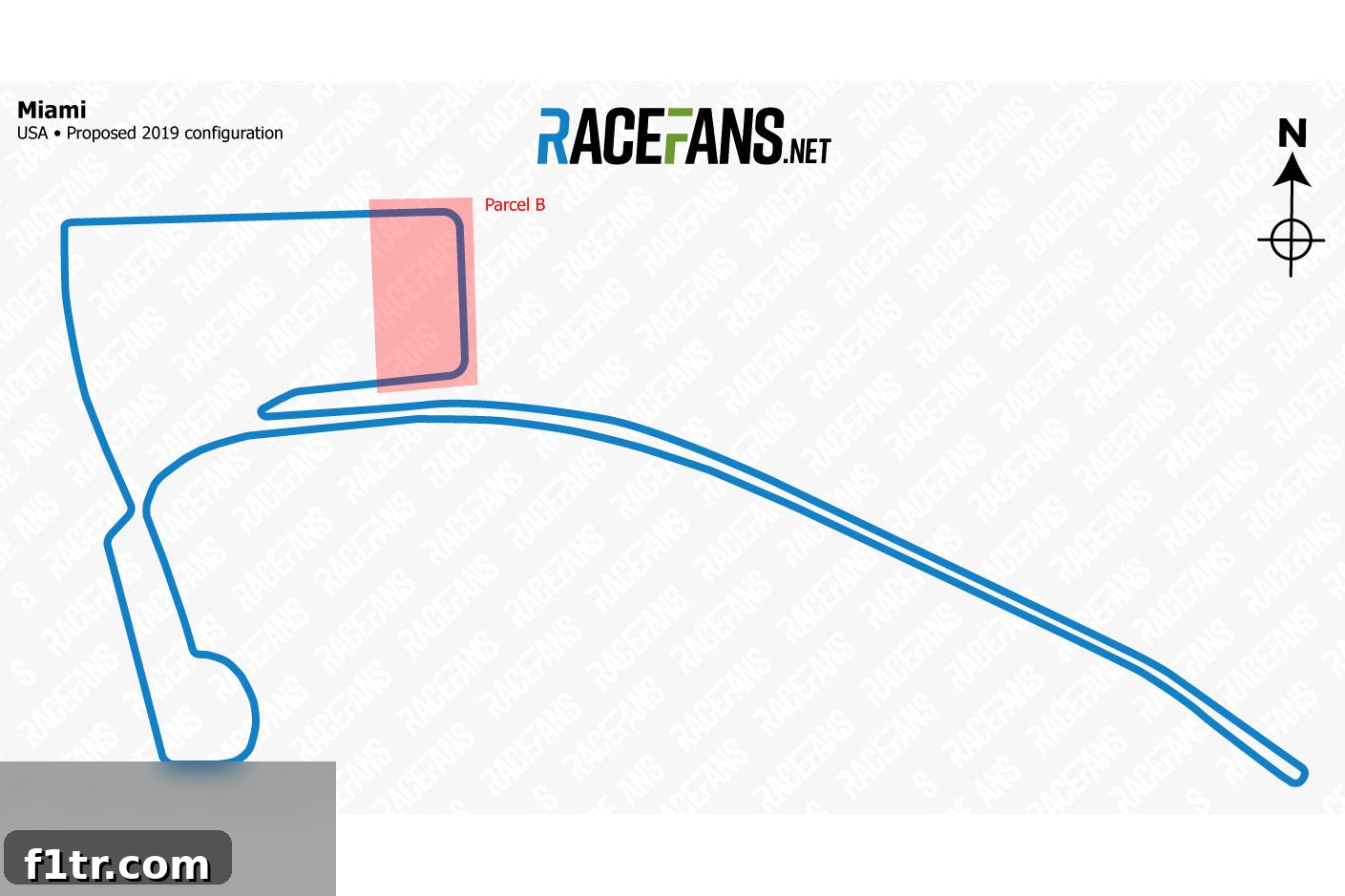
Initial plans for the street circuit, which captured global attention upon their unveiling, showcased a spectacular route along the scenic waterfront situated directly east of the iconic AmericanAirlines Arena. This picturesque section of the track was designed to pass directly through ‘Parcel B’, a specific plot of land under the jurisdiction of Miami-Dade County. The ambition was to deliver a truly unique and visually stunning racing experience, leveraging Miami’s renowned coastal beauty and integrating the dynamic urban landscape into the thrill of Formula 1 racing.
Advert | Become a Supporter & go ad-free
The Controversial Ruling: ‘Parcel B’ Off-Limits for Formula 1
A recent amendment, decisively approved by Miami-Dade County, has unequivocally forbidden the Grand Prix promoters from utilizing ‘Parcel B’. This ruling introduces a significant hurdle for the track designers. While detailed track maps (which often indicated ‘Parcel B’ highlighted in red to denote its position within the original proposal) suggest that there might be sufficient alternative road infrastructure to navigate around this newly restricted area, the implications for the circuit’s overall character and appeal are profound. The most immediate consequence is that the high-speed F1 cars will no longer be able to race alongside as much of Miami’s stunning waterfront. This change potentially diminishes one of the track’s key visual selling points and a significant part of its initial charm, which was heavily promoted to fans and stakeholders alike.
‘Parcel B’ has been a persistent source of friction and debate among local residents and community groups for decades. Its history is steeped in unfulfilled promises and evolving public expectations, making it a highly sensitive piece of land. Back in 1996, during the referendum process for the construction of the AmericanAirlines Arena – the bustling home of the Miami Heat basketball team – residents were explicitly assured that this very parcel of land would be transformed into a vibrant public park, a much-needed green oasis amidst the rapidly developing urban sprawl. However, following the arena’s completion, these promises remained largely unfulfilled. Instead, the land was leased to the basketball team, primarily serving as an area for logistics, equipment staging, and crucial parking facilities, much to the dismay and frustration of the local populace who had been promised a public amenity.
A Precedent: Formula E’s Interaction with ‘Parcel B’
Interestingly, ‘Parcel B’ has previously hosted a major motorsport event, demonstrating its potential for such large-scale gatherings. In 2015, the electric single-seater series Formula E was granted permission to use the parcel for its vital pits and paddock area during its one-off race in Miami. However, this access came with a significant price tag and stringent conditions, underscoring the value and community considerations associated with the land. Race promoters, Andretti Sports Marketing Florida, incurred costs totaling $22,200 for its usage. Furthermore, they were responsible for covering extensive electrical upgrades on the site, estimated to be almost $200,000, ensuring the venue met the demanding requirements of a major international race. In a further commitment to the community, they contributed an additional $5,000 to fund much-needed improvements to public amenities in the vicinity. This precedent highlights the existing potential of the land for event hosting, but also underscores the considerable investment and community give-back required for its temporary use.
Since Formula E’s brief tenure, ‘Parcel B’ has undergone a significant transformation, with concerted efforts aimed at its development for genuine public use. Commencing in July of the previous year, a comprehensive “greening” program was initiated. This ambitious project marked the beginning of its conversion into a bona fide public park, featuring the planting of fresh, lush grass and an impressive array of 42 coconut trees. This initiative was a direct response to years of community advocacy and a clear effort to finally deliver on the original promises made to the residents regarding the land’s purpose as a public recreational space.
The revitalized area was formally dedicated by Councillor Audrey Edmonson, a key figure who played a pivotal role in yesterday’s crucial amendment. It was Councillor Edmonson herself who proposed the motion explicitly barring the parcel’s use for an F1 race. Her unwavering commitment to preserving public spaces stems from the fact that the northernmost section of the initially proposed F1 track, including both ‘Parcel B’ and the AmericanAirlines Arena, lies entirely within her electoral district. This geographical alignment positions her as a direct representative of the residents who have long championed the park’s development and actively opposed its commercialization for private, temporary events like a Formula 1 Grand Prix.
F1 Driver Reactions and The Intricacies of Track Design
Beyond the local political landscape and community concerns, the initially proposed track design itself garnered a somewhat critical reception from several prominent figures within the Formula 1 paddock. Upon its reveal, two notable drivers, Lewis Hamilton and Stoffel Vandoorne, publicly expressed their unimpressed views regarding the plans. Their critiques often revolve around the inherent challenges of creating an engaging and thrilling street circuit that provides ample overtaking opportunities while maintaining a high level of safety within a confined urban environment. The loss of a significant waterfront section, which could have offered longer straights or unique corners, is likely to exacerbate these design complexities, potentially making it even harder to craft a circuit that truly excites both drivers and fans and adheres to the high standards expected of a modern Formula 1 venue.
The Complexities of Urban Street Circuits in Formula 1
Hosting a Formula 1 Grand Prix in a bustling city like Miami presents a unique set of challenges that extend far beyond simply mapping out a route on paper. Urban street circuits, by their very nature, require intricate planning, significant infrastructure modifications, and delicate negotiations with local authorities and communities. Unlike purpose-built tracks, which offer vast expanses for design flexibility, street circuits must navigate existing public roads, often characterized by tight corners, variable surfaces, and limited run-off areas. The inherent appeal lies in showcasing the pinnacle of motorsport against an iconic city backdrop, but this comes at the cost of design compromises and logistical nightmares. Circuits like Monaco, Baku, and Singapore have successfully integrated into their urban environments, yet each has faced its own battles with local concerns, environmental impact, and the sheer disruption caused by constructing and dismantling a temporary racing facility. The Miami project is clearly no exception, battling for public acceptance and optimal track design simultaneously in a highly scrutinized environment.
The Future of the Miami Grand Prix: A Pivotal Moment for Adaptation
The denial of access to ‘Parcel B’ represents a pivotal moment for the Miami Grand Prix. It forces promoters to return to the drawing board, potentially leading to a significantly revised track layout that might diverge substantially from the original vision. This adjustment could impact everything from the circuit’s overall length and average speed to its aesthetic appeal and the fan experience, particularly for those envisioning a race track truly hugging the coastline. The loss of the scenic waterfront stretch means that alternative sections of the city will need to be integrated, raising new questions about congestion, noise, and the overall disruption to residents and businesses in other areas. Successfully navigating these challenges will be crucial for the project to move forward and secure its place on the coveted F1 calendar. The race organizers must now demonstrate not only their ability to adapt to unforeseen obstacles but also their unwavering commitment to addressing community concerns and delivering a world-class event that genuinely benefits Miami while minimizing its impact on daily life.
Advert | Become a RaceFans supporter andgo ad-free
Related Articles: The 2019 F1 Season and Beyond
Explore more content related to the exciting world of Formula 1 and significant events from the 2019 season and subsequent years, including driver insights and team analyses.
- Esteban Ocon on his emotional 2019 Melbourne Grand Prix experience
- McLaren Racing’s financial performance in 2019: A look at their reduced losses
- Daniil Kvyat’s Hockenheim podium in 2019: A career highlight
- How the FIA’s new encrypted fuel flow meter targets Ferrari’s suspected ‘aliasing’ trick
- “He smashed my office door”: 23 must-see moments from ‘Drive to Survive’ season two
Browse all 2019 F1 season articles