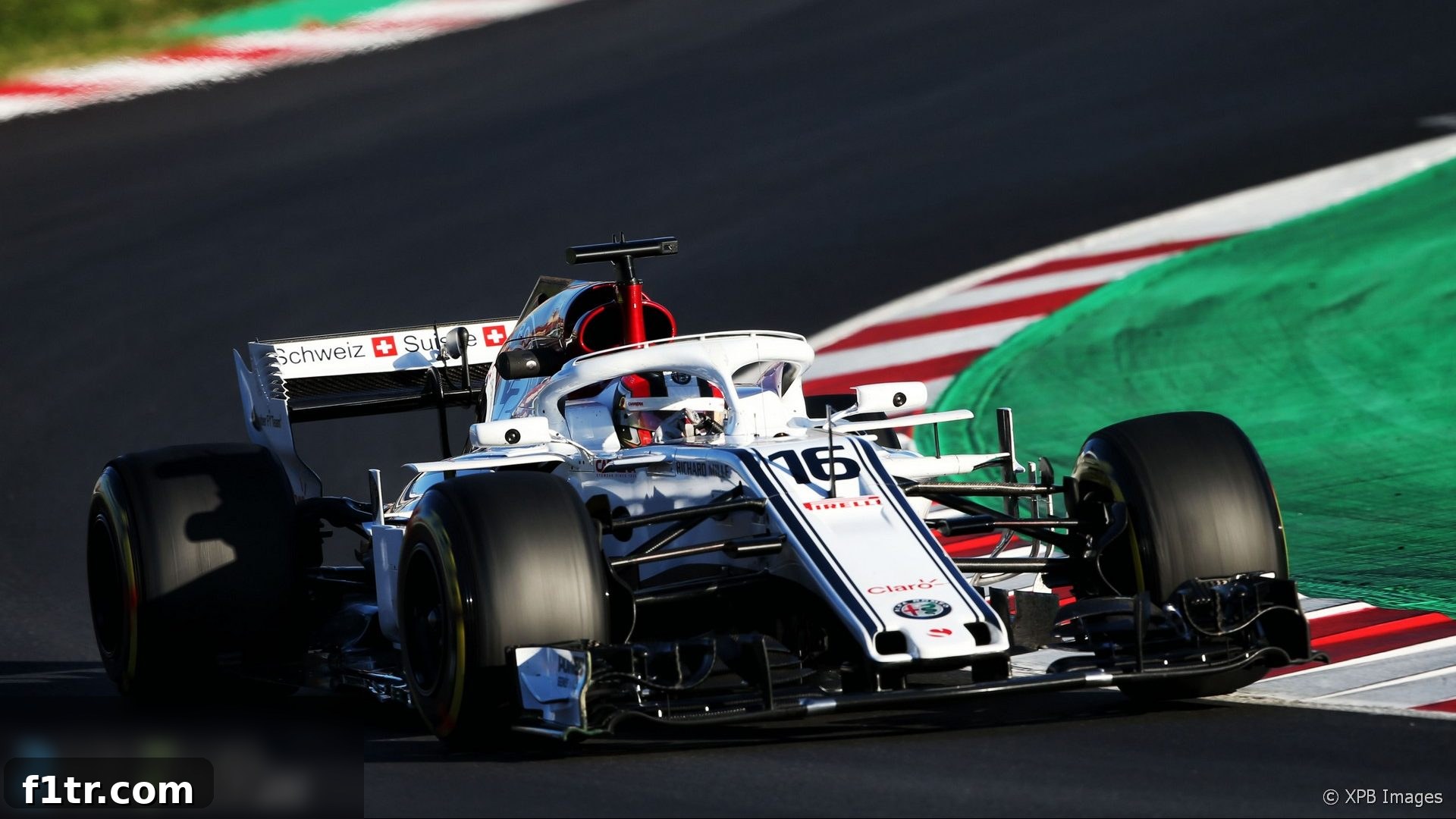
The dawn of a new Formula 1 season is always accompanied by a potent mix of anticipation and speculation, yet the lead-up to the 2018 championship has been particularly rife with uncertainty. Sauber Team Principal Frederic Vasseur has fueled this intrigue, openly predicting a series of surprises in the opening races of the season. His forecast stems directly from the complex and often perplexing difficulties encountered by teams during the crucial pre-season testing sessions held at the Circuit de Catalunya in Spain.
The challenges facing the F1 paddock were multifaceted. A newly re-laid track surface at the Barcelona circuit, combined with Pirelli’s significantly expanded and revised range of tyre compounds, presented an unprecedented puzzle for engineers and drivers alike. Adding to these technical hurdles, uncharacteristically cold weather conditions during the testing period further constrained teams’ ability to gather meaningful, representative data. This confluence of factors has led to an environment where definitive performance metrics are scarce, and Vasseur believes this obscurity is a prime ingredient for unexpected results as the season kicks off.
With the inaugural Grand Prix of 2018 scheduled for the atypical street circuit of Melbourne, Australia, Vasseur’s apprehension appears well-founded. The Albert Park circuit, known for its unique demands and often ‘green’ track surface at the start of the weekend, is notoriously unforgiving. Such a venue, following a turbulent testing phase, could very well amplify the unpredictability, setting the stage for an electrifying and potentially disorienting start to the championship battle, where form books might be thrown out of the window.
Pirelli’s Expanded Tyre Range: A Strategic Minefield for F1 Teams
One of the most significant contributors to the pre-season uncertainty was Pirelli’s ambitious overhaul of its tyre lineup for 2018. The Italian manufacturer introduced two entirely new compounds – the ‘HyperSoft’ and ‘SuperHard’ – while also revising the characteristics of existing tyres and expanding the total number of options available to teams. This strategic move was designed to increase variability and create more exciting racing, but it inadvertently created a data-logging nightmare during testing. With more compounds to assess, each with its unique optimal operating window, degradation rate, and performance ceiling, teams faced an uphill battle in gathering comprehensive data.
Vasseur highlighted the sheer volume of compounds as a primary concern. “I think it’s tricky for everybody mainly due to the fact that we have too many compounds, or a lot of compounds,” he explained. “I spoke with a couple of my colleagues, we are more or less in the same situation that it’s very difficult to understand each compound.” Teams typically use pre-season testing to thoroughly understand these intricate details. However, with an increased number of options and finite track time, the challenge of generating comprehensive data for every compound became immense. This made it exceedingly difficult for teams to establish reliable correlations between simulator data and real-world performance, leaving many in the dark about their true competitive standing.
The ability to accurately predict tyre behavior is fundamental to modern F1 strategy. Engineers need to understand precisely how each compound will react under various fuel loads, in different temperatures, and over race distances. The lack of clarity stemming from testing meant that teams were effectively heading into the opening races with incomplete data sets, particularly concerning the nuances between the closely grouped compounds. This pervasive uncertainty around tyre performance will undoubtedly add a significant layer of complexity to qualifying and race strategy, where a slight miscalculation could prove disastrous and dramatically alter race outcomes.
The Evolving Circuit de Catalunya Surface: An Unforeseen Variable
Further complicating matters for teams was the newly laid asphalt at the Circuit de Catalunya. While track resurfacing is a common improvement, a fresh surface inherently behaves differently than a matured one. The new Tarmac at Barcelona was still evolving throughout the testing period, constantly changing its characteristics as more rubber was laid down by the F1 cars. This dynamic nature added another significant layer of unpredictability to an already challenging environment, forcing teams to contend with a continually shifting baseline.
Vasseur explicitly pointed out this difficulty: “Even during the four days the Tarmac changes a little bit. Now we are putting some rubber on track there’s a huge change on track and it’s difficult to do a proper correlation between what you are doing on Friday and what you did on Tuesday.” This means that data gathered on the first day of testing might not be entirely relevant by the last, as the track’s grip levels and abrasive qualities shift. Such rapid evolution makes it incredibly hard for teams to establish a stable baseline for their car setups and tyre analyses. It’s akin to trying to hit a moving target, where the very rules of engagement are constantly changing, demanding constant adaptation from engineers and drivers.
This issue was exacerbated by the aforementioned cold conditions that plagued much of the testing. Tyres require specific temperatures to operate effectively, and a cold track makes it harder to bring them into their optimal operating window, especially for softer compounds. This not only makes it difficult for drivers to extract maximum performance but also skews the data regarding tyre wear and degradation. A cold track can lead to graining or blistering that might not occur in warmer race conditions, thus providing misleading insights into tyre durability. The combined effect of an evolving track and cold temperatures meant that teams were often collecting data under non-representative conditions, further clouding their understanding of car and tyre performance, and increasing the potential for surprises.
The HyperSoft Enigma and Mid-Range Ambiguity
Among the new tyre compounds, the pink-walled HyperSoft generated particular interest. Designed to be the fastest and softest tyre in Pirelli’s range, its performance in testing offered some unexpected insights. Vasseur noted that the HyperSoft proved “more durable than expected in its first runs.” This suggests that while it lived up to its promise of outright speed, its longevity might have surprised teams, potentially opening up new strategic avenues that were not initially anticipated. A durable soft compound could be a game-changer in qualifying and certain race scenarios.
“I think it’s more or less the case for everybody that everybody’s performing with the hyper soft,” Vasseur commented, implying a general consensus among teams regarding its outright pace and immediate usability. However, the picture became significantly less clear when it came to the compounds bridging the gap between the HyperSoft and the harder Medium tyre. “In the middle between hyper-soft and medium it’s a bit unclear,” he admitted. This ambiguity around the SuperSoft and UltraSoft compounds poses a significant strategic challenge. If teams cannot confidently differentiate the performance and degradation characteristics of these crucial mid-range tyres, it makes optimal race strategy planning immensely difficult. Should they opt for a shorter, faster stint on a SuperSoft, or risk a longer one on an UltraSoft with unknown degradation? These are the high-stakes questions that will plague strategists in the early races, turning them into intricate chess matches.
The limited running on each compound also played a crucial role in this uncertainty. “When you have only one or two compounds it’s not easy but now this morning we’ve used medium, soft, super-soft, ultra-soft, hyper-soft. At the end of the day you are doing two or three laps with it, it’s not easy to be honest,” Vasseur elaborated. Such brief stints provide minimal data, making it incredibly hard to assess long-run performance or degradation profiles accurately. Teams are essentially piecing together a complex puzzle with very few, and sometimes unreliable, pieces, increasing the likelihood of early-season missteps.
Melbourne: A Perfect Storm for Surprises at the F1 Season Opener
The cumulative effect of these testing woes converges dramatically on the season-opening Australian Grand Prix in Melbourne. As Vasseur pointed out, Albert Park is “not the easiest one because it’s not a proper track.” Unlike purpose-built race circuits, a street circuit like Melbourne is typically ‘green’ – meaning it has very little rubber laid down on its surface at the start of a race weekend. This makes initial grip levels low and track evolution very rapid, mimicking some of the dynamic conditions seen in Barcelona testing but under the intense pressure of a competitive Grand Prix weekend.
The inherent challenges of Melbourne – coupled with teams’ limited understanding of their cars’ optimal setup with the new tyres on an evolving surface – create a volatile environment. Qualifying, which often dictates much of the race outcome, could see unexpected front-runners or established teams struggling to find consistent pace. Race strategy will undoubtedly be a high-stakes gamble, as teams try to interpret limited data and adapt to real-time track and tyre behavior. This scenario aligns perfectly with Vasseur’s prediction of a “surprising start” to the F1 season, promising an opening weekend filled with drama, strategic gambles, and potentially unexpected heroes emerging from the pack.
Broader Implications for the Early 2018 Formula 1 Season
The broad implications of these testing difficulties extend well beyond the single race in Melbourne. The widespread uncertainty surrounding tyre performance and optimal car setup could ripple through the initial few races of the 2018 season. Teams that manage to adapt quickly, perhaps through superior simulation models or astute on-the-fly strategy adjustments, could gain a significant early advantage in the championship standings. Conversely, those that struggle to unlock the full potential of their packages in this unpredictable environment might find themselves on the back foot, facing a steep climb to recover vital points.
This scenario underscores the critical role of adaptability and quick learning in modern Formula 1. It also highlights the immense pressure on engineers, strategists, and drivers to make the most of every lap and every piece of data available to them. For fans, this translates into an exhilarating prospect: a potentially shaken-up pecking order, unexpected podium contenders, and a championship battle that could begin with a bang. Frederic Vasseur’s cautious predictions are not just a reflection of Sauber’s challenges but a widespread sentiment across the paddock, suggesting that the 2018 F1 season might indeed be one of the most unpredictable and thrilling in recent memory, keeping everyone on the edge of their seats.
Go ad-free for just £1 per month>> Find out more and sign up
2018 F1 Season Articles
- F1 feared “death knell” for Drive to Survive after Ferrari and Mercedes snub
- McLaren staff told us we were “totally crazy” to take Honda engines in 2018 – Tost
- ‘It doesn’t matter if we start last’: How Red Bull’s junior team aided Honda’s leap forward
- Honda’s jet division helped F1 engineers solve power unit problem
- McLaren Racing losses rise after Honda split
Browse all 2018 F1 season articles