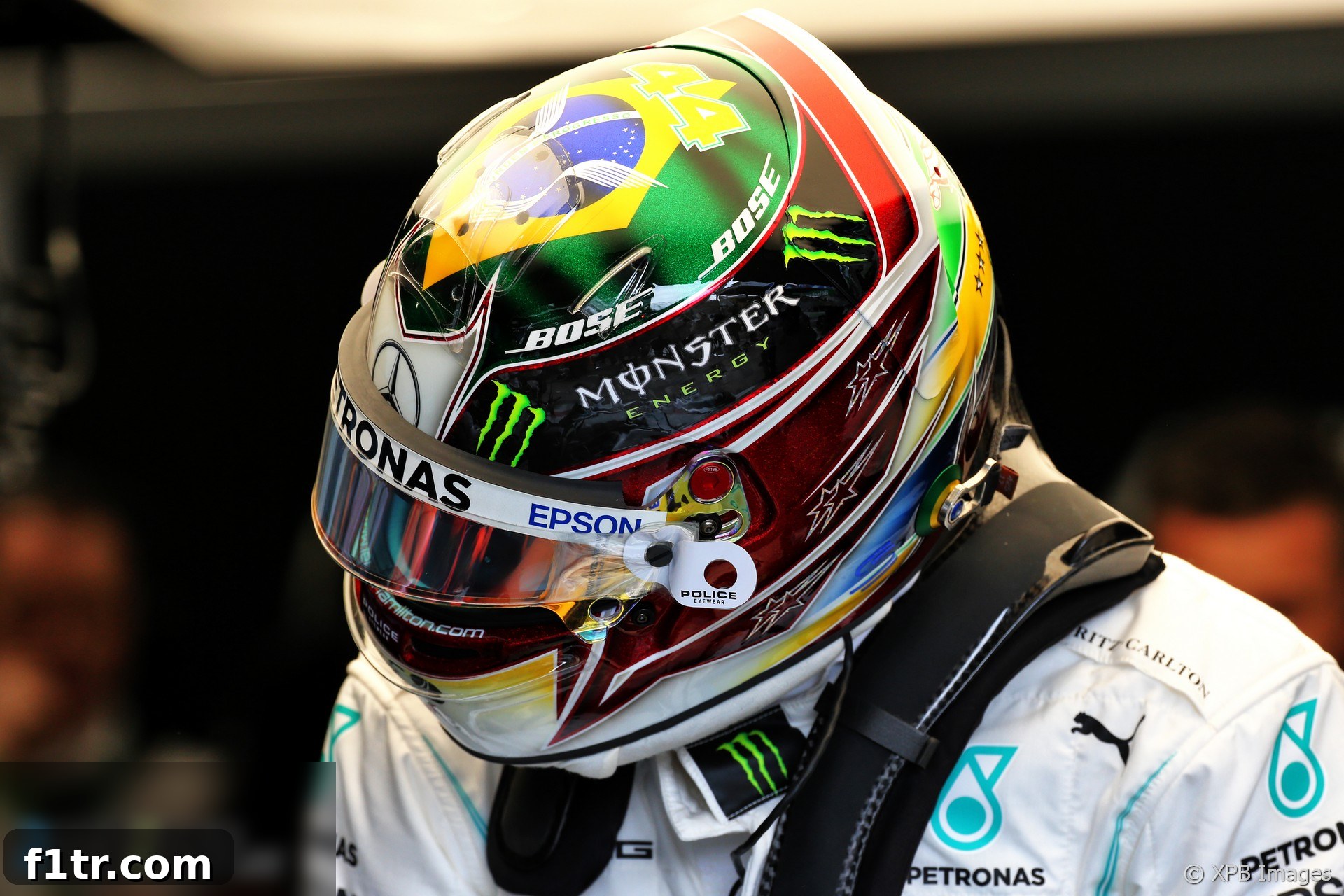
The Grand Prix Drivers’ Association (GPDA) is set to formally urge the FIA to reconsider and ultimately revoke a contentious rule that severely limits how often Formula 1 drivers can change their helmet designs during a season. This initiative comes amid growing dissatisfaction among the grid, with seven-time world champion Lewis Hamilton emerging as a prominent voice in this call for change.
Advert | Become a Supporter & go ad-free
The sentiment against the regulation has been palpable across the F1 paddock for some time. Lewis Hamilton, known for his vibrant and often changing helmet liveries, recently gauged public opinion on the matter through a social media poll. The results were unequivocal: an overwhelming majority of fans expressed their belief that the rule should be scrapped, signaling strong public support for greater driver freedom and creative expression.
The Controversial Helmet Rule: A Battle for Individuality
Introduced at the start of the 2015 Formula 1 season, the regulation was ostensibly put in place to ensure “in order for drivers to be easily distinguished from one another whilst they are on the track.” It stipulates that, with the sole exception of one competition of the driver’s choice, “the crash helmet of each driver must be presented in substantially the same livery at every competition during a championship season.” This directive was intended to aid in rapid driver identification, particularly in high-speed scenarios or during incidents requiring immediate medical response. However, its practical application and the underlying rationale have been heavily debated and widely criticized by those within the sport.
From the outset, many drivers found the rule overly restrictive, stifling their ability to express their personality, commemorate special events, or pay tribute to personal heroes. Lewis Hamilton himself has voiced his bewilderment regarding its necessity. “I don’t fully understand why the rule was brought in,” he stated, reflecting a common sentiment among his peers. For a sport that prides itself on innovation and pushing boundaries, such a seemingly arbitrary restriction on personal expression felt out of place and counterproductive to many.
Drivers’ Voices: The Push for Change by the GPDA
The Grand Prix Drivers’ Association (GPDA) serves as the collective voice for Formula 1 drivers, primarily focusing on safety, welfare, and representation within the sport’s governing bodies. It acts as a crucial liaison between the drivers and the FIA, allowing for unified and impactful advocacy. Recognizing the widespread discontent regarding the helmet design limitations, the GPDA is now preparing to engage directly with the FIA to lobby for the rule’s abolishment. Hamilton expressed optimism about this collaborative approach: “I hope with the GPDA we can work with the FIA to change it.” This collective action underscores the significance of the issue to the drivers, elevating it beyond individual preferences to a matter of collective principle.
The arguments put forth by the drivers extend beyond mere aesthetics. They contend that the rule fails in its primary objective of enhancing driver identification. With modern F1 cars, driver visibility is already challenging. “With the halo you can’t even really see it anyway,” Hamilton pointed out, referring to the cockpit protection device that, while crucial for safety, further obscures a driver’s head and helmet. This makes the premise of the rule – that a static helmet design aids identification – largely moot in the eyes of the competitors. Instead, drivers highlight the profound importance of self-expression and creativity in a sport where individuality often shines through their personal brand.
The Art of Identity: More Than Just a Helmet
For many Formula 1 drivers, their helmet is more than just a piece of safety equipment; it is a canvas, a personal brand statement, and a direct visual link to their identity. Before 2015, it was common practice for drivers to update their helmet designs throughout the season, often incorporating special liveries for home races, celebratory milestones, or as tributes. These unique designs became iconic in their own right, instantly recognizable and deeply cherished by fans. Think of Michael Schumacher’s shifting red designs or Ayrton Senna’s distinctive yellow, green, and blue. These helmets were not just protective gear; they were extensions of the drivers themselves, forming a vital part of their narrative and appeal.
Hamilton passionately articulated this perspective: “I think it’s really important that, I’ve always said, each individual should be able to express their own individuality and their creativeness. That’s something I always got really creative with. You see some people obviously changing their helmets all the time.” The ability to frequently change designs allowed drivers to connect with their fan base, acknowledge significant cultural moments, or simply showcase their artistic flair. Restricting this freedom diminishes a unique aspect of a driver’s persona and limits a rich tradition within the sport.
Lewis Hamilton’s Enduring Tribute to Ayrton Senna
A poignant example of the desire for creative expression, and one that resonates deeply with the argument against the rule, is Lewis Hamilton’s annual tribute helmet for Ayrton Senna. Hamilton, a vocal admirer of the legendary Brazilian driver, consistently adapts his helmet design during the Brazilian Grand Prix weekend to honor Senna’s memory. This year was no exception, as he once again sported a special livery paying homage to his childhood hero.
“I always generally do a helmet in honour of Ayrton during the Brazilian Grand Prix,” Hamilton explained, emphasizing the tradition’s personal significance. “It’s kind of a salute to him.” This gesture is more than just a personal act of remembrance; it’s a powerful acknowledgment of Senna’s enduring legacy, particularly in his home country. “I know that obviously there’s no Brazilian drivers here. And I know how much Brazil misses Ayrton. So it’s really kind of cool, not that they can really see my helmet, but it’s cool just to bring that back each year. Plus he’s the guy obviously that inspired me to do what I do.” His words highlight the emotional weight behind such tributes and their ability to connect with fans on a deeper, more meaningful level than a standardized design ever could.
Beyond Brazil: The Broader Message of Tribute Helmets
The significance of tribute helmets, like Hamilton’s Senna design, extends far beyond individual preference. They represent a bridge between generations of drivers, a nod to the sport’s rich history, and a way for current stars to acknowledge the legends who paved their way. These designs often tell stories, reflecting personal journeys, moments of inspiration, or national pride. For fans, spotting a unique helmet design adds an extra layer of excitement and interest, transforming the headgear into a collectible piece of art and a talking point throughout a race weekend. This interaction fosters greater fan engagement, which is a critical aspect for any global sport seeking to expand its reach and maintain relevance.
The FIA’s rule, while well-intentioned for safety and identification, inadvertently overlooks the cultural and personal value these designs hold. In an era where sports personalization and digital engagement are paramount, restricting such a visible form of expression seems counterintuitive. The drivers’ collective push, led by figures like Hamilton, suggests a growing desire to reclaim this aspect of their identity, ensuring that their helmets can once again serve as dynamic canvases for their stories, passions, and tributes, enriching the sport for both participants and spectators alike.
The Future of Helmet Regulations: Balancing Identity and Order
The debate surrounding F1 helmet restrictions highlights a broader tension between regulatory uniformity and individual freedom within a highly structured sport. While the FIA has a legitimate mandate to ensure safety and clear identification, the arguments put forth by the GPDA and drivers like Lewis Hamilton suggest that the current rule may be an overreach, or at least, no longer fit for purpose in the modern era of Formula 1. The minimal visibility of helmets due to the Halo, coupled with advanced telemetry and digital identification systems, arguably negates the rule’s primary justification.
Moving forward, a constructive dialogue between the FIA and the GPDA will be crucial. Potential compromises could include allowing more than one special design per season, or perhaps even a complete reversal to pre-2015 regulations. The overwhelming feedback from fans through Hamilton’s poll further reinforces the idea that the audience values the personality and creative expression of their favorite drivers. Ultimately, revisiting this rule could not only boost driver morale and allow for more personal storytelling but also enhance fan engagement, making Formula 1 an even more vibrant and visually diverse spectacle.
Advert | Become a RaceFans supporter andgo ad-free
2019 F1 Season Insights
- Crying in the Melbourne car park at 2019 grand prix was my career low – Ocon
- McLaren Racing reports reduced £71 million loss in 2019
- Kvyat: Hockenheim podium last year was “my biggest achievement” so far
- How the FIA’s new encrypted fuel flow meter targets Ferrari’s suspected ‘aliasing’ trick
- “He smashed my office door”: 23 must-see moments from ‘Drive to Survive’ season two
Browse all 2019 F1 season articles