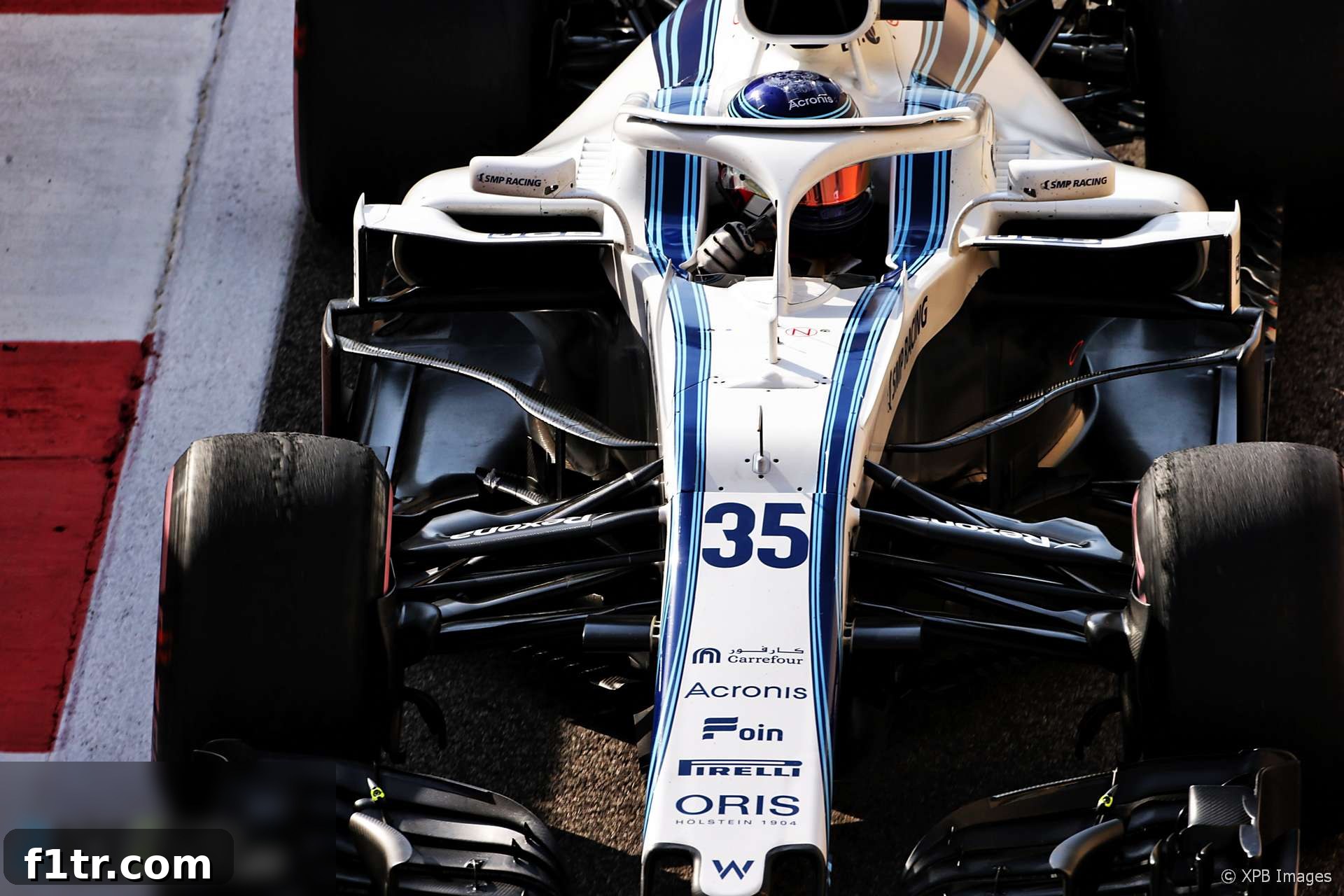
Sergey Sirotkin’s Painful F1 Farewell: A Battle Against Adversity in Abu Dhabi
The checkered flag at the 2018 Abu Dhabi Grand Prix brought a bittersweet end to the Formula 1 season, and for Sergey Sirotkin, it marked a particularly challenging conclusion to his rookie F1 career. Describing his final race as “painful,” the Russian driver fought an uphill battle against an overheating car throughout the entire event, a fitting, albeit unfortunate, microcosm of his season with the struggling Williams team.
A Rookie Season Defined by Struggle: Sergey Sirotkin’s F1 Journey
Sergey Sirotkin entered the elite world of Formula 1 in 2018 with considerable anticipation, having shown promise in junior categories and serving as a test driver for Renault. His promotion to a full-time race seat with Williams, partnering Lance Stroll, was a significant milestone. However, the dream of competing at the pinnacle of motorsport quickly encountered the harsh reality of a team in decline. The 2018 season proved to be one of Williams’ most challenging in its illustrious history, with the FW41 chassis consistently lacking performance and reliability compared to its rivals.
Throughout the season, Sirotkin demonstrated resilience and a methodical approach, often extracting the maximum from a difficult car. He scored his sole championship point at the Italian Grand Prix after Romain Grosjean was disqualified, a testament to his persistent efforts. Despite the team’s struggles, Sirotkin consistently outperformed expectations in qualifying, often putting the car higher on the grid than its true pace suggested. His technical feedback and dedication were widely praised within the team, highlighting his professionalism even in the face of daunting circumstances.
The Troubled FW41: A Car Plagued by Design Flaws
The Williams FW41, powered by a Mercedes engine, was unfortunately not a competitive package. From the outset, the car suffered from fundamental aerodynamic instabilities and a narrow operating window, making it incredibly challenging for drivers to find confidence and consistent pace. Reports from within the team suggested design flaws that led to significant balance issues, especially in cornering, and a general lack of downforce. This meant that Sirotkin and his teammate were often fighting the car itself rather than their competitors, leading to a season where finishing races reliably was often considered a victory in itself.
For a rookie like Sirotkin, this environment presented an extraordinarily steep learning curve. Instead of focusing solely on refining his driving technique and adapting to F1’s demands, he was thrust into a development role, tasked with providing crucial feedback on a fundamentally flawed machine. This added pressure, combined with the intense scrutiny of the F1 paddock, made his debut season an immense test of character and skill.
The Abu Dhabi Grand Prix: A ‘Painful’ Farewell
As the F1 circus arrived in Abu Dhabi for the season finale, Sirotkin was hoping to conclude his demanding year on a positive note. However, fate had other plans. From the moment the lights went out, the race quickly devolved into a relentless struggle, a microcosm of the entire season’s frustrations compressed into 55 laps around the Yas Marina Circuit.
Reflecting on the race, the Williams driver, who ultimately finished last, described it starkly: “This was the most difficult race of a very difficult season.” His post-race comments on social media painted a vivid picture of the relentless challenges he faced, which were not against other competitors but against the very machinery he commanded.
A Battle with the Machine, Not the Field
Sirotkin’s problems began almost immediately. “I didn’t get the best start and straight away I lost a lot of ground and wasn’t in the best position for the next sequences of corners,” he recounted. A poor start often dictates the trajectory of a race, forcing drivers into defensive positions and making overtakes incredibly difficult. For a car already struggling for pace, this early setback was particularly punishing.
However, the real adversary emerged in the form of persistent overheating issues. Sirotkin detailed how he had to contend with “ERS and rims temperatures all the way through my first stint.” The Energy Recovery System (ERS) is a critical component of modern F1 power units, and managing its temperature, alongside tire and brake temperatures (which are influenced by rim heat), is paramount for performance and reliability. When these systems overheat, drivers are forced to lift off the throttle earlier, coast more, and adjust their braking points, all of which compromise lap times and overall race pace.
“I had problems with the car overheating so for one-third of the race I had to do massive cooling,” Sirotkin explained. This wasn’t just a minor adjustment; “massive cooling” implies significant compromises, likely involving opening cooling ducts, short-shifting, or backing off during critical sections of the track. These actions inevitably slow the car down considerably. The constant mental tug-of-war between pushing for pace and protecting the car’s delicate systems is a mentally exhausting ordeal, especially in the high-stakes environment of a Grand Prix.
The Russian driver expressed his profound frustration: “It was such a painful race, such a painful stint. I was trying my best to cool it down as quick as I could but as other cars pitted and came out behind me, I tried to fight, protect and cool the car at the same time and it was a mess.” The dilemma of simultaneously trying to defend position against faster, cooler cars, while also nursing his own ailing machine, created an almost impossible situation. It robbed him of any joy or satisfaction that a final Formula 1 race should ordinarily provide.
“I didn’t enjoy it. It has been a very, very painful race. I really wanted to enjoy it and it’s just so painful to finish the season like this,” he lamented. His words underscore the emotional toll of such a performance, a poignant reflection on a season where the joy of racing was often overshadowed by the sheer effort required to simply manage the car.
The F1 Driver Market: A Swift and Unforgiving Reality
Even before the Abu Dhabi finale, the writing was on the wall for Sergey Sirotkin’s immediate future in Formula 1. Williams had already confirmed its driver lineup for the 2019 season, opting for George Russell, a highly-rated Mercedes junior, and the returning fan-favorite Robert Kubica. This left Sirotkin without a drive, a stark reminder of the brutal competitiveness and often political nature of the F1 driver market.
The decision by Williams, while understandable from a strategic perspective – Russell brought fresh talent and Kubica a compelling narrative and significant sponsorship – was undoubtedly a blow to Sirotkin. Despite the difficulties of the FW41, he had shown flashes of potential and a strong work ethic, characteristics that many believed deserved another season to develop in a more competitive environment.
Hope for an F1 Return: “It’s Not The End”
Despite the setback, Sirotkin’s spirit remained unbroken. His social media message to his supporters encapsulated his determination: “Thanks for all your support, guys. I do really believe it’s not the end.” This sentiment resonated with many fans and pundits who felt he had not been given a fair opportunity to showcase his true abilities due to the car’s limitations.
Indeed, many drivers who lose their F1 seats find paths back to the grid, often after gaining experience in other racing categories or taking on reserve driver roles. Sirotkin himself pursued opportunities outside F1, including sportscar racing and eventually a role as a reserve driver for McLaren and later as a simulator driver for Alpine. This keeps a foot in the door, maintaining relevance within the F1 ecosystem and hoping for an unexpected opening.
The journey of an F1 driver is rarely linear, and the story of a comeback is one that often captures the imagination. For Sirotkin, his single season in F1 was a baptism of fire, but one that undoubtedly forged a stronger, more resilient competitor. His “painful” farewell in Abu Dhabi was not an admission of defeat, but a testament to the immense challenges he faced and a defiant promise that his F1 chapter might not yet be closed.
Looking Back: The 2018 F1 Season and Williams’ Struggles
The 2018 Formula 1 season stands as a significant marker in the recent history of Williams Racing. It was a year that saw the once-dominant team plummet to the very bottom of the Constructors’ Championship, scoring a mere seven points across two drivers, a stark contrast to their glorious past. This downturn wasn’t merely a blip; it signaled deeper systemic issues within the team, which would persist for several more seasons and eventually lead to its sale to Dorilton Capital in 2020.
Sirotkin’s experience in 2018 must be viewed within this broader context. He was a talented rookie tasked with driving a fundamentally uncompetitive car for a team struggling with its identity and direction. While his F1 career may have been cut short, his resilience and measured approach during such a trying period speak volumes about his character and professional qualities, traits that are highly valued in any motorsport discipline.
Related Formula 1 Insights
- Understanding Technical Challenges in Modern F1 Car Development
- The Pressures and Pitfalls Faced by F1 Rookie Drivers
- The Legacy of Williams Racing: From Dominance to Rebuilding
- Dynamics of the Formula 1 Driver Market and Career Longevity
- The Art of Power Unit Management and Temperature Control in F1 Racing