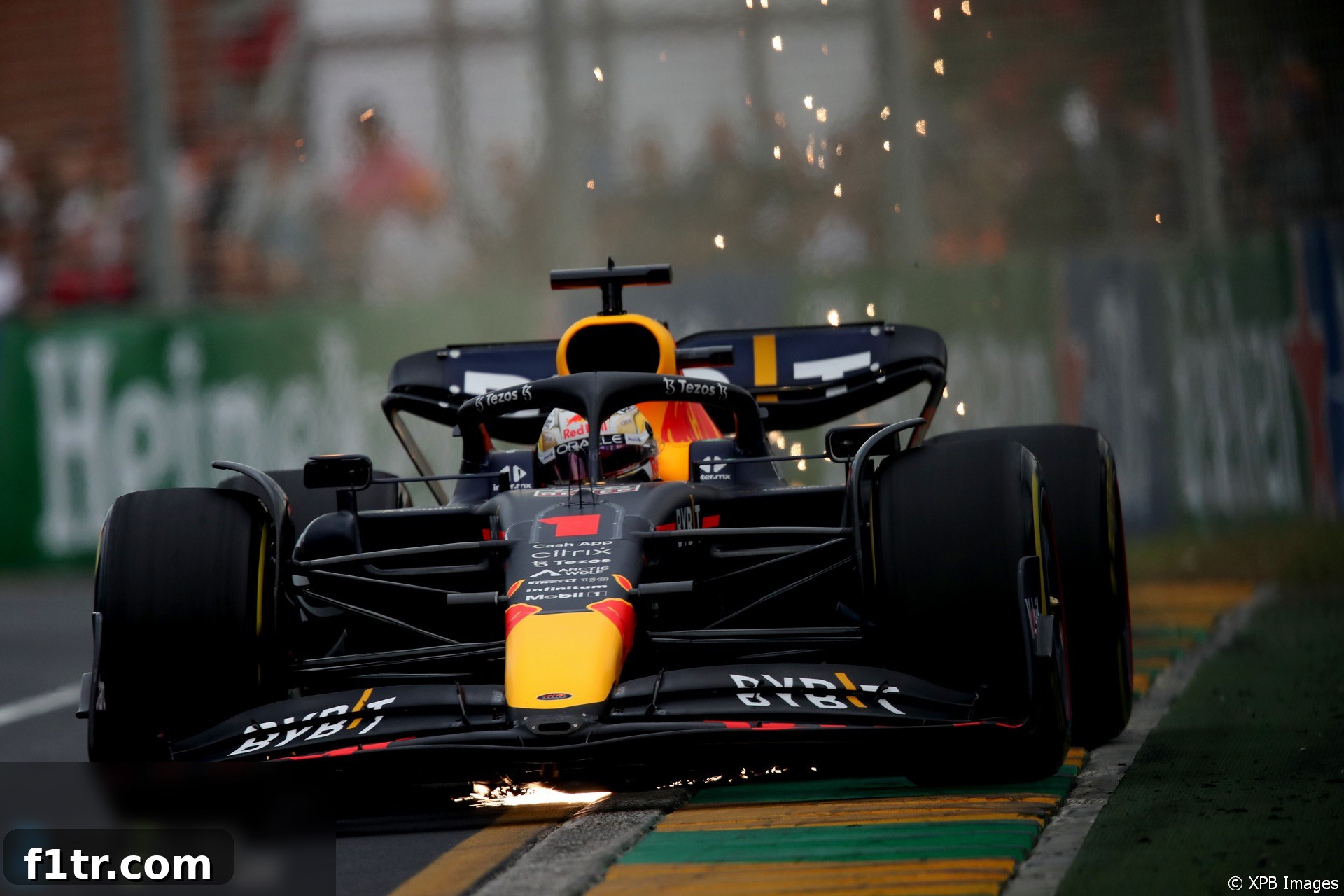
The Australian Grand Prix has long held a revered status in the Formula 1 calendar, often serving as the traditional season-opener. Its iconic Albert Park Circuit, set against the stunning backdrop of Melbourne, usually presents teams with a challenging enigma, shrouded in pre-season mystery and limited data. However, for the 2022 season, the narrative shifted. With two intense race weekends already concluded in Bahrain and Saudi Arabia, and two comprehensive Friday practice sessions under their belts at a dramatically revised Albert Park layout, teams arrived in Melbourne equipped with a wealth of data. This unprecedented insight made deciphering the early weekend performances far more straightforward, offering a clearer preview of the potential contenders and challenges.
The Australian Grand Prix: A New Era at Albert Park
The 2022 Australian Grand Prix marked a significant evolution for the Albert Park Circuit. Extensively reconfigured, the track featured several layout changes designed to enhance racing and increase speed. Corners were widened, chicanes removed, and the overall flow improved, shortening the lap distance to 5.28 kilometres. This modernisation, aimed at injecting more speed and overtaking opportunities, added another layer of intrigue to a season already buzzing with excitement over radical new technical regulations. Despite its historical role as a season-opener, the third round of the championship in Melbourne this year carried the weight of accumulated knowledge, allowing for more informed analysis of team performances from the outset.
Ferrari vs. Red Bull: The Battle Heats Up in Melbourne
The opening rounds of the 2022 Formula 1 season had already established a compelling rivalry between Ferrari and Red Bull Racing. Charles Leclerc, driving for Ferrari, secured a dominant victory at the Bahrain Grand Prix, expertly fending off Max Verstappen and the Red Bull challenge, which ultimately succumbed to reliability issues. Red Bull, however, mounted a swift comeback in Saudi Arabia, where Verstappen showcased their raw speed and strategic prowess with an effective low-downforce setup on the high-speed Jeddah circuit, clinching the win. This ebb and flow set the stage for Melbourne, with both teams eager to assert their dominance on a unique, revamped track.
Heading into the Australian Grand Prix weekend, reigning world champion Max Verstappen remained cautiously optimistic about Red Bull’s prospects at Albert Park. Prior to the first practice session, he acknowledged the car’s inherent top-speed advantage but suggested Ferrari might still hold an edge, particularly on the straights. “We definitely have good top speed but I wouldn’t say we are quicker,” Verstappen stated on Friday morning. “I personally think the Ferrari is a rocket on the straight, but I don’t know. Maybe some other people might disagree, but it also depends on the wing level you take.” His comments highlighted the critical balance between outright speed and optimal downforce, a decision that would prove crucial for qualifying and race pace on the newly configured circuit.
Friday Practice: A Glimpse into the Weekend’s Pace
As the sun set on Friday’s practice sessions, a clear picture began to emerge. The Red Bull drivers, Max Verstappen and Sergio Perez, emphatically confirmed their car’s straight-line speed capabilities, dominating the speed trap readings in Sector 2. They were the only cars on track to surpass the 320 km/h (200 mph) barrier, underscoring their power unit and aerodynamic efficiency in low-drag configurations. However, it was Charles Leclerc in the Ferrari who ultimately topped the timing sheets, laying down a formidable lap almost a quarter of a second faster than Verstappen across the entire 5.28-kilometre circuit. This demonstrated Ferrari’s impressive overall package and their ability to extract performance through the newly flowing corners.
Despite setting the fastest time of the day, Leclerc remained grounded, acknowledging that Ferrari still had significant work ahead of them to maintain their advantage over Red Bull, especially as they geared up for the critical qualifying session. “For me, today was a bit of a harder Friday,” Leclerc commented, reflecting on the challenges faced. “FP1 was a bit tricky, I improved in terms of driving in FP2, but there is still quite a bit of work to do.” This cautious assessment hinted at the underlying competitiveness of their rivals and the ongoing pursuit of perfect car balance.
Leclerc’s measured optimism was well-founded, particularly given Verstappen’s own account of his fastest lap. The Red Bull driver revealed that his crucial qualifying simulation run had been “compromised” by Lance Stroll’s Aston Martin in the final sector. While Stroll wasn’t deemed slow enough to warrant an official impediment, the four-tenths of a second Verstappen reportedly lost to Leclerc in that single sector alone strongly suggested that the Red Bull held considerable untapped potential. For Christian Horner’s team, the primary objective for Saturday morning would be to fine-tune their downforce levels, optimising for outright pace in qualifying without sacrificing the delicate balance of the car for the demanding race conditions.
Verstappen further elaborated on his Friday experience, stating, “I think FP1 and the beginning of FP2 we were lacking a bit of balance. Then I think for the final run we changed the car around a bit and I felt a lot happier. We were a tiny bit off Ferrari but I do think that we can maybe make it a bit closer.” This indicated that Red Bull was progressively dialling into the circuit, and with further optimisation, they expected to close the gap to Ferrari, promising another nail-biting showdown for pole position.
Mercedes’ Struggles Continue: A Challenging Weekend Ahead
While Ferrari and Red Bull appear poised for another thrilling head-to-head battle, Mercedes-AMG Petronas F1 Team found themselves in a familiar, yet frustrating, position. After a difficult start to the season grappling with the new regulations, George Russell had expressed some hope that the Albert Park circuit, with its recent revisions, might prove less challenging for the Silver Arrows than the high-speed Jeddah track. However, the reality of Friday’s performance painted a different picture. Both Russell and his teammate Lewis Hamilton found themselves languishing outside the top ten, visibly struggling with the persistent issue of ‘porpoising’ on the straights and a noticeable lack of speed through the corners.
Porpoising, the aerodynamic phenomenon causing the car to bounce violently at high speeds, continued to plague Mercedes, making it difficult for their drivers to extract maximum performance and confidence. This, coupled with their car’s inability to generate sufficient speed through the newly flowing corners, left them significantly adrift of the front-running pace. Andrew Shovlin, Mercedes’ Trackside Engineering Director, provided further insight into their struggles, pinpointing tyre temperature as a major factor. “We’re finding it hard to generate tyre temperature here so that’s the big thing we need to work on overnight,” Shovlin explained.
He highlighted that Mercedes had been more competitive during the warmer conditions of FP1, only to lose ground as temperatures dropped in the afternoon session. “We were clearly more competitive in the first session than in the cooler conditions of the afternoon session, and the data we’re seeing from the car is supporting the fact we’re just not hot enough,” Shovlin elaborated. This created a “vicious circle” where drivers lacked the confidence to push hard through fast corners, which in turn prevented the tyres from reaching their optimal operating temperature. Breaking this cycle would be paramount for Mercedes if they hoped to improve their grip and, consequently, their lap times, making their outlook for qualifying and the race appear particularly challenging.
Midfield Momentum: Alpine and McLaren Find Their Stride
In stark contrast to Mercedes’ performance woes, the midfield battle delivered some pleasant surprises, with Alpine and McLaren showcasing significant improvements. While the front-runners wrestled for tenths, these teams focused on consolidating and, ideally, elevating their performance. Both teams enjoyed arguably their strongest starts to a race weekend of the 2022 season so far. Fernando Alonso, in particular, demonstrated Alpine’s newfound pace, briefly topping a session before concluding the day as the fourth fastest driver, remarkably ahead of Sergio Perez’s Red Bull. His teammate, Esteban Ocon, also had a strong showing, finishing Friday in sixth place, signalling Alpine’s impressive step forward.
However, Ocon remained realistic about the fierce competition that lay ahead, particularly in the tightly packed midfield. “We know it’s all about tomorrow and Sunday and we can already see that it’s going to be very tight like it was in Bahrain and Jeddah,” he noted. “The competition is close, especially in the midfield, so we will be working hard to put it all together for qualifying.” This sentiment underscored the intense fight for every position and the critical importance of a flawless qualifying performance to secure a strong grid slot.
McLaren also experienced a resurgence, with Lando Norris optimistically describing their Friday as the team’s “best Friday” of the season. Despite this positive start, Norris was quick to temper expectations for Sunday’s race, suggesting that McLaren’s strengths might be more apparent in qualifying. “I think we have a bit more work to do in the long run,” Norris admitted. “I’m a bit more confident in the short run. I think a bit of it is our car limitation and a bit of that is exposing a bit more in the high fuel pace.” This indicated that while McLaren had made strides in single-lap pace, maintaining that performance over a full race distance, especially with high fuel, remained a challenge. Meanwhile, Valtteri Bottas continued his strong form for Alfa Romeo, consistently placing in the top 10, further highlighting the tight and unpredictable nature of the midfield battle, where every tenth of a second would count.
Tyre Strategy: The C5 Dilemma and Race Day Decisions
Tyre management emerged as a crucial strategic element during the first two race weekends of the 2022 season, prompting significant interest in how the Pirelli compounds would perform at the revised Albert Park circuit. In particular, the C5 tyre, the softest compound available, was under scrutiny for its durability and performance envelope. Following Friday’s running, Pirelli’s motorsport director, Mario Isola, shared observations that would undoubtedly influence teams’ race strategies for Sunday.
“We observed some graining on the medium and soft in particular during both sessions,” Isola explained. Graining, a phenomenon where rubber peels off the tyre surface due to sliding, directly impacts degradation and significantly shortens a tyre’s effective lifespan. This finding suggested that managing tyre wear would be a paramount factor in the Australian Grand Prix. Isola further predicted that, while the soft compound would be essential for qualifying to extract maximum single-lap performance, the race strategy for most teams would likely revolve around the two harder compounds – the C2 (hard) and C3 (medium). This would likely lead to a multi-stop race, with teams seeking to balance performance with longevity.
The inherent track evolution at Albert Park, where the circuit progressively gains grip as more rubber is laid down, also adds an element of uncertainty. “With the track evolution here, we’ve not quite seen the full picture yet so the final data we get from FP3 tomorrow will also be important in terms of strategy,” Isola concluded. This emphasises that the strategic landscape could still shift significantly, making the final practice session and the subsequent analysis critical for nailing down the optimal race plan.
Combined Practice Times: A Snapshot of the Field
| Position | Number | Driver | Team | FP1 time | FP2 time | Gap | Laps |
|---|---|---|---|---|---|---|---|
| 1 | 16 | Charles Leclerc | Ferrari | 1’20.377 | 1’18.978 | 47 | |
| 2 | 1 | Max Verstappen | Red Bull | 1’20.626 | 1’19.223 | 0.245 | 44 |
| 3 | 55 | Carlos Sainz Jnr | Ferrari | 1’19.806 | 1’19.376 | 0.398 | 50 |
| 4 | 14 | Fernando Alonso | Alpine-Renault | 1’21.229 | 1’19.537 | 0.559 | 43 |
| 5 | 11 | Sergio Perez | Red Bull | 1’20.399 | 1’19.658 | 0.680 | 40 |
| 6 | 31 | Esteban Ocon | Alpine-Renault | 1’21.004 | 1’19.842 | 0.864 | 52 |
| 7 | 77 | Valtteri Bottas | Alfa Romeo-Ferrari | 1’21.247 | 1’20.055 | 1.077 | 48 |
| 8 | 4 | Lando Norris | McLaren-Mercedes | 1’20.878 | 1’20.100 | 1.122 | 46 |
| 9 | 10 | Pierre Gasly | AlphaTauri-Red Bull | 1’21.701 | 1’20.142 | 1.164 | 53 |
| 10 | 3 | Daniel Ricciardo | McLaren-Mercedes | 1’21.155 | 1’20.203 | 1.225 | 47 |
| 11 | 63 | George Russell | Mercedes | 1’21.457 | 1’20.212 | 1.234 | 51 |
| 12 | 22 | Yuki Tsunoda | AlphaTauri-Red Bull | 1’21.289 | 1’20.424 | 1.446 | 56 |
| 13 | 44 | Lewis Hamilton | Mercedes | 1’21.027 | 1’20.521 | 1.543 | 48 |
| 14 | 18 | Lance Stroll | Aston Martin-Mercedes | 1’21.869 | 1’20.611 | 1.633 | 52 |
| 15 | 24 | Zhou Guanyu | Alfa Romeo-Ferrari | 1’21.821 | 1’21.063 | 2.085 | 44 |
| 16 | 20 | Kevin Magnussen | Haas-Ferrari | 1’23.186 | 1’21.191 | 2.213 | 40 |
| 17 | 5 | Sebastian Vettel | Aston Martin-Mercedes | 1’21.661 | No time | 2.683 | 18 |
| 18 | 23 | Alexander Albon | Williams-Mercedes | 1’22.754 | 1’21.912 | 2.934 | 52 |
| 19 | 47 | Mick Schumacher | Haas-Ferrari | 1’24.349 | 1’21.974 | 2.996 | 37 |
| 20 | 6 | Nicholas Latifi | Williams-Mercedes | 1’23.924 | 1’22.307 | 3.329 | 48 |
Support RaceFans
RaceFans thrives on the generous support of its dedicated readers. By contributing a small monthly or annual sum, you play a vital role in covering the operational costs, hosting, and ongoing development of RaceFans, ensuring its continued growth and high-quality content for all Formula 1 enthusiasts.
Become a RaceFans Supporter today and enjoy an ad-free browsing experience. Discover more about the benefits and sign up through the links below:
- Become a RaceFans Supporter
- RaceFans Supporter FAQ
Related Articles: 2022 Australian Grand Prix
- Aston Martin’s porpoising “does not allow us to exploit the progress the guys have made”
- Wolff puts Mercedes’ odds of championship victory at “two to eight”
- FIA responds to Verstappen’s criticism of Safety Car performance
- “So this is the end of our race, I guess?” How Alonso’s luckless Australian GP unfolded
- Two-degree temperature rise led to Hamilton’s “difficult position” radio message
Browse all 2022 Australian Grand Prix articles