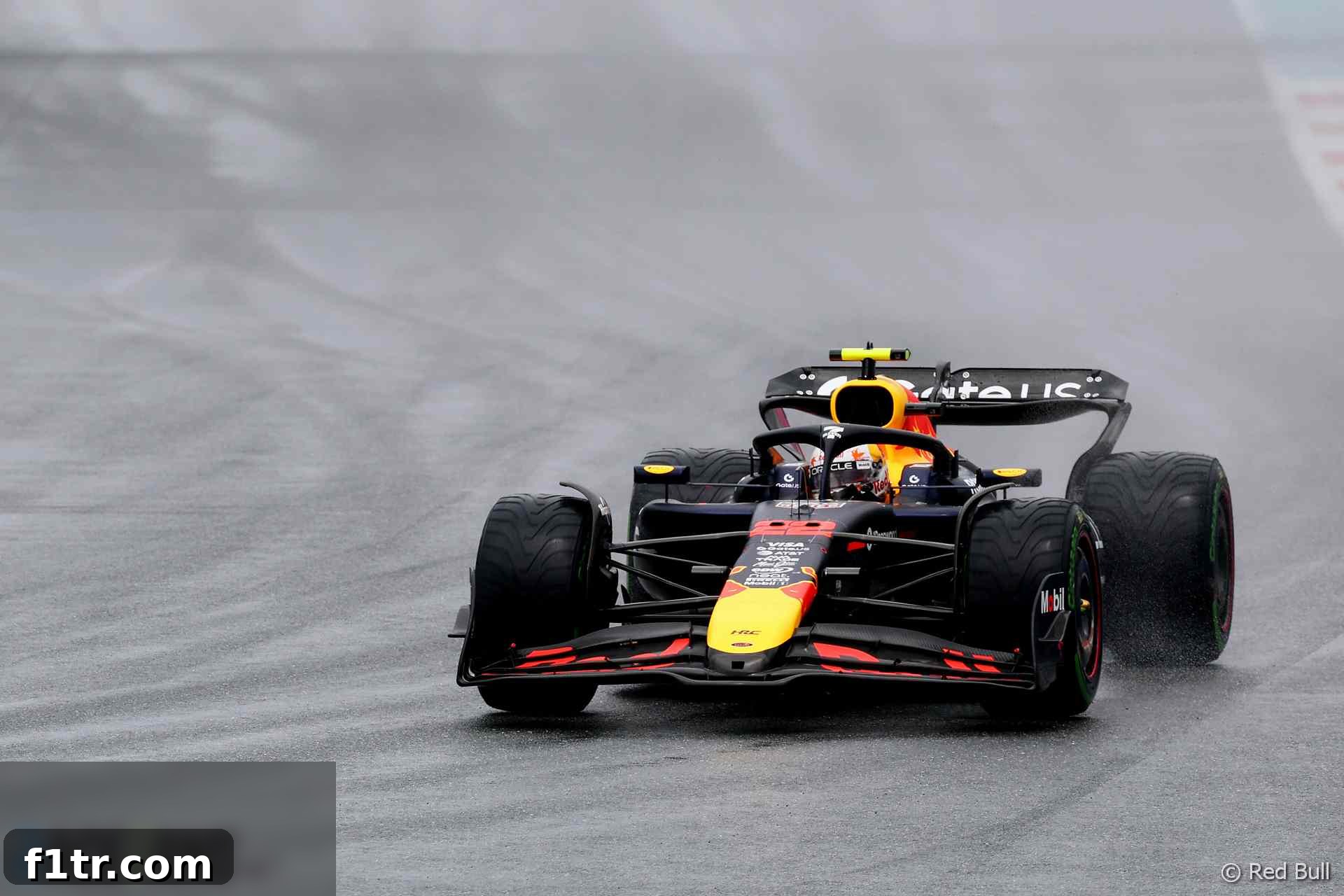
In a dramatic conclusion to a recent sprint race, Yuki Tsunoda, the spirited driver for Red Bull’s sister team, found himself at the receiving end of a perplexing instruction from his race engineer, one that has since sparked considerable discussion within the Formula 1 paddock. As the race neared its end under Safety Car conditions, Tsunoda was told to deliberately drop back from the cars ahead – an order that immediately raised eyebrows and left the Japanese driver visibly bewildered.
The unusual directive came while Tsunoda was holding a provisional tenth position, tucked in a line of cars behind the Safety Car. With the checkered flag looming, such an instruction to create a gap is highly unconventional, especially when every position can yield crucial points or improve grid standing for future races. Tsunoda’s race engineer, Richard Wood, conveyed the message, but conspicuously withheld the reasoning, repeatedly assuring Tsunoda that a full explanation would be provided once they returned to the garage.
This cryptic command wasn’t issued in a vacuum. It followed a significant development concerning Tsunoda’s more experienced teammate, Max Verstappen. Earlier in the race, Verstappen, who was running ahead in fourth place, had incurred a ten-second time penalty for an incident during a pit stop involving a collision with Andrea Kimi Antonelli. This penalty significantly reshaped the race’s immediate outcome for Red Bull’s lead driver and undoubtedly played a pivotal role in the subsequent instructions given to Tsunoda.
Furthermore, the atmosphere was thick with uncertainty, as multiple other drivers were simultaneously under investigation for various on-track infringements. This precarious situation likely prompted a flurry of strategic calculations within the Red Bull pit wall. Initially, Wood had advised Tsunoda to do the opposite of what was eventually commanded: to maintain close proximity to the cars in front. “Liam [Lawson], two cars ahead of you, is under investigation so he may get a penalty,” Wood had communicated, highlighting the potential for penalties to shuffle the order. He reiterated this strategy on the final lap, stating, “This is the final lap, keep it tight, keep it tight. We will finish under the Safety Car but keep it tight in case there’s penalties ahead.” This initial advice underscores the team’s awareness of the unfolding investigations and their desire to capitalize on any advantage.
However, as the Safety Car led the pack through Turn 17 on that very final lap, the strategy took a sudden and unexpected turn. Wood’s voice crackled over the radio, delivering the contradictory instruction: “Drop back to eight car lengths behind Bearman, please.” The abrupt shift from “keep it tight” to “drop back” left Tsunoda understandably confused and questioning the rationale behind such a late-stage amendment to race strategy. This change of heart from the pit wall in such a crucial moment speaks volumes about the dynamic and often high-stakes decision-making that occurs in the pressured environment of Formula 1 racing.
The rules governing Safety Car periods in Formula 1 explicitly mandate that drivers must remain within a maximum of ten car lengths of the vehicle directly ahead. Red Bull’s instruction to drop back to “eight car lengths” suggests a meticulous, albeit risky, interpretation of these regulations. By specifying eight car lengths, the team likely aimed to create a strategic buffer – perhaps to avoid being caught in a potential domino effect of penalties, or to allow for positions to be redistributed more favorably after investigations concluded – while carefully staying within the legal limit. This tightrope walk between strategic maneuvering and regulatory compliance is a constant challenge for F1 teams, and this incident provides a stark example of such an attempt.
Tsunoda’s bewilderment was palpable. His radio responses of “What? What?” echoed the confusion that many spectators and pundits felt. Wood’s repeated, almost automated, reply – “I’ll explain in the garage, I’ll explain in the garage” – while intended to reassure, only served to heighten the mystery for the driver in the cockpit. Tsunoda pressed for clarity: “You mean like make a gap or what? To the car in front?” The urgency in his voice underscored the pressure and the need for immediate, actionable information during such a critical phase of the race.
Upon returning to the garage, Tsunoda vocalized his frustration, describing the end-of-race communication as “terrible.” This candid feedback highlights the immense importance of clear, concise, and timely communication between driver and engineer, especially when split-second decisions can have significant ramifications. Wood acknowledged the late nature of the request, again promising a more detailed debrief. Tsunoda’s final plea for validation – “Did I do the right thing or what? Did I do the right thing?” – perfectly encapsulates the psychological burden placed on drivers to execute complex instructions, even when their underlying purpose remains obscure. Wood’s simple “Yes you did, thank you very much” finally offered the much-needed affirmation, but the lingering questions about the strategic intent remained.
The immediate impact of this intricate strategic play, at least concerning Max Verstappen’s penalty, yielded little immediate benefit. Verstappen’s ten-second time penalty ultimately demoted him from his provisional fourth position all the way down to 17th in the initial classification. While the team might have hoped Tsunoda’s instruction to drop back could somehow mitigate this or position him better for subsequent penalties affecting other drivers, the initial outcome was significant and unfavorable for Verstappen. The true finality of the race classification, however, remained fluid, pending the stewards’ decisions on the multitude of other ongoing investigations. These investigations had the potential to further reshuffle the standings, making Red Bull’s late strategic gambit understandable, even if its direct efficacy wasn’t immediately apparent.
This incident serves as a fascinating case study in the high-pressure environment of Formula 1. It underscores the constant interplay of rules, strategy, communication, and human emotion that defines the sport. Teams are always looking for marginal gains, for legal loopholes, or for ways to adapt to rapidly changing circumstances. Red Bull’s decision to instruct Tsunoda to create a gap, even if it puzzled the driver at the time, was undoubtedly an attempt to navigate a complex, penalty-laden endgame. It highlights the strategic chess match played out not just on the track, but also between the pit wall and race control, with drivers acting as crucial, if sometimes confused, executors of these intricate plans.
Tsunoda’s Radio Messages: A Glimpse into the Race End Drama
| Wood | Yuki, race update, you’re currently, P10, P10. There’s three laps remaining, including this one. |
| Wood | So Liam, two cars ahead of you, is under investigation so he may get a penalty. |
| Tsunoda | I can’t see the tyre temp. I want to see it. |
| Wood | Display seven, display seven. |
| Wood | Okay, so this is the final lap, keep it tight, keep it tight. We will finish under the Safety Car but keep it tight in case there’s penalties ahead. |
| Wood | Correcting himself Okay so we need to be within eight… So, drop back to eight car lengths, eight car lengths behind Bearman please. Eight car lengths behind. |
| Tsunoda | What? What? |
| Wood | I’ll explain in the garage. I’ll explain in the garage. |
| Tsunoda | You mean like make a gap or what? To the car in front? |
| Wood | Yeah, recharge on. I’ll explain in the garage. |
| Tsunoda | Mate… |
| Tsunoda | I’m sorry about that. Communication, man, it’s like [unclear] just terrible. |
| Wood | Yeah, the request came late. I’ll explain in the garage. |
| Tsunoda | Did I do the right thing or what? Did I do the right thing? |
| Wood | Yes you did, yes you did. Thank you very much. |