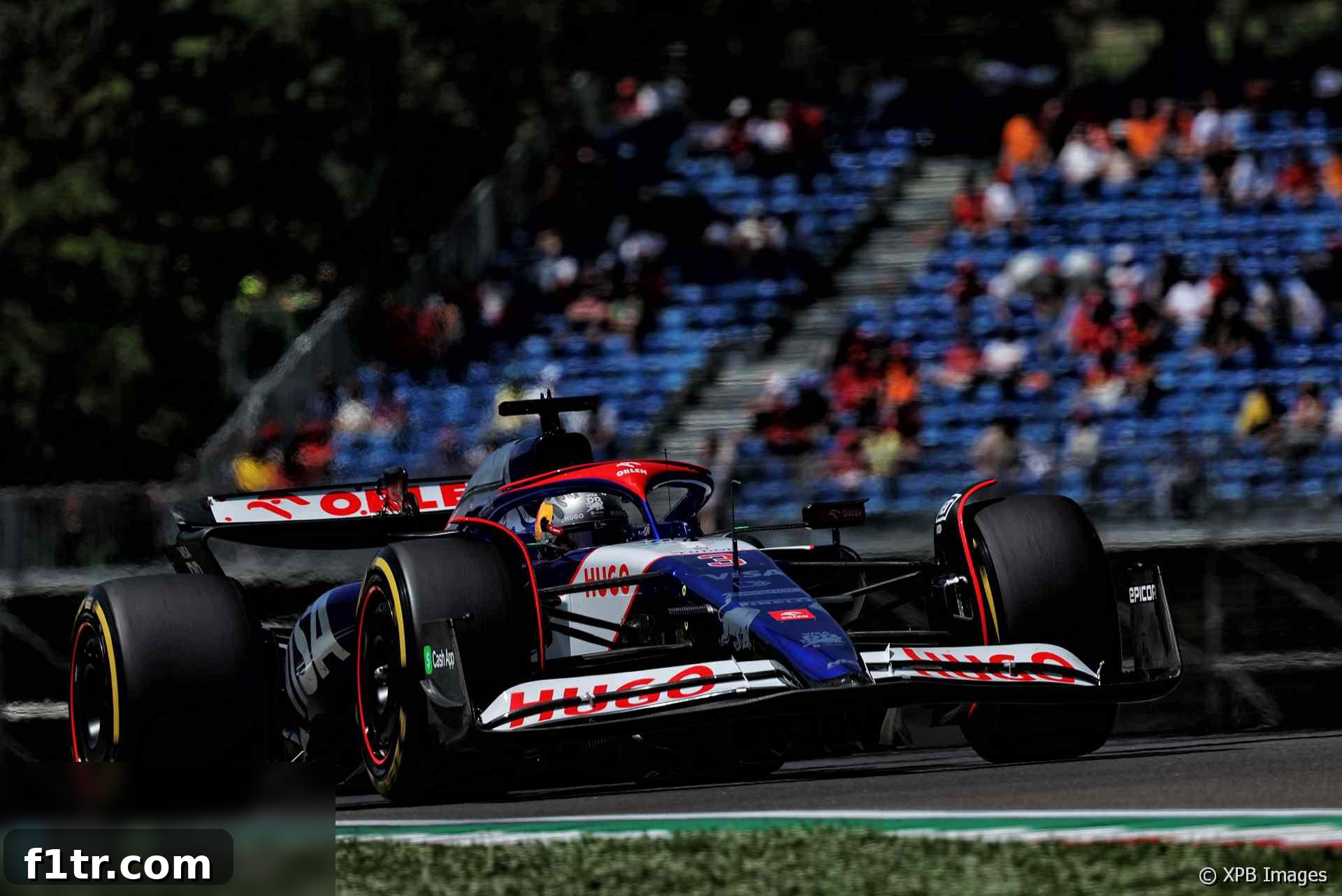
Formula 1, a sport synonymous with speed, precision, and relentless pursuit of performance, places paramount importance on safety. While the spotlight often shines on high-speed crashes during competitive laps, incidents, however rare, can occur even when the chequered flag has fallen. Such was the case at the Emilia-Romagna Grand Prix, where the RB Formula 1 team found itself in the stewards’ crosshairs, receiving a fine of £4,287 (€5,000) for an unusual, yet “potentially dangerous,” post-session encounter.
The Post-Chequered Flag Drama Unfolds at Imola
Advert | Become a Supporter & go ad-free
The incident in question involved Haas driver Kevin Magnussen and RB’s Daniel Ricciardo during the concluding moments of the final practice session. As the session concluded and the chequered flag waved, signaling the end of competitive running, drivers typically begin their cool-down laps, often preparing for practice starts at designated areas. It was during this transitional phase that the unexpected occurred.
A Close Call at High Speed
Magnussen, maintaining a considerable speed of approximately 225kph, was traversing the section of the track from Acque Minerali to Variante Alta – a notorious stretch known for its demanding corners and elevation changes. As he came over the crest of a hill, his path was suddenly obstructed by Ricciardo’s RB, which was moving at a significantly slower pace. To avoid a high-speed collision, Magnussen was forced to take immediate and decisive evasive action, swerving sharply to the right and momentarily leaving the tarmac onto the grass.
This heart-stopping moment, thankfully, did not result in contact or injury, but it starkly highlighted the inherent risks that persist even outside of flat-out racing. The speed differential, coupled with the blind nature of the hill crest, created a cocktail of factors that could have led to a far more severe outcome.
Stewards’ Deliberation: A Complex Case of Post-Session Protocols
The Formula 1 stewards, tasked with upholding the sport’s regulations and ensuring fair play and safety, meticulously investigated the incident. They acknowledged that this was not a straightforward case of “impeding,” a common infraction where a slower car obstructs a faster one on a flying lap. Their notes reflected this nuance: “This means it is not classically ‘impeding’ as it did not prevent Magnussen from setting a fast time.”
Understanding Ricciardo’s and Magnussen’s Actions
The stewards delved into the context of both drivers’ actions. They understood that Ricciardo was driving slowly with a legitimate purpose – he was preparing for a practice start, a routine procedure at the end of practice sessions to gather data for race day. This action is fully within the regulations.
Equally, Magnussen’s decision to maintain speed after the chequered flag was also deemed permissible. Drivers often continue at a brisk pace on their cool-down laps before slowing down, and there are no specific rules mandating a reduced speed immediately upon crossing the finish line, beyond reasonable safety considerations.
The Confluence of Factors: Blind Spot and Teammate Avoidance
The incident’s location played a critical role in its perceived danger. Occurring after the crest of a hill, visibility for both drivers was severely limited. The stewards noted, “There was no chance that Ricciardo was likely to see Magnussen in time, and vice versa.” This blind spot was a significant contributing factor to the near-miss.
Furthermore, Ricciardo’s position on the track was influenced by another mitigating circumstance: he was actively avoiding his RB teammate, Yuki Tsunoda, who was also maneuvering to prepare for his own practice start. This sequence of events meant that Ricciardo found himself near the racing line at the time Magnussen approached, inadvertently placing him in a precarious position.
An Unusually Timed Incident
Adding another layer of complexity, the stewards highlighted that the situation was “even more unusual” because it occurred following a late restart to the practice session. Such late restarts can disrupt drivers’ usual end-of-session routines, leaving some with insufficient time to set another lap or complete planned procedures, potentially altering their track behavior as the chequered flag falls.
The Verdict: Team Responsibility and Duty of Care
Despite the array of mitigating circumstances, the stewards ultimately held the RB team responsible. Their primary failure was in communication. They observed: “Given the circumstances, it was important for the team to give sufficient warning of a fast car the stewards approaching, which they failed to do until Magnussen was at the scene. This failure caused a potentially dangerous situation.”
The Importance of Real-Time Information
In the high-stakes environment of Formula 1, teams are equipped with sophisticated telemetry and real-time tracking systems, allowing them to monitor the positions and speeds of all cars on track, not just their own. This critical information is meant to be relayed to their drivers, especially when potential hazards arise. In this instance, the delay in relaying information to Ricciardo about Magnussen’s rapid approach was deemed a breach of their “duty of care.”
The concept of “duty of care” in motorsport extends beyond the competitive phase of a session. It encompasses the entire time a car is on track, obliging teams to ensure their drivers operate in a manner that prioritizes safety for themselves and others. This responsibility remains paramount, even after the chequered flag has been waved and the pursuit of lap times has ceased.
A Reduced Fine, No Driver Penalty
Taking into account the multitude of unusual and mitigating factors – the blind crest, Ricciardo avoiding Tsunoda, the legitimate purpose of practice starts, and the unusual session restart – the stewards opted for a significantly reduced fine for the team compared to previous incidents. Crucially, no penalty was issued to Daniel Ricciardo himself, acknowledging that his actions, while contributing to the situation, were not reckless or intentional and were influenced by external factors and limited visibility.
This decision underscores the stewards’ nuanced approach, balancing strict adherence to safety protocols with an understanding of the dynamic and often unpredictable nature of Formula 1 operations. They had issued penalties for free practice incidents previously, but those generally occurred prior to the chequered flag, often involving impeding during competitive laps.
Broader Implications for F1 Safety Protocols
This incident, though minor in its immediate physical consequences, serves as an important reminder and a potential catalyst for reviewing post-chequered flag procedures in Formula 1. While practice starts are vital for race preparation, and drivers are permitted to return to the pits at speed, the confluence of these actions, especially on blind sections of the track, demands stringent communication protocols.
The F1 paddock is a continually evolving environment, always striving for greater safety. Incidents like the one involving Magnussen and Ricciardo, even in practice, prompt a re-evaluation of existing guidelines and communication strategies. It reinforces the need for teams to remain hyper-vigilant and proactive in their real-time communication with drivers, ensuring that potential hazards are identified and averted well in advance. This ensures that the thrill of Formula 1 racing never comes at the expense of its participants’ well-being, from the first green light to the final wave of the chequered flag and beyond.
Advert | Become a RaceFans supporter andgo ad-free
2024 Emilia-Romagna Grand Prix Coverage
For more detailed analysis and updates from the 2024 Emilia-Romagna Grand Prix, explore our comprehensive coverage:
- Ferrari expect qualifying gain after spotting rivals’ power strategy tactics
- How Alonso and Stroll copied Verstappen’s tactic plus more unheard Imola radio
- Verstappen beats Hamilton’s winning rate with Emilia-Romagna GP victory
- How Russell resisted losing position to Hamilton “for no reason” with extra stop
- “Lando’s found some pace”: Unheard radio from Verstappen-Norris Imola duel
Browse all 2024 Emilia-Romagna Grand Prix articles