The Circuit of the Americas, a premier venue on the Formula 1 calendar, is set for extensive resurfacing during the off-season. This crucial maintenance work aims to eliminate the persistent bumps that plagued drivers throughout the year, impacting both performance and comfort. This comprehensive report brings the final paddock insights from a bustling Formula 1 weekend in Austin, offering a glimpse into critical discussions, behind-the-scenes moments, and the dramatic conclusion of the championship battle.
8:30am
The journey from New Braunfels to the Circuit of the Americas begins with a significant development: my esteemed, now-retired friend Forrest Bond, whose hospitality I’ve enjoyed for the past four nights, has generously entrusted me with his invaluable RaceFax archive. This acquisition is more than just a collection of documents; it represents a treasure trove of incisive motorsport writings now poised to be shared with new generations of enthusiasts. For those unfamiliar with its profound impact, RaceFax pioneered the first electronic motorsport news service, revolutionizing transparency in Formula 1. A prime example of its fearless reporting was the groundbreaking publication of the full Concorde Agreement in 2009, an act that offered unprecedented insight into the sport’s commercial and governance structures, forever changing how information was disseminated within F1.
My drive north spans just under an hour, allowing me to arrive and park by 9:30am. As I navigate the parking lot en route to the shuttle stop, a captivating display of gleaming, classic Chevrolet Corvettes immediately catches my eye. This unexpected automotive spectacle turns out to be more than just a static exhibition; these iconic American sports cars are destined to ferry the drivers during the pre-start parade, adding a distinct local flavour to the Grand Prix festivities.
Despite being thoroughly impressed by these symbols of American motoring heritage, I arrive in the bustling paddock with ample time to engage in conversations with various key figures. The primary topics of discussion revolve around the impending, seismic shifts scheduled for the 2021 F1 season. These include revolutionary changes to the sport’s financial structures, such as the introduction of a budget cap designed to level the playing field, and fundamental alterations to its governance. These discussions represent the next significant evolution for Formula 1, promising a more equitable and sustainable future. I look forward to sharing these insightful perspectives and detailed analyses with our readers very soon, exploring the intricate implications of these transformative regulations.
10:30am
A fascinating, brief conversation with Dennis Dean, a distinguished FIA steward and the esteemed chairman of the FIA Land Speed Record Commission, provides an intriguing update. Dean recently undertook a critical observer role during the Bloodhound SSC’s shakedown tests at Hakskeenpan, a remote mud and salt flat nestled within South Africa’s vast Kalahari Desert. The Bloodhound, an ambitious land speed projectile designed to break the 1,000 mph barrier, achieved an impressive 750 kph (approximately 470 mph) during these initial trials. While this is a remarkable speed for early testing, it starkly highlights the immense, herculean task still facing the dedicated team, as they aim to more than double this velocity to reach their ambitious target. The engineering challenges and the sheer scale of the project are truly immense, demanding precision and innovation at every step.
Later in the morning, I am fortunate to engage in an insightful discussion with Pat Symonds, Formula 1’s highly respected Technical Director. Our conversation focuses on the sport’s progressive plans to significantly increase its commitment to sustainability through the adoption of advanced bio-fuels. Symonds details the strategy to double the bio-fuel content in F1 engines to 10 per cent from 2021, with an even more dramatic increase targeted by 2025. This initiative underscores Formula 1’s dedication to leading automotive innovation towards a greener future. Chatting with Pat Symonds is consistently inspirational; he is widely regarded as ‘the engineer’s engineer,’ possessing an unparalleled ability to distil even the most intricate and complex technical topics into easily digestible, bite-sized explanations. His clarity and depth of knowledge make understanding the future of motorsport technology genuinely accessible and exciting.
Although it feels a touch early for a full lunch, the race schedule dictates an earlier start time of 1:10pm, a more sensible timing compared to the later qualifying session. Capitalizing on this, I opt for a convenient takeaway bowl of classic Caesar salad from the Mercedes hospitality area, complemented by a refreshing mug of fruit salad for dessert. This quick, satisfying meal ensures I am fuelled and ready for the impending pre-race activities. By the time I finish, the paddock is buzzing with an electric energy, signalling that it’s officially time for the highly anticipated grid walk, offering a unique opportunity to witness the final preparations up close.
As I make my way along the pit lane during the grid walk, a newly painted section immediately catches my attention: the prominent signage for ‘2019 World Champion Parking.’ This bold declaration sparks a moment of contemplation. Is the circuit, in its enthusiasm, perhaps tempting fate by prematurely assigning the title? Given the overwhelming statistical advantage and recent performance, it seems highly improbable. The numbers are overwhelmingly stacked in Lewis Hamilton’s favour, making his sixth world championship title, and potentially his third in a row, an almost foregone conclusion for many in the paddock. The atmosphere is thick with anticipation, but a sense of inevitability also pervades the air.
The main grandstand is absolutely packed, a vibrant sea of fans creating an incredible spectacle. Similarly, the general admission area, strategically positioned beside the iconic hill leading to Turn One, is heaving with enthusiastic spectators. Promoter Bobby Epstein had confidently estimated a race day attendance of an astonishing 120,000. Standing amidst the immense crowds, observing the sheer volume of motorsport fans, it becomes abundantly clear that if his prediction is inaccurate, it is certainly not by a significant margin. The energy and passion emanating from the gathered multitude are palpable, underscoring the enduring appeal and growing popularity of Formula 1 in the United States.
Speaking of Bobby Epstein, news circulates swiftly in the paddock regarding the significant complaints raised by drivers and teams concerning the circuit’s surface. In response to these persistent issues, an extensive resurfacing project is now firmly planned for the Circuit of the Americas in January. This major undertaking will involve laying down new asphalt across approximately 2.2 kilometres of the track, accounting for around 40 per cent of its total length. This much-needed renovation is expected to bring considerable relief and satisfaction to most drivers across various racing series, and will be particularly welcomed by the demanding Moto GP riders, who are scheduled to make their return to COTA in April. The smoother surface promises improved safety, better grip, and a more consistent racing experience for all competitors, ensuring the circuit maintains its world-class status.
1:30pm
Approximately a quarter of the way into the intensely unfolding race, I decide to take a brief walk outside the media centre, primarily to assess the prevailing wind speed and direction, a critical factor influencing aerodynamic performance. By pure chance, and with impeccable timing, the recovery truck returning Sebastian Vettel’s Ferrari to the garage comes to a complete stop directly in front of the media centre for the necessary unloading procedure. This fortuitous positioning allows for an incredibly rare and detailed photographic opportunity. I quickly seize the chance to snap several close-up shots of the rear suspension damage, which had demonstrably caused the German driver’s unexpected and disheartening retirement from the race. Following this, I am able to meticulously study some of the car’s lower components, now conveniently displayed at eye-level, offering an invaluable technical insight into the complexities and vulnerabilities of Formula 1 machinery. Such an unplanned occurrence provides an unfiltered, raw look at the consequences of high-speed racing.
3pm
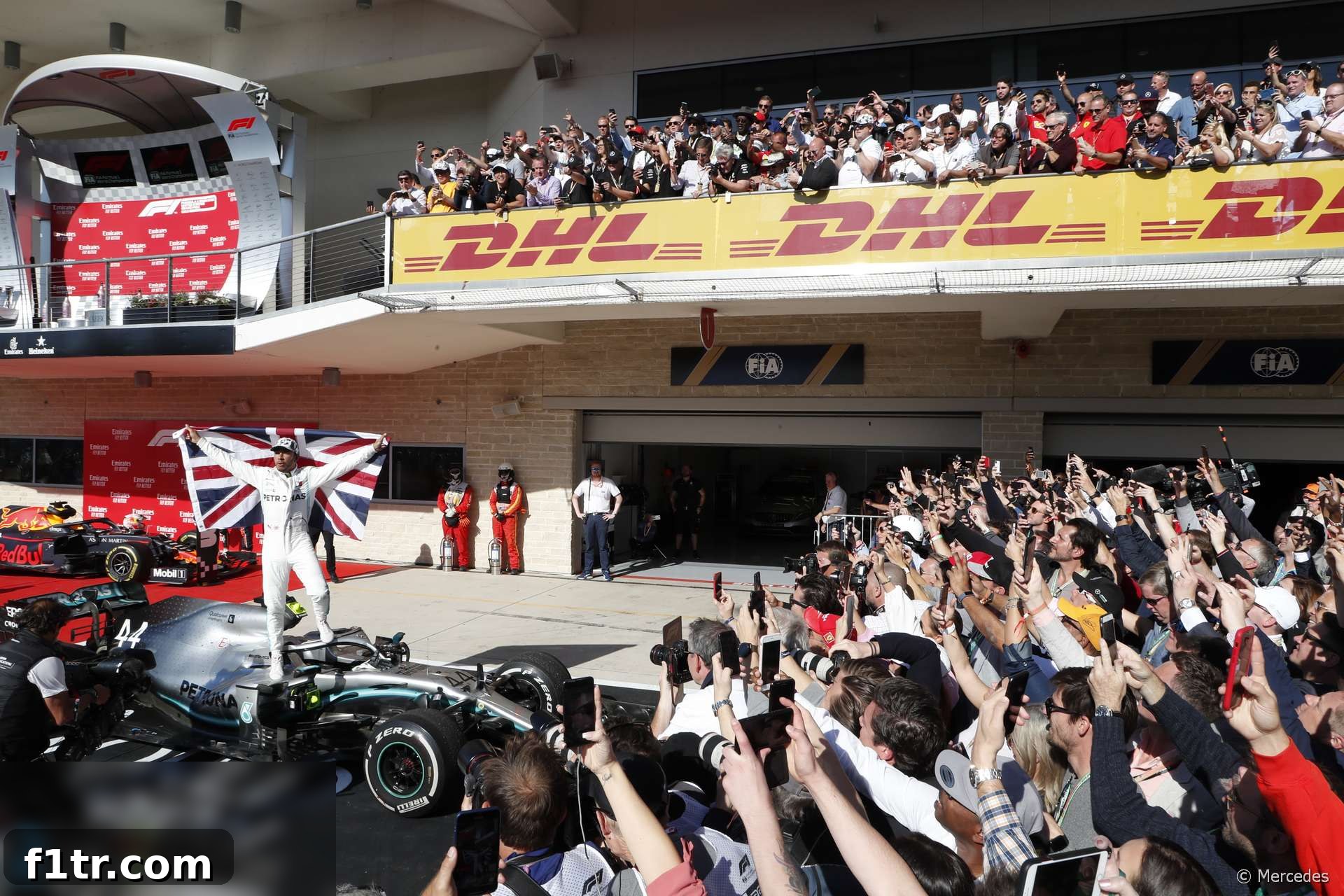
As the chequered flag ultimately falls, it becomes abundantly clear that the circuit’s ‘World Champion Parking’ sign had not, in fact, tempted fate. Lewis Hamilton, demonstrating yet another utterly dominant season, duly seals his sixth Formula 1 World Championship title – a remarkable third in a row. This monumental achievement further solidifies his place among the sport’s all-time greats. Amidst the jubilant celebrations and the intense post-race buzz, I spot Nico Rosberg, Hamilton’s former teammate and fierce rival, wandering through the paddock. His presence sparks a moment of reflection, prompting me to wonder about the true depth of Hamilton’s thoughts regarding Rosberg, the only driver who managed to break his otherwise relentless championship streak by clinching the 2016 title. Without that singular victory, Hamilton would today be celebrating his sixth consecutive championship, a staggering feat that would have seen him equal Michael Schumacher’s seemingly insurmountable record of seven world championships in quick succession. The competitive fire between them, though now in the past, undeniably shaped a significant era of Formula 1.
The post-race mixed zone sessions, typically a cacophony of questions and answers, provide another memorable moment. Amidst the jostle of journalists and camera crews, a rather humorous incident unfolds: Kimi Raikkonen, known for his stoic demeanor and dry wit, accidentally knocks my phone clean out of my hand. With a rare display of concern, he promptly apologizes, then charismatically asks if the device is unharmed. Before I can fully respond, he points towards his team minder and, with characteristic bluntness, instructs: “Get them to buy you a new one if it’s broken…” I am delighted to report that such an expense won’t be necessary, Kimi! The phone survived the encounter unscathed, a testament perhaps to its robust design, or simply good fortune. This brief, candid interaction with the “Iceman” adds a unique and personal touch to an already eventful race day.
4pm
Following the championship celebrations and the flurry of post-race interviews, I head over for Andreas Seidl’s post-race session, where the McLaren Team Principal provides a comprehensive debrief on his team’s performance. A particularly positive sign of McLaren’s resurgence and increasing prominence is the keen interest shown by Sheikh Mohammed of Bahrain, who chairs McLaren’s board. His attentive presence underscores the growing confidence and significant investment in the team’s future, signaling a clear intent to restore the legendary outfit to its former glory. This high-level engagement is a strong indicator of the commitment behind McLaren’s ambitious turnaround project, offering hope for a competitive future.
I also have the opportunity to hear from Formula 1 Race Director, Michael Masi, who addresses an intriguing rumour circulating in the paddock. He is asked whether the Friday drivers’ briefing, as reported elsewhere, indeed ran for an unusually extended period of nearly an hour and a half. Such a lengthy session, if true, would typically indicate that the drivers had a multitude of pressing concerns and issues they wished to raise directly with him. Masi clarifies the situation, revealing that the official briefing actually lasted only a fraction of that time – approximately 20 minutes. He further explains that the perceived extended duration was due to a subsequent, separate GPDA (Grand Prix Drivers’ Association) meeting, which ran for over an hour and in which he was not involved. This distinction provides important clarity, highlighting the active role of the drivers’ association in addressing collective concerns independently. Both sessions, overall, are fairly brief; the immense hullabaloo of the title-deciding race aside, many individuals within the paddock have immediate flights to catch, eager to depart Austin. I am no exception to this exodus. With the demanding race weekend now concluded, I quickly make my way to Austin-Bergstrom International Airport to catch an early flight to New York, with onward travel plans to Brussels via Madrid. The hope, as always with such a tight schedule, is that all connections proceed smoothly and precisely as planned, bringing a close to an unforgettable chapter in the Formula 1 season.
2019 United States Grand Prix
- Gasly: Toro Rosso in the hunt for points every weekend
- Vettel praises “very good job” by Leclerc after losing qualifying battle
- Drivers’ salaries should be included in budget cap – Brown
- Grosjean: Hard to maintain motivation at end of tough year
- F1’s US audience continuing to grow in third year under Liberty
Browse all 2019 United States Grand Prix articles