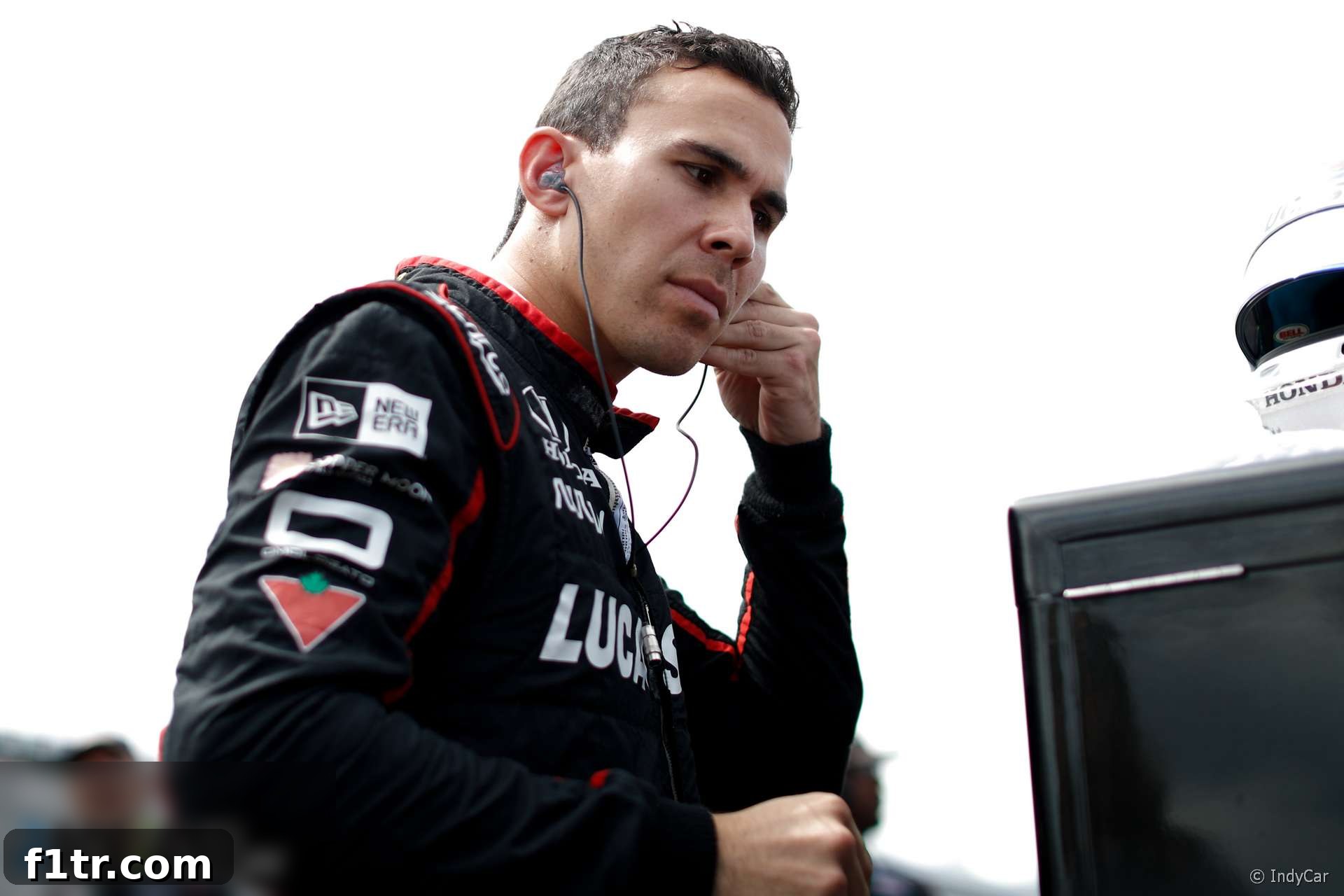
Robert Wickens’ Harrowing IndyCar Pocono Crash: Injuries, Driver Accounts, and Safety Concerns
The world of motorsports was brought to a standstill following the harrowing incident involving IndyCar driver Robert Wickens at the 2018 Pocono 500. A severe crash on the seventh lap of the race left the promising Canadian racer with significant injuries, triggering an immediate red flag and raising renewed questions about safety in high-speed, open-wheel competition. This incident not only highlighted the inherent dangers of the sport but also united the racing community in concern for Wickens’ recovery.
IndyCar promptly released initial details regarding Wickens’ condition, confirming the severity of the situation that unfolded at the challenging Pocono Raceway. The crash, which saw Wickens’ car launched spectacularly into the catch fence, resulted in a complex set of injuries that would require extensive medical attention and a long road to recovery. The immediate aftermath on track was chaotic, with multiple cars involved and the race halted as emergency crews attended to the drivers.
The Catastrophic Incident at Pocono: A Detailed Account
The terrifying collision occurred on Lap 7 of the Pocono 500, a race known for its blistering speeds and tight pack racing. Robert Wickens, driving for Schmidt Peterson Motorsports, was involved in an entanglement with Ryan Hunter-Reay at Turn 2, a section of the unique ‘Tricky Triangle’ oval that drivers noted had become particularly challenging with reduced downforce levels. The contact sent Wickens’ car airborne, propelling it with immense force into the fence bordering the track, a sight that sent shivers down the spines of spectators and fellow competitors alike.
Hunter-Reay, a seasoned IndyCar veteran, shared his immediate thoughts on the incident, expressing surprise and confusion regarding the contact. “He had a run out of Turn 1, came up along the side of me, but I was in the draft of [Will] Power in front of me so I started pulling ahead,” Hunter-Reay recounted. He continued, describing his perception as they entered the critical Turn 2: “Once we got to [Turn] 2 he was at my corner at best. I mean barely there. I thought, at that point, I had got to him, cleared him. I even gave room. I left a lane, left a half of a lane, if not more. I’ve got to look at it again. I was pretty shocked I got hit in the back.” His statement underscores the fine margins and split-second decisions that define oval racing, where a slight misjudgment can have catastrophic consequences.
The multi-car pile-up also claimed several other notable drivers, including Wickens’ Schmidt Peterson teammate James Hinchcliffe, as well as the experienced Takuma Sato and rookie Pietro Fittipaldi. Hinchcliffe, in particular, was caught in the debris field from the primary collision, adding another layer of danger to an already terrifying scene. The immediate focus, however, remained on Wickens, whose car had suffered the most severe impact with the unforgiving catch fence.
Robert Wickens’ Critical Condition and Medical Response
Following the crash, Robert Wickens was immediately transported to Lehigh Valley Hospital Cedar Crest, where he underwent urgent medical evaluation. IndyCar’s statement confirmed a comprehensive list of serious injuries: “The Schmidt Peterson racer suffered injuries to his legs, right arm and spine when his car was launched into a fence on the seventh lap of the race. Wickens also suffered bruising to his lungs in the crash.” The severity of these injuries necessitated immediate and ongoing medical intervention.
Further medical updates indicated that Wickens was scheduled to undergo an MRI scan and probable surgery. These procedures were crucial for thoroughly assessing the extent of the spinal injuries and planning the subsequent course of treatment. The medical team at Lehigh Valley Hospital Cedar Crest commenced a meticulous approach to managing his complex condition, with the racing community and fans across the globe holding their breath for positive news.
Driver Reactions and the Unspoken Dangers of the Sport
The incident deeply affected Wickens’ fellow competitors, highlighting the strong camaraderie within the IndyCar paddock despite the fierce rivalries on track. James Hinchcliffe, Wickens’ teammate and a close friend, expressed profound concern for his colleague’s well-being, even as he himself recovered from minor injuries sustained in the crash. “I took my hands off the wheel when I went backward and I think some piece of debris came in as I was holding [my hands] in, kind of just smacked the top of them so I took a bit of a beating. But nothing is broken, just some swelling and some cuts. We’ll rest it up and be fine,” Hinchcliffe reported.
However, his primary focus was Wickens: “Obviously, I’m just hoping Robbie’s alright. Never good to see a car go up [into the fence] like that, but I know he is in good hands. Hopefully, we’ll see him back in the car soon.” Hinchcliffe’s words resonated deeply, echoing the sentiments of many who watched the horrific replay. His hope for Wickens’ swift return to racing underscored the resilience and optimism characteristic of these elite athletes, even in the face of such adversity.
Takuma Sato, another veteran driver caught in the multi-car accident, provided an insightful perspective on the challenging nature of Turn 2 at Pocono, particularly under the 2018 regulations. “I saw Ryan Hunter-Reay’s car hit the wall and I immediately backed off but I was covered by oil, my helmet and my car, and there was nothing I could do. I just went straight into the wall,” Sato described, illustrating the chain reaction that often occurs in such high-speed incidents.
Sato went on to elaborate on the technical aspects contributing to the danger: “He pointed out that the reduced downforce levels on the cars had made Turn 2 a more difficult corner. When you are side-by-side, drivers get adrenaline and want to go faster but the problem was in Turn 2, it used to be just a kink, it’s nothing, you could go flat side-by-side. But now, with the less downforce, it’s really bumpy and you’ve got to be really careful with that.” This commentary highlighted how subtle aerodynamic changes and track characteristics can dramatically alter the risk profile of certain sections of a circuit, demanding even greater precision and caution from drivers.
He further added, “I was side-by-side with Sebastien Bourdais into the corner and I backed off and braked but in front, unfortunately, Robert and Ryan made contact and that was nothing we could control.” Sato’s detailed account emphasized the often-unavoidable nature of secondary collisions when a primary incident unfolds at such speed.
The Broader Impact: Safety Discussions and Future Implications
The Robert Wickens crash at Pocono served as a stark reminder of the inherent dangers in motorsport, particularly in high-speed, oval racing. Incidents of this magnitude invariably spark widespread discussions about driver safety, car design, and track infrastructure. While IndyCar, like other major racing series, has made tremendous strides in safety over the decades, each severe accident prompts a re-evaluation of existing measures and a push for further improvements.
Concerns often focus on catch fence integrity, cockpit protection (especially in open-wheel series), and the specific characteristics of tracks that might exacerbate accident severity. The Pocono incident, where a car went into the fence, brought these discussions to the forefront, with experts and fans alike scrutinizing every aspect to understand how such devastating outcomes might be mitigated in the future. The commitment to safety is a continuous journey in motorsport, driven by technological innovation and lessons learned from every critical incident.
The Road Ahead for Robert Wickens
Robert Wickens’ journey following the Pocono crash was widely followed by the racing community. His injuries, particularly those to his spine, presented a formidable challenge, requiring extensive rehabilitation and an incredible display of strength and determination. While the immediate focus was on stabilizing his condition and conducting necessary surgeries, the long-term prognosis involved a rigorous recovery process, pushing the boundaries of physical and mental endurance.
Wickens quickly became a symbol of courage and resilience, inspiring many with his unwavering spirit. The outpouring of support from fans, fellow drivers, and the entire racing ecosystem demonstrated the tight-knit nature of this global family, united in hoping for his complete recovery and return to a fulfilling life, whether behind the wheel or in another capacity within the sport he loves.
Video: IndyCar Pocono 500 Highlights
For those who wish to revisit the dramatic and unfortunate events of the 2018 Pocono 500, the following video provides highlights of the race, including the pivotal incident that involved Robert Wickens and multiple other drivers. Viewer discretion is advised due to the severe nature of the crash.
Further IndyCar Insights
The world of IndyCar racing is constantly evolving, with new developments, driver movements, and ongoing safety advancements. For those interested in staying updated on the latest news and analysis from the series, explore more articles below:
- IndyCar driver McLaughlin cleared of injury after crashing through barrier at Barber
- Schumacher says his IndyCar feels like ‘an F2 car, just with better tyres’
- IndyCar “way faster than Formula 1” in some corners, says Grosjean
- FIA to award more F1 superlicence points to IndyCar drivers from 2026
- Schumacher to race full-time in IndyCar with RLL in 2026
Browse all IndyCar articles