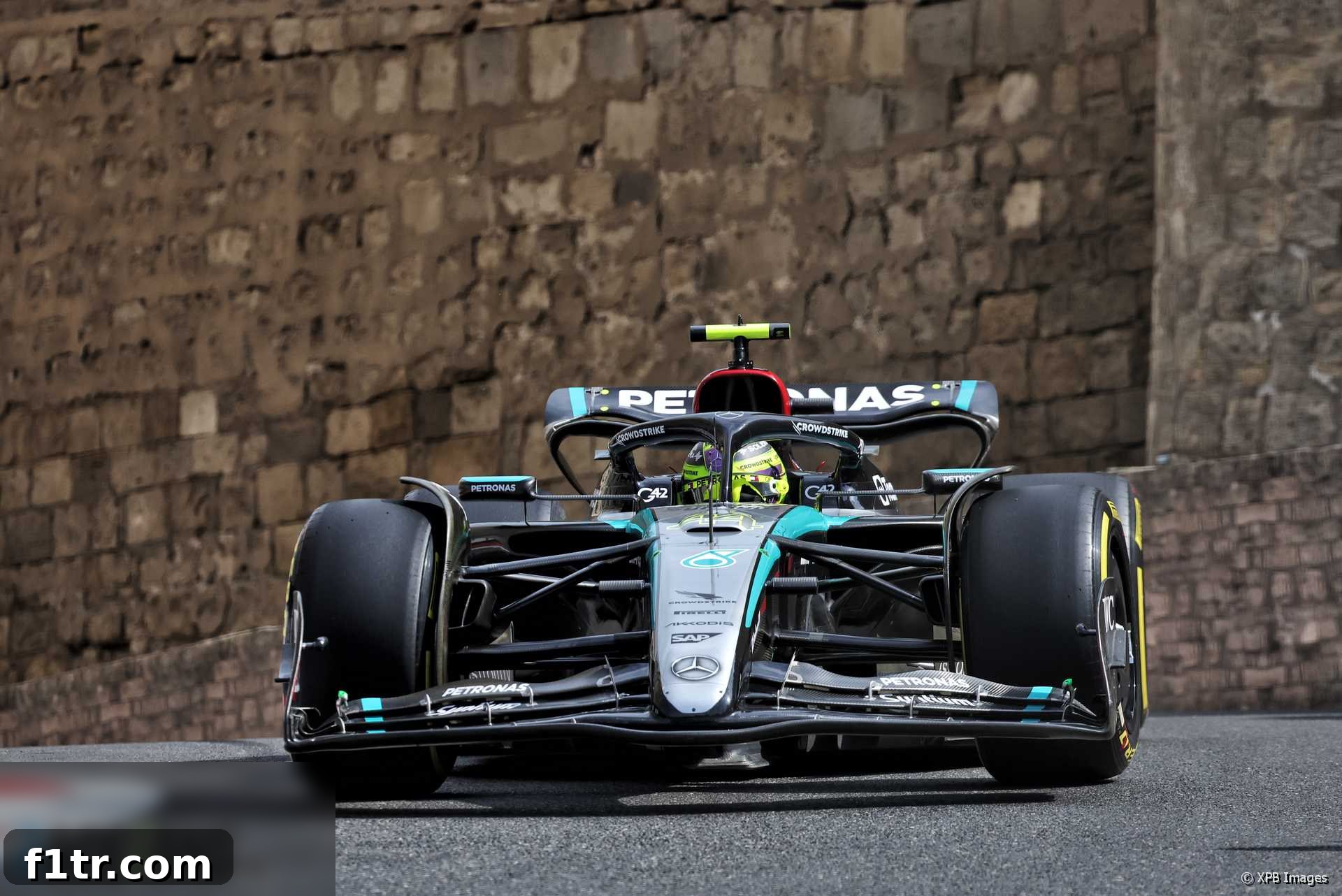
The highly anticipated Azerbaijan Grand Prix is set to deliver drama and strategic intrigue from the very start, with a significant grid shake-up impacting several key contenders. In a bold strategic move, seven-time world champion Lewis Hamilton will commence today’s race from the pit lane. This decision by Mercedes-AMG Petronas F1 Team, aimed at mitigating future penalties, adds an unpredictable element to the already thrilling street circuit in Baku.
Originally slated to start from seventh position on the grid, Hamilton’s demotion to the pit lane comes as Mercedes opted to replace his power unit. This choice directly stems from a power unit failure Hamilton experienced earlier in the season at the Australian Grand Prix in March. By taking the penalty now, the team strategically aims to avoid potential grid penalties later in the season, which could prove more costly in the championship battle. This tactical sacrifice highlights the intricate balance F1 teams must strike between immediate performance and long-term reliability within the stringent power unit component limits.
Hamilton’s Strategic Sacrifice: A Calculated Risk in Baku
The regulations in Formula 1 impose strict limits on the number of power unit components (internal combustion engine, turbocharger, MGU-H, MGU-K, energy store, control electronics, and exhaust system) a driver can use throughout a season. Exceeding these allocations typically results in grid penalties. Hamilton’s power unit replacement means he will now be running a fresh engine, potentially offering an advantage in terms of raw power and reliability for the remainder of the season. Mercedes’ confidence in their car’s pace and Hamilton’s ability to navigate the unique challenges of the Baku City Circuit from the back of the field underscores their belief in this strategy.
The Baku City Circuit is renowned for its thrilling blend of high-speed straights and incredibly tight, technical sections, making it a true test of both driver skill and engineering prowess. Its exceptionally long main straight, stretching over two kilometers, combined with multiple DRS zones, presents ample overtaking opportunities. Mercedes’ assessment of their car’s straight-line speed was evident in qualifying, where Hamilton’s W15 was the fourth-quickest through the speed trap, while his teammate George Russell recorded the second-fastest time. A brand new power unit should further enhance Hamilton’s top-end speed, crucial for carving through the field on race day.
Starting from the pit lane in Baku, while challenging, is not an insurmountable task. The unpredictable nature of the circuit, characterized by its propensity for Safety Car periods and even red flags, can often compress the field and offer drivers starting further back a chance to close the gap. Such interruptions can effectively neutralize any initial disadvantage, allowing a driver of Hamilton’s caliber to capitalize on strategic pit stops or restarts. This element of chance is undoubtedly a factor Mercedes has weighed in their decision.
Grid Shifts and Their Ripple Effects
Hamilton’s pit lane start has a direct impact on the starting grid, promoting several drivers up the order. Fernando Alonso, the seasoned two-time world champion, will now start from an improved seventh place, enhancing his prospects for securing valuable points. Furthermore, Franco Colapinto will now make his second Grand Prix start from the fourth row, a significant boost for the young talent in his nascent F1 career. These marginal gains can be critical in the intense midfield battle, influencing early race strategies and the flow of the Grand Prix.
Lando Norris, who had a challenging qualifying session and initially placed 17th after his Q1 elimination, has also benefited from the grid changes. He will now start 15th, having gained a position from Hamilton’s penalty and another from Pierre Gasly’s disqualification. While two positions may seem minor, every spot can make a difference in optimizing track position and minimizing exposure to midfield chaos. However, Norris himself had expressed reservations about making significant progress through the field, despite Baku’s long straights, indicating potential underlying performance concerns or a nuanced understanding of the overtaking dynamics unique to this circuit.
The extension of one DRS zone since last year’s event offers an additional avenue for overtaking. This modification, coupled with Mercedes’ car performance, might provide Hamilton the necessary tools to orchestrate a comeback drive. The team’s decision is a clear statement of intent and confidence in both their machinery and their star driver’s ability to deliver under pressure. It transforms Hamilton’s race into a strategic chess match, where precision, timing, and raw pace will be paramount to convert a pit lane start into a strong points finish.
Esteban Ocon’s Alpine Anguish: Another Pit Lane Start
Joining Lewis Hamilton at the pit exit when the race commences will be Esteban Ocon, marking his second consecutive year starting the Azerbaijan Grand Prix from the pit lane. The Alpine team confirmed their decision to take his car off the grid to implement extensive set-up changes. Ocon endured a frustrating weekend leading up to the race, expressing significant dissatisfaction with the handling of his car. His struggles were compounded by missing substantial portions of both the first and third practice sessions due to persistent power unit problems, culminating in a crash during Q1.
The inability to fine-tune the car’s setup during critical practice sessions is particularly detrimental at a complex circuit like Baku. The track demands a delicate balance between high-speed stability for the straights and agile handling for the intricate castle section and slow-speed corners. Without sufficient track time to dial in the car, Ocon found himself wrestling with an unpredictable machine, leading to his qualifying incident. Alpine’s decision to start from the pit lane is a last-ditch effort to optimize the car’s performance, hoping that the modified setup will provide Ocon with a more manageable and competitive package for the race.
Ocon’s recurring pit lane start in Baku highlights a potentially deeper issue for Alpine at this specific venue, or perhaps a persistent struggle with their car’s adaptability. For a team striving to climb the constructors’ standings, such strategic retreats before the race even begins are a clear indication of performance shortfalls and operational challenges. Ocon will face a monumental task to recover positions and secure points, relying heavily on strategy, attrition, and any potential Safety Car interventions to aid his charge through the field.
Norris’s Cautious Outlook and McLaren’s Race Strategy
Despite gaining two grid positions, Lando Norris’s pre-race prediction of a difficult afternoon in Baku remains a point of interest. His struggles in qualifying suggest that the McLaren MCL38 might not be ideally suited to the unique demands of the circuit, or perhaps that the team is grappling with specific setup challenges. While the long straights of Baku theoretically favor overtaking, cars that struggle with overall straight-line speed, traction out of slow corners, or braking stability can find themselves unable to make passes stick, even with the aid of DRS.
McLaren’s qualifying performance indicates that they may lack the outright pace to comfortably dispatch rivals ahead, particularly if those cars have superior straight-line speed or better tire management characteristics. Norris’s cautious assessment could also reflect concerns about dirty air effects in the closely packed midfield, which can significantly hinder a car’s aerodynamic performance and make overtaking incredibly challenging, even on seemingly open stretches of track. For McLaren, the race will likely be a battle of attrition and strategic finesse, aiming to convert their improved grid position into a solid points finish by maximizing reliability and opportunistic driving.
Anticipating an Electrifying Baku Grand Prix
The 2024 Azerbaijan Grand Prix promises to be an electrifying spectacle, marked by these significant pre-race developments. Lewis Hamilton’s calculated risk from the pit lane, Esteban Ocon’s desperate bid for a competitive setup, and Lando Norris’s cautious optimism all add layers of intrigue to what is already one of the most unpredictable races on the Formula 1 calendar. The interplay of high-speed sections, technical corners, and the ever-present threat of Safety Cars or red flags means that strategy will be paramount, and every decision, from tire choice to overtaking maneuvers, will be magnified.
Fans can anticipate a thrilling race day, where drivers will push the limits, and teams will execute finely tuned strategies to capitalize on every opportunity. The unique challenges of Baku, coupled with the individual battles unfolding throughout the field, ensure that the Azerbaijan Grand Prix will deliver a memorable chapter in the 2024 Formula 1 season. All eyes will be on Hamilton as he attempts to carve his way through the field, and on Ocon as he seeks redemption, in what promises to be an enthralling display of speed, skill, and strategic gambles.