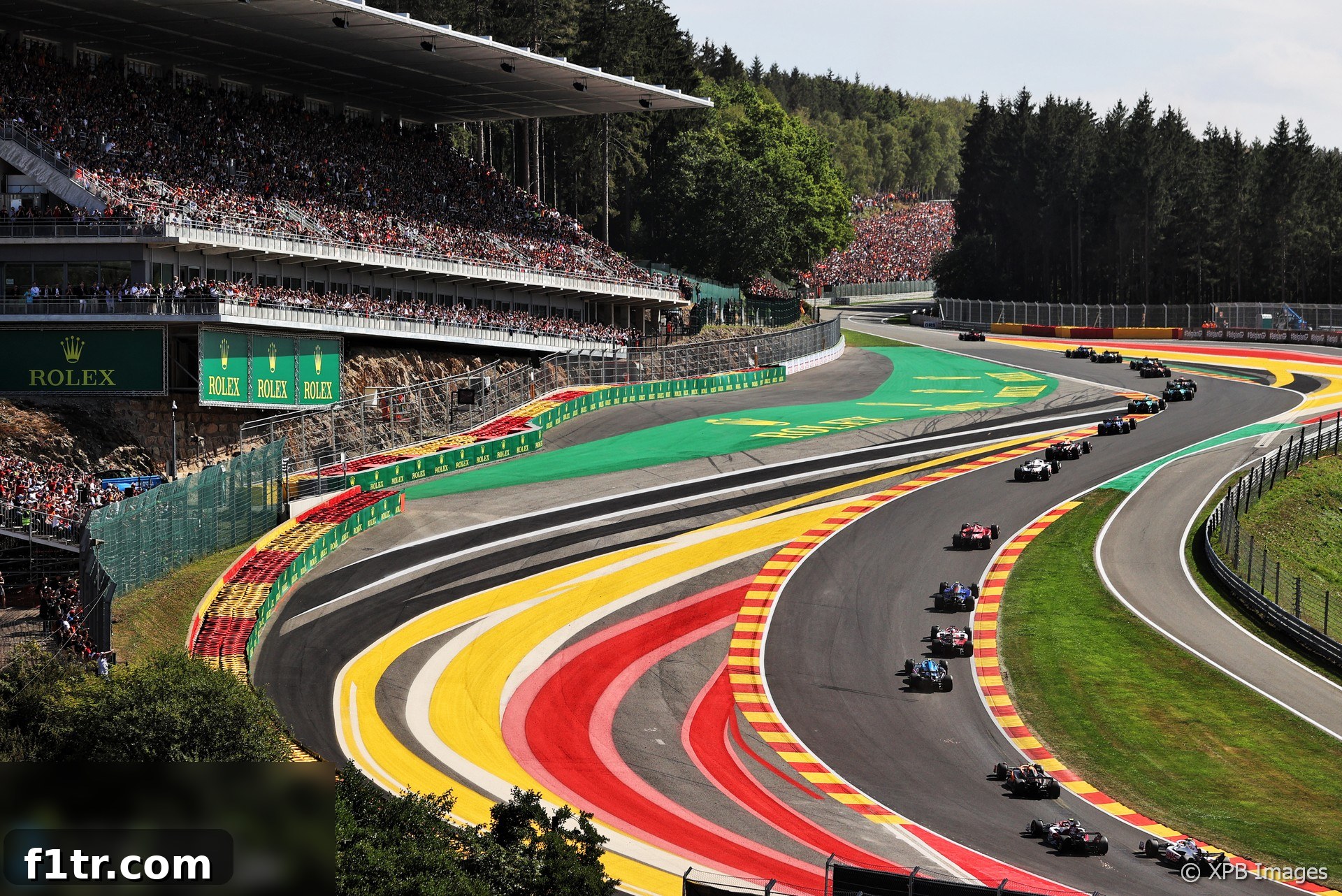
The roar of Formula 1 engines is set to grace the legendary Spa-Francorchamps circuit once again, as confirmation arrived that the iconic venue will host a Grand Prix in 2023. This highly anticipated announcement follows significant revisions and safety upgrades made to the track, a move widely welcomed by drivers and fans alike. The future of the Belgian Grand Prix had been a subject of much speculation, making this single-year deal a moment of relief and celebration for the motorsport community, ensuring one of the sport’s most challenging and beloved circuits remains on the calendar.
Spa’s Strategic Upgrades: Enhancing Safety and Preserving Character
Ahead of this year’s race, Spa-Francorchamps underwent a comprehensive series of enhancements designed to bolster safety without compromising its celebrated character. Key among these improvements was the strategic replacement of several asphalt run-offs with traditional gravel traps. This change, particularly at critical points, aims to punish driver errors more effectively and reduce the ability to gain an advantage by exceeding track limits. Furthermore, barriers were repositioned and moved further away from the circuit, notably around the high-speed, demanding Eau Rouge-Raidillon complex, a section renowned for its unique challenge and occasional dramatic incidents. Beyond safety, the fan experience was also prioritized with the installation of new, modern grandstands, increasing capacity and offering improved viewing points for spectators eager to witness the thrilling F1 action.
These proactive changes were met with widespread approval from the Formula 1 fraternity. Drivers, who are intimately familiar with the nuances and demands of the circuit, universally praised the updates, expressing their delight that Spa’s unique challenges and enduring appeal would continue to feature prominently on the global F1 stage. Their support underscores the importance of balancing modern safety requirements with the preservation of classic circuit layouts.
Drivers Applaud the Evolution of a Classic Circuit
Among the chorus of positive feedback was Scuderia Ferrari driver Carlos Sainz, who articulated the general sentiment regarding the circuit’s evolution. “It’s one of the best tracks in the calendar,” Sainz stated emphatically, highlighting the intrinsic appeal of Spa. He went on to commend the meticulous work undertaken by the circuit management. “They’ve also done a very good job with the changes they’ve done on track, putting gravel, getting rid of some Tarmac run-offs, making Eau Rouge safer.” Sainz emphasized that these modifications represent progress in the right direction, not just for safety but for the spectacle of racing. “It’s all changes that are in the right direction, and I think we need to congratulate the circuit for that. It makes for a better show, and we look forward to come back in the future and hopefully it can stay in the calendar long[-term].” His comments reflect a desire among drivers to see classic venues adapt and thrive, rather than being replaced, ensuring the future of circuits that offer genuine racing challenges.
Red Bull’s reigning world champion, Max Verstappen, whose colossal travelling fanbase often transforms parts of the circuit into a sea of orange, echoed Sainz’s enthusiasm with characteristic fervor. Following his dominant victory from 14th on the grid, further extending his championship lead, Verstappen beamed, “It’s my favourite track on the calendar, it’s amazing.” He particularly highlighted the joy of driving the circuit when the car is perfectly balanced: “Especially when the car is really hooked up, like in qualifying it was really enjoyable to drive.” The Dutch driver, whose connection to Spa is almost a home-race sentiment due to its proximity to the Netherlands, expressed a profound hope for the circuit’s longevity. “From my side, I hope we will never stop coming here, but at the end of the day it’s not up to me, but I’m very happy that it’s here and that it’s happening next year.” His passionate support, along with that of many other drivers, undoubtedly played a role in the public discourse surrounding Spa’s future, even if its ultimate influence on commercial decisions remains debated.
The Debate: Driver Influence vs. Commercial Realities
While the drivers’ affection for Spa is undeniable, the extent to which their sentiments sway commercial and calendar decisions remains a topic of discussion. Verstappen’s teammate, Sergio Perez, who finished an impressive second behind him, offered a more pragmatic view on the matter. “I wish to think differently, but I think it was not for the drivers that they’ve kept the place in the calendar,” he remarked, acknowledging the complex financial and political landscape of Formula 1. Despite this realistic outlook, Perez was unequivocal about the circuit’s intrinsic value: “It’s great to have Spa. It’s a unique place that we all enjoy coming to. The pure fans really enjoy coming here.” His comments underscore the tension between the sport’s traditional values, often championed by drivers and long-time fans, and the commercial imperatives that frequently dictate the sport’s direction and calendar composition.
Spa’s Enduring Appeal: A Racetrack for True Racing
The 2022 Belgian Grand Prix itself served as a powerful testament to Spa’s enduring appeal as a racing circuit. With a remarkable 49 overtakes across 44 laps, the race delivered thrilling action and demonstrated the track’s capacity for genuine, wheel-to-wheel battles. This high-octane performance only solidified the drivers’ collective satisfaction upon learning of the circuit’s retention for another year. Spa’s long, fast straights, combined with its challenging, flowing corners, provide ample opportunities for drivers to exploit their cars’ performance and engage in strategic overtakes, making it a favorite for both competitors and purist racing enthusiasts.
Mercedes driver George Russell perfectly captured the essence of the circuit’s appeal. “As a race and as a circuit it’s exceptional,” he enthused, highlighting its unique blend of speed and technicality. Russell also acknowledged Spa’s notorious wildcard element: the unpredictable Ardennes weather. “A negative is obviously the weather, you never know what you’re going to get here, but it’s always a place I enjoy.” This unpredictability, while sometimes leading to challenging conditions, often adds another layer of drama and strategic complexity to the Grand Prix, further cementing its legendary status.
Indeed, the memory of the farcical 2021 edition, which saw only a single classified lap due to streaming wet conditions, was still fresh. This year, however, delivered significantly better conditions, much to the delight of the spectators and drivers. Daniel Ricciardo, then driving for McLaren, expressed his relief and happiness for the fans. “It’s good [Spa is staying], especially when the weather’s like this,” he said, drawing a stark contrast to the previous year. Reflecting on the exciting race, Ricciardo added, “I saw Max won, so that must have meant some overtaking, hopefully it was a good race. So I’m happy for Spa and whether I’m here or not, I’m happy that as an F1 collective, I think this circuit deserves a race.” His comments underscore the sentiment that some circuits transcend individual careers, holding a permanent place in the sport’s heritage and deserving of a spot on the calendar for the benefit of the sport itself.
Even Sebastian Vettel, the Aston Martin driver who announced his retirement and will not be on the grid for F1’s return to Spa next year, emphasized the track’s irreplaceable quality. As a four-time world champion and a seasoned veteran, his perspective carries significant weight. He described the Belgian Grand Prix as “one of the races where the race goes by fairly quick and never gets dull – it’s enjoyable, and it would be a shame to lose it.” This sentiment highlights Spa’s ability to consistently deliver engaging racing, captivating audiences from start to finish. His valedictory remarks serve as a poignant reminder of the value of classic venues for drivers who have raced on them for years.
Alfa Romeo’s Valtteri Bottas further reinforced this view, echoing the consensus among many of his peers who are eager for Formula 1 to continue visiting Spa. “It’s important to have these type of tracks in the calendar in the world championship,” Bottas affirmed. This collective desire stems from the belief that circuits like Spa-Francorchamps are more than just race venues; they are integral parts of Formula 1’s identity and heritage, offering challenges and experiences that newer, often purpose-built tracks struggle to replicate. The preservation of such tracks is seen as crucial for maintaining the sport’s connection to its roots and ensuring a diverse and exciting calendar for years to come.
The Future of Spa: A Historic Track in a Modern Era
The single-year deal for Spa-Francorchamps on the 2023 F1 calendar is a testament to its enduring popularity and the successful execution of its recent safety and infrastructure upgrades. It also reflects the ongoing delicate balance within Formula 1 between expanding into new, lucrative markets and retaining its storied historical venues. While the future beyond 2023 remains uncertain, the strong support from drivers, the positive impact of the track modifications, and the thrilling racing demonstrated in the most recent Grand Prix all build a compelling case for Spa’s continued presence. As Formula 1 continues to evolve, circuits like Spa-Francorchamps serve as vital links to the sport’s rich past, reminding us of the raw speed, courage, and natural beauty that define Grand Prix racing. The return of the Belgian Grand Prix is not just a calendar fixture; it’s a reaffirmation of the timeless appeal of one of motorsport’s true cathedrals of speed.
Related F1 Articles: 2022 Season Review
- Mercedes told me “you’re wrong” about 2022 car’s problems – Hamilton
- FIA confirms all 10 F1 teams complied with 2022 cost cap
- Steiner “not ashamed” of panning “slow” Schumacher in Drive to Survive
- Albon believes year out of F1 improved him as a driver
- Hamilton sees diversity gains in F1 years on from his ‘traumatising’ experience of racism
Browse all 2022 F1 season articles