In the tumultuous dawn of the 1980s, Formula 1 found itself at the heart of a fiercely contested battle, not merely for on-track supremacy but for the very soul and commercial future of the sport. This period of intense political fallout, famously dubbed the “FIASCO war,” saw races cancelled and allegiances shift, ultimately forging the fundamental governance and commercial structures that define modern F1. A recently unearthed trove of documents, brought to light by journalist @DieterRencken, offers unprecedented insights into this fraught, yet uniquely formative, chapter in motorsport history.
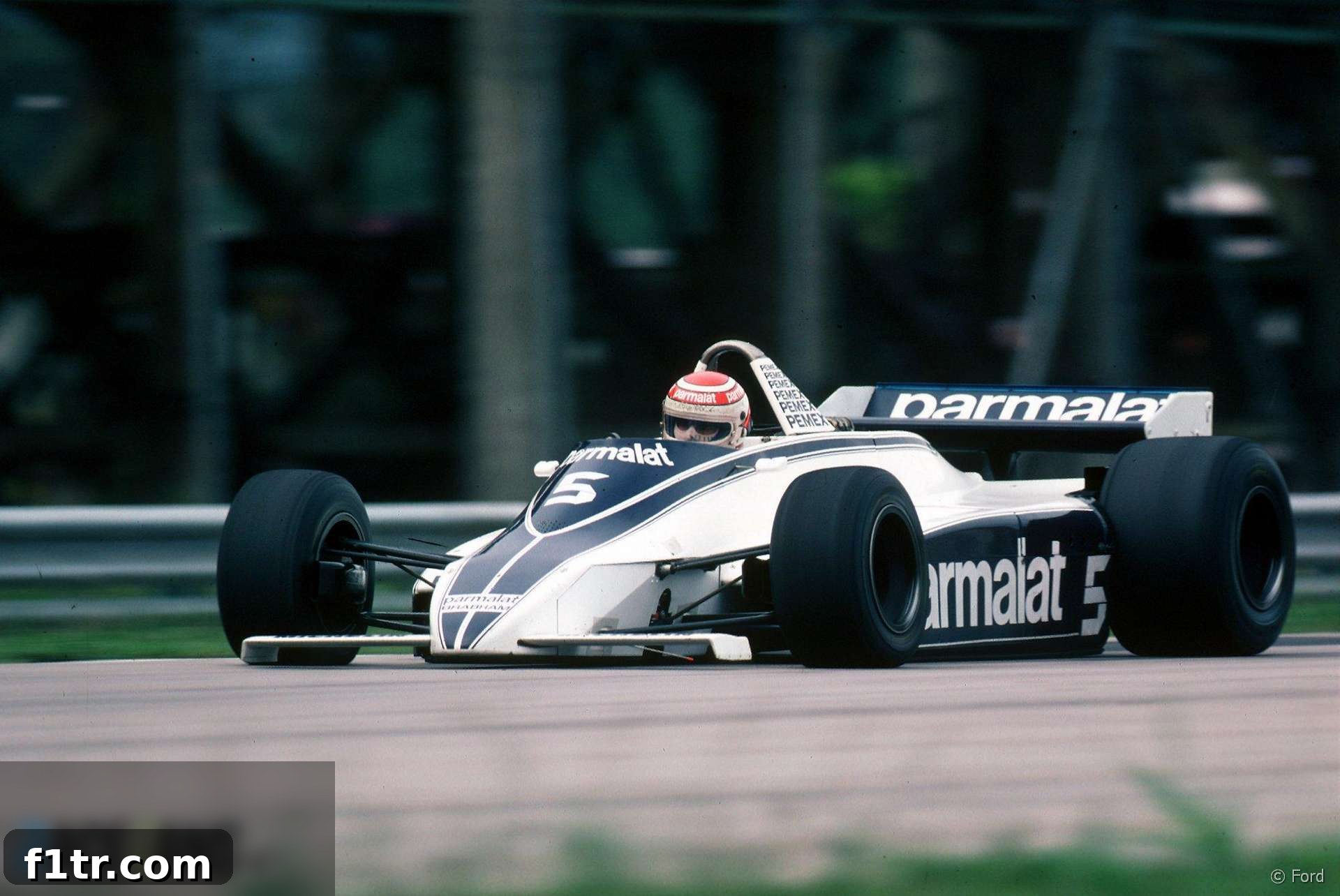
The conflict lines were sharply drawn in early 1980. On one side stood the predominantly British teams, pejoratively labeled ‘garagistes’ by Enzo Ferrari. These independent constructors, including powerhouses like Brabham, McLaren, and Williams, built their cars using readily available proprietary components – Cosworth engines, Hewland gearboxes – and operated under the banner of the Formula One Constructors Association (FOCA).
Advert | Become a Supporter & go ad-free
Their formidable opponents were spearheaded by Jean-Marie Balestre, the notoriously belligerent president of FISA (Fédération Internationale du Sport Automobile), then the sporting arm of the FIA. Aligned with FISA were the ‘grande’ teams – major manufacturers such as Ferrari, Renault, and Alfa Romeo. These industrial giants, with their deep pockets and political clout, observed the escalating skirmishes with a mixture of apprehension and self-interest, often switching allegiances to suit their own strategic agendas.
FOCA’s operations were steered by two exceptionally astute figures: Bernie Ecclestone, who chaired the association while also running the championship-contending Brabham team, and his right-hand man, Max Mosley, a former barrister and co-founder of March. Their primary adversary was Balestre, who had transformed the FIA’s International Sporting Commission into FISA in 1978. The stakes of this acrimonious battle were nothing less than the ownership and control of Formula 1’s lucrative commercial rights.
The Commercial Rights Conundrum: A Battle for F1’s Financial Soul
Balestre, on behalf of FISA, sought to claim financial control over both F1 championships – then known as the World Championship for F1 Drivers and the International Cup for F1 Constructors. Historically, FOCA had taken the initiative to negotiate commercial deals with race promoters on behalf of its member teams, subsequently distributing the revenues according to a pre-agreed financial structure. This established, revenue-generating system was precisely what Balestre aimed to seize control of for FISA.
Ecclestone and the FOCA teams vehemently argued that they were the true drivers of the sport’s commercial and sporting value. It was their collective participation, performance, and fan appeal that made Formula 1 attractive to promoters, sponsors, and television broadcasters worldwide. They maintained that FISA’s role was purely administrative and regulatory, and as such, the governing body had no legitimate claim to commercial involvement or a share of the sport’s substantial fiscal earnings.
Beyond commercial rights, regulatory authority also became a major flashpoint. Balestre insisted that FISA held the unilateral power to implement immediate regulatory changes, especially if deemed critical for safety. FOCA, conversely, demanded a minimum of two years’ notice for any significant rule alterations, unless a shorter period was mutually agreed upon by all parties. This disagreement underscored the fundamental power struggle: who controlled the rules, and how quickly could they be changed?
The FIASCO War Ignites: The 1980 Spanish Grand Prix Debacle
The stage was thus set for what journalist Forrest Bond aptly christened the “FIASCO war,” a public and multifaceted conflict. The first major casualty of this escalating dispute was the 1980 Spanish Grand Prix. In a move that demonstrated FISA’s absolute power, the race was retrospectively stripped of its championship status after Balestre unilaterally withdrew the governing body’s sanction. The backstory to this incident reads like a dramatic screenplay.
Prior to the Spanish GP, at the preceding Monaco race, Balestre decreed that all drivers must attend a mandatory 45-minute briefing. Crucially, this requirement was not enshrined in the official regulations. Acting under the direct orders of their FOCA-linked team principals, the drivers boycotted the briefing. FISA’s swift retaliation was to issue a $2,000 fine to each driver, which they, again under team orders, refused to pay.
The stakes reached boiling point when FISA escalated its response by suspending the drivers’ racing licenses. In an attempt to de-escalate the situation, the race promoter for the Spanish Grand Prix offered to cover the fines. However, Balestre rejected this offer, insisting that he would only accept payment if it came directly from the drivers themselves, viewing it as an admission of guilt. Despite FISA’s stance and the suspended licenses, the race proceeded due to the insistence of King Juan Carlos of Spain, who was both monarch and royal patron of the organizing club, Real Automóvil Club de España. FISA, in a final act of defiance, responded by stripping the Grand Prix of its championship status, leaving it as a non-championship event.
Advert | Become a RaceFans supporter andgo ad-free
This saga vividly illustrates the petty and self-destructive lengths to which both parties were willing to go, seemingly intent on tearing Formula 1 apart. Balestre wielded threats of regulatory power, while FOCA countered with the ultimate deterrent: the threat of a breakaway series. Caught in the middle were the ‘grande’ manufacturer teams, who faced the perilous risk of losing their entrant licenses for other prestigious FISA championships, such as rally, endurance racing, or touring cars, should they side definitively with FOCA.
The Concorde Agreement: A Fragile Peace
Just as a complete meltdown of the sport seemed inevitable, a glimmer of sanity emerged. After an exhausting 13-hour negotiation session in Paris, on January 19, 1981, the warring factions finally announced that a peace deal had been reached. This landmark agreement, known as the Concorde Agreement – the first of six such pivotal documents, with the last expiring in 2012 before being replaced by current bilateral agreements – was signed in the FIA/FISA offices on the historic Place de la Concorde, hence its name, which translates simply to “agreement” in English.
However, common sense did not immediately prevail. No sooner had the first Concorde Agreement been signed than FISA insisted on changing the date of the 1981 season opener, the South African Grand Prix, originally scheduled for February 7th at Kyalami. Ecclestone, who had previously acquired the financially struggling circuit but sold it in 1980 to what was believed to be a front company, was reportedly incandescent with rage, especially since FOCA had underwritten the race financially.
The World Professional Drivers Championship: FOCA’s Bluff and Legacy
This renewed provocation prompted FOCA to execute its ultimate threat: the launch of a breakaway series, known as the World Professional Drivers Championship (WPDC), sanctioned by the equally new World Federation of Motor Sport (WFMS). Unlike later, ill-fated breakaway threats – such as those by FOTA in the 2000s, which often floundered on undeliverable hyperbole – the WPDC was meticulously planned. It boasted fully articulated regulations and, critically, a draft calendar based on concrete race promoter contracts. This level of preparation demonstrated FOCA’s serious intent and strategic foresight.
One WPDC race was indeed staged, still referred to as the South African Grand Prix, though it proceeded without the participation of the ‘grande’ manufacturer teams. FISA, attempting to save face, declared it a ‘Formula Libre’ race. However, the mere successful staging of this event was enough to call Balestre’s bluff and demonstrate FOCA’s organizational capabilities. At long last, a genuine sense of peace began to settle over the sport, though Max Mosley later revealed in his autobiography that FOCA “would probably not have been able to race in [Long Beach, the next championship round] for lack of money,” highlighting how precariously balanced the war truly was.
It’s remarkable how few online references exist for the WPDC or WFMS, considering this championship arguably laid the foundational blueprint for modern Formula 1. It established – for better or worse – many of the sport’s revenue and governance structures, some of which persist to this day. A primary differentiator and crucial legacy was the strong emphasis on teams needing to be true constructors, building their own chassis rather than simply buying them.
Unearthing the WPDC Documents: Insights into F1’s Genesis
The significance of these formative documents cannot be overstated. During a visit to Forrest Bond, the journalist credited with coining “FIASCO war,” a priceless collection of original WFMS/WPDC documents was gifted. These documents offer a captivating window into the rationale and meticulous planning behind FOCA’s strategy, revealing precisely how and why F1 evolved into its current form.
The documents, for starters, contained scathing criticisms of FISA and Balestre. One section boldly stated, “As [he] is demonstrably incapable of running the sport, there is little reason to think that he would have done any better with the commerce.” Another added, “FISA’s presence at a Grand Prix used to depend on the weather conditions and quality of the parties,” noting the governing body’s representation could range “from 100 at Monaco to as few as one at less attractive venues.”
Beyond these pointed remarks – which ironically echo comments made by Mosley during his later FIA presidency – the unearthed collection powerfully illuminates the incredible thought, effort, and strategic foresight Bernie Ecclestone poured into FOCA during its nascent stages. This foundational work enabled FOCA to eventually morph into the Formula One Group, a commercial entity that was later acquired by CVC Capital Partners before its onward sale to current owners Liberty Media at an astounding valuation of $8 billion.
Before Ecclestone and Mosley could credibly formulate a breakaway championship under FOCA’s aegis, they needed a robust administrative body. Thus, the World Federation of Motor Sport (WFMS) was “formed,” structured to “contain only the number of democratically elected sub-divisions essential to the fair and efficient administration of Formula One racing.” This demonstrated a clear intent to establish a legitimate, self-governing entity.
WPDC Regulations: A Glimpse into F1’s Past and Future
While the WPDC’s sporting and technical regulations were largely based on the prevailing rules of the era, they contained some intriguing provisions. For instance, the introduction concisely defined the core performance parameters of a racing car:
- a) the engine power available
- b) the aerodynamic download which can be generated
- c) the area and effectiveness of tyre rubber in contact with the ground
- d) the weight of the vehicle
These foundational principles remain relevant in car design to this day. The regulations also aimed for stability, stipulating that performance rules – as outlined by these parameters – could not be changed with less than “two clear years’ notice.” For major engine changes, a four-year period of validity was mandated after a two-year notice. However, safety-driven changes uniquely required unanimity to waive these lead times, a clause that, in retrospect, points to a rather cavalier attitude toward driver safety in comparison to modern standards.
The technical regulations were quite specific, stating that if a “[constructor] fits an engine it does not manufacture, the car shall be considered a hybrid.” Other practical stipulations included that “all vehicles must have a reverse gear which must be in working order” and “a starter capable of starting the car must be carried aboard at all times.” The minimum weight of the car in running order was set at 575 kilograms.
Regarding wheels and tyres, some fascinating details emerged: “The total tyre volume of a car must not exceed 400 litres,” defined as “the sum of the individual tyre volumes of the car.” This provision aimed to “save expenditure on freak wheels and tyres” by allowing wheel rim diameters of “not less than 13 inches or more than 15 inches” front and rear. Intriguingly, despite this early flexibility and the trend towards low-profile rubber in road and race cars, F1 remained entrenched with its 13-inch wheels for over three decades.
The clause pertaining to fuel tanks vividly illustrates the monumental progress F1 has achieved in fuel and thermal efficiency over the past four decades. The WPDC regulations noted that “the total capacity of the fuel tanks shall not exceed 250 litres” for 3-litre engines producing around 500bhp. In stark contrast, today’s highly advanced 1000bhp, 1.5-litre hybrid power units require less than half that amount of fuel to cover a similar race distance of “not less than 190 miles (304km) and not more than 200 miles (320km).”
Commercial Agreements: Shaping F1’s Financial Future
Race promoter contracts from the WPDC era also contained equally quaint yet revealing provisions. For example: “The constructors will ensure that the drivers of any car finishing the race in first, second or third will (except in the case of force majeure) attend the victory ceremony, provided it is not longer than half an hour, is held at the circuit within half an hour of the finish of the race, and that its time and place were agreed in writing between the constructors and the promoters.” This level of detail highlights the early attempts to standardize event protocols and driver obligations.
Further demonstrating FOCA’s commercial ambition, the documents stipulated: “In the event that television coverage of the race exceeds the following number of audience/minutes worldwide of 500 million for [year], the constructors shall be entitled to 50 per cent of the total revenue for the year in which the race takes place arising from the sale by the promoters or any other party of trackside advertising of any kind at the circuit at which the race takes place.” Considering races then – as now – typically ran for around 100 minutes, this clause implied that a full race broadcast was expected to attract five million viewers, or multiples thereof for highlights packages. For context, last year’s Monaco Grand Prix TV audience peaked at 110 million viewers, showcasing the immense growth in F1’s global reach.
Go ad-free for just £1 per month>> Find out more and sign up
Equally illuminating were stipulations demanding that promoters provide the “constructors with an additional 250 passes providing free access to the circuit, paddock, garages, pit complex boxes and pit complex,” in addition to passes issued to team staff. This provision undoubtedly foreshadowed Ecclestone’s keen eye for commercial opportunities, particularly in hospitality and sponsor engagement. Another clause further emphasized this, requiring an area of “not less than 200 metres by 160 metres adjoining the paddock for the promotional facilities of the teams’ sponsors.”
The FOCA Prize Fund: A Precursor to Modern F1 Revenue Distribution
Perhaps the most intriguing appendix within these documents detailed the FOCA Prize Fund Scale, which meticulously divided the race purse as follows:
- 20% for Qualifying performance
- 45% for Race performance
- 35% for Contractual compensations
The 20% qualifying pot was shared among the top 20 qualifiers on a sliding scale, ranging from 2% for pole position down to 0.4% for 20th place. For races featuring up to 24 cars, those starting in the final two rows did not qualify for any qualifying money, emphasizing performance-based rewards.
The distribution table for the race kitty was more complex. The 45% race fund was further divided into four parts. 64% of this fund was paid on a sliding scale from 6.5% for victory down to 0.3% for 20th place. The remaining 36% was split three ways for placings at one-quarter, one-half, and three-quarters race distance, using the same percentage splits. This intricate system aimed to reward consistent performance throughout the race.
The “contractual compensation” kitty, representing 35% of the total fund, forms the clear basis for F1’s current revenue structure. While today’s system includes controversial special bonuses paid to major teams simply for participation, this early structure looks like a direct forebearer of the “column one” and “column two” payments. The 35% fund was divided into two sums: the first was split equally among 20 eligible cars (not just 10 teams, a significant distinction), while the second amount was calculated by “dividing by the number of points accrued in the (note) previous two half seasons,” meaning the second half of 1980 was added to the first half of 1981, and so on. This established an early form of performance-based historical payment.
Further illustrating FOCA’s shrewd commercial dealings was a financial agreement between FOCA and non-member manufacturer teams like Ferrari, Alfa Romeo, and Renault. This agreement allowed FOCA to collect a commission on monies received on behalf of all teams, showcasing Ecclestone’s ability to generate revenue even from rivals.
The Enduring Legacy of the FIASCO War
As history ultimately recounts, a long-term, albeit occasionally turbulent, peace eventually settled over Formula 1. All teams eventually aligned with FOCA and the FIA, with the latter absorbing FISA during Max Mosley’s presidency. The FIASCO war thus crucially paved the way for the appointment of the Formula One Group as the sport’s commercial rights holder. This pivotal shift, however, came only after a controversial 113-year deal was struck between Ecclestone and Mosley’s administration – a deal that, significantly, excluded the teams from direct ownership of those rights. That complex chapter, however, is a story for another day, but its roots lie firmly in the political battles of the early 1980s.
Advert | Become a RaceFans supporter andgo ad-free
RacingLines
- The year of sprints, ‘the show’ – and rising stock: A political review of the 2021 F1 season
- The problems of perception the FIA must address after the Abu Dhabi row
- Why the budget cap could be F1’s next battleground between Mercedes and Red Bull
- Todt defied expectations as president – now he plans to “disappear” from FIA
- Sir Frank Williams: A personal appreciation of a true racer
Browse all RacingLines columns