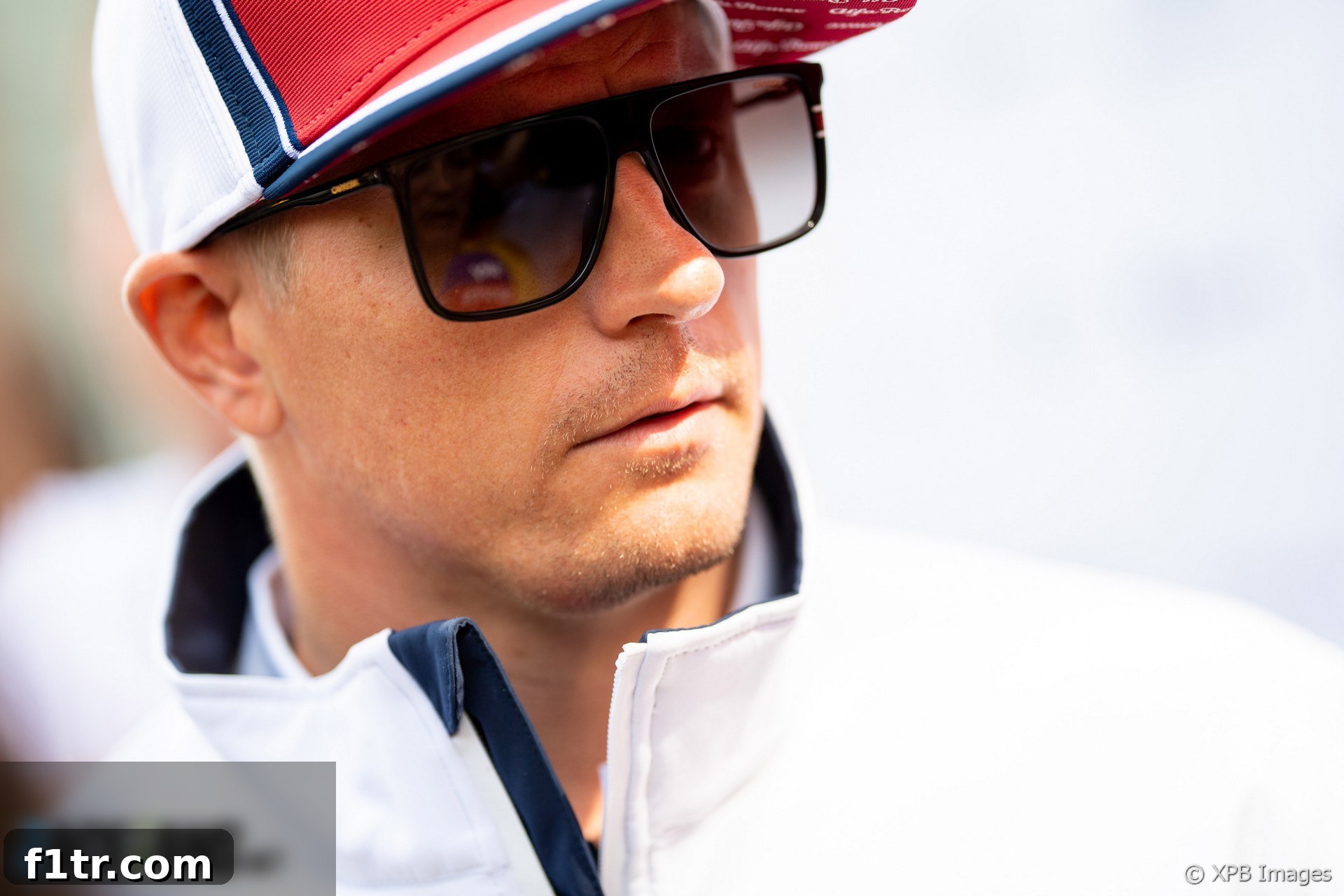
Kimi Raikkonen’s Injury Raises Concerns for Belgian GP, Marcus Ericsson on Standby
The highly anticipated return to Formula 1 action after the summer break has been met with an unexpected twist for Kimi Raikkonen and his Alfa Romeo Racing team. The veteran Finn has revealed he is nursing a leg injury, casting a significant doubt over his participation in this weekend’s prestigious Belgian Grand Prix at Spa-Francorchamps. In response to this developing situation, Alfa Romeo has promptly called upon their reserve driver, Marcus Ericsson, to be on standby, pulling him away from his scheduled IndyCar race in Portland.
Raikkonen, known for his stoic demeanor and terse responses, offered minimal details about the injury to his left leg. When pressed by reporters regarding the nature of the ailment, the 2007 world champion simply stated, “I pulled a muscle and that’s about it. We’ll see what happens.” His characteristically understated explanation left much to speculation, only adding to the uncertainty surrounding his fitness for one of the most demanding circuits on the F1 calendar. Further queries about how the injury occurred elicited a dry, “Sport, injury, getting old” – a quip that, while humorous, underscores the physical toll top-tier motorsport takes on its athletes, even during downtime.
The Reserve Driver Contingency: Marcus Ericsson Steps Up
The decision by Alfa Romeo to summon Marcus Ericsson underscores the seriousness with which the team views Raikkonen’s injury. Ericsson, who competed for Sauber (now Alfa Romeo Racing) in Formula 1 from 2014 to 2018, has since transitioned to a successful career in the IndyCar Series. His abrupt call to Spa means he will miss his commitment to the IndyCar Grand Prix of Portland, a significant disruption to his championship pursuit in another competitive racing series. This move highlights the critical role of a well-prepared reserve driver in Formula 1 and the complex logistics involved in ensuring a team is always ready for any eventuality.
Raikkonen himself acknowledged the necessity of having Ericsson on hand. “Obviously we need to have some back-up plans,” he explained. “It would be really stupid not to have our third driver in case we wouldn’t be driving, then it’s the worst-case scenario. There is a reason why every team has a third driver.” He also expressed empathy for Ericsson’s predicament, noting, “I think it’s a normal story. It’s a difficult situation for him also because he had a race but that’s how it is.” This sentiment reflects the professional sacrifices often required in the fast-paced world of motorsport, where team obligations frequently override individual sporting commitments.
Physical Demands of Spa-Francorchamps and an Injured Driver
Spa-Francorchamps is renowned for its iconic layout, challenging elevation changes, and high-speed corners, making it a true test of both car and driver. Sections like Eau Rouge/Raidillon, Pouhon, and Blanchimont subject drivers to immense G-forces, while heavy braking zones such as La Source and Les Combes demand significant leg strength and stamina. A pulled muscle in the left leg could severely hamper Raikkonen’s ability to operate the clutch (if manual) and, more critically, exert the necessary force on the brake pedal during cornering. While modern F1 cars predominantly use a foot clutch on starts and pit stops, the brake pedal is a constant, crucial input, often requiring hundreds of pounds of force over a race distance.
Even a minor muscle strain can be exacerbated by the intense vibrations and physical jostling inside an F1 cockpit. The potential for discomfort and a drop in performance would be a major concern for both Raikkonen and Alfa Romeo. The long, sweeping corners of Spa also require precise throttle and steering inputs, demanding full physical capacity and concentration, which could be compromised by persistent pain or limited mobility. This puts Raikkonen in a challenging position, as he must balance his desire to compete with the practical realities of his physical condition.
Kimi’s Veteran Resolve and Uncertainty Ahead
Despite the injury, Raikkonen maintained his characteristic pragmatism, stating he wouldn’t know the full extent of the injury’s impact until he gets behind the wheel. “We will find out tomorrow,” he said, referring to the upcoming practice sessions. “Obviously it’s impossible to try, we don’t have a simulator and that doesn’t tell an awful lot anyhow. So we will see. In my head it should be fine.” This reflects the unique nature of F1, where the true test of a driver’s fitness can only come when subjected to the extreme forces of a race car.
Raikkonen’s vast experience, with over 300 Grand Prix starts, could play a crucial role in his ability to manage the situation. His reputation as a robust and resilient competitor suggests he would only step aside if absolutely necessary. However, the team’s responsibility for driver safety and maximizing their championship points means a calculated decision must be made. The collective eyes of the F1 paddock will be on the Finn during Friday’s practice sessions, scrutinizing his movements and performance for any signs of discomfort or limitation. This period will be critical in determining whether he is fit to continue for qualifying and the race.
Alfa Romeo’s 2019 Season and the Importance of Points
The 2019 Formula 1 season has seen Alfa Romeo Racing establish itself as a consistent mid-field competitor, largely thanks to Raikkonen’s strong performances and invaluable experience. Before the summer break, Raikkonen had been a frequent points-scorer, often dragging the car into positions that seemed beyond its inherent pace. His contribution is vital for the team’s battle in the Constructors’ Championship, where every point can mean millions of dollars in prize money and crucial bragging rights.
Should Raikkonen be unable to race, it would be a significant blow to the team. While Marcus Ericsson is an experienced F1 driver, stepping into a car mid-season with no prior testing or familiarity with its current setup and nuances would be a formidable challenge, especially at a track like Spa. This incident underscores the precarious nature of F1, where driver health can suddenly shift the balance for an entire team and influence the outcome of a critical race weekend. The team will be hoping for a speedy recovery for Kimi, or at least sufficient fitness to compete at a high level.
The Road Ahead: Friday Practice and Final Decisions
The next 24 hours will be pivotal for Kimi Raikkonen and Alfa Romeo Racing. Friday’s free practice sessions will serve as the ultimate litmus test for Raikkonen’s fitness. His ability to consistently perform at the required level, without undue pain or risk, will be carefully assessed by both the driver himself and the team’s medical and strategic personnel. Should there be any lingering concerns, the FIA’s medical delegate would also have to clear him to race, adding another layer of scrutiny to the decision-making process.
The prospect of a last-minute driver change always adds an extra layer of drama to a Grand Prix weekend. For Marcus Ericsson, it presents an unexpected opportunity to return to the F1 cockpit, albeit under challenging circumstances. For Kimi Raikkonen, it’s a battle against his own body, a test of resilience that defines many elite athletes. The entire motorsport community will be keenly watching how this situation unfolds at the iconic Spa-Francorchamps circuit, eagerly anticipating the final decision regarding Raikkonen’s participation in the Belgian Grand Prix.
2019 F1 season News and Updates
Stay informed on all developments from the 2019 F1 season with our comprehensive coverage:
- Crying in the Melbourne car park at 2019 grand prix was my career low – Ocon
- McLaren Racing reports reduced £71 million loss in 2019
- Kvyat: Hockenheim podium last year was “my biggest achievement” so far
- How the FIA’s new encrypted fuel flow meter targets Ferrari’s suspected ‘aliasing’ trick
- “He smashed my office door”: 23 must-see moments from ‘Drive to Survive’ season two
Browse all 2019 F1 season articles