Lewis Hamilton Demands Enduring Anti-Racism Commitment from Formula 1
Formula 1 superstar Lewis Hamilton has intensified his calls for a sustained and unequivocal stance against racism within the sport, directly challenging both the leadership of Formula 1 and Grand Prix Drivers’ Association (GPDA) director, Romain Grosjean. Hamilton’s impassioned plea underscores a growing concern that the initial momentum behind anti-racism initiatives might be waning, stressing the critical importance of continuous advocacy and visible unity.
Advert | Become a Supporter & go ad-free
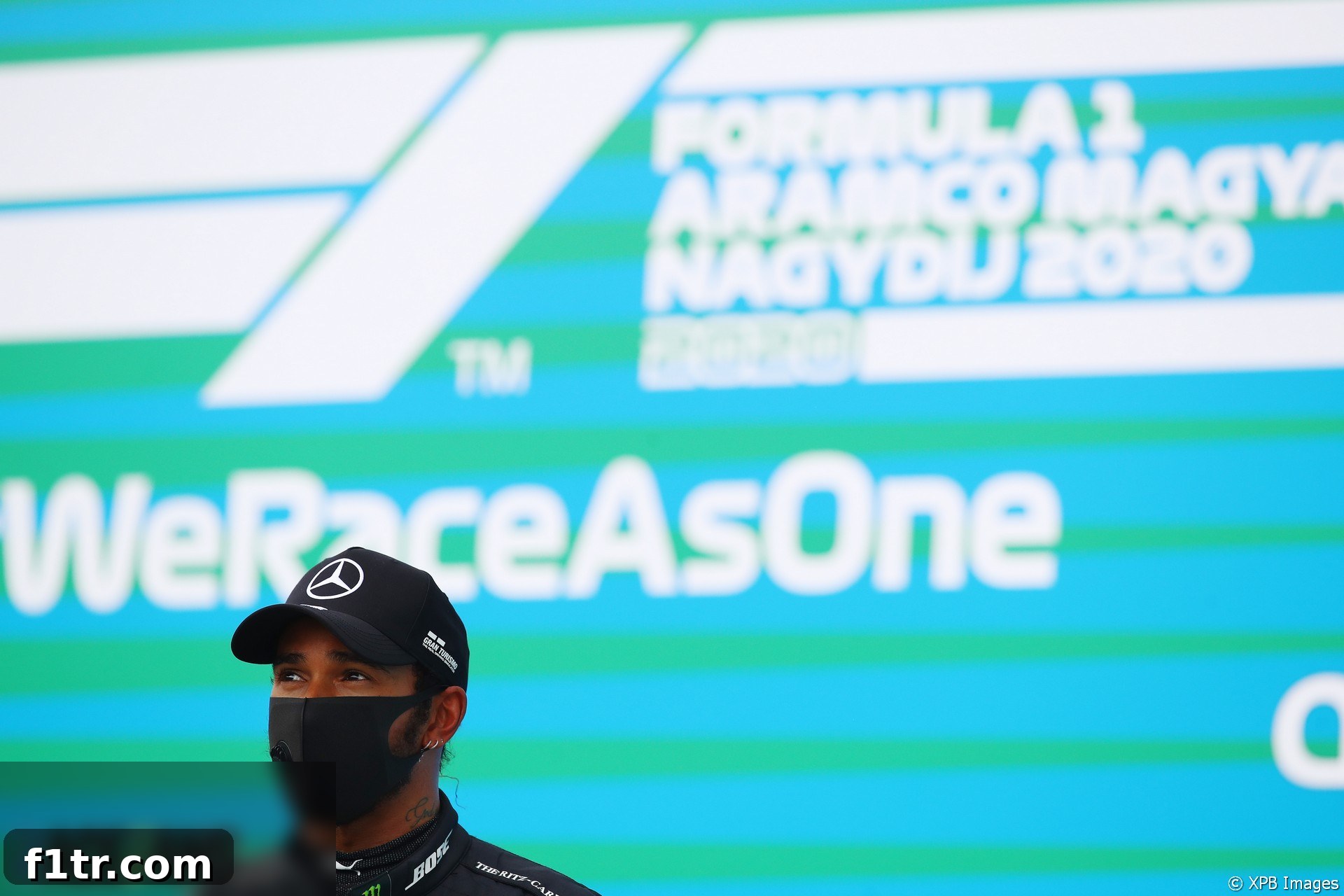
The issue came to the forefront once again during the pre-race ceremonies at the Hungarian Grand Prix. Following similar gestures at the preceding Austrian races, drivers were scheduled to assemble for a collective show of support for campaigns dedicated to eradicating racism. However, a significant change in the pre-race podium ceremony’s schedule meant the demonstration was moved to the pit lane, an alteration that, according to Hamilton, contributed to a chaotic and less impactful presentation.
The Challenge of Sustaining Momentum: Hungarian GP’s Mixed Signals
The ceremony in Hungary revealed underlying challenges in maintaining consistent driver participation. Not all drivers managed to reach the designated area in time, with several arriving late. As seen in earlier events, Hamilton, alongside a committed group of fellow drivers, chose to ‘take a knee,’ a powerful gesture of solidarity with anti-racism activists globally. This act, rooted in calls for racial justice, has become a poignant symbol of the movement.
When questioned about whether the campaign’s momentum was indeed faltering within the F1 community, Hamilton did not mince words. He pointed to perceived indifference from certain quarters, specifically mentioning Romain Grosjean. “He doesn’t think it’s important to do it – he’s one of them that thinks it was done once and that’s all we need to do,” Hamilton stated, reflecting a stark difference in perspective regarding the longevity and depth of commitment required.
Hamilton detailed his efforts to engage Grosjean on the matter, emphasizing the persistent nature of racial inequality. “So I tried to speak to him about what the problem is and that it’s not going away and we have to continue to fight for equality,” he explained. This dialogue highlights the internal complexities and varying levels of understanding among drivers regarding the gravity and sustained effort needed for social change.
A Divided Front? Grosjean’s Stance vs. Vettel’s Solidarity
The Mercedes driver further noted a worrying silence at a crucial forum. “I think this time he didn’t mention anything in the drivers’ briefing and neither did Sebastian [Vettel].” However, he quickly clarified Sebastian Vettel’s unwavering support, drawing a clear distinction. “Sebastian and I messaged each other and he stressed, as did I, the importance of continuing to do it.” This private exchange with Vettel underscores a shared commitment to the cause, forming a visible contrast to Grosjean’s reported viewpoint.
The GPDA, which represents the interests of Grand Prix drivers, plays a pivotal role in organizing collective actions. As a director, Grosjean’s reported stance, suggesting a one-off gesture is sufficient, raises questions about the association’s collective will and its capacity to champion enduring social justice initiatives. Hamilton’s pressure on Grosjean is, therefore, not just a personal appeal but a call for the GPDA to embody a more consistent and robust commitment to tackling racism.
Formula 1’s Responsibility: Crafting a Meaningful Platform
Beyond driver dynamics, Hamilton also directed his criticism towards Formula 1’s organizational efforts. He articulated plans to engage directly with the sport’s leadership to ensure future anti-racism ceremonies are handled with the seriousness and structure they deserve. “I think moving forwards we need to speak with Formula 1. They’ve got to do a better job,” he asserted, advocating for a more considered and impactful approach.
Advert | Become a RaceFans supporter andgo ad-free
The hurried execution of the pre-race gesture at the Hungarian Grand Prix particularly bothered Hamilton. “It was such a rush: Us getting out of the car, running over, quickly taking the knee… they need to do more.” This chaotic setup, he argued, diluted the powerful message intended by the gesture, reducing it to a mere formality rather than a profound statement of solidarity.
Hamilton’s frustration stemmed from a perceived disconnect between F1’s public declarations and its practical implementation. “I don’t know why they’ve only done it at the first race. They did it at the start, they’ve not done it since then. They’ve come out saying that they’re going to be fighting for diversity and racism but they’re not giving us a platform to continue to do that. It’s all rushed.” This sentiment highlights the need for Formula 1 to move beyond symbolic statements and to actively facilitate and amplify the anti-racism message with dedicated, well-organized platforms.
To address these structural shortcomings, Hamilton plans concrete steps. “So I think they could give us more time so if we speak to them I’ll probably send an email over the next couple of days and try to co-ordinate with them because they do want to do it, I guess there was just not enough communication.” His proactive approach underscores a determination to transform F1’s expressed commitments into tangible, impactful actions, ensuring that the message of equality and diversity is not merely a fleeting trend but a fundamental principle integrated into the sport’s ethos.
A Vision for Unity: Inspiring Collective Action
Hamilton’s enduring hope lies in a future where all drivers stand, or kneel, together in a unified front against racism. While acknowledging the difficulties in achieving this universal participation, he remains optimistic. “With the other drivers, there’s not a lot I can do. I gave a lot of energy in Austria to try to convince a couple of the drivers and it’s a battle.” This admission reveals the personal investment and emotional toll of his advocacy, yet he finds strength in the support of those who do participate.
He expressed profound appreciation for the drivers who have shown solidarity. “But I think what’s important is the ones that are doing it. The understanding I think is fantastic.” For Hamilton, the act of kneeling transcends a simple gesture; it signifies a deeper comprehension and commitment to the underlying issues of racial injustice. This understanding is what he hopes will eventually resonate with all his peers.
Advert | Become a RaceFans supporter andgo ad-free
Hamilton’s ultimate dream is a powerful vision of collective action and unity. “My dream is that one day the other drivers come around to it and if we get to the last race and we’re all kneeling down and showing that we’re united I think that will be beautiful.” Such a unanimous display would send an unequivocal message, not only to the millions of F1 fans worldwide but also to the broader global community, demonstrating that a sport built on fierce competition can nonetheless unite for a cause as fundamental as human equality.
The Broader Impact of Formula 1’s Anti-Racism Stance
The significance of Formula 1’s stance against racism extends far beyond the racetrack. As a global sport with a massive following across diverse cultures and continents, its actions and pronouncements carry immense weight. When drivers, particularly figures as influential as Lewis Hamilton, champion social justice, it amplifies the message and inspires dialogue in places where it might otherwise be ignored.
A consistent and robust anti-racism policy within F1 can serve as a powerful example for other sports and industries. It demonstrates that professional excellence and social responsibility are not mutually exclusive but can, in fact, be mutually reinforcing. By actively promoting diversity and inclusivity, Formula 1 has the potential to cultivate a more equitable environment not just for its participants, but also for its vast fanbase and the communities it touches globally.
Conversely, any perceived wavering or dilution of its commitment risks undermining the positive steps already taken. It could send a message that the fight against racism is a temporary trend rather than an enduring imperative. Hamilton’s advocacy, therefore, is crucial in holding the sport accountable and ensuring that its initial pledges evolve into sustained, meaningful change.
Ultimately, Lewis Hamilton’s relentless pursuit of equality within Formula 1 is a testament to his belief in the sport’s power to transcend entertainment and become a force for good. His efforts to educate, persuade, and challenge both his peers and the governing bodies are instrumental in shaping a more inclusive future for motorsport and society at large.
Related 2020 F1 season articles:
- Grosjean to make F1 test return tomorrow for first time since Bahrain horror crash
- Pictures: Wrecked chassis from Grosjean’s Bahrain fireball crash to go on display
- Bottas vs Rosberg: Hamilton’s Mercedes team mates compared after 78 races each
- F1 revenues fell by $877 million in Covid-struck 2020 season
- Hamilton and Mercedes finally announce new deal for 2021 season
Browse all 2020 F1 season articles