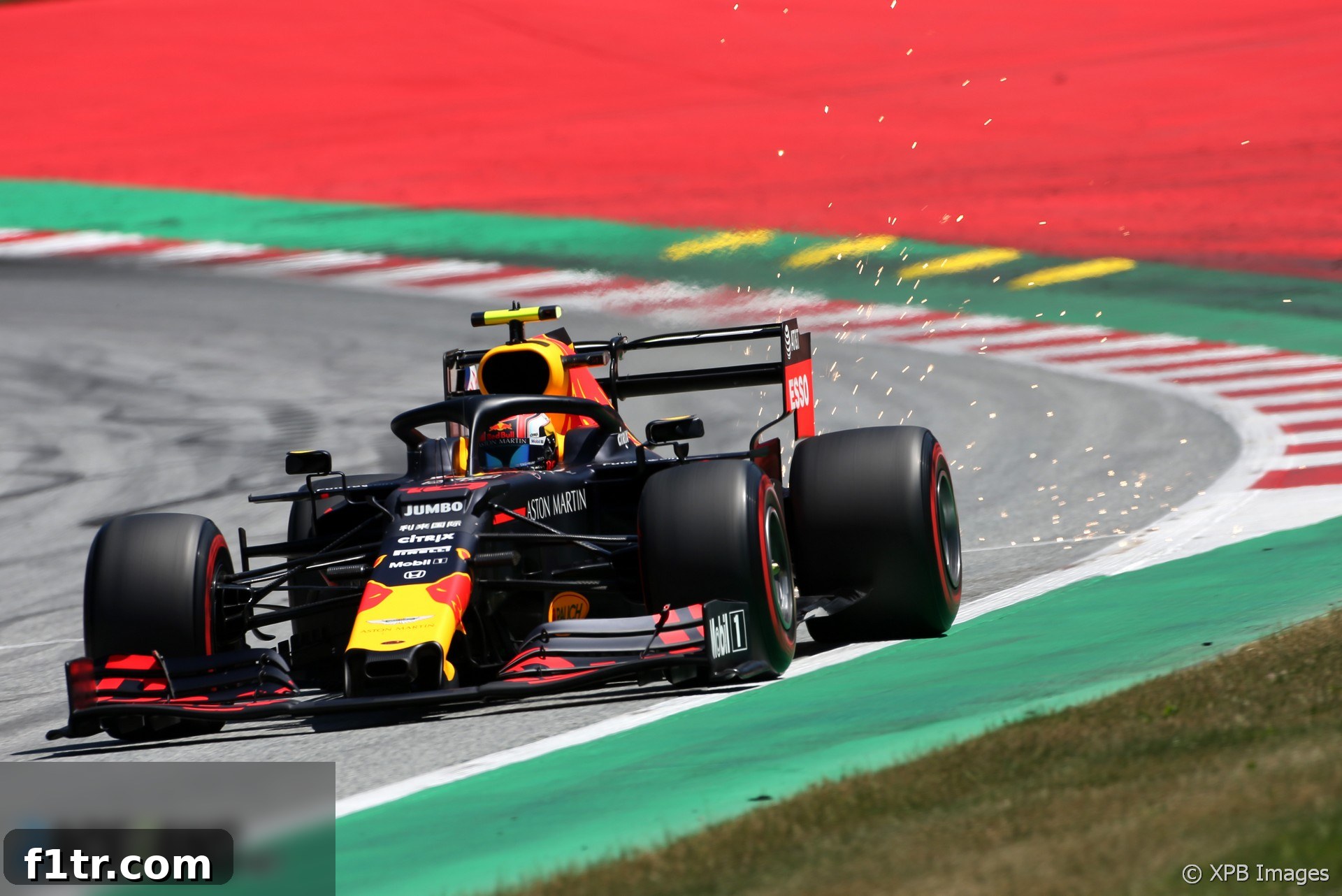
Pierre Gasly found himself grappling with a profound sense of ‘what if’ after the qualifying session for the 2019 Austrian Grand Prix. The Red Bull Racing driver, who ultimately secured ninth place on the grid, openly attributed his missed opportunity for a significantly higher starting position to a critical error at Turn 1 of the Spielberg circuit. His candid reflections highlight the razor-thin margins that often define success and disappointment at the pinnacle of motorsport.
The highly competitive qualifying session at the Red Bull Ring saw Gasly finish a mere 0.127 seconds adrift of Kevin Magnussen, who initially qualified in an impressive fifth place. This narrow gap underscored the potential that Gasly believed he had squandered, a sentiment that resonated deeply given the context of his challenging maiden season with Red Bull. The Frenchman’s performance throughout the earlier stages of qualifying had shown promise, only for a moment of imprecision to derail his Q3 aspirations.
Speaking to the media after the session, Gasly conveyed a mix of satisfaction with his initial progress and palpable frustration over his decisive mistake. “It was a good Q1, good Q2, and that’s something,” he explained, hinting at a renewed sense of confidence and consistency he had been striving to achieve. “We tried to find some consistency and managed to put some good laps in in qualifying. Things were going well, I felt good with the car in Q1, Q2, and pace was pretty good.” This positive momentum, however, took an unfortunate turn during the final qualifying segment.
A Season Under Scrutiny: Pierre Gasly’s Journey with Red Bull in 2019
The 2019 Formula 1 season was a pivotal and often tumultuous period for Pierre Gasly. Having been promoted from Toro Rosso to the senior Red Bull Racing team to replace Daniel Ricciardo, the young Frenchman faced immense pressure to perform alongside the highly-rated Max Verstappen. His early season struggles were well-documented, marked by difficulties adapting to the new car, inconsistent pace, and several incidents that put his position under increasing scrutiny. The Austrian Grand Prix, therefore, represented another crucial juncture for Gasly to demonstrate his capabilities and solidify his place within the team.
The Red Bull Ring, with its short, fast laps and distinctive elevation changes, is a circuit that demands precision and confidence. For a driver like Gasly, who was battling to find his rhythm, mastering this track was essential. The high-altitude setting also posed unique challenges for engine performance and car setup, adding another layer of complexity to the weekend. Heading into qualifying, Gasly knew that a strong performance was not just about securing a good grid slot but also about rebuilding his confidence and sending a clear message to his critics and the team.
Throughout Q1 and Q2, Gasly appeared to be doing just that. He navigated the sessions efficiently, posting competitive times and displaying a level of comfort with the RB15 that had sometimes been absent earlier in the season. His observations about feeling “good with the car” and his “pace being pretty good” were not merely platitudes but genuine indicators of a performance curve that seemed to be heading in the right direction. This steady build-up set the stage for a potentially strong showing in Q3, where the fight for the top grid positions truly intensifies.
Advert | Become a Supporter & go ad-free
The Defining Moment: A Costly Error at Turn 1 in Q3
The final segment of qualifying, Q3, is where drivers push their machinery and their skills to the absolute limit. It is a quest for perfection, where even the slightest deviation can have significant consequences. For Pierre Gasly, the first run in Q3 was “not ideal,” leaving room for improvement. It was on his second, crucial attempt that fate intervened in the form of an uncharacteristic error at the very first corner.
“Then Q3 the first run wasn’t ideal and then [on the] second run I arrived in turn one and lost the car on the entry,” Gasly recounted, the disappointment evident in his voice. “I just went over the kerb, went off-track and lost four-tenths up to Turn 3.” This description vividly paints a picture of the moment: a loss of control on entry, the car straying over the unforgiving kerbs, and the subsequent excursion off the racing line. The Red Bull Ring’s Turn 1, a relatively slow right-hander after a short DRS straight, is critical for setting up the subsequent run through Turn 2 and into Turn 3. An error here is magnified across the opening sector, costing valuable time that is almost impossible to recover on such a short lap.
The loss of four-tenths of a second in the opening corners was catastrophic for Gasly’s lap time. In Formula 1 qualifying, where grid positions are often separated by hundredths of a second, such a deficit is insurmountable. “After that the rest of the lap was good, just a mistake in Turn 1 cost me the fifth place,” he reflected. His self-assessment was clear: the car had the pace, he had the capability, but a solitary lapse in concentration or judgment denied him a prime starting spot.
The Fine Margins: P5 vs. P9 on the Grid
The difference between qualifying fifth and ninth in Formula 1 is not merely cosmetic; it has profound implications for the race itself. Starting from fifth place often means a clearer view of the first corner, less exposure to potential incidents in the midfield pack, and a better chance to run in clean air, which is crucial for tyre management and overall race pace. A fifth-place start would have placed Gasly firmly among the front-runners, offering a strong platform to challenge for significant points, perhaps even a podium if circumstances aligned. It would have also been a much-needed psychological boost for a driver under pressure, validating his efforts and demonstrating his potential.
Conversely, starting from ninth place plunges a driver into the thick of the midfield battle. The opening laps become a high-stakes chess match of avoiding contact, managing traffic, and often compromising on optimal lines. Overtaking at the Red Bull Ring, while possible, requires precision and aggressive driving, adding another layer of challenge. Gasly himself acknowledged the potential impact, stating, “I think we had the pace to clearly be fifth, we ended only a tenth from P5.” He was convinced that P5 was within his grasp and that such a result would have been highly satisfying. “Not better than that, but [that] already would have been a pretty good one and would have been pretty satisfying after a pretty good weekend. So I’m quite disappointed with myself with the mistake in Turn 1.”
His self-criticism underscores the high standards expected of Formula 1 drivers and their innate drive for perfection. In a sport where fractional differences dictate fortunes, a single error, no matter how small, can reshape a driver’s entire weekend and, at times, their season trajectory.
Beyond Qualifying: Gasly’s Austrian GP Race and Red Bull Trajectory
The qualifying result for the 2019 Austrian Grand Prix set the tone for Pierre Gasly’s race. Despite the setback, he managed to improve his position during Sunday’s main event, ultimately finishing in seventh place. While a solid points finish, it still left many wondering what might have been had he started higher up the grid. The race itself was a memorable one for Red Bull, with Max Verstappen delivering a stunning performance to take victory, further highlighting the contrasting fortunes within the team.
Gasly’s struggles and the consistent underperformance relative to Verstappen eventually led to his demotion back to Toro Rosso (soon to be AlphaTauri) later in the 2019 season, a decision that sent shockwaves through the F1 paddock. This marked a difficult period for the French driver, but it also served as a catalyst for his remarkable resurgence. Freed from the intense pressure of the senior team, Gasly rediscovered his form at AlphaTauri, culminating in a sensational victory at the 2020 Italian Grand Prix and establishing himself as a highly respected and consistent performer in Formula 1. His journey stands as a testament to resilience and the profound impact of driver confidence and team environment.
The 2019 Austrian Grand Prix qualifying, therefore, serves as a poignant reminder of the relentless demands of Formula 1. It showcases how a fleeting moment of imperfection can dictate the immediate outcome, yet it also subtly hints at the broader narrative of a driver’s growth, challenges, and eventual triumph. Pierre Gasly’s regret over Turn 1 in Austria was a snapshot of a season-long battle, a moment that, while disappointing at the time, contributed to the rich tapestry of his Formula 1 career.
Don’t miss anything new from RaceFans
Follow RaceFans on social media to stay updated with the latest news, analysis, and features from the world of Formula 1:
- Join RaceFans on Facebook
- Follow RaceFans on Twitter
- Get daily email updates from RaceFans
Advert | Become a RaceFans supporter andgo ad-free
More from the 2019 F1 season
Explore a collection of articles and insights related to the thrilling 2019 Formula 1 season:
- Crying in the Melbourne car park at 2019 grand prix was my career low – Ocon
- McLaren Racing reports reduced £71 million loss in 2019
- Kvyat: Hockenheim podium last year was “my biggest achievement” so far
- How the FIA’s new encrypted fuel flow meter targets Ferrari’s suspected ‘aliasing’ trick
- “He smashed my office door”: 23 must-see moments from ‘Drive to Survive’ season two
Browse all 2019 F1 season articles