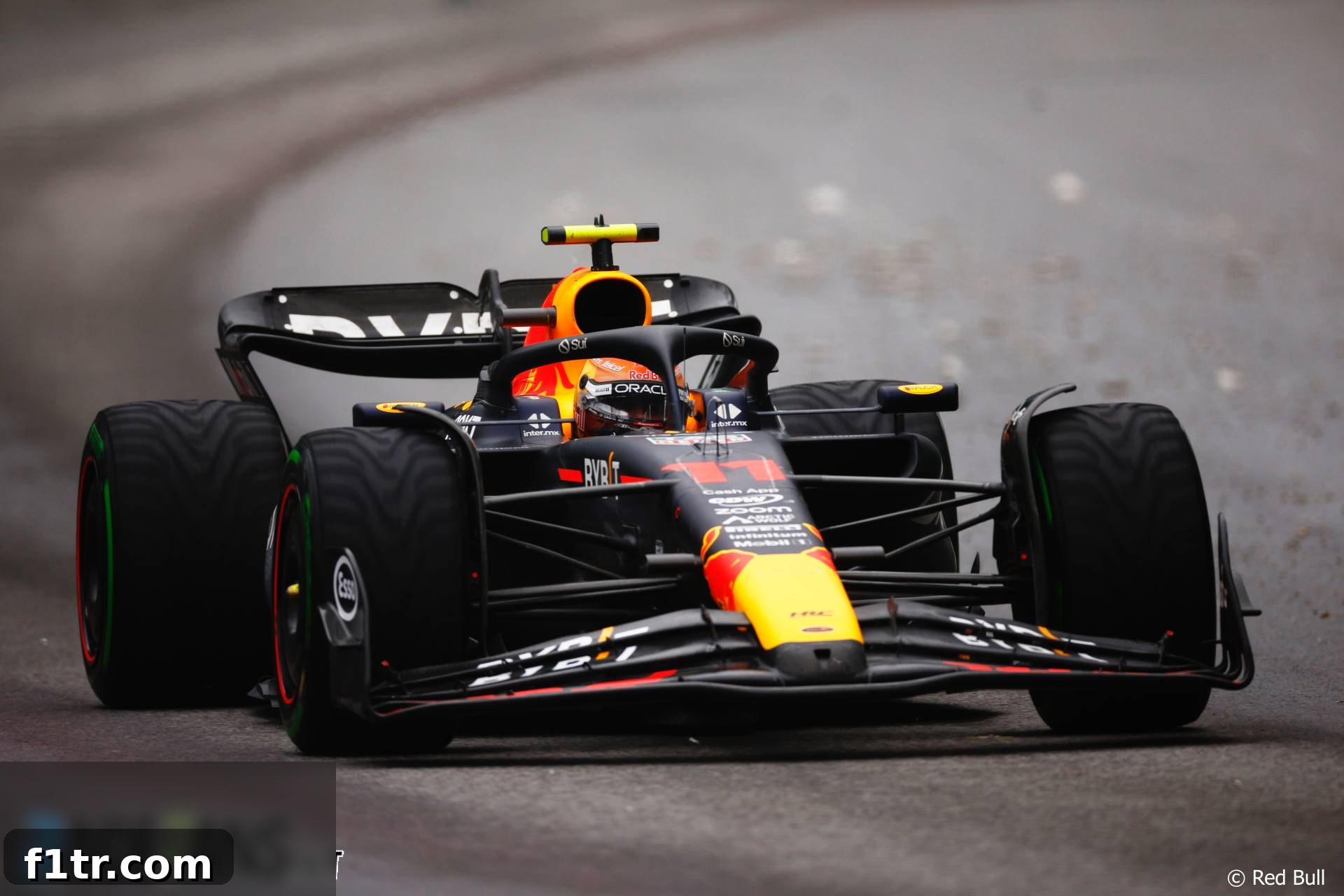
In the high-stakes world of Formula 1, where every tenth of a second can dictate victory or defeat, qualifying performance is often seen as a direct indicator of a car’s raw pace. Yet, the 2023 season has presented a fascinating paradox: while Red Bull Racing has been relentlessly dominant in the championship, their qualifying statistics, particularly concerning Q3 appearances, tell a more nuanced story. Surprisingly, formidable rivals like Ferrari, Mercedes-AMG, and Aston Martin have collectively outpaced Red Bull in reaching the final, crucial qualifying segment this year, challenging the conventional wisdom of what true dominance looks like on a Saturday afternoon.
Advert | Become a Supporter & go ad-free
This intriguing discrepancy primarily stems from the varying fortunes of Red Bull’s two drivers. While reigning world champion Max Verstappen has largely continued his formidable form, his teammate, Sergio Perez, has endured a challenging run in qualifying. Out of the initial eight Grand Prix weekends of the 2023 Formula 1 season, Perez has unfortunately failed to advance to Q3 in a staggering half of them. This pattern underscores a critical area for improvement within the championship-leading team, as consistent two-car participation in Q3 is vital for maximizing strategic options and championship points.
Perez’s struggles were particularly evident ahead of the Canadian Grand Prix, where he missed the cut for the final top-10 shootout for the third consecutive weekend. This series of setbacks began much earlier in the season. Verstappen, by contrast, has only failed to make Q3 once, an anomaly at the second round of the season in Saudi Arabia when a driveshaft issue during Q2 prematurely ended his session. This single instance highlights Verstappen’s near-perfect qualifying record, starkly contrasting with his teammate’s more inconsistent outings.
Sergio Perez’s first significant qualifying hurdle of the season emerged at the Australian Grand Prix, two races after Verstappen’s driveshaft incident. Throughout the final practice session in Melbourne, Perez grappled with persistent braking problems, issues that unfortunately plagued him into qualifying. His session ended abruptly on his very first flying lap in Q1, as he skidded into a gravel trap at Turn 3, unable to recover. This incident marked the beginning of a challenging period for the Mexican driver, as he subsequently only managed to reach Q3 once across five consecutive races – an impressive run to pole position at the Miami Grand Prix. His qualifying performance remains a significant talking point, particularly given Red Bull’s otherwise unassailable position in both championships.
Advert | Become a RaceFans supporter andgo ad-free
2023 F1 Qualifying Statistics: A Deep Dive into Q1, Q2, and Q3 Dynamics
The 2023 Formula 1 season has provided a rich tapestry of qualifying performances, showcasing both expected dominance and surprising vulnerabilities. Understanding the intricacies of Q1, Q2, and Q3 appearances and eliminations offers a clearer picture of each team’s raw pace and consistency. Tap each layer of the interactive charts (if available) to compare the qualifying journeys of teammates and assess team performance throughout the initial phases of the season.
Q1 Eliminations: The Starting Line Scramble
At the absolute opposite end of the grid from Red Bull’s championship aspirations, the situation at Williams Racing presents a mirror image in terms of qualifying challenges. Williams holds the unenviable record for the most Q1 eliminations among all teams, with a total of nine throughout the season so far. However, much like the paradox at Red Bull, this statistic doesn’t entirely reflect the individual prowess of one of their drivers. Alexander Albon has proven remarkably adept at avoiding an early exit, sidestepping a first-round elimination on all but two occasions. His consistent ability to extract performance from the Williams FW45 in the crucial opening segment often allows him to advance, showcasing a significant individual contribution despite the team’s overall struggles.
In contrast, Mercedes-AMG has maintained a pristine record, being the sole team to have entirely avoided a Q1 elimination at every single round of the season thus far. This perfect streak highlights the consistent baseline performance and reliability of their W14 challenger, ensuring both Lewis Hamilton and George Russell consistently progress to at least Q2. Ferrari’s solitary Q1 exit came courtesy of Charles Leclerc at the Spanish Grand Prix, where an unexpected handling problem saw him drop out in a shocking 19th place. Similarly, Aston Martin’s only Q1 elimination was a narrow miss for Lance Stroll in Miami, illustrating that even top-tier teams are not entirely immune to the occasional Saturday blip, though such instances remain rare exceptions rather than a pattern.
Advert | Become a RaceFans supporter andgo ad-free
Q2 Eliminations: The Midfield Gauntlet
The Q2 session often represents the true crucible of the Formula 1 midfield, a fierce battleground where teams vie for a coveted spot in the top ten. This season, Alfa Romeo has found itself exiting in Q2 more frequently than any other team, highlighting their struggles to consistently find that extra tenth required to push into the final segment. What makes this statistic particularly telling is the highly competitive nature of the current Formula 1 grid: all nine of Alfa Romeo’s rivals have managed to make it into Q3 on more than one occasion. This underscores the intense rivalry within the midfield, where even marginal gains or losses can dramatically alter a team’s qualifying fortunes.
It’s a stark reminder of how much the landscape of Formula 1 has evolved. Not so long ago, it was common to see certain teams struggle throughout entire seasons, consistently failing to escape the clutches of Q1, let alone progress through Q2. The current era, however, boasts a tightly packed midfield where multiple teams possess the potential to reach Q3 on any given weekend. Teams like Haas, AlphaTauri, and even Alpine and McLaren frequently find themselves in this precarious Q2 battle, often seeing their hopes for a strong starting position hinge on a fraction of a second. Alfa Romeo’s challenge lies in consistently elevating their performance to navigate this midfield gauntlet, converting their Q2 participation into more frequent Q3 appearances to maximize their points-scoring opportunities on race day.
Advert | Become a RaceFans supporter andgo ad-free
Q3 Appearances: The Fight for Pole Position
Despite Red Bull’s overwhelming lead in the Constructors’ Championship, the statistics for Q3 appearances reveal an unexpected twist. Ferrari’s inherent strength in terms of raw one-lap pace has seen them reach Q3 more often than any other team so far this year. This consistent ability to extract maximum performance from their car over a single qualifying lap highlights the potential of the SF-23, even if its race performance has often been inconsistent. The Prancing Horse consistently puts both Charles Leclerc and Carlos Sainz Jnr into the final qualifying segment, demonstrating their engineering prowess in optimizing the car for peak Saturday performance.
Moreover, due to Sergio Perez’s aforementioned qualifying struggles, both Mercedes-AMG and Aston Martin have also managed to accrue more Q3 appearances than Red Bull as a team. This is a significant metric, indicating a deeper pool of consistent qualifying performance across their driver pairings. Mercedes, with Lewis Hamilton and George Russell, and Aston Martin, with the formidable Fernando Alonso consistently performing, have shown a greater ability to place both their cars in the crucial top-ten shootout. This consistent presence in Q3 often provides a crucial strategic advantage on Sunday, offering better grid positions and clearer air at the start of the race.
McLaren is another team that frequently showcases stronger qualifying performance than its race pace. The Woking-based squad managed to get both of its cars into Q3 at the Canadian Grand Prix, mirroring a similar strong showing in Spain. However, despite their promising grid positions, McLaren frustratingly failed to score any points at the Spanish event just two weeks prior. This highlights a common challenge for some teams: transforming impressive one-lap pace into sustained race performance, often due to factors like tyre degradation or race strategy. The ability to reach Q3 is undoubtedly important, but ultimate championship success hinges on converting those starting positions into valuable points on Sundays.
Advert | Become a RaceFans supporter andgo ad-free
Intra-Team Battles: The Ultimate Test of Pace
Beyond team-level statistics, the head-to-head qualifying battles between teammates offer a compelling insight into individual driver performance, car adaptation, and the sheer pressure of Formula 1. These internal rivalries are often the most direct comparison available, shedding light on who is truly extracting the maximum potential from their machinery on a Saturday afternoon. As of the current standings, Alexander Albon stands out as the only driver to maintain a flawless record against his teammate, having comprehensively out-qualified Logan Sargeant in every single round of the season so far. This 8-0 scoreline not only underscores Albon’s impressive talent but also highlights Sargeant’s ongoing learning curve in his rookie F1 season.
Other significant battles include the commanding lead of Fernando Alonso over Lance Stroll at Aston Martin (7-1), demonstrating the veteran Spaniard’s undiminished pace and relentless consistency. Similarly, Lando Norris holds a solid advantage over rookie Oscar Piastri at McLaren (7-1), indicating a strong hierarchy within the team, though Piastri is showing promising signs of adapting. At Haas, Nico Hulkenberg has largely had the upper hand over Kevin Magnussen (6-2), while Yuki Tsunoda has similarly outpaced Nyck de Vries at AlphaTauri (6-2), putting pressure on the rookie drivers.
The Red Bull intra-team battle of Max Verstappen vs. Sergio Perez stands at 5-1 in Verstappen’s favor, a clear testament to the Dutchman’s unparalleled qualifying prowess and his ability to consistently extract performance when it matters most. Elsewhere, the Alpine pairing of Esteban Ocon and Pierre Gasly has seen Ocon slightly ahead (5-3), indicating a closely matched and evolving rivalry. Similarly, Valtteri Bottas holds a 5-3 lead over Zhou Guanyu at Alfa Romeo, showcasing the experienced Finn’s continued ability to perform.
Perhaps the most tightly contested battles are those at Ferrari and Mercedes. Charles Leclerc and Carlos Sainz Jnr are evenly matched at 4-4, reflecting the close competition and varied circuit strengths between the two drivers. The same applies to the Mercedes duo of Lewis Hamilton and George Russell, also tied at 4-4, suggesting both drivers are maximizing the W14’s potential and pushing each other to new heights. These head-to-head comparisons are not just statistics; they are narratives of ambition, skill, and the relentless pursuit of perfection in the world’s fastest sport.
| 2023 F1 Qualifying Head-to-Head Scores | ||
|---|---|---|
| Alexander Albon | 8 – 0 | Logan Sargeant |
| Lando Norris | 7 – 1 | Oscar Piastri |
| Lance Stroll | 1 – 7 | Fernando Alonso |
| Kevin Magnussen | 2 – 6 | Nico Hulkenberg |
| Nyck de Vries | 2 – 6 | Yuki Tsunoda |
| Max Verstappen | 5 – 1 | Sergio Perez |
| Esteban Ocon | 5 – 3 | Pierre Gasly |
| Valtteri Bottas | 5 – 3 | Zhou Guanyu |
| Charles Leclerc | 4 – 4 | Carlos Sainz Jnr |
| Lewis Hamilton | 4 – 4 | George Russell |
Methodology: The driver reaching the later qualifying stage or setting the faster lap time in identical sessions is deemed the winner, excluding instances of technical faults preventing a time. Data pertains solely to Grand Prix qualifying sessions, not Sprint races.
Support Independent F1 Journalism: Become a RaceFans Supporter
RaceFans thrives on the passionate support of its dedicated readership. By contributing a modest amount each month or annually (or the equivalent in your local currency), you play a crucial role in funding the creation, hosting, and continuous development of RaceFans content, ensuring its future growth and independence. Your support directly enables us to deliver in-depth analysis, breaking news, and engaging articles for Formula 1 fans worldwide.
Join the RaceFans Supporter community today to enjoy an ad-free browsing experience and contribute directly to high-quality Formula 1 analysis. Discover more about the benefits and sign up through the links below:
- Become a RaceFans Supporter
- RaceFans Supporter FAQ
Further Reading: The 2023 F1 Season in Review
- FIA President Cleared of Alleged Interference in 2023 Races
- Drive to Survive Season Six Sees Further Drop in Viewing Figures
- Drive to Survive Season Six Prioritizes Fan Favorites Over Max Verstappen
- RaceFans’ Comprehensive 2023 F1 Season Review
- Top 10 F1 Drivers with the Biggest Charges Through the Field in 2023
Browse All 2023 F1 Season Articles