2021 F1 Season: The Shifting Sands of Team Performance After Seven Rounds
As the 2021 Formula 1 season passed its seventh qualifying session at the demanding Paul Ricard circuit, the competitive landscape has come into sharper, more defined focus. The championship battle, initially predicted to be a fierce duel between two titans, has evolved into a multi-layered contest where every team’s performance, from the front-runners to the backmarkers, tells a significant story of engineering prowess, strategic acumen, and driver skill. This pivotal point in the season provides ample opportunity to dissect the intricate pecking order that has solidified across the grid, highlighting shifts, surprises, and crucial implications for the remainder of what promises to be an unforgettable year.
Despite the inherent differences between the high-speed, street-circuit challenge of Baku and the more conventional, expansive layout of Paul Ricard, the relative competitiveness among the F1 teams has shown remarkable consistency. Such steadfastness in performance across varied track characteristics speaks volumes about the underlying strengths and weaknesses of each constructor. Intriguingly, only two teams, Red Bull Racing and Scuderia Ferrari, have exchanged positions within the hierarchy since the Azerbaijan Grand Prix, underscoring both the stability of the pecking order and the significant gains made by those who have managed to buck the trend.
Red Bull Ascends: Dominance at Paul Ricard and Championship Implications
Red Bull Racing delivered a commanding performance at Paul Ricard, emphatically setting the quickest individual lap during qualifying. This was only the second time in the 2021 season that they definitively established the pace, although there have been other instances where they demonstrated the potential to do so. This benchmark performance underscores their growing momentum and the impressive evolution of the RB16B chassis. Max Verstappen’s pole position at a venue historically considered a stronghold for Mercedes-AMG Petronas F1 Team has profoundly bolstered Red Bull’s championship credentials. It sent a clear message that their challenge for both the drivers’ and constructors’ titles is not merely aspirational but a formidable reality, built on consistent pace and strategic execution.
Verstappen’s ability to extract maximum performance from his car, combined with Red Bull’s relentless development push, has positioned them as the team to beat. Their ascent has not been without its challenges, but the French Grand Prix served as a testament to their engineering excellence and their drivers’ unwavering determination. The shift in dynamics at the front, with Red Bull now definitively leading Mercedes in the qualifying pecking order, sets the stage for a thrilling and unpredictable championship battle that could go down to the wire.
Ferrari’s Resurgence: From Mid-Table to Consistent Top Three Contender
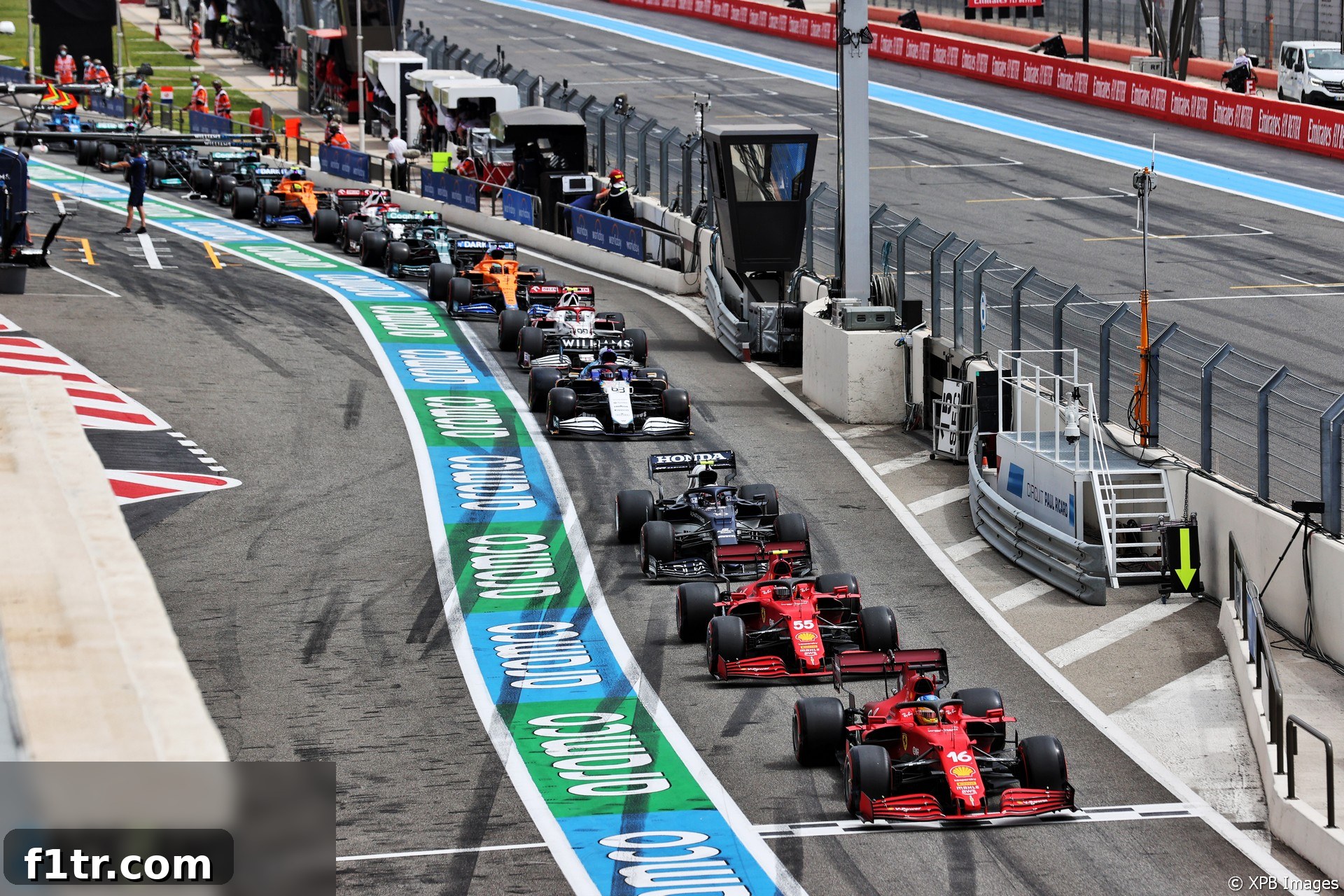
In a significant development for the passionate Tifosi and the wider F1 community, Scuderia Ferrari has demonstrated a remarkable resurgence, ascending to third place in the qualifying hierarchy, surpassing McLaren and even briefly challenging Mercedes’ hold. This marks a notable improvement for the Italian outfit, who earlier in the season appeared to be hovering at the lower end of the top five. However, a string of impressive performances, including securing two consecutive pole positions prior to the French Grand Prix, has firmly established Ferrari as a consistent fixture in the top three. While they may not yet possess the outright pace to consistently challenge Mercedes and Red Bull for race wins on all circuits, their progress is undeniable and highly encouraging.
The strategic brilliance and aerodynamic improvements brought to the SF21 have clearly paid dividends, allowing Charles Leclerc and Carlos Sainz to consistently extract competitive lap times. This upward trajectory is a testament to the hard work at Maranello, indicating that the team is successfully navigating the new regulations and finding innovative ways to optimize their package. Ferrari’s consistent presence at the sharp end of the grid adds another exciting dimension to the 2021 season, transforming the battle for constructor points and offering compelling races as they aim to consolidate their position and potentially challenge further up the grid.
The Midfield Skirmish: McLaren, AlphaTauri, Alpine, and Aston Martin
The midfield battle remains as intense as ever, with McLaren facing stiff competition. Despite being Ferrari’s closest rival for third in the constructors’ championship, the Woking-based team found themselves beaten to fourth place by AlphaTauri at Paul Ricard. This development will undoubtedly be a cause for concern for McLaren, who had shown strong promise earlier in the season. Maintaining their competitive edge against a rapidly improving AlphaTauri is crucial for their championship ambitions, and they will need to analyze their performance closely to regain momentum.
AlphaTauri, on the other hand, continues to impress. Their consistent strong outings, particularly with Pierre Gasly, highlight their potential as a formidable midfield force capable of challenging the established top teams on their day. Their ability to outqualify McLaren at Paul Ricard signals a significant step forward and adds another layer of intrigue to the fight for best of the rest.
Further back, Alpine and Aston Martin are steadily trending towards establishing themselves in sixth and seventh positions on outright pace, respectively. Both teams have shown flashes of brilliance but are still working to find the consistency that would allow them to regularly challenge higher up the grid. Their battle for these crucial points-paying positions adds excitement to the middle segment of the races, as they strive to optimize their packages and maximize their potential.
The Backmarkers and Notable Performances: Haas, Williams, and Alfa Romeo
A discernible gap persists between the core midfield and the remaining teams. Haas F1 Team has consistently found itself at the slowest end of the spectrum in every race of the season so far. This consistent struggle underscores the challenges faced by the team, particularly with a developing car and two rookie drivers. However, Mick Schumacher’s remarkable appearance in Q2 at Paul Ricard was a shining moment of unexpected brilliance, defying the team’s typical performance profile and offering a glimpse of his immense talent and potential. Such individual achievements, against the odds, provide valuable motivation and highlight the sheer determination within the team.
Alfa Romeo Racing and Williams Racing occupy positions eight and nine, respectively, striving to challenge for points whenever an opportunity arises. Both teams are fighting hard to close the gap to the midfield, demonstrating resilience and flashes of competitive pace, particularly from their experienced drivers. The battle among these backmarker teams for any slight advantage or a rare points finish is as fiercely contested as any other part of the grid, embodying the competitive spirit of Formula 1.
Regulatory Impact and the Evolving Pace of F1
The 2021 season has also provided further evidence of how the teams’ aerodynamic performance has been meticulously curtailed by the off-season regulatory changes. Specifically, modifications to the floor and diffuser areas were introduced to reduce downforce, aiming to bring the cars closer together and manage rising cornering speeds. Max Verstappen’s pole position time at Paul Ricard, while impressive, was only marginally quicker than the time Lewis Hamilton set in 2018 when Formula 1 made its return to the French track. This comparison serves as a stark reminder of the significant impact these technical directives have had, effectively clipping the wings of the current generation of F1 cars and demonstrating the constant push-and-pull between regulatory bodies and engineering innovation.
Despite the constraints, teams have shown incredible adaptability, finding ingenious ways to recover lost downforce and maintain blisteringly fast lap times. This constant evolution, driven by the challenges of new rules, is a hallmark of Formula 1 and ensures that the sport remains at the pinnacle of motorsport engineering. The subtle yet impactful changes in regulations continue to shape the performance narrative of the season, demanding continuous development and strategic adjustments from every team on the grid.
Teams’ Performance Rankings at Each Race During 2021
The table below provides a comprehensive overview of how teams have ranked in qualifying performance across the initial seven races of the 2021 F1 season. This data highlights the dynamic shifts and consistent trends observed in the competitive pecking order, offering valuable insights into each team’s progress and struggles.
| Race | Mercedes | Red Bull | Ferrari | McLaren | AlphaTauri | Alpine | Aston Martin | Alfa Romeo | Williams | Haas |
|---|---|---|---|---|---|---|---|---|---|---|
| Bahrain | 2 | 1 | 3 | 5 | 4 | 6 | 7 | 8 | 9 | 10 |
| Emilia-Romagna | 1 | 2 | 4 | 3 | 5 | 6 | 7 | 9 | 8 | 10 |
| Portugal | 1 | 3 | 5 | 2 | 7 | 4 | 6 | 9 | 8 | 10 |
| Spain | 1 | 2 | 3 | 5 | 7 | 4 | 6 | 8 | 9 | 10 |
| Monaco | 3 | 2 | 1 | 4 | 5 | 8 | 6 | 7 | 9 | 10 |
| Azerbaijan | 2 | 3 | 1 | 5 | 4 | 6 | 7 | 8 | 9 | 10 |
| France | 2 | 1 | 3 | 5 | 4 | 6 | 7 | 8 | 9 | 10 |
Quotes: Dieter Rencken
Looking Ahead: The Road to the Championship
The 2021 F1 season continues to deliver exhilarating competition and unexpected twists. The clarity provided by the Paul Ricard round allows us to project how the championship might unfold. Red Bull’s ascendancy, Ferrari’s impressive recovery, and the relentless midfield skirmishes guarantee a captivating spectacle for fans worldwide. As teams head into the crucial middle phase of the season, every development, every upgrade, and every strategic decision will play a vital role in shaping the final outcome. The battle for supremacy, both among the drivers and constructors, is far from over, promising more thrilling moments and dramatic shifts in the pecking order as the season progresses.
Related Articles: 2021 French Grand Prix Insights
Stay informed with deeper analysis and perspectives from the 2021 French Grand Prix:
- The potentially crucial differences in how Bottas and Perez help their team mates
- How much-maligned Paul Ricard produced “one of the most exciting races for five years”
- Todt would “prefer less controversy” in Formula 1
- Wolff encouraged by ‘real progress’ from Bottas in French GP
- Red Bull’s French GP win disproves accusations over tyres and wings – Horner
Browse all 2021 French Grand Prix articles