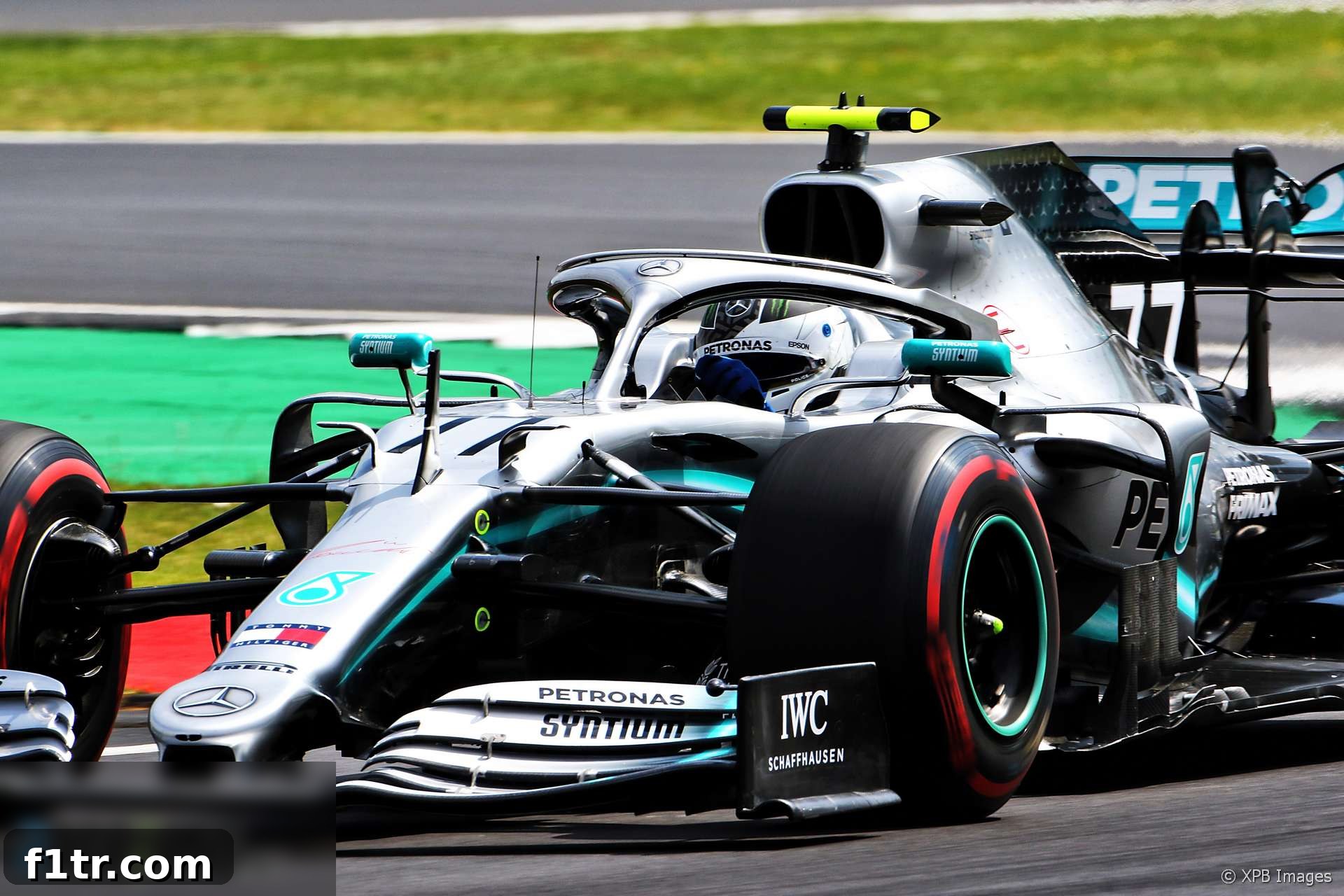
In a fascinating strategic move ahead of the upcoming Hungarian Grand Prix, Mercedes, the reigning Formula 1 world champions, have opted for what appears to be the most conservative tyre selection among all the competing teams. This decision immediately sets the stage for a compelling strategic battle at the Hungaroring, a circuit renowned for its demanding nature and the critical role tyre management plays in achieving success. While most rivals have leaned towards a more aggressive allocation of the softer compounds, Mercedes has notably chosen fewer sets of the soft tyre (C4) for their drivers, signalling a potential focus on race-day flexibility and endurance rather than outright single-lap qualifying pace.
The Hungaroring, often dubbed “Monaco without the walls” due to its tight, twisty layout and lack of long straights, presents a unique challenge for tyre management. High ambient temperatures, a notoriously abrasive track surface, and a relentless sequence of corners combine to place significant stress on the tyres, particularly the rears. Consequently, understanding tyre degradation and having the right compounds available for different phases of the race weekend is paramount. Pirelli, the sole tyre supplier for Formula 1, has brought their C2 (Hard), C3 (Medium), and C4 (Soft) compounds to Budapest, covering a range of performance and durability characteristics.
Mercedes’ choice of just eight sets of the soft C4 compound for each of their drivers, Lewis Hamilton and Valtteri Bottas, is a stark contrast to the rest of the field. This allocation, fewer than any of their direct competitors, suggests a high degree of confidence in their W10 challenger’s ability to extract performance from the more durable medium (C3) and hard (C2) tyres. It could also indicate a strategic intent to pursue longer stints during the race, potentially avoiding an extra pit stop or gaining an advantage when other teams are forced to manage rapidly degrading softs. Given the difficulty of overtaking at the Hungaroring, a robust one-stop strategy or an extended opening stint could prove decisive.
In contrast to Mercedes’ cautious approach, their main rivals, Ferrari and Red Bull Racing, have both opted for a slightly more aggressive allocation, selecting nine sets of the soft C4 compound for their drivers. This choice hints at their readiness to push for maximum performance in qualifying, aiming to secure strong grid positions, which are particularly crucial on a track where track position is king. The additional soft tyre might also give them more options for a two-stop strategy, allowing for shorter, faster stints on the grippier compound during the race. Teams often use these extra soft sets in practice sessions to fine-tune car setup and explore the tyre’s full performance window, providing valuable data for race strategy.
Even more assertive in their tyre choices are teams like Renault, Alfa Romeo Racing, and Toro Rosso, who have committed to an even higher number of soft tyres, with each of their drivers receiving a generous ten sets of the C4 compound. This strategy typically implies a strong focus on qualifying performance, aiming to maximize their chances of progressing through Q1 and Q2, and potentially challenging for points from a better starting position. For midfield teams, securing a higher grid slot can be a game-changer, even if it means sacrificing some flexibility in race strategy or necessitating a more aggressive two-stop approach. The added grip of the softs can deliver those crucial tenths of a second in qualifying laps.
Beyond the soft tyre allocations, there are notable variations in the selection of the harder compounds as well. Most teams have chosen at least one extra set of the C2 hard tyres for one or both of their drivers. This provision offers a valuable safety net for unexpected race conditions or the possibility of extending a stint significantly. However, Racing Point has gone a step further, providing two sets of the hard tyres for both Sergio Perez and Lance Stroll, suggesting a keen interest in exploring highly durable long-run options. This could be a tactical response to their car’s characteristics or an anticipation of very high degradation rates on the softer compounds, allowing them to remain competitive even if the race becomes an attrition battle. Conversely, McLaren’s Carlos Sainz Jr. and Lando Norris have stuck to the single mandatory set of hard tyres each, indicating their confidence in managing the softer compounds or a preference for maximizing their allocation of medium and soft tyres for performance.
The intricate dance of tyre selection extends its influence across the entire Grand Prix weekend. During free practice sessions, teams will meticulously assess the degradation rates of each compound, especially the C4 soft, which is prone to overheating and blistering on the demanding Hungaroring surface. The data gathered here is vital for formulating qualifying and race strategies. In qualifying, the choice of tyre for Q2 can significantly impact a driver’s starting compound for the race, offering a tactical advantage or disadvantage. For instance, successfully setting a competitive time on the medium (C3) tyre in Q2 allows a driver to start the race on a more durable compound, potentially enabling a longer first stint and greater strategic flexibility compared to those starting on softs.
Come race day, these pre-determined tyre choices will directly shape the pit stop windows, the potential for undercut or overcut strategies, and ultimately, the race outcome. Teams with more soft tyres might have the option for an aggressive two-stop strategy with multiple soft stints, aiming for bursts of speed, while those with more hard or medium tyres might target a one-stop strategy, relying on consistent pace and superior durability. The unpredictable nature of the Hungaroring, combined with varying tyre strategies, promises a thrilling tactical battle where the quickest car doesn’t always win, but the smartest strategy often does. Temperature fluctuations, safety car periods, and unexpected incidents can further complicate matters, requiring teams to adapt their plans on the fly, making pre-race tyre allocation even more critical.
Historically, the Hungarian Grand Prix has often been decided by strategic prowess rather than raw pace alone. Tyre wear and temperature management have consistently played pivotal roles, leading to diverse pit stop strategies and nail-biting finishes. The 2019 selections clearly reflect this strategic depth, with each team attempting to optimize their resources for what they believe will be the most effective approach on this challenging circuit. Mercedes’ gamble on fewer softs could either pay off handsomely by offering superior race pace and strategy flexibility, or it could leave them vulnerable in qualifying if their rivals extract more one-lap performance. Conversely, teams with more softs might gain initial track position but face greater degradation challenges later in the race.
Ultimately, the upcoming Hungarian Grand Prix is poised to be a captivating display of both driving skill and strategic acumen. The tyre choices made weeks in advance are not arbitrary; they are the result of extensive simulations, past performance analysis, and a calculated gamble on how the circuit and conditions will evolve over the weekend. Mercedes’ conservative stance, juxtaposed with the more aggressive approaches of Ferrari, Red Bull, and other midfield teams, creates a diverse strategic chessboard. Fans can expect a tense and unpredictable race, where every pit stop and every tyre compound decision will be scrutinized, as teams vie for supremacy on one of Formula 1’s most unique and demanding tracks.
2019 Hungarian Grand Prix Tyre Selections: A Detailed Overview
| Driver | Team | Hard (C2) | Medium (C3) | Soft (C4) |
|---|---|---|---|---|
| Lewis Hamilton | Mercedes | 2 | 3 | 8 |
| Valtteri Bottas | Mercedes | 1 | 4 | 8 |
| Sebastian Vettel | Ferrari | 2 | 2 | 9 |
| Charles Leclerc | Ferrari | 1 | 3 | 9 |
| Max Verstappen | Red Bull | 1 | 3 | 9 |
| Pierre Gasly | Red Bull | 1 | 3 | 9 |
| Daniel Riccairdo | Renault | 2 | 1 | 10 |
| Nico Hulkenberg | Renault | 1 | 2 | 10 |
| Kevin Magnussen | Haas | 2 | 2 | 9 |
| Romain Grosjean | Haas | 1 | 3 | 9 |
| Carlos Sainz Jnr | McLaren | 1 | 3 | 9 |
| Lando Norris | McLaren | 1 | 3 | 9 |
| Sergio Perez | Racing Point | 2 | 2 | 9 |
| Lance Stroll | Racing Point | 2 | 2 | 9 |
| Kimi Raikkonen | Alfa Romeo | 2 | 1 | 10 |
| Antonio Giovinazzi | Alfa Romeo | 1 | 2 | 10 |
| Daniil Kvyat | Toro Rosso | 1 | 2 | 10 |
| Alexander Albon | Toro Rosso | 2 | 1 | 10 |
| George Russell | Williams | 1 | 3 | 9 |
| Robert Kubica | Williams | 2 | 2 | 9 |
Related Articles: Exploring the 2019 F1 Season
- Crying in the Melbourne car park at 2019 grand prix was my career low – Ocon
- McLaren Racing reports reduced £71 million loss in 2019
- Kvyat: Hockenheim podium last year was “my biggest achievement” so far
- How the FIA’s new encrypted fuel flow meter targets Ferrari’s suspected ‘aliasing’ trick
- “He smashed my office door”: 23 must-see moments from ‘Drive to Survive’ season two
Browse all 2019 F1 season articles