McLaren Emerges as Formidable Force While Mercedes Seeks Consistency Ahead of New F1 Season
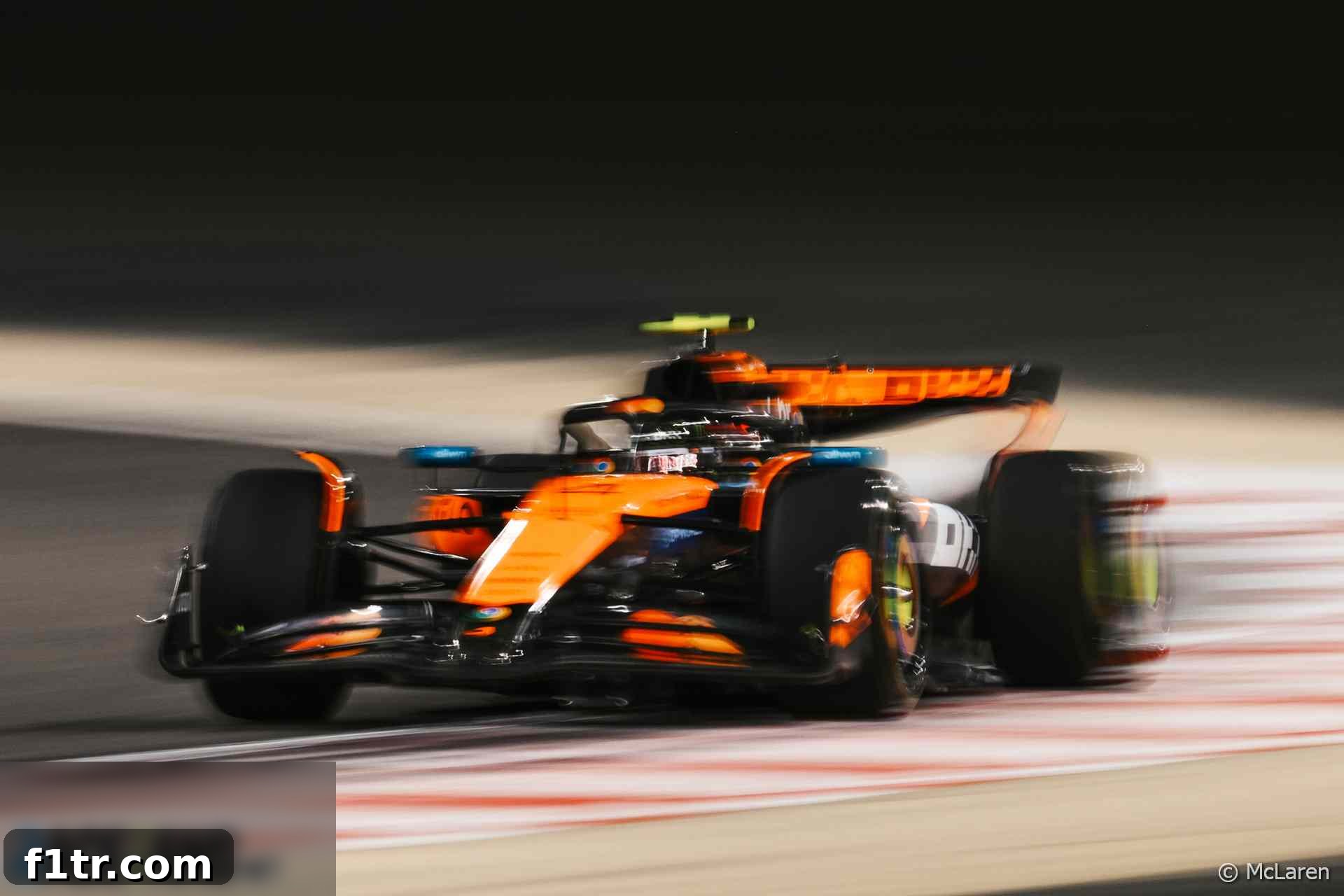
As the Formula 1 season opener rapidly approaches, the paddock is buzzing with predictions and observations following the crucial pre-season testing sessions. A prevailing sentiment, voiced by none other than Mercedes driver George Russell, suggests that McLaren has positioned itself as the team to beat, showcasing a performance that has left a significant impression on their rivals.
Russell, a key figure in the Mercedes AMG Petronas Formula One Team, offered a candid assessment of the competitive landscape after witnessing McLaren’s impressive pace and reliability during testing. His remarks highlight a shifting dynamic at the front of the grid, signaling a potential challenge to the established order and setting the stage for an electrifying start to the championship.
George Russell Identifies McLaren as the Pace-Setters After Strong Testing Showing
Reflecting on the comprehensive pre-season testing, George Russell did not mince words when discussing the front-running contenders. Speaking to the official F1 channel, the British driver articulated a clear belief in McLaren’s current form. “We can’t kid ourselves,” Russell stated unequivocally. “We know McLaren are without doubt the favourites right now. They look absolutely dominant and I’m sure they’re going to be the ones to beat.” This strong endorsement from a rival driver underscores the sheer impact of McLaren’s performance in Bahrain, which traditionally provides a crucial, albeit not definitive, indication of early season potential.
McLaren’s resurgence through the latter half of the previous season was a remarkable narrative, seeing them climb from a challenging start to securing multiple podiums and even victories. This momentum appears to have carried over into the new year, with their latest challenger demonstrating impressive speed and handling characteristics. Russell’s comments serve as a testament to the hard work put in by the Woking-based outfit, and they inevitably raise expectations for McLaren to be a consistent threat at the sharp end of the grid, potentially vying for race wins from the very first Grand Prix.
Mercedes’ Quest for Consistency: Russell’s Hopes for the W15 Challenger
While acknowledging McLaren’s strong position, George Russell also expressed guarded optimism regarding Mercedes’ own prospects for the upcoming season. His primary hope for the new W15 car revolves around consistency, a quality that proved elusive for the team in recent years. “The car’s feeling good,” Russell shared, reflecting on the initial impressions from testing. “I think last year, even though we finished in the lowest [position] that we have done in the last three years, we won the [highest] number of races.” This observation highlights the paradox of Mercedes’ recent performance: moments of brilliance interspersed with periods of struggle.
The Mercedes W14 often demonstrated a “peaky” nature, capable of delivering exceptional performance on certain tracks and conditions, such as their dominant showing in Las Vegas. However, this was frequently offset by weekends where the car significantly underperformed, leaving both drivers and fans frustrated. Russell’s aspiration for the W15 is to iron out these extreme fluctuations. “I have confidence that this car is going to be slightly more consistent, not quite as peaky,” he explained. “So we might not see those mega highs like we saw in Vegas, and just sort of wiping the floor with everybody, but then hopefully we’re not going to see those lows as well that we saw at a few races.” Achieving greater consistency would be a monumental step for Mercedes, allowing them to maximize their points haul across the season and mount a more sustained challenge for championship honors, rather than relying on sporadic bursts of pace.
The pursuit of a more predictable and adaptable car is a common goal for all teams in Formula 1. A consistent platform enables drivers to extract performance more reliably, fine-tune setups with greater confidence, and ultimately reduces the risk of unexpected poor weekends. For Mercedes, a team accustomed to championship dominance, regaining this fundamental characteristic is paramount to their ambitions of returning to the very top of the sport.
The Weight of Expectation: Oscar Piastri’s Caution Ahead of Home Race
Despite the high praise from competitors like George Russell, McLaren driver Oscar Piastri remained notably reserved when discussing expectations for the new season, particularly regarding his home race, the Australian Grand Prix. The young Australian talent, who impressed greatly in his rookie year, was cautious about fueling premature excitement. When pressed about the possibility of becoming Australia’s first home F1 race winner this weekend, Piastri expertly managed expectations, stating, “I know what you want me to say, and everyone’s headline can be that, but we’ll see.” His measured response reflects a professional understanding of the unpredictable nature of Formula 1 and the often-misleading impressions derived from pre-season testing.
Piastri’s caution is well-founded. While testing provides invaluable data, it doesn’t replicate race conditions, varying fuel loads, different tire strategies, or the intense pressure of a competitive Grand Prix weekend. Teams often run varying programs, making direct comparisons difficult. “No one really knows what to expect,” Piastri emphasized during an FIA press conference, echoing a sentiment widely shared across the paddock. This pragmatism is crucial for drivers and teams alike, preventing complacency and ensuring a focused approach as the season kicks off.
Navigating the Unique Challenges of the Australian Grand Prix
Expanding on his cautious outlook, Oscar Piastri highlighted the specific variables associated with the season-opening Australian Grand Prix at Albert Park, Melbourne. He acknowledged McLaren’s positive testing experience, stating, “We’re pretty happy with how our test went.” However, he quickly drew a distinction between the Bahrain International Circuit, where testing took place, and the Albert Park street circuit. “Melbourne is a completely different track to Bahrain,” he pointed out. Bahrain is known for its abrasive surface and high temperatures, while Melbourne offers a semi-street circuit layout with different grip levels and a more varied profile, often featuring cooler conditions.
Beyond the track characteristics, Piastri also underscored the significant role of the weather in Melbourne, which can be notoriously unpredictable. “The weather is going to be different to Bahrain and different every hour, by the look of it,” he noted. Fluctuating weather conditions, ranging from bright sunshine to sudden downpours, can dramatically impact car setup, tire performance, and overall race strategy, adding an extra layer of complexity and uncertainty to the event. This unpredictability means that even a strong car in testing might face unforeseen challenges in Melbourne.
“So it’s going to be an interesting weekend for sure,” Piastri concluded, expressing a hope for a strong showing but deferring definitive predictions. “But I think hopefully we’re expecting to be somewhere up the front. Whether that’s right at the pointy end, we’ll wait until Saturday.” This cautious optimism is a hallmark of experienced drivers who understand that true performance hierarchy only becomes clear once the competitive sessions of a race weekend, particularly qualifying, begin.
The F1 Landscape Post-Testing: Expectations and Unseen Potential
The contrasting perspectives from George Russell and Oscar Piastri encapsulate the prevailing mood across the Formula 1 grid after pre-season testing. While some teams appear to have made significant strides, and rivals are quick to point out potential threats, the inherent secrecy and strategic gamesmanship of testing mean that the true pecking order remains shrouded in mystery. Every team endeavors to hide its full potential, running different fuel loads, engine modes, and tire compounds to obscure their actual performance levels.
The data gathered during testing provides engineers with a crucial baseline, but it is often only through the rigors of a full Grand Prix weekend – with all teams pushing to their absolute limits in qualifying and racing wheel-to-wheel – that the true competitive landscape is revealed. This makes the opening rounds of any F1 season particularly thrilling, as the carefully guarded secrets of winter development are finally exposed on track. Fans eagerly await to see whether McLaren can indeed convert their impressive testing form into real-world results and how Mercedes’ quest for consistency will translate into lap times and race positions.
Ultimately, the first few races of the season, beginning with the Australian Grand Prix, will be critical in establishing early momentum and defining the championship narratives. Both McLaren and Mercedes, along with other top teams, will be pushing hard to make a strong statement, knowing that every point can prove decisive in the long and arduous championship battle.
2025 Australian Grand Prix
- F1 rules change to prevent repeat of Verstappen-Bearman Australian GP confusion
- Contact with team mate may have led to Bortoleto’s Australian GP crash
- Hamilton dismisses ‘negativity’ over his radio calls. ‘Other drivers are almost abusive’
- Antonelli “got really scared” when he made “big save” on first lap of Australian GP
- Williams explain role played by car’s systems in Sainz’s race-ending crash
Browse all 2025 Australian Grand Prix articles