Austrian Grand Prix 2020: Mercedes Dominance Faces Key Challenges on Race Day
The highly anticipated and delayed start of the 2020 Formula 1 season at the Austrian Grand Prix has unfurled with a familiar tale of Mercedes dominance. After a clean sweep of all three practice sessions and securing a commanding one-two lockout in qualifying, the Silver Arrows appear to be in a league of their own. However, as the focus shifts to Sunday’s pivotal race, a critical factor looms large that could introduce unforeseen challenges for the championship leaders: the escalating track temperature. This crucial element, coupled with bold strategic gambles from their closest rivals and a striking new car livery, promises to make the opening race of the season a thrilling and unpredictable affair, keeping fans on the edge of their seats.
Advert | Become a Supporter & go ad-free
The specter of rising temperatures casts a significant shadow over Mercedes’ otherwise flawless performance. History serves as a potent reminder: exactly twelve months prior, at this very circuit, cooling issues proved to be Mercedes’ Achilles’ heel. The combination of scorching Austrian summer heat, the Red Bull Ring’s relatively high altitude (which impacts air density and thus cooling efficiency), and specific cooling configurations on their W10 car collectively led to their first defeat of that season. While it’s highly improbable that a team of Mercedes’ unparalleled caliber would repeat such a fundamental engineering error, the revised weather forecast for Sunday predicts ambient temperatures climbing towards a challenging 30°C – substantially hotter than initially anticipated at the beginning of the weekend, pushing the limits of car design.
Adding another layer of intrigue and complexity to Mercedes’ weekend is the striking new black livery adorning their W11 car. This significant aesthetic overhaul, implemented to demonstrate the team’s unwavering commitment to diversity and opposition to racism, is a noble and powerful statement that has garnered widespread acclaim. However, Mercedes Team Principal Toto Wolff candidly admitted on Saturday that this change could potentially have an unintended consequence for the car’s thermal management. Darker colors, by their very nature, absorb more solar radiation and thus more heat than lighter ones. This could subtly compromise the car’s ability to reject heat – a critical aspect for optimal performance, component longevity, and overall reliability in the intensely demanding world of Formula 1.
The Black Livery Conundrum: A Technical Gamble for Mercedes?
Wolff elaborated on the team’s ongoing assessment of this unique situation, stating, “The messaging and the marketing is very important. But if performance is being harmed, that’s obviously not great. We have made some calculations, but tomorrow when the weather is expected to be around 30 degrees, we will see whether our simulations with a silver car have been different to the results on track with a black car. So [it’s a] fair point. It’s a little bit of an unknown to us.” This frank admission from the team principal underscores the delicate balance between making powerful social statements and the relentless, often brutal, pursuit of on-track performance in elite motorsport. While the direct impact of the livery might be subtle, in a sport where victory margins are often measured in mere milliseconds, every single factor, no matter how small, has the potential to influence the outcome.
While it would be easy to overstate the role of a paint job, the significant shift in ambient conditions is certainly not lost on Mercedes’ closest rivals, Red Bull Racing and Scuderia Ferrari. Both teams are closely monitoring the latest weather forecasts, hoping that the hotter conditions might just play directly into their hands, creating an unexpected opportunity to challenge the seemingly unassailable Silver Arrows. The prospect of Mercedes potentially struggling with cooling issues, however minor, offers a glimmer of hope for the chasing pack.
Red Bull’s Strategic Gambit: A Calculated Tire Risk for Max Verstappen
Red Bull Racing, competing at their home circuit, is keenly aware of the potential for a shift in fortunes. Paul Monaghan, Red Bull’s Head of Car Engineering, reflected on last year’s race with a touch of nostalgia: “We were blessed last year with particularly warm conditions and a Mercedes that was not equipped to run in warm conditions so they dropped away quite a bit.” However, he quickly tempered expectations, adding, “[But] I don’t suppose they’re going to fall into that helpful trap for us tomorrow.” This suggests a pragmatic recognition that Mercedes will undoubtedly have learned valuable lessons from their past mistakes, yet Red Bull is prepared with its own innovative counter-strategy designed to maximize their opportunities.
A significant cornerstone of Red Bull’s race day plan revolves around a daring tire strategy. While most of the front-runners, including Lewis Hamilton and Valtteri Bottas, opted for the C4 soft compound for their fastest qualifying laps – thereby committing to starting the race on this grippier but less durable tire – Max Verstappen made a bold and unconventional choice, qualifying on the C3 medium compound. This pivotal decision was made with the anticipated warmer weather firmly in mind, aiming to provide a distinct advantage over the course of the Grand Prix.
Monaghan provided a detailed explanation for this strategic rationale: “If you look at Friday’s longer runs in cool conditions the C4 tyre I think for everybody exhibited a reasonable amount of drop-off or degradation. And the yellow wall [medium] tyre looks to stand up a little bit better.” He further emphasized that if the forecast for an even warmer Sunday holds true, “it will make it we think a bit harder for the C4 to survive. So we’ve opted to try and give ourselves a better tyre for the first [stint] and make our selections from there.” This strategy is specifically designed to give Verstappen a longer and potentially more consistent first stint, enabling him to push harder or significantly delay his pit stop compared to his competitors on the softer, faster-wearing rubber.
Interestingly, Verstappen’s teammate, Alexander Albon, who will start two places behind Max in fifth position, qualified on the soft tire. This deliberate divergence in tire strategy provides Red Bull with invaluable tactical flexibility. As Monaghan keenly noted, “So if the C4 struggles tomorrow then we’re on a C3 with Max, and equally if the C4 is stunning tomorrow, we’re on a C4 with Alex. And we can pull Max in at a point and put him onto something else. So it’s all to play for, really. At least we’re not lining up on the same tyre two spots behind the pole-sitter.” This sophisticated dual approach is a classic Formula 1 tactic, allowing the team to effectively react to varying track conditions, unexpected race incidents, and the evolving strategies of their main competitors, thereby maximizing their chances for a strong points haul.
Ferrari’s Steep Decline and Hopes for a Weather Miracle
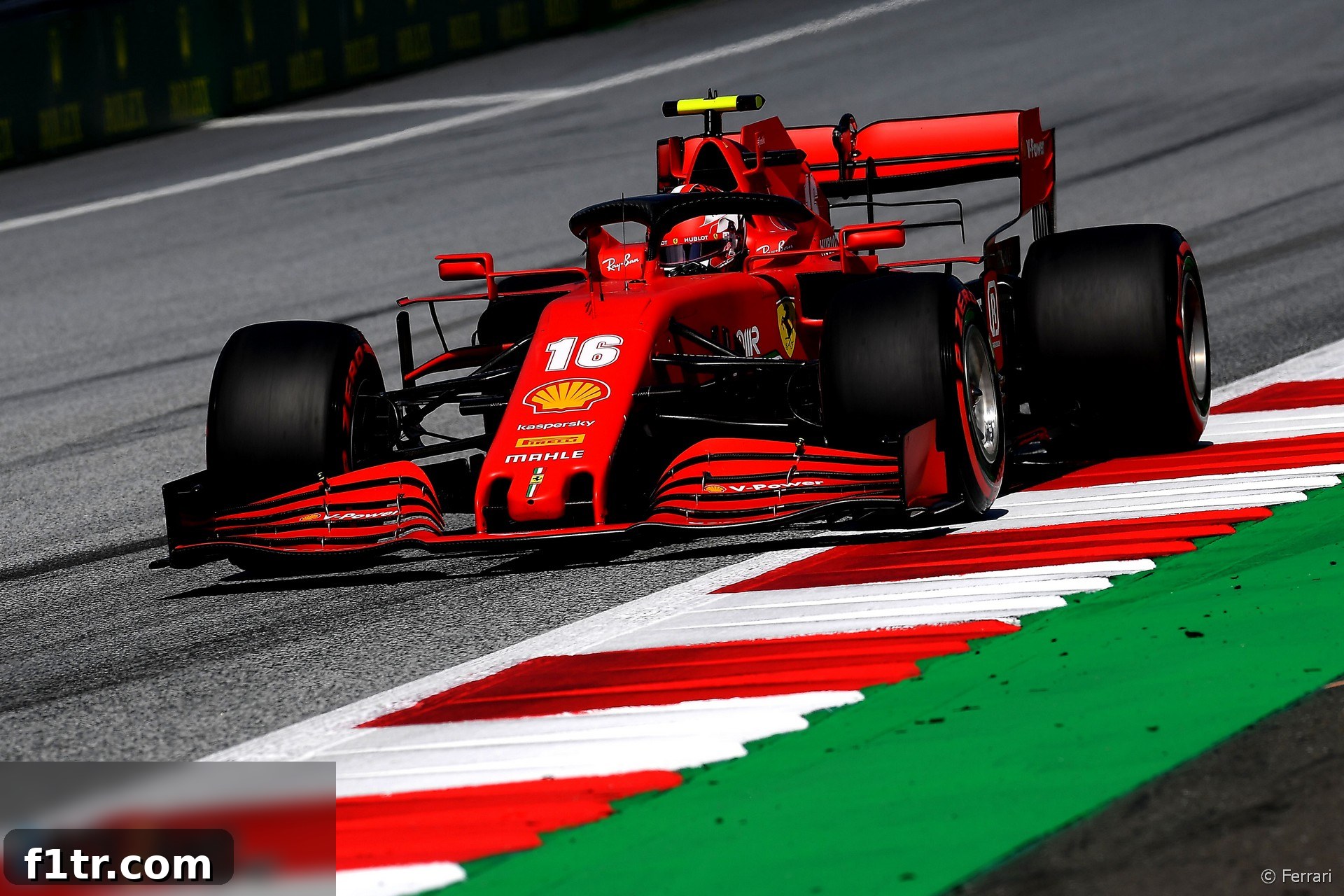
For Scuderia Ferrari, the revered Italian team, the start to the 2020 season has been nothing short of grim and deeply concerning. A disastrous qualifying session saw Charles Leclerc manage only seventh place, while four-time world champion Sebastian Vettel failed to even reach Q3 – a truly significant and disheartening blow for a team with such a rich history of success. Sporting Director Laurent Mekies openly admitted that the team is pinning some of its hopes on the forecasted hotter weather conditions, believing it could slightly alter the competitive landscape in their favor. “It’s much hotter again tomorrow,” he said. “And it will change a little bit the pecking order. It won’t be a revolution, but things will change.”
However, the stark and undeniable reality for Ferrari extends far beyond mere strategy or the whims of weather changes. The team has suffered a significant, measurable, and alarming hit to its straight-line speed performance over the past 12 months. This dramatic deficit is strikingly evident and painfully clear in the official speed trap data from qualifying. At this very race last year, Charles Leclerc not only secured a brilliant pole position but was also the quickest driver through the speed trap, clocking an impressive 325.7 kph. Fast forward to this year, and Leclerc finds himself at the absolute opposite end of the speed trap table, a staggering 13.3 kph slower. Sebastian Vettel has also experienced a substantial loss of 8.3 kph in top speed. This dramatic and widespread decline, coupled with significant lap time losses across all three Ferrari-powered teams (Ferrari, Alfa Romeo, and Haas), is a clear and unequivocal indication that Ferrari’s once-formidable power unit is no longer the dominant force it was a mere season ago. The exact reasons for this sharp decline have been widely debated and speculated upon within the F1 paddock, but the irrefutable on-track evidence speaks for itself.
Despite the challenging circumstances and the undeniable performance deficit, Mekies expressed his continued faith in his talented drivers: “It’s going to be a big fight and we know Charles and Seb are very good at that, and therefore try to give them the best weapon to be able to fight in these conditions.” While such optimistic rhetoric is expected, the underlying performance issues, particularly the significant loss in outright power, leave Ferrari facing an immense uphill battle to salvage a respectable result from the Austrian Grand Prix. Their cautious hopes for a “tight field” behind Mercedes clearly suggest they are primarily aiming to compete vigorously in the highly competitive midfield battle rather than realistically challenging for podium finishes or race victories.
The 2020 Austrian Grand Prix is thus poised to deliver an opening race packed with strategic depth, intriguing performance variables, and intense on-track battles. While Mercedes currently holds a clear and dominant advantage, the variable elements of rising temperature, unpredictable tire degradation, and daring strategic gambles from Red Bull could certainly inject a substantial dose of spice and excitement into the race. Meanwhile, Ferrari’s arduous battle against its own power unit deficit will undoubtedly be a key and closely watched storyline throughout the Grand Prix. The stage is perfectly set for a captivating and memorable start to what promises to be an extraordinary Formula 1 season.
Go ad-free for just £1 per month>> Find out more and sign up
Sector Times: A Closer Look at Lap Performance
Analyzing individual sector times provides granular insight into where drivers gain or lose crucial time around the challenging Red Bull Ring. These detailed figures highlight the specific strengths and weaknesses of each car and driver combination in the distinct sections of the circuit, offering a deeper understanding of qualifying performance.
| Driver | Sector 1 | Sector 2 | Sector 3 |
|---|---|---|---|
| Valtteri Bottas | 16.011 (2) | 27.905 (1) | 18.984 (1) |
| Lewis Hamilton | 15.898 (1) | 27.934 (2) | 19.024 (2) |
| Max Verstappen | 16.093 (4) | 28.045 (3) | 19.256 (3) |
| Lando Norris | 16.162 (7) | 28.159 (4) | 19.305 (5) |
| Alexander Albon | 16.165 (8) | 28.232 (7) | 19.347 (6) |
| Sergio Perez | 16.120 (5) | 28.180 (5) | 19.362 (7) |
| Charles Leclerc | 16.423 (18) | 28.215 (6) | 19.260 (4) |
| Carlos Sainz Jnr | 16.134 (6) | 28.293 (9) | 19.446 (9) |
| Lance Stroll | 16.190 (9) | 28.278 (8) | 19.451 (10) |
| Daniel Ricciardo | 16.085 (3) | 28.436 (11) | 19.478 (11) |
| Sebastian Vettel | 16.272 (13) | 28.400 (10) | 19.381 (8) |
| Pierre Gasly | 16.239 (12) | 28.456 (13) | 19.565 (13) |
| Daniil Kvyat | 16.199 (10) | 28.455 (12) | 19.530 (12) |
| Esteban Ocon | 16.402 (17) | 28.647 (14) | 19.576 (14) |
| Romain Grosjean | 16.222 (11) | 28.719 (15) | 19.740 (16) |
| Kevin Magnussen | 16.438 (19) | 28.756 (16) | 19.970 (20) |
| George Russell | 16.396 (16) | 28.945 (18) | 19.717 (15) |
| Antonio Giovinazzi | 16.331 (15) | 28.892 (17) | 19.952 (19) |
| Kimi Raikkonen | 16.291 (14) | 28.948 (19) | 19.918 (18) |
| Nicholas Latifi | 16.476 (20) | 29.378 (20) | 19.903 (17) |
Speed Trap: Unmasking Top-End Performance
The speed trap figures are a revealing indicator of a car’s aerodynamic efficiency and raw engine power. This data starkly highlights the significant performance gaps across the field, particularly Ferrari’s struggles compared to the dominant Mercedes-powered cars and even other midfield competitors.
| Pos | Driver | Car | Engine | Speed (kph/mph) | Gap |
|---|---|---|---|---|---|
| 1 | Lewis Hamilton | Mercedes | Mercedes | 322.5 (200.4) | – |
| 2 | Valtteri Bottas | Mercedes | Mercedes | 321.6 (199.8) | -0.9 |
| 3 | Sergio Perez | Racing Point | Mercedes | 321.2 (199.6) | -1.3 |
| 4 | Antonio Giovinazzi | Alfa Romeo | Ferrari | 320.4 (199.1) | -2.1 |
| 5 | Lando Norris | McLaren | Renault | 320.1 (198.9) | -2.4 |
| 6 | Kimi Raikkonen | Alfa Romeo | Ferrari | 320.0 (198.8) | -2.5 |
| 7 | Lance Stroll | Racing Point | Mercedes | 319.7 (198.7) | -2.8 |
| 8 | Alexander Albon | Red Bull | Honda | 319.1 (198.3) | -3.4 |
| 9 | Daniel Ricciardo | Renault | Renault | 319.0 (198.2) | -3.5 |
| 10 | George Russell | Williams | Mercedes | 318.3 (197.8) | -4.2 |
| 11 | Romain Grosjean | Haas | Ferrari | 318.3 (197.8) | -4.2 |
| 12 | Carlos Sainz Jnr | McLaren | Renault | 318.0 (197.6) | -4.5 |
| 13 | Daniil Kvyat | Toro Rosso | Honda | 317.7 (197.4) | -4.8 |
| 14 | Pierre Gasly | Toro Rosso | Honda | 316.8 (196.9) | -5.7 |
| 15 | Max Verstappen | Red Bull | Honda | 316.8 (196.9) | -5.7 |
| 16 | Esteban Ocon | Renault | Renault | 315.3 (195.9) | -7.2 |
| 17 | Kevin Magnussen | Haas | Ferrari | 314.8 (195.6) | -7.7 |
| 18 | Sebastian Vettel | Ferrari | Ferrari | 313.2 (194.6) | -9.3 |
| 19 | Nicholas Latifi | Williams | Mercedes | 313.0 (194.5) | -9.5 |
| 20 | Charles Leclerc | Ferrari | Ferrari | 312.4 (194.1) | -10.1 |
Advert | Become a RaceFans supporter andgo ad-free
Over to You: Share Your Austrian Grand Prix Predictions
With Mercedes looking incredibly strong but facing potential thermal uncertainties, Red Bull playing a tactical masterclass with diversified tire strategies, and Ferrari grappling with a significant and concerning performance deficit, the 2020 Austrian Grand Prix promises a fascinating and unpredictable race. Can anyone truly challenge Mercedes’ seemingly unstoppable momentum and claim victory? What can Ferrari realistically hope to salvage from what has been a deeply challenging start to the season for the Scuderia? And who among the highly competitive midfield pack will emerge as the ‘best of the rest’ to score valuable points?
We invite you to share your insightful opinions, predictions, and views on the upcoming Austrian Grand Prix in the comments section below. We eagerly look forward to hearing your thoughts on this thrilling and unique season opener!
More on the 2020 Austrian Grand Prix
- FIA issues new Austrian GP results after correcting Kvyat error
- Russell sees Mercedes as only possible alternative to Williams in 2021
- Hamilton: No “bad blood” with Albon after second collision in three races
- 2020 Austrian Grand Prix interactive data: lap charts, times and tyres
- 2020 Austrian Grand Prix Star Performers
Browse all 2020 Austrian Grand Prix articles