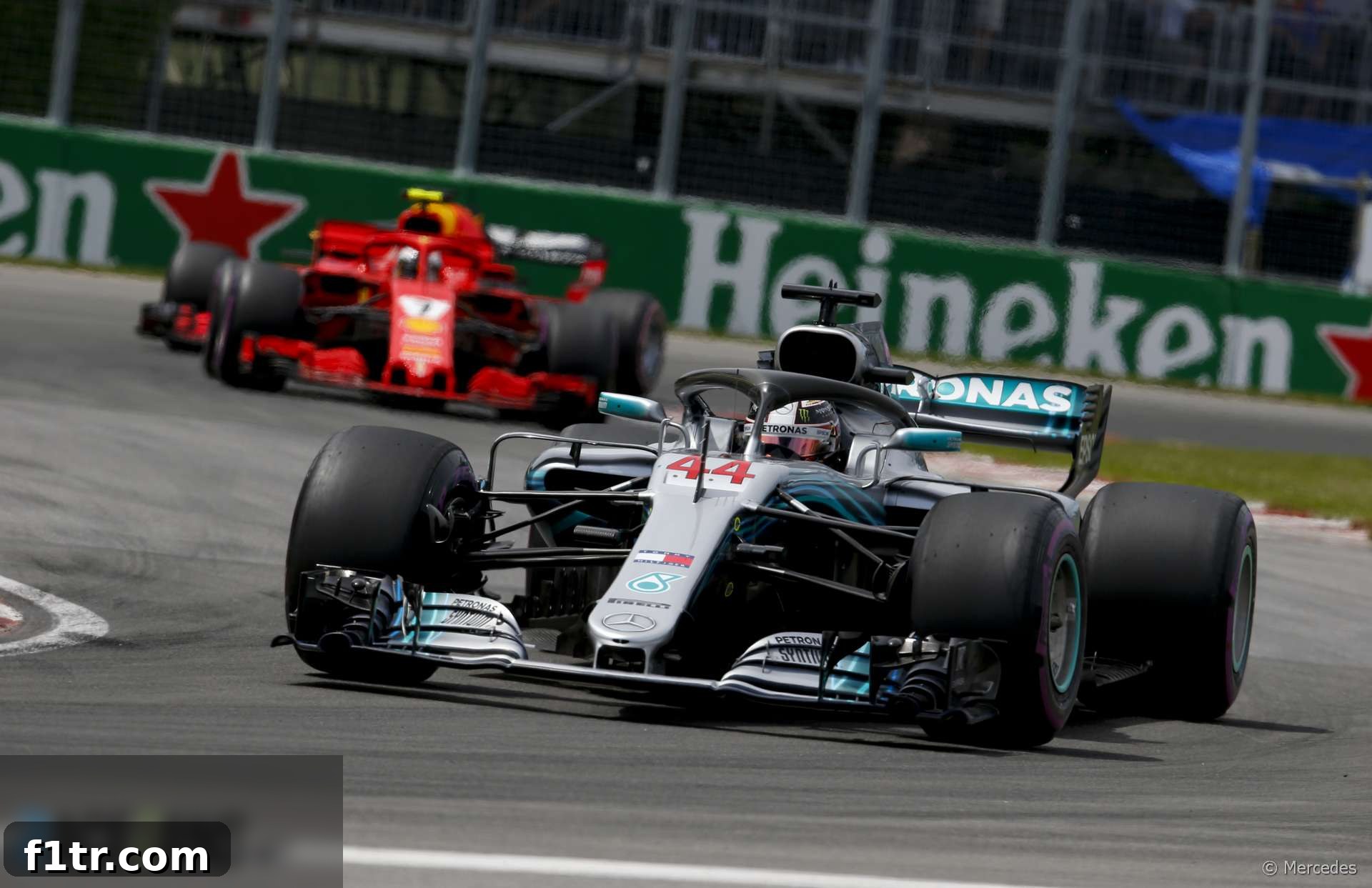
As the Formula 1 circus made its anticipated return to the Circuit Paul Ricard for the 2018 French Grand Prix, the spotlight intensified not just on the drivers, but significantly on the crucial tyre selections. Pirelli’s nominated compounds for the weekend – the UltraSoft, SuperSoft, and Soft – set the stage for a fascinating strategic battle. Teams meticulously crafted their tyre allocations, a decision that could make or break their weekend performance, especially on a demanding track like Paul Ricard.
The championship front-runners, Mercedes and Ferrari, unveiled remarkably similar tyre choices for their star drivers, indicating a shared aggressive approach to extract maximum performance from the softer compounds. All four drivers across these two powerhouse teams opted for a generous nine sets of the UltraSoft compound, which was the softest available. This aggressive selection highlights a clear intent to maximize qualifying pace and gain crucial track position from the outset. However, subtle differences emerged in their SuperSoft allocations, hinting at nuanced strategic considerations for the race.
Meanwhile, Red Bull Racing charted a distinctly different course. Opting for a more conservative seven sets of UltraSofts, their strategy stood in stark contrast to the championship leaders. This decision underscores the diverse philosophies within Formula 1, where teams balance outright speed with potential race-day durability and strategic flexibility. The Williams team, having grappled with extracting performance from softer tyres in previous outings, surprised many with an even more aggressive UltraSoft allocation for Paul Ricard, signaling a bold attempt to reverse their fortunes.
Advert | Become a Supporter & go ad-free
Understanding Pirelli’s 2018 Tyre Range and Paul Ricard’s Demands
For the 2018 Formula 1 season, Pirelli introduced an expanded range of seven slick compounds, from the hardest ‘Hard’ to the softest ‘Hypersoft’, each denoted by distinct colours. For the French Grand Prix, the Italian manufacturer nominated the UltraSoft (purple), SuperSoft (red), and Soft (yellow). These choices are pivotal, as each compound possesses unique characteristics in terms of grip, wear rate, and optimal operating temperature window.
The UltraSoft compound, as its name suggests, offers the highest level of grip and thus the fastest lap times, making it ideal for qualifying. However, this comes at the cost of durability, meaning higher degradation over a race stint. The SuperSoft sits in the middle, providing a good balance of performance and longevity, often serving as a versatile race tyre. The Soft compound is the most durable of the three nominated for this event, capable of extended stints but with a slight performance deficit compared to its softer counterparts.
The Circuit Paul Ricard itself plays a significant role in tyre behaviour. Returning to the F1 calendar after a long hiatus, the track is known for its smooth asphalt, which generally reduces abrasive wear. However, its layout features a blend of high-speed corners like Signes, flowing chicanes, and long straights, all of which put different stresses on the tyres. High-lateral G-forces in the corners can cause heat build-up and degradation, while traction zones demand optimal grip. Managing thermal degradation and preserving the structural integrity of the tyres become paramount challenges for teams and drivers throughout the weekend. The notorious Mistral Straight, even with its chicane, still allows for significant speeds, further stressing the tyres upon braking and acceleration into the subsequent corners. Understanding these demands is key to deciphering the strategic choices made by each team.
Championship Battle: Mercedes and Ferrari’s Aggressive Stance
The tyre selections made by Mercedes and Ferrari underscored their fierce rivalry in the 2018 championship fight. Both teams allocated nine sets of UltraSofts to their respective drivers, Lewis Hamilton, Valtteri Bottas, Sebastian Vettel, and Kimi Räikkönen. This identical allocation of the purple-banded tyres points to a shared philosophy: prioritizing raw pace for qualifying to secure front-row starts. In modern F1, track position at the start of the race can be incredibly influential, especially on circuits that are not notoriously easy for overtaking.
The slight divergence appeared in their SuperSoft allocations. Championship leaders Sebastian Vettel and Lewis Hamilton each received three sets of SuperSofts, one more than their teammates Valtteri Bottas and Kimi Räikkönen, who were allocated two sets each. This strategic nuance for the lead drivers suggests a desire for increased flexibility during the race. An extra set of SuperSofts could provide a crucial alternative for a second stint, allow for a different tyre compound to be used in Q2 (potentially saving a softer tyre for Q3 or the race start), or simply offer a contingency in case of unforeseen degradation. For drivers vying for the championship, having more strategic options can be a significant advantage, enabling them to react to changing race conditions or rival strategies more effectively. This subtle difference highlights the confidence placed in Hamilton and Vettel to manage more complex strategies or to push harder on varied compounds.
Red Bull’s Conservative Counter-Strategy
In stark contrast to the aggressive selections of Mercedes and Ferrari, Red Bull Racing adopted a noticeably more conservative tyre strategy for Daniel Ricciardo and Max Verstappen. Both Red Bull drivers were allocated only seven sets of the UltraSoft compound, the fewest of any team on the grid. This decision is intriguing and points towards a different strategic emphasis, likely prioritizing race pace and tyre longevity over outright qualifying performance.
There could be several reasons behind Red Bull’s approach. Firstly, they might have identified that their chassis and aerodynamic package at Paul Ricard would perform more consistently and effectively on the more durable SuperSoft or Soft compounds over a race distance. Secondly, a lower UltraSoft count implies a stronger focus on a one-stop strategy, aiming to complete longer stints on the SuperSoft or Soft tyres. This could potentially give them an advantage later in the race when competitors on more aggressive two-stop strategies might be struggling with degradation or making another pit stop. While this approach might mean a slight disadvantage in qualifying, potentially starting further down the grid, the team might be banking on their strong race pace and superior tyre management to make up positions during the Grand Prix. It’s a calculated gamble that could pay dividends if tyre degradation on the UltraSofts proves to be high during the race weekend.
Williams’ Bold Gamble: An Aggressive Response to Struggles
The Williams team, which had openly struggled to extract optimal performance from the softer available tyres in previous races, made a particularly bold statement with their tyre selection for Paul Ricard. Both Lance Stroll and Sergey Sirotkin were allocated a striking ten sets of the UltraSoft compound, the most of any team on the grid. This aggressive move, especially coming from a team that faced performance challenges, is indicative of a desperate attempt to unlock pace and improve their competitiveness.
The motivations behind such an audacious strategy could be multifaceted. It might signify a belief within the team that the smooth surface of Paul Ricard would be more forgiving on the UltraSofts, allowing them to extract maximum grip without excessive degradation. Alternatively, it could be a strategic gamble to maximize their qualifying performance, hoping to secure better grid positions by having an abundance of the fastest tyre. Given their struggles, Williams might have felt they had little to lose by adopting an unconventional and aggressive approach. However, this strategy carries significant risks. If the UltraSofts degrade rapidly during the race, it could force them into unwanted two-stop strategies, further complicating their race and potentially leaving them vulnerable. It’s a high-risk, high-reward approach that highlights the pressure on the team to improve their standing.
The 2018 French Grand Prix Tyre Selections: A Detailed Overview
The following table provides a comprehensive look at the tyre allocations for each driver ahead of the 2018 French Grand Prix, showcasing the variety in team strategies from the aggressive UltraSoft focus to more balanced approaches.
2018 French Grand Prix tyre selections
| Driver | Team | Tyres (US-SS-S) |
|---|---|---|
| Lewis Hamilton | Mercedes | 9-3-1 |
| Valtteri Bottas | Mercedes | 9-2-2 |
| Sebastian Vettel | Ferrari | 9-3-1 |
| Kimi Raikkonen | Ferrari | 9-2-2 |
| Daniel Ricciardo | Red Bull | 7-4-2 |
| Max Verstappen | Red Bull | 7-4-2 |
| Sergio Perez | Force India | 8-3-2 |
| Esteban Ocon | Force India | 8-3-2 |
| Lance Stroll | Williams | 10-2-1 |
| Sergey Sirotkin | Williams | 10-2-1 |
| Carlos Sainz Jnr | Renault | 9-3-1 |
| Nico Hulkenberg | Renault | 9-3-1 |
| Pierre Gasly | Toro Rosso | 8-3-2 |
| Brendon Hartley | Toro Rosso | 8-3-2 |
| Romain Grosjean | Haas | 9-2-2 |
| Kevin Magnussen | Haas | 9-2-2 |
| Fernando Alonso | McLaren | 9-2-2 |
| Stoffel Vandoorne | McLaren | 9-2-2 |
| Marcus Ericsson | Sauber | 9-2-2 |
| Charles Leclerc | Sauber | 9-2-2 |
The Dynamics of Race Strategy and Tyre Management
The selection of tyres is just the first step in a complex strategic dance. Throughout the French Grand Prix weekend, teams would be continuously evaluating how their chosen compounds perform in practice sessions. Data gathered on tyre wear, degradation, and optimal performance windows would inform critical decisions for qualifying and the race.
In qualifying, the UltraSofts were expected to be the primary compound for setting the fastest lap times, especially in Q3. The crucial Q2 rule, which dictates that drivers reaching Q3 must start the race on the tyre they used to set their fastest Q2 time, adds another layer of complexity. Teams like Mercedes and Ferrari, with their ample UltraSoft allocation, could afford to use multiple sets in Q2 to secure passage to Q3 on their preferred compound for the race start.
Race day is where these strategies truly come to life. The choice between a one-stop or two-stop strategy would be heavily influenced by the actual degradation rates observed, track temperatures, and the behaviour of rival teams. Drivers would need exceptional tyre management skills to preserve their compounds, particularly the UltraSofts, over a race stint. Overtaking opportunities could also arise from significant tyre deltas between cars on different strategies or older compounds. A well-timed safety car or virtual safety car could further throw a spanner in the works, creating opportunities for “free” pit stops and shaking up the running order.
Anticipating the French Grand Prix Showdown
As the French Grand Prix weekend unfolded, all eyes would be on how these diverse tyre strategies played out. Would Mercedes and Ferrari’s aggressive UltraSoft selections translate into unassailable qualifying pace and controlled race management? Or would Red Bull’s more conservative approach yield dividends in terms of superior race pace and durability, allowing them to challenge for podiums from potentially lower grid positions? The audacious gamble by Williams would also be closely watched to see if it could propel them closer to the midfield battle.
Beyond the top teams, the midfield battle was also expected to be shaped by tyre choices. Teams like Force India, Renault, Haas, McLaren, Toro Rosso, and Sauber each made nuanced selections, balancing performance aspirations with the realities of their car’s characteristics and budget constraints. The varying allocations promised an intriguing mix of strategies, ensuring that the French Grand Prix would not only be a test of raw speed but also a true chess match of tyre management and strategic foresight. The unpredictable nature of Formula 1, coupled with the return to a classic European circuit, set the stage for a thrilling and strategically rich race where every decision, particularly concerning tyres, could prove decisive.
Advert | Become a RaceFans supporter andgo ad-free
2018 F1 season
- F1 feared “death knell” for Drive to Survive after Ferrari and Mercedes snub
- McLaren staff told us we were “totally crazy” to take Honda engines in 2018 – Tost
- ‘It doesn’t matter if we start last’: How Red Bull’s junior team aided Honda’s leap forward
- Honda’s jet division helped F1 engineers solve power unit problem
- McLaren Racing losses rise after Honda split
Browse all 2018 F1 season articles