Monza: The Temple of Speed and the Pursuit of F1’s Fastest Lap Record
The Monza circuit, often reverently dubbed “The Temple of Speed,” holds a unique and revered place in the annals of Formula 1 history. For decades, this legendary Italian track has been synonymous with breathtaking velocity, raw power, and an unparalleled challenge for drivers and engineers alike. It’s a place where speed records are not just broken but are fiercely pursued, year after year, as teams push the boundaries of automotive engineering and driver skill. The very essence of Monza is captured in the relentless quest for the fastest possible lap time, a pursuit that epitomizes the spirit of Formula 1.
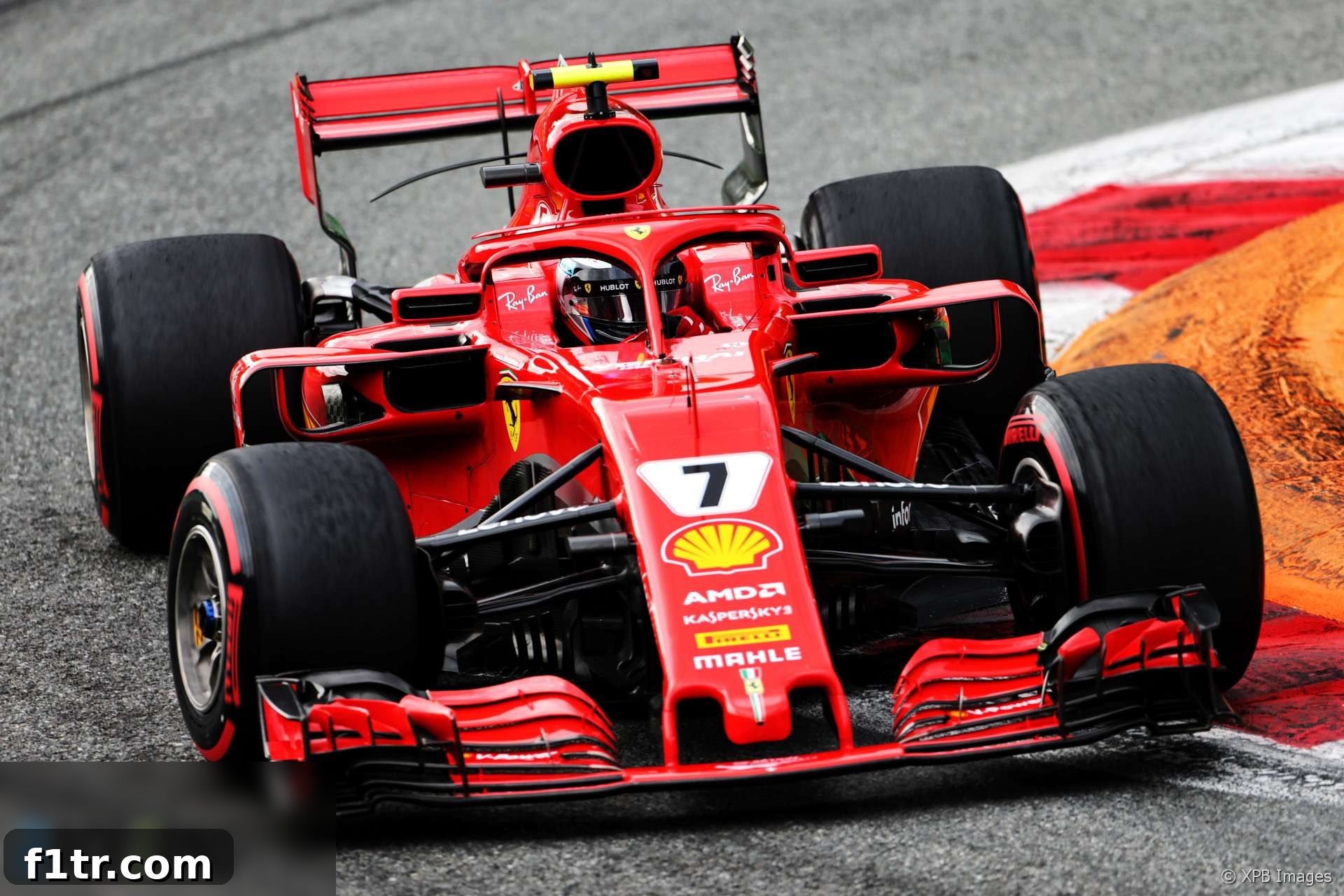
Indeed, the all-time record for the fastest lap of a circuit in a Formula 1 car remains a coveted benchmark, a testament to a perfect fusion of machine and human prowess. This prestigious record was most recently etched into history by none other than the “Iceman,” Kimi Raikkonen, during the Italian Grand Prix just last year. His blistering performance, securing pole position, was a moment that solidified his legend and added another glorious chapter to Monza’s rich tapestry of speed.
Kimi Raikkonen’s Unforgettable Record: A Masterclass in Speed
Kimi Raikkonen’s record-setting lap at Monza 12 months ago wasn’t just fast; it was historic. Clocking an astonishing average speed of 263.587 kph, he didn’t just take pole position; he redefined what was possible on this high-speed circuit. This lap wasn’t merely about raw engine power; it was a symphony of precision driving, impeccable car setup, and a deep understanding of Monza’s unique characteristics. The Ferrari car, at its home race, seemed to dance through the chicanes and power down the long straights, propelled by the roar of the Tifosi. It was a lap that combined bravery with finesse, pushing the limits while maintaining absolute control.
The anticipation leading into every Italian Grand Prix qualifying session is palpable, especially with such a formidable benchmark established. There’s always the hope, the whisper among fans and pundits, that Raikkonen’s incredible average speed might finally be surpassed. Today’s qualifying session was no exception; the conditions were ripe, the cars were fast, and the drivers were hungry. For a moment, it seemed entirely plausible that a new chapter of speed would be written. However, the capricious nature of Formula 1, especially in a pressure cooker like Monza Q3, had other plans.
The Thrilling 2019 Qualifying Session: A Near Miss and Unforeseen Drama
The 2019 qualifying session, particularly the final segment of Q3, delivered a blend of drama and frustration that left many questioning what might have been. What started with immense promise, a clear indication that lap times were improving, devolved into a peculiar spectacle. Almost every driver failed to complete a second flying lap at the very end of the session, largely due to a critical miscalculation by multiple teams regarding track positioning and the crucial art of the slipstream. At Monza, where fractions of a second can be gained by drafting behind another car on the long straights, drivers often play a strategic game of cat and mouse, waiting for the perfect tow. In Q3, this strategy backfired spectacularly, resulting in a chaotic final few minutes where cars were out of sync, and precious seconds ticked away without anyone crossing the start-finish line in time for a final attempt.
Amidst this unfolding drama, Charles Leclerc, Ferrari’s rising star and the home crowd’s new hero, came tantalizingly close to eclipsing Raikkonen’s record. His best lap fell short by just over a tenth of a second – an agonizingly small margin that, on another day, with different Q3 circumstances, could have easily been overcome. The potential was undeniable, the speed was there, but the execution of the final qualifying attempts for many drivers became compromised by the peculiar ‘tow train’ scenario.
Ferrari’s Home Challenge and Mercedes’ Pursuit
Ferrari, with Leclerc at the helm, faced immense pressure at their home circuit, not only to perform but to justify the Tifosi’s fervent support. While Leclerc secured pole, the team, like Mercedes, ultimately couldn’t improve upon their best lap time from the previous year’s qualifying session. This inability to shave off crucial milliseconds, despite technological advancements and a year of development, highlights the fine margins in Formula 1 and perhaps the unique difficulty of optimizing a car for Monza’s specific demands.
Mercedes, Ferrari’s perennial rivals, also found themselves in a similar predicament. Despite their consistent championship-winning form, the German powerhouse couldn’t breach their own previous year’s benchmark. This underscores the competitive intensity at the pinnacle of motorsport, where even the slightest improvement demands extraordinary effort and innovation. The pursuit of outright speed at Monza is a complex dance between engine power, aerodynamic efficiency, and the precise setup needed to navigate its high-speed corners and chicanes.
Williams’ Enduring Struggles
At the other end of the spectrum, Williams continued to grapple with their performance challenges. For the seventh time in the 14 races run so far this year, the British team emerged as the least-improved team year-on-year. This consistent trend paints a clear picture of the struggles faced by the team, underscoring the deep-seated issues that require significant overhaul. In a sport where evolution and improvement are paramount, Williams’ inability to find significant gains highlights the stark realities of competing at the highest level without the necessary resources or a breakthrough development.
McLaren’s Remarkable Ascent: A Story of Consistent Improvement
In stark contrast to Williams, McLaren continued to be the standout performer in terms of year-on-year lap time gains. For the fifth consecutive race, the Woking-based outfit posted the largest improvement of any team on the grid. This remarkable resurgence is a testament to the significant strides McLaren has made in recent seasons, showcasing a revitalized team ethos, improved car design, and strategic operational excellence.
This impressive performance wasn’t merely a fluke or a result of specific qualifying tactics. While Carlos Sainz Jnr was indeed one of the few drivers who managed to set a second lap time at the chaotic end of Q3, his Q2 time was actually quicker, demonstrating the inherent pace of the McLaren package. Moreover, Sainz achieved this without the benefit of a tow, further emphasizing the genuine speed and balance of the car. The consistent improvement by McLaren signals a significant turnaround for a team that has faced challenging years, positioning them as a strong contender in the midfield and a potential threat to the top teams in the future.
What Drives McLaren’s Resurgence?
McLaren’s consistent improvement can be attributed to several key factors. A more efficient aerodynamic package, coupled with a reliable and competitive engine, has undoubtedly played a crucial role. Furthermore, a renewed focus on team synergy, a clearer development path, and the impressive driving talents of Carlos Sainz Jnr and his teammate have converged to create a potent force. This upward trajectory is not just about raw speed but also about the ability to extract maximum performance from the car consistently across various circuit types, including the unique demands of Monza.
The Art of Qualifying at Monza: Beyond Raw Speed
Qualifying at Monza is a masterclass in strategy, precision, and nerve. While engine power is paramount on its long straights, success hinges on more than just horsepower. Drivers must perfectly balance high-speed stability through the iconic Curva Grande and Parabolica with the ability to attack the chicanes without compromising momentum. Tire management, especially over a single flying lap, is critical, as is the crucial decision of whether to seek a slipstream (a ‘tow’) from a car ahead. As witnessed in the 2019 Q3, the pursuit of this aerodynamic advantage can be a double-edged sword, capable of delivering immense gains or leading to tactical disarray.
The constant evolution of Formula 1 regulations also plays a significant role in year-on-year lap time comparisons. Changes in aerodynamic rules, tire specifications, or power unit limitations can drastically affect car performance. Therefore, simply comparing lap times without considering the regulatory landscape can be misleading. A team showing ‘less improvement’ might be adapting to a new rule set, while a ‘highly improved’ team might have found a clever interpretation of the current regulations. This intricate dance of innovation and regulation ensures that the challenge of setting the fastest lap remains ever-present and continually dynamic.
Beyond Qualifying: What This Means for the Race
While qualifying sets the grid, the real battle unfolds during the race. Leclerc’s pole position, achieved under such peculiar circumstances, gave Ferrari a crucial advantage at their home Grand Prix. However, the close margins and the competitive form shown by teams like Mercedes and McLaren promised an exhilarating race. The Italian Grand Prix is renowned for its slipstreaming battles and strategic nuances, meaning that even from pole position, victory is far from guaranteed. The insights gained from qualifying – particularly concerning team pace and year-on-year improvements – offer a tantalizing preview of the ongoing Constructors’ and Drivers’ Championship battles, promising more thrilling action on the tarmac.