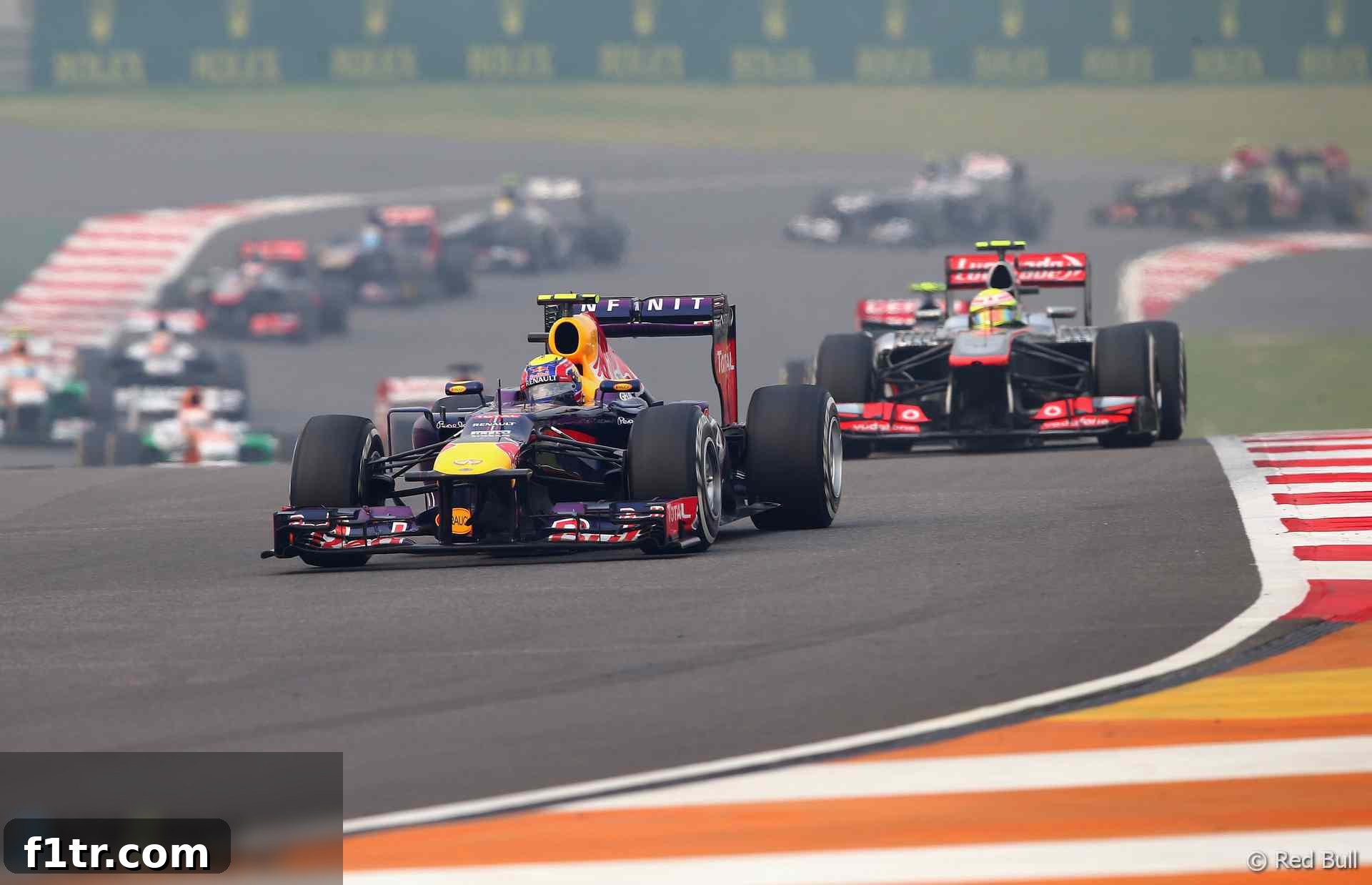
In a significant announcement shaping the future landscape of Formula 1, the Indian Grand Prix is confirmed to be absent from the 2014 F1 calendar. However, this strategic hiatus is not a permanent departure, as the event is set to make a triumphant return the following year, firmly establishing its place in the 2015 season. This confirmation comes directly from Bernie Ecclestone, the then-supremo of Formula 1, signaling a deliberate and calculated adjustment to the sport’s ever-evolving global schedule.
Ecclestone conveyed this pivotal decision to the Indo-Asian News Service, detailing an agreement reached with the race promoter, the Jaypee Group. The core of this understanding involves the event skipping a year on its five-year contract in 2014, allowing for crucial calendar restructuring. This strategic pause is primarily driven by the desire to reposition the Indian Grand Prix to an earlier slot within the F1 season, a move that would have otherwise led to an uncomfortably close proximity between the 2014 and 2015 events had it remained in its original autumn schedule.
The reasoning behind this calendar adjustment stems from a long-standing aspiration to integrate the Indian Grand Prix into the initial sequence of ‘flyaway’ races. Ecclestone himself elaborated on this, stating, “When we signed the five-year deal with Jaypee, we were keen on going to India in the first half and Jaypee wanted it to be in October. We gave in at that time, but now it looks we will have the race early 2015.” This statement underscores a shift in strategic priorities, aiming for a more streamlined and logistically coherent F1 calendar that optimizes travel and operational efficiencies for teams and personnel.
The proposed early 2015 slot for the Indian Grand Prix positions it alongside other prominent opening races, including Australia, Malaysia, China, and Bahrain. This cluster of events, typically held in March and April, forms the globe-trotting beginning of the F1 season, demanding significant logistical planning and execution. Incorporating India into this initial sequence not only enhances the geographical flow of the calendar but also potentially offers better climatic conditions for racing compared to the later months, which can be affected by monsoon season preparations or post-monsoon humidity.
For the Jaypee Group, the race promoter, and indeed for Indian motorsport enthusiasts, this temporary break allows for a comprehensive re-evaluation and preparation for a stronger, more impactful return. While a year’s absence might seem like a setback, it is framed as a necessary step to align the event with Formula 1’s broader global strategy. It provides an opportunity to address any logistical challenges encountered in previous editions and to build even greater anticipation for its comeback. The Buddh International Circuit, a world-class facility, stands ready to welcome the pinnacle of motorsport once again, benefiting from this period to fine-tune its operations and fan engagement initiatives.
The Buddh International Circuit, located in Greater Noida, Uttar Pradesh, has a relatively short but memorable history in Formula 1. Designed by the renowned circuit architect Hermann Tilke, it quickly gained acclaim for its challenging layout, high-speed straights, and technical corners. Inaugurated in 2011, it hosted three successful Grand Prix events, captivating audiences with its modern infrastructure and impressive scale. Drivers consistently praised the circuit for its flow and the opportunities it presented for exciting racing, making it a popular addition to the calendar despite its brief tenure.
India’s entry into the F1 calendar marked a significant milestone in the sport’s efforts to expand its reach into emerging markets. It symbolized Formula 1’s commitment to growing its global footprint beyond its traditional European strongholds. The initial races were met with immense enthusiasm, drawing large crowds and showcasing India’s capability to host major international sporting events. This period allowed F1 to tap into a vast and passionate new fanbase, fostering greater awareness and interest in motorsport across the subcontinent, thereby reinforcing its status as a truly global sport.
The decision to strategically adjust the Indian Grand Prix’s schedule is reflective of Formula 1’s ongoing commitment to optimize its global calendar. The sport continually seeks a balance between maximizing commercial opportunities, managing logistical complexities for teams, and ensuring a compelling narrative for fans worldwide. Grouping ‘flyaway’ races, as proposed for India, is a common practice that minimizes travel time and costs for the F1 circus, enhancing overall efficiency and sustainability for teams that traverse continents throughout the season. This careful planning ensures that each race weekend can deliver maximum impact without undue strain on the sport’s extensive operational framework.
Moreover, the dynamic nature of the F1 calendar was further highlighted by another recent development. Just last week, Bernie Ecclestone announced that the Austrian Grand Prix will make its return to the calendar in 2014, hosted at the revitalized Red Bull Ring. This news, occurring concurrently with the Indian GP announcement, underscores the sport’s agile approach to calendar management, where new opportunities and historical venues are constantly weighed against the existing schedule to create the most exciting and viable championship each year. The return of Austria, a circuit steeped in F1 history, demonstrates a desire to blend tradition with new frontiers, enriching the sport’s global appeal.
The temporary absence of the Indian Grand Prix is therefore not an indication of waning interest, but rather a tactical regrouping. It signifies a collective effort to ensure the event’s long-term viability and success by placing it in a more advantageous position within the F1 calendar. This strategic outlook is crucial for events in burgeoning markets like India, where sustained engagement and optimized scheduling are key to embedding Formula 1 firmly within the national sporting consciousness. The commitment from both Formula 1 management and the Jaypee Group for an early 2015 return paints a promising picture for the future of motorsport in India.
Ultimately, the pause in 2014 is a calculated move designed to strengthen the Indian Grand Prix’s presence on the Formula 1 circuit for years to come. Fans can look forward to its resurgence as part of the initial “flyaway” leg of the 2015 season, promising thrilling races at the state-of-the-art Buddh International Circuit. This strategic repositioning reinforces F1’s dedication to its global expansion while ensuring the best possible conditions for competition and viewership. The anticipation for its return will undoubtedly build, setting the stage for an even more spectacular comeback when the cars next hit the Indian tarmac.
2014 F1 season
- Which was F1’s best down-to-the-wire title fight?
- Fear of rules change led Mercedes to run dominant 2014 engine in “idle mode”
- Mercedes’ Bahrain battle “too dangerous” – Warwick
- Streiff’s comments on Bianchi crash investigation prompts legal action from FIA
- Is stewarding improving? Analysing 2014’s penalties
Browse all 2014 F1 season articles