As I settled onto the train bound for the airport, anticipating my second visit to the captivating Bahrain International Circuit, a profound sense of duality enveloped me. The thrill of immersing myself in the world of Formula 1 in the Middle East was starkly contrasted by the grave global backdrop: the escalating conflict in Ukraine, a brutal reality tearing apart the lives of millions. This geopolitical tension had already cast a long shadow over the F1 community, with its initial ripples felt during the first pre-season test in Spain. Two weeks later, the paddock was still abuzz with speculation, awaiting the official announcement from Haas regarding who would fill the void left by their Russian driver, Nikita Mazepin. The anticipation for the 2022 Formula 1 season was palpable, yet it was tinged with a solemn awareness of events far grander than motor racing.
My journey commenced on a Tuesday, culminating in a predawn arrival at my Bahraini hotel around 5 AM on Wednesday. Despite the exhaustion, I was eager for the days ahead. My battered suitcase, having lost a wheel during transit from the airport, was a minor inconvenience. The prospect of returning to the Bahrain International Circuit, the stage for the crucial pre-season testing, energized me, readying me for the demanding schedule that awaited from Thursday onwards. The calm before the storm of engines and media briefings was a welcome pause, allowing me to prepare mentally for the whirlwind of Formula 1 activity.
Thursday: The Paddock Awakens
The Bahrain International Circuit is a unique spectacle, carved out of arid desert plains, occasionally punctuated by residential clusters and a landscape dotted with the skeletal frames of unfinished buildings. The drive to the circuit is a ritual in itself, marked by a noticeable increase in police presence, their vehicles lining the route as stewards efficiently guide media personnel to the designated car park. This heightened security underscores the prestige and importance of the event, ensuring a smooth and organized arrival for all attendees.
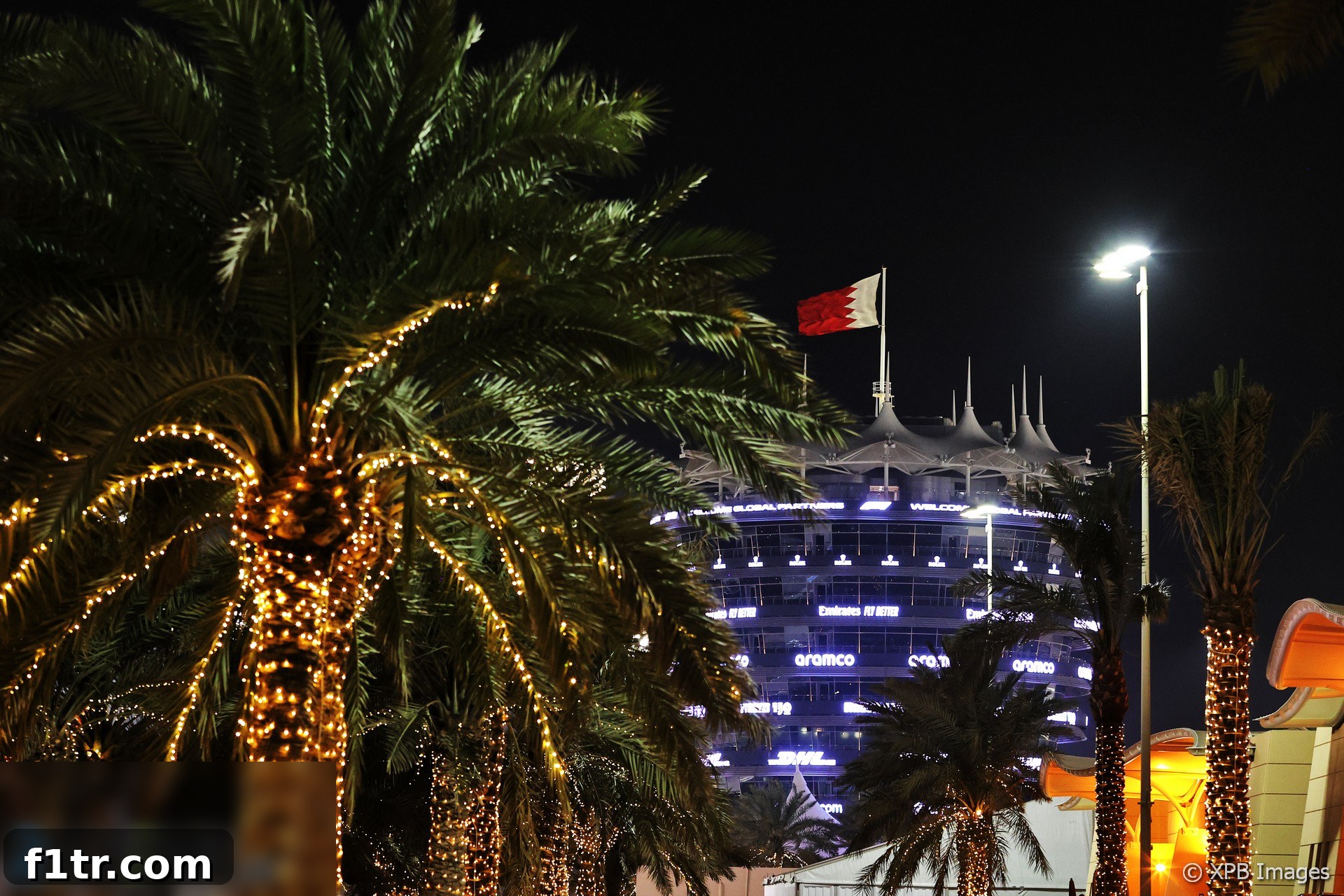
The walk from the parking area to the paddock is an experience that builds anticipation. It leads through an atmospheric tunnel, its walls adorned with vibrant murals depicting moments from Formula 1 history, a visual journey into the sport’s rich heritage. Emerging from the tunnel, one is greeted by the turnstiles, the gateway to the heart of F1. Stepping through these gates never loses its magic. In Bahrain, this entrance is particularly enchanting, with palm trees strung with whimsical fairy lights illuminating the paddock, setting a glamorous scene for the high-performance machines that would begin their track assault promptly at 10 AM. The blend of desert landscape, modern architecture, and festive lighting creates an unparalleled atmosphere unique to this Middle Eastern racing venue.
The major news of the day, though widely anticipated, was the official confirmation of Kevin Magnussen’s return to Formula 1 with Haas. Whispers of his comeback had circulated, and on Wednesday, Haas made it official: their former driver was back to replace Mazepin. By Thursday afternoon, Magnussen, looking remarkably relaxed and composed, faced the media for his first interview since his unexpected return. He openly shared his astonishment, revealing that he had only learned of the opportunity a week prior. His story was one of genuine surprise, admitting he hadn’t fully believed the deal would materialize until the ink was dry. This unexpected turn of events injected a fresh wave of human interest and excitement into the paddock, a poignant reminder of the sport’s unpredictable nature.
Pre-season testing days are notoriously long and intense for those covering the sport. My routine typically began at 8 AM, arriving at the circuit well before the cars hit the track at 10 AM. Track action would conclude at 7 PM, but the day was far from over, as media sessions with drivers and team principals often stretched late into the evening. Consequently, it was not uncommon to leave the circuit past 9 PM, under the desert stars. After one such exhaustive day, I eventually made it back to my hotel, only to inadvertently stumble into the midst of a lively pub quiz. A brief moment of unexpected camaraderie provided a lighthearted end to a demanding day, before I finally retired, ready to tackle day two with renewed vigor.
Friday: Scorching Heat and Sudden Setbacks
Friday dawned noticeably hotter, with the desert sun already beating down on the circuit. My morning began with a visit to the Williams garage to catch up with Alex Albon. In high spirits, Albon spoke candidly about his refreshed perspective, his relationship with Mercedes’ George Russell, and the invaluable advice he had received prior to signing with Williams for his F1 comeback. He exuded an air of quiet determination, eager to make his mark with the historic British team.
However, the fortunes of Williams took a dramatic turn shortly after our conversation. Albon’s teammate, Nicholas Latifi, experienced a harrowing incident when his car’s rear brakes overheated, igniting a significant fire. The inferno brought Williams’s second day of testing to an abrupt and premature end, a costly setback that robbed them of crucial track time and data. The paddock watched with bated breath as marshals extinguished the blaze, a stark reminder of the inherent dangers and technical complexities of Formula 1.
As track temperatures soared to a blistering 38 degrees Celsius, the relentless pounding of cars around the circuit continued. The intense heat, however, meant that most drivers sought refuge in the cooler confines of their garages during longer breaks, emerging only for their scheduled stints. The conditions were a true test of both driver endurance and car reliability, pushing the limits of all involved.
Amidst the sweltering conditions, the midday press conference brought its own heat. Red Bull Team Principal Christian Horner found himself grilled over contentious comments attributed to him in other reports, where he was said to have questioned the legality of Mercedes’ revolutionary new sidepod design. Red Bull was swift to issue a denial, claiming Horner had not made such statements. Yet, the tension was palpable. Horner himself preempted questions from press conference moderator Tom Clarkson, making a deliberate and firm clarification that he did not believe Mercedes was “bending the rules.” This public denial, however, did little to quell the underlying rivalry and the intense scrutiny on Mercedes’ innovative aerodynamic solution, a talking point that dominated paddock chatter.
Later that evening, the media were offered a unique diversion: an invitation to watch Kings of Leon perform at the Al Dana Amphitheatre. Just as the concert reached its crescendo, a flurry of notifications lit up a whole row of phones. McLaren had sent an urgent message, confirming that Daniel Ricciardo had tested positive for Covid-19 and would be unable to participate in the remainder of testing. The collective gasp and immediate scramble to cover the breaking news momentarily pulled us away from the music, a vivid illustration of how quickly the F1 news cycle can interrupt even the most entertaining of distractions. Ricciardo’s absence was a blow for McLaren, adding another layer of uncertainty to the pre-season narrative.
Saturday: Hamilton’s Concerns and Trackside Revelations
Saturday brought a welcome dip in temperature, offering slightly cooler conditions for the final day of pre-season testing. I began by making my way down the lengthy paddock to the Williams motorhome to attend a roundtable interview with Team Principal Jost Capito. The conversation inevitably turned to Latifi’s car fire from the previous day. Capito, with a wry smile and a touch of humor, explained that the team was “95% clear” on what had occurred, attributing the incident to a “procedural mis-step” that was “too stupid to talk about.” His candor, while deflecting specifics, underscored the team’s commitment to understanding and rectifying the issue swiftly.
The day’s press conference presented a rare and highly anticipated opportunity: our first and only chance during the entire test to speak with Lewis Hamilton, who often maintains a low profile during testing. Mercedes frequently faces accusations of downplaying their competitiveness, a strategic maneuver dubbed “sandbagging.” However, this time, Hamilton’s concern about the W13’s handling appeared undeniably genuine. His words immediately made headlines as he declared, without equivocation, that Mercedes, in its current form, would not be challenging for victories. He spoke of the car’s unpredictable balance, the persistent porpoising, and the difficulties in finding a consistent setup, delivering a stark assessment that sent shockwaves through the F1 world and amplified speculation about Mercedes’ prospects for the upcoming season.
As the desert evening drew in, I donned a rather fetching tabard and ventured trackside to observe the cars navigating the final two corners of the circuit. This specific vantage point proved invaluable for direct comparisons, as each driver approached the apex of the corner with discernible differences in technique and car behavior. It was an unparalleled opportunity to witness the subtle nuances that separate the various chassis and driving styles.
With George Russell at the wheel of the Mercedes W13, the car appeared to be handling marginally better than it had during the preceding days, perhaps a testament to the team’s relentless work overnight. Yet, it still exhibited a noticeable hesitancy to turn in, requiring Russell to grapple with its responsiveness. He attempted to pitch the car deep into the final right-hander, but the W13 washed out, forcing him to bump across the kerbs as he fought for grip and precision. The visual struggle highlighted the engineering challenges Mercedes faced.
In stark contrast, Max Verstappen, in his Red Bull, appeared to glide across the apex effortlessly and smoothly, a testament to the car’s inherent balance and the reigning world champion’s innate talent. As he set the fastest time of the session, I observed him make only a couple of minor twitches and steering corrections through Turn 15, showcasing the Red Bull’s superior stability and responsiveness. The difference in how the two top teams’ cars handled the critical final sector was striking. The AlphaTauri, however, seemed less composed, particularly in Yuki Tsunoda’s hands. At one point, he locked up heavily, with dramatic puffs of smoke billowing from his rear tires as he wrestled the car under braking.
Despite these trackside observations not being a complete representation of the entire three days of running, the opportunity to compare the cars so intimately, witnessing their distinct handling traits and driver inputs, was utterly fascinating. It offered a unique glimpse into the intricacies of Formula 1 engineering and the art of driving at the absolute limit.
My final interview of the test was with Sebastian Vettel, who greeted me with a wide smile and a series of characteristic jokes. It has been genuinely encouraging to witness this revitalized Vettel, reminiscent of his joyful and dominant Red Bull days. He clearly relishes his time at Aston Martin and expressed high hopes for his second season with the team. His renewed enthusiasm was a positive note on which to conclude the media proceedings.
With Sebastian’s reflections, the six demanding days of pre-season running officially drew to a close. The intense scrutiny, the endless speculation, and the educated guesses about which team holds the competitive edge would soon be put to the ultimate test. In just one week, the curtain would rise on the 2022 Formula 1 season, and we would finally discover the identity of our first race-winner, ushering in a new chapter of high-speed drama and unpredictable outcomes.
2022 F1 Season Insights and Developments
- Mercedes told me “you’re wrong” about 2022 car’s problems – Hamilton
- FIA confirms all 10 F1 teams complied with 2022 cost cap
- Steiner “not ashamed” of panning “slow” Schumacher in Drive to Survive
- Albon believes year out of F1 improved him as a driver
- Hamilton sees diversity gains in F1 years on from his ‘traumatising’ experience of racism
Browse all 2022 F1 season articles