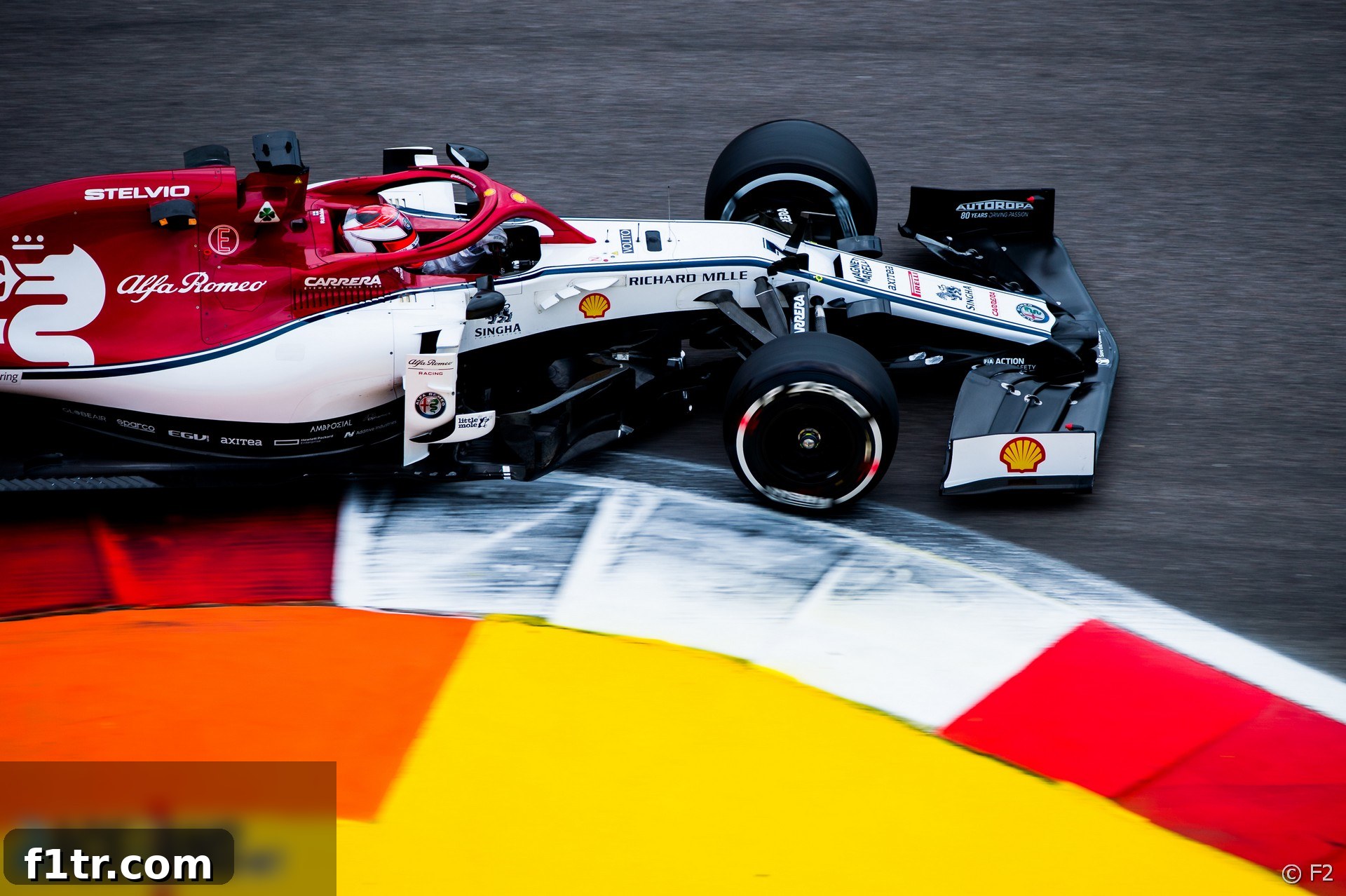
Kimi Raikkonen Accepts Blame for Sochi Penalty Amidst Alfa Romeo’s Post-Summer Performance Slump
Kimi Raikkonen, the seasoned Formula 1 driver renowned for his direct and often stoic communication, has openly acknowledged his culpability for the jump start penalty incurred at the Sochi Grand Prix. While accepting responsibility for the track infringement that compromised his race, Raikkonen simultaneously vocalized profound frustration and concern over his Alfa Romeo C38’s alarming lack of performance, describing the period since the summer break as a series of “nightmares.”
Advert | Become a Supporter & go ad-free
Raikkonen’s Candid Admission and the Sochi Race Start
“Obviously the race was my fault,” Raikkonen stated unequivocally after the Russian Grand Prix, where he ultimately finished 13th following a mandatory drive-through penalty for prematurely moving off the grid. The incident, a subtle but critical early engagement before the official start signal, is a clear violation of Formula 1 regulations designed to maintain fair and safe racing conditions from the very first moment.
The penalty significantly hindered Raikkonen’s efforts to climb through the field. Starting from 13th position, an early penalty meant losing crucial track position and time, forcing him to battle from the very back. Despite this setback, the 2007 World Champion, often known as ‘The Iceman’, demonstrated his characteristic determination. “In the end we got back in the race with the Safety Cars and we managed to un-lap ourselves. But unfortunately we just didn’t have enough speed,” he elaborated, highlighting the dual challenge of recovering from an error while simultaneously wrestling with an underperforming car.
The stewards’ investigation confirmed Raikkonen’s early movement but notably concluded that he did not gain any actual competitive advantage from it. Their official bulletin read: “Although car seven [Raikkonen] moved before the start signal, it was determined that he did not gain an advantage by doing so.” However, the rulebook leaves no room for discretion on the penalty: “The penalty prescribed for this infringement, where no advantage is gained, is a mandatory drive-through penalty.” This strict interpretation underscores the FIA’s commitment to consistent enforcement, irrespective of whether a driver benefits from the early movement.
Beyond the immediate race impact, Raikkonen also received two penalty points on his Super Licence. These were his first two points within the current 12-month period. While not an immediate threat to his eligibility, accumulating 12 points within a year leads to a race ban, a scenario all drivers meticulously avoid. This incident served as a stark reminder of the rigorous disciplinary framework within Formula 1.
Alfa Romeo’s Post-Summer Slump: A “Nightmare” for the Iceman
While taking responsibility for his error, Raikkonen’s primary concern shifted swiftly to the alarming deficit in pace exhibited by his Alfa Romeo C38. His frustration was palpable as he articulated the team’s struggles since the traditional Formula 1 summer shutdown. “We have to understand, the last four races have been nightmares and we need to figure out what’s going wrong and where and clean up and understand things,” Raikkonen declared, a rare public display of significant concern from a driver known for his composed and succinct commentary.
This noticeable decline in performance was particularly perplexing given Alfa Romeo Racing’s promising start to the 2019 season. In the earlier rounds, Raikkonen consistently demonstrated strong form, frequently securing points and often battling impressively within the notoriously competitive midfield. His invaluable veteran experience and precise feedback were instrumental in guiding the team to several commendable finishes. However, a distinct shift occurred as the season transitioned into its latter stages, leaving the team struggling to replicate their initial momentum and competitiveness.
Raikkonen’s assessment provided a stark summary of the situation: “Out of the last races only Spa we actually [had] speed. The rest has been more or less fighting with it.” This suggests that the underlying issues are not isolated to specific track characteristics but rather point to a systemic problem with the car’s overall package, making every race an arduous uphill battle for the drivers. The Belgian Grand Prix at Spa-Francorchamps, known for its predominantly high-speed layout, might have temporarily masked certain aerodynamic or balance deficiencies that became glaringly obvious on circuits demanding different compromises and a more balanced car setup.
Unpacking the Performance Dip: Exploring Potential Factors
The reasons behind a sudden and sustained performance drop in the cutthroat world of Formula 1 are invariably complex and multifaceted. For Alfa Romeo, operating as a customer team receiving engines and certain strategic components from Ferrari, the diagnostic process becomes even more intricate. Several potential factors could collectively contribute to such a slump:
- Development Stagnation or Missteps: While front-running and even many midfield teams introduce continuous upgrades post-summer, Alfa Romeo might have either hit a development plateau, or their introduced upgrades simply failed to deliver the anticipated performance gains, causing them to fall behind the relentless, rapid pace of F1 development.
- Aerodynamic Sensitivity: The C38 could have developed an inherent sensitivity to specific track characteristics, ambient temperatures, or wind conditions. A car performing optimally in high-speed, low-downforce configurations (like Spa) might struggle significantly on circuits that demand high downforce, strong cornering stability, or precise tire management.
- Tyre Operating Window Issues: Modern Formula 1 tyres are notoriously sensitive to their operating windows. If the car struggles to generate or consistently maintain optimal tyre temperatures, it can drastically compromise grip, balance, and overall race pace. Even subtle changes in car setup, track surface, or ambient conditions can push a car out of this narrow optimal window.
- Engine Performance and Integration: Although utilizing Ferrari power units, the seamless integration of the engine with the bespoke chassis, and the optimization of power delivery characteristics, are crucial. If rival customer teams or the works team found more effective ways to extract or deploy power, Alfa Romeo might have inadvertently lagged behind.
- Competitive Landscape Dynamics: The F1 midfield is often described as an intensely competitive ‘shark tank’, where margins between teams are incredibly fine. Even minor performance fluctuations can result in a team dropping multiple positions in the pecking order, as direct competitors continue to make relative gains, intensifying the battle for every point.
Understanding these intricate factors is paramount for Alfa Romeo Racing to effectively “clean up and understand things,” as Raikkonen succinctly articulated. The comprehensive data gleaned from these challenging races, combined with sophisticated simulation work and rigorous wind tunnel testing, will be absolutely critical for precisely pinpointing the exact areas of deficiency. This meticulous analysis is essential for formulating an effective recovery plan for the remainder of the current season and, crucially, for the successful design and development of their next challenger.
The Iceman’s Enduring Value: Beyond the Podium Finishes
Kimi Raikkonen’s decision to join Alfa Romeo Racing, following a distinguished career culminating in a World Championship title, was strategically aimed at injecting invaluable experience and a proven winning mentality into the team. Even when confronted with challenging circumstances, his straightforward and honest feedback remains an immeasurable asset. Unlike some drivers who might avoid direct criticism, Raikkonen’s formidable reputation is built upon his unambiguous communication, making his “nightmare” comments a particularly powerful indicator of the severity of the team’s predicament.
His innate ability to swiftly and accurately pinpoint critical issues, often with minimal fuss or ambiguity, is a major advantage in Formula 1’s highly technical and data-driven environment. For a team like Alfa Romeo, aspiring to consistently climb the grid, having a driver who can articulate the car’s failings with such precision empowers engineers to focus their development efforts far more effectively. These current struggles, while undoubtedly painful in the short term, serve as a vital learning curve for the entire team, particularly in mastering how to optimize performance across a diverse range of circuits and varying conditions.
The sustained underperformance is undoubtedly a source of profound frustration for a driver of Raikkonen’s exceptional caliber. His opportunistic pass on a competitor in Sochi, achieved only because they were “fighting against each other [and] he run wide,” starkly underscores the inherent lack of raw speed in the Alfa Romeo car. It was not a pass born of superior machinery or dominant pace, but rather a testament to his opportunistic driving skills, further highlighting the significant deficit in raw performance that Alfa Romeo was confronting.
Looking Ahead: A Critical Period for Alfa Romeo Racing
The remaining races of the 2019 season represented a critical and diagnostic period for Alfa Romeo Racing. Beyond the immediate objective of simply scoring points, the team’s overarching focus would necessarily shift towards comprehensively diagnosing the root causes of their significant performance slump. Every subsequent race effectively transformed into an intensive test session, providing vital real-world data for the engineering teams to meticulously analyze and fully comprehend the car’s behavior under competitive pressure. This indispensable data is fundamental for the successful development of the following year’s challenger, serving as a safeguard against carrying over the same fundamental issues.
For a midfield team, maintaining consistent momentum and accurately understanding development trajectories are absolutely key to achieving long-term success and progression within Formula 1. A prolonged period of sustained underperformance can have far-reaching negative impacts on team morale, the ability to attract and retain top talent, and even crucial sponsor relations. Therefore, Raikkonen’s candid public call for deep introspection and decisive resolution was not merely a driver venting frustration; it represented a strategic imperative for the team’s immediate future and long-term viability.
The ultimate goal for Alfa Romeo during this challenging phase would be to conclude the season on a more positive trajectory, or at the very least, with an unequivocally clear and comprehensive understanding of their fundamental deficiencies. This clarity would enable them to enter the crucial off-season with a highly targeted and effective development plan, strategically aimed at recapturing the competitive form that had positioned them as strong contenders during the earlier phase of the 2019 Formula 1 season. The inherently competitive nature of F1 relentlessly demands constant evolution, adaptation, and improvement, and for Alfa Romeo, the challenge was unequivocally clear: evolve decisively or risk being left behind in the relentless, high-stakes pursuit of ultimate speed.
Don’t miss anything new from RaceFans
Follow RaceFans on social media:
- Join RaceFans on Facebook
- Follow RaceFans on Twitter
- Get daily email updates from RaceFans
Advert | Become a RaceFans supporter andgo ad-free
2019 F1 season
- Crying in the Melbourne car park at 2019 grand prix was my career low – Ocon
- McLaren Racing reports reduced £71 million loss in 2019
- Kvyat: Hockenheim podium last year was “my biggest achievement” so far
- How the FIA’s new encrypted fuel flow meter targets Ferrari’s suspected ‘aliasing’ trick
- “He smashed my office door”: 23 must-see moments from ‘Drive to Survive’ season two
Browse all 2019 F1 season articles