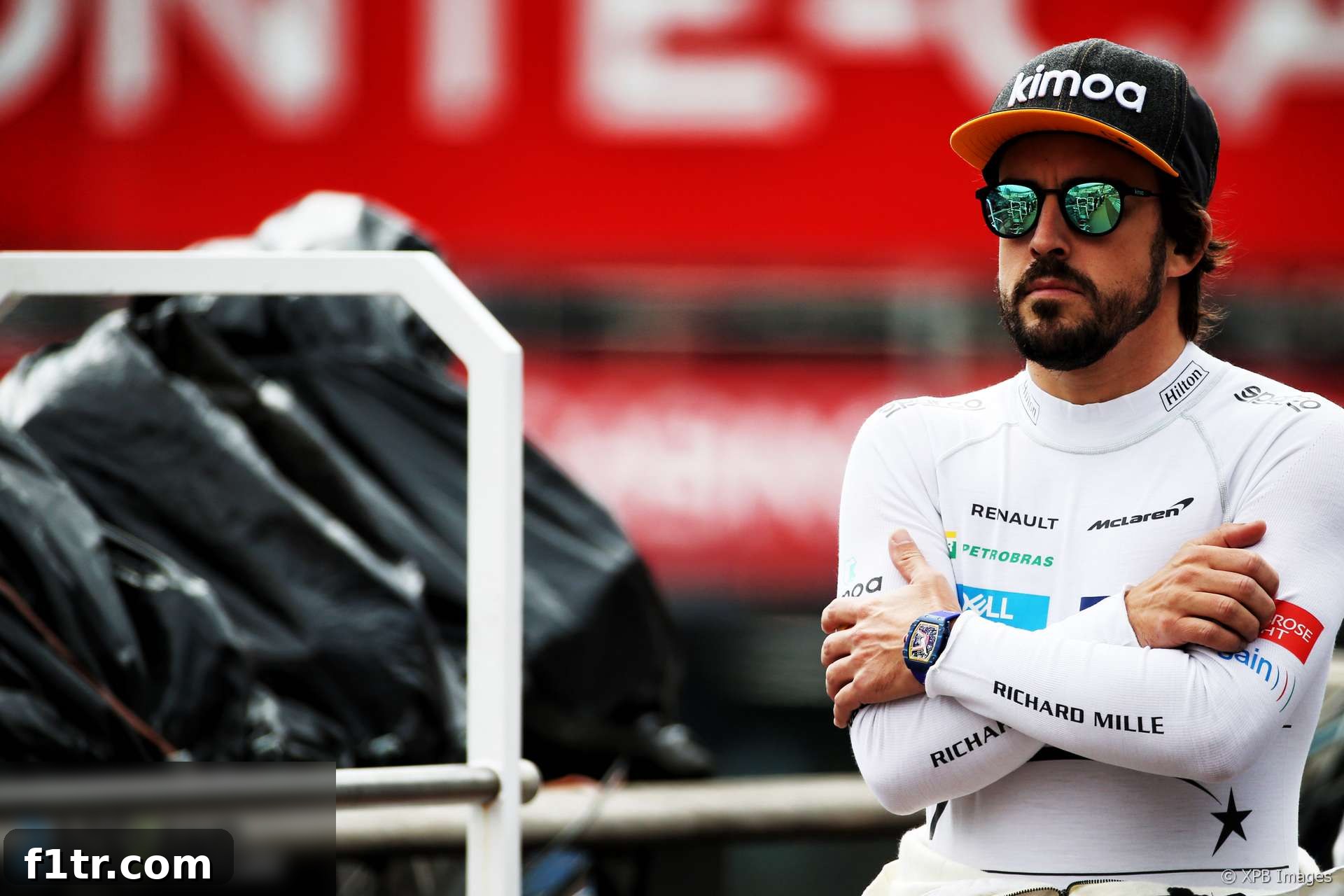
Welcome to today’s F1 Racing Recap, where we delve into the latest headlines, driver insights, and behind-the-scenes developments from the world of Formula 1. In this edition, we hear directly from McLaren’s star driver, Fernando Alonso, who candidly expresses his disappointment regarding his team’s performance gap to rivals Red Bull, particularly after the recent Monaco Grand Prix.
Fernando Alonso’s Perspective: Chasing the Pace in Monaco
During the qualifying session in Monaco, a circuit renowned for its unique demands on chassis performance and driver skill, RaceFans journalists pressed Fernando Alonso on the significant pace advantage demonstrated by Red Bull Racing. The Austrian team had managed to out-qualify McLaren by a substantial 1.3 seconds, raising questions about McLaren’s progress throughout the 2018 season.
“We pretty much knew beforehand that Red Bull would be exceptionally strong here in Monaco; they were, in a way, the clear favorites. Even for teams like Mercedes and Ferrari, Red Bull was definitively the benchmark to beat on this particular track. So, from that perspective, their qualifying performance wasn’t a total surprise to us.”
“However, it’s undeniable that we’ve been relentlessly chasing that top-tier pace all year long. We have a clear understanding of the specific areas we need to address to bridge that gap and compete at their level. Reflecting on our performance in the final sector of Barcelona, it became evident that Monaco would indeed play strongly into Red Bull’s hands, and unfortunately, we just aren’t matching that level of performance right now.”
“Naturally, there’s a degree of disappointment because we are currently utilizing the same power unit as Red Bull – the Renault engine – and logically, we aspire to be competing at a similar level. Yet, at the same time, it’s a reality we’ve acknowledged since the very beginning of the season: we simply haven’t reached that performance benchmark. Nevertheless, our commitment remains unwavering, and we are working tirelessly to get there as quickly as humanly possible.”
Alonso’s comments highlight the perennial challenge in Formula 1: the intricate balance between engine performance and chassis development. Despite sharing the same Renault power unit as Red Bull, McLaren found themselves considerably adrift, underscoring the critical role of aerodynamic efficiency, mechanical grip, and overall car design, particularly on a high-downforce, low-speed circuit like Monaco. His frank assessment points to McLaren’s ongoing struggle to return to the front of the grid, a journey that has proven more arduous than anticipated.
Quotes courtesy of Dieter Rencken
Advert | Become a RaceFans supporter andgo ad-free
Social Media Buzz: Key Developments from the Paddock
The world of Formula 1 is always abuzz with news, insights, and engaging content shared across social media platforms. Here’s a curated selection of notable posts that captured attention, offering glimpses into technical updates, team visions, and important personnel changes.
There’s been a lot of talk about the upgrades Renault and Honda are planning for Canada. But Mercedes are also planning to run their second engine of the season – and it, too, is expected to be a new specification…
— Andrew Benson (@andrewbensonf1) May 31, 2018
Andrew Benson’s tweet sparked considerable discussion regarding the fierce engine development race among F1’s power unit manufacturers. With both Renault and Honda rumored to bring significant upgrades to the Canadian Grand Prix, the revelation that Mercedes also planned to introduce its second engine of the season, likely featuring a new specification, highlighted the relentless pursuit of performance. This competitive push for power and efficiency is crucial, as engine reliability and output can often be the decisive factor in championship battles, especially as the season progresses and teams seek to maximize their points haul. The Canadian GP, with its long straights, typically provides an ideal proving ground for engine enhancements.
In 2015, we created our vision of racing future, the MP4-X. Fast-forward three years, add a coat of papaya paint, and you have the stunning #McLarenX2. https://t.co/zFotDDytXt pic.twitter.com/rWYofJWjaE
— McLaren (@McLarenF1) May 31, 2018
McLaren’s social media team reminded fans of their innovative spirit by showcasing the #McLarenX2, an evolution of their futuristic MP4-X concept car. Originally unveiled in 2015, the MP4-X represented McLaren’s bold vision for the future of motorsport, featuring advanced aerodynamics, adaptable chassis, and cutting-edge safety features. The updated #McLarenX2, presented in their iconic papaya livery, serves as a visual testament to McLaren’s heritage of technological exploration and their enduring commitment to pushing the boundaries of automotive design, even amidst their current F1 performance challenges. It’s a reminder that beyond the race track, innovation remains at the core of the Woking-based outfit.
@TheVijayMallya resigns as a director of Force India which has nothing to do with the Indian government’s bid to extradite him on charges of fraud. Nothing at all. No. #f1
— Byron Young (@byronf1) May 31, 2018
Byron Young’s sardonic tweet highlighted a significant development for the Force India F1 team: the resignation of Vijay Mallya as a director. This move came amidst ongoing legal challenges for Mallya, who was facing extradition proceedings by the Indian government on charges of fraud. While the official stance often tries to separate such corporate changes from personal legal battles, the implication was clear. Mallya’s financial difficulties had cast a long shadow over Force India for some time, eventually leading to the team entering administration and later being acquired by a consortium led by Lawrence Stroll. This event marked a crucial turning point in the team’s history, signaling the end of an era and paving the way for its eventual transformation.
- Find more official F1 accounts to follow in the F1 Twitter Directory
Essential Reading: Motorsport News and Analysis
Beyond the immediate headlines, the world of motor racing offers a rich tapestry of in-depth analysis, compelling interviews, and historical retrospectives. Here, we compile some of the most insightful articles and discussions making waves across the motorsport community, covering everything from driver performance to the future of racing regulations.
Advert | Become a Supporter & go ad-free
Superb Monaco drive shows Ocon’s maturity – Fernley (Racer)
Force India’s deputy team principal, Bob Fernley, praised Esteban Ocon’s mature performance at the Monaco Grand Prix. Ocon, known for his consistent driving and strategic racecraft, delivered a standout drive on the notoriously challenging street circuit, earning valuable points for the team. Fernley’s comments highlight the importance of driver skill and adaptability, especially in races where track position is paramount. “I think that where you’ve got the performance is very circuit specific, I think there’s always a chance for us to perform well. What we really want to do, the hard time for us will be making sure that the work we did in Barcelona and then the test in Barcelona, plus all the data we’ve now got, starts to pay dividends in France, Austria and Silverstone.” This quote underscores the continuous development cycle in F1, where data gathered from one race and subsequent tests are crucial for improving performance in upcoming events, particularly on varied circuit layouts.
Rosberg urges F1 to pursue ground effect aero (Autosport)
1982 F1 World Champion Keke Rosberg made a compelling argument for Formula 1 to re-embrace ground effect aerodynamics. Ground effect, a concept that dominated F1 in the late 1970s and early 1980s, uses the shape of the car’s underbody to create a low-pressure area, effectively sucking the car to the track and generating immense downforce. Rosberg points out the advantages for racing, stating, “I was looking at my dad’s car and it’s all ground effect. The aerodynamics are under the car. They could follow each other in the gearbox all the time.” The current F1 regulations, which rely heavily on over-car aerodynamics (wings, bargeboards), create turbulent air, making it incredibly difficult for cars to follow closely and thus hindering overtaking. Reintroducing ground effect could potentially clean up the air behind cars, allowing for tighter racing and more thrilling wheel-to-wheel battles, a long-standing desire among fans and drivers alike.
Analysis: Let’s talk about TMC (F1 Broadcasting)
This insightful analysis from F1 Broadcasting delves into the perception of ‘boring’ races and the crucial role of the race director and TV production in shaping the viewer’s experience. “When fans have called a race ‘boring’, you need to ask what draws them to that conclusion. Formula 1 attracts in excess 50 million viewers worldwide per race, all of them watching the same World Feed. Fans can only judge the race based upon the angles the producer chooses to air.” This highlights a fundamental truth about F1 broadcasts: what viewers see is a curated narrative. If camera angles focus solely on the leaders with large gaps, or miss exciting midfield battles, the overall impression can be one of a monotonous procession. The article implicitly suggests that more dynamic camera work and intelligent storytelling from the broadcast director could significantly enhance fan engagement, even in races that might lack overt drama at the very front.
Driver’s Eye: 24 Hours with Pierre Gasly (Toro Rosso via YouTube)
For fans looking for an intimate glimpse into the life of a Formula 1 driver, Toro Rosso (now AlphaTauri) provided an excellent piece of content: “Driver’s Eye: 24 Hours with Pierre Gasly.” This behind-the-scenes video offers a rare perspective on the routines, challenges, and lesser-seen aspects of a Grand Prix weekend from the perspective of a rising star like Pierre Gasly. From fitness training and media commitments to engineering briefings and track walks, such content is invaluable for humanizing the sport’s heroes and allowing fans to connect more deeply with the drivers’ dedication and demanding schedules.
Monaco GP review (Motor sport press)
A review of the Monaco Grand Prix from Motorsport Press acknowledged the common criticism that the race was “not great” in terms of on-track action, yet offered a different perspective from those deeply immersed in the event. “Now there’s no way I’m going to say that the race was great because it most certainly wasn’t, but as I’ve said here before, it’s all about the potential, what could happen. I don’t know what those media outlets mentioned majored on but for us in the circuit commentary booth we were talking about the gaps and the pace of the front runners and the battles going on further back. Had us pretty wrapped up, if no one else.'” This illustrates a crucial point: while TV audiences might find Monaco processional due to limited overtaking, the intense strategic battle, the pressure on drivers to avoid mistakes on the unforgiving streets, and the subtle shifts in pace and gaps provide a different kind of drama for those analyzing the race up close. The unique allure of Monaco, despite its racing limitations, continues to captivate those who appreciate its technical challenges and high stakes.
- Paddock Diary: Why the shine is coming off F1’s ‘jewel’
Work / Life: Race Support Team Manager (Renault)
A fascinating insight into the unseen heroes of Formula 1, this Renault Sport feature on a Race Support Team Manager offers a rare glimpse into the dedication and passion required behind the scenes. These individuals play a critical role, ensuring everything runs smoothly, from logistics to technical support, far away from the glamour of the pit lane. The manager’s most memorable moment perfectly encapsulates the raw emotion of F1: “‘The 1994 Australian Grand Prix, when Michael Schumacher won his first world title. Seeing him walk back into the garage was incredible – he just couldn’t believe it, and neither could we. It was my first world championship and it was a very special feeling.'” This anecdote serves as a powerful reminder of the collective effort and profound emotional investment that goes into achieving success in Formula 1, extending far beyond the drivers themselves.
NASCAR’s high-tech world: Leave any preconceptions behind for this deep-dive (ARS Tecyhnica)
An article from ARS Technica encouraged readers to shed preconceptions about NASCAR, revealing the surprising depth of technology and engineering prowess behind the seemingly simple oval racing. The comparison of track design vividly illustrates the core differences: “Imagine making a track by taking two Barcelona turn threes, sticking them together with some short straights, make it faster by adding banking, then surround it by walls, and you now have a typical NASCAR 1.5 mile oval.” While F1 is characterized by complex, varied road courses and intricate aerodynamic battles, NASCAR thrives on extreme speeds, close-quarters racing, and a different set of engineering challenges focused on power, durability, and tire management on banked ovals. This deep dive helps broaden the understanding of motorsport, appreciating the unique technical demands of each discipline.
Thanks to @Phylyp for the tip.
We always endeavor to credit original sources and appreciate tips from our dedicated readers. If you come across a compelling link or an interesting piece of motor racing news you believe deserves to be featured in our next RaceFans round-up, please do not hesitate to share it with us. Your contributions help us keep the community informed and engaged.
- Contact RaceFans
Advert | Become a RaceFans supporter andgo ad-free
Fan Voice: The Diminishing Indian Presence in F1
Our “Comment of the Day” features a poignant reflection from reader @PinakGhosh, who expresses genuine concern and dismay over the declining visible involvement of India in Formula 1, a trend that appears to be continuing with the latest developments surrounding the Force India team.
“It is a bit sad that when eventually Force India changes its name, India will no longer have any visible connection in F1.”
“On reflection – India once boasted a purpose-built track capable of hosting a Grand Prix, had drivers competing at various levels, and even featured principal sponsors for an F1 team. Now, the sole significant Indian link remaining is Tata Communications, serving as the official connectivity partner. This situation clearly demonstrates that there is definite and significant interest in motorsport within the subcontinent. Unfortunately, however, the losses in direct participation and visible presence seem to be outweighing any gains in other areas.”
“For an Indian F1 fan, Singapore is now arguably the best bet for experiencing the sport up close, given the proximity and ease of travel.”
@PinakGhosh
PinakGhosh’s comment succinctly captures a sentiment shared by many F1 enthusiasts in India. The nation once had a strong, multi-faceted connection to Formula 1, highlighted by the Indian Grand Prix held at the Buddh International Circuit, drivers like Narain Karthikeyan, and the Force India team itself, which proudly carried the country’s flag. The potential renaming of Force India, coupled with the absence of an Indian driver or a major Indian sponsor, signifies a concerning retreat for what was once a burgeoning market for the sport. This shift raises questions about F1’s global outreach strategy and the challenges of sustaining engagement in regions where direct participation wanes. The observation that Singapore might now be the most accessible F1 destination for Indian fans underscores the geographical void left by the loss of the home Grand Prix and a prominently Indian-flagged team.
Happy Birthday to Our Readers!
A very special happy birthday goes out to Josh, Kevin Hodge, and Christos! We hope you all have a fantastic day filled with joy, celebration, and perhaps a bit of F1 action.
If you’d like to receive a birthday shout-out in a future RaceFans round-up, simply let us know when your special day is via our contact form or by adding your details to our dedicated list here. We love celebrating with our community!
On This Day in F1 History
- Exactly 20 years ago today, the legendary Juan Pablo Montoya delivered a dominant performance to win the final F3000 Pau Grand Prix, spectacularly lapping the entire field in a display of sheer talent and speed. This victory was a significant milestone in Montoya’s burgeoning career, foreshadowing his future success in Formula 1 and other top-tier motorsport categories, where he would become renowned for his aggressive driving style and undeniable pace.