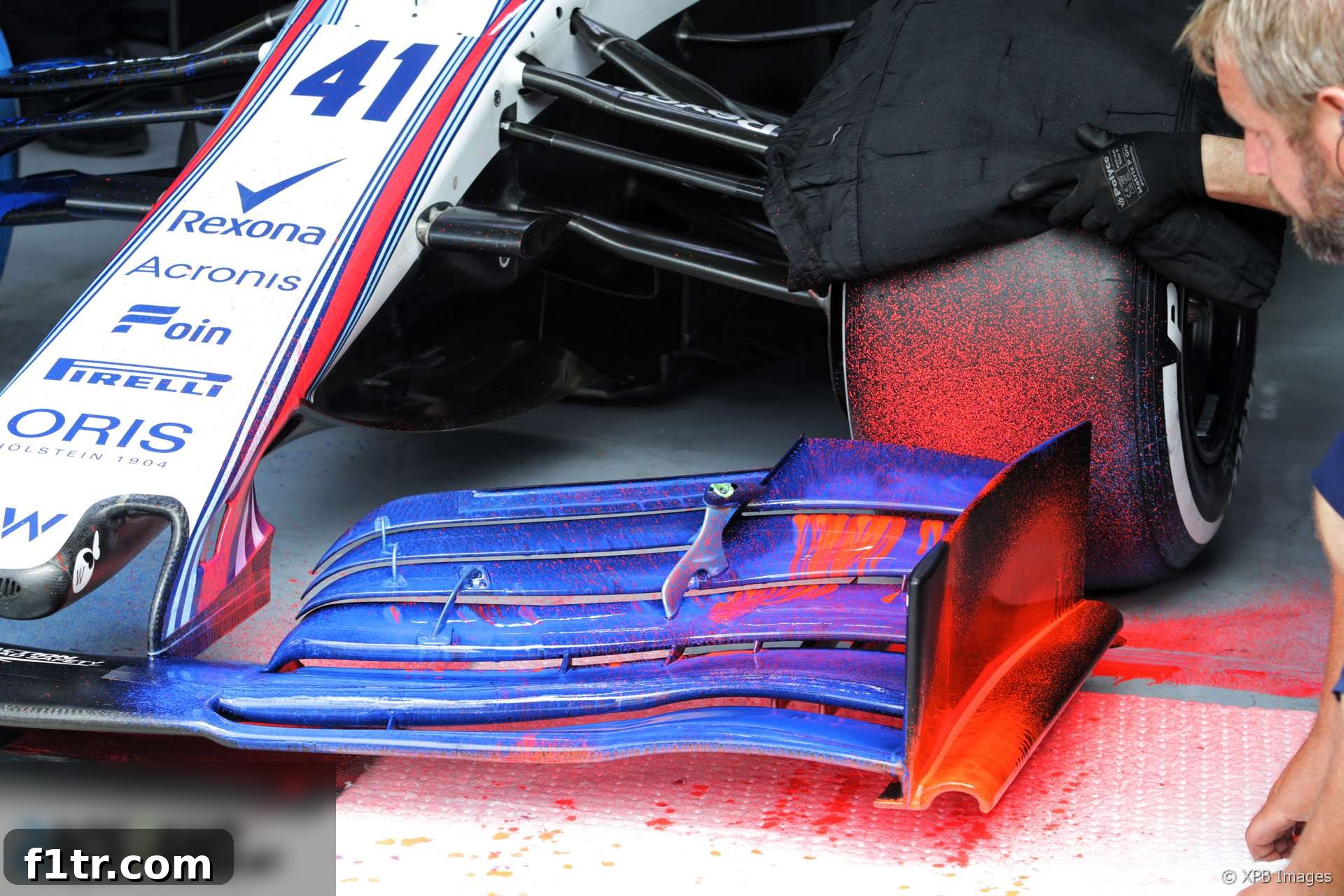
The final in-season Formula 1 test of 2018 commenced with great anticipation at the technical and challenging Hungaroring circuit. This crucial two-day event, following immediately after the Hungarian Grand Prix, offered teams a vital opportunity to not only refine their current-season machines but, more importantly, to gain a pivotal head start on the radically different aerodynamic regulations set to define the 2019 F1 season. With significant changes planned, particularly to the front wings, this test day transformed into an early battleground for next year’s development, providing the first public glimpses of F1’s impending evolution.
Hungaroring F1 Test 2018: A Pivotal Glimpse into the Future of Formula 1
As the roar of Formula 1 engines echoed once more around the twisting confines of the Hungaroring, the atmosphere was charged with a dual purpose. While the ink was barely dry on the Hungarian Grand Prix results, the teams were already looking ahead, specifically to the dramatic technical overhaul awaiting them in 2019. This 2018 in-season test was not merely about optimizing car setups or evaluating young talent; it was a critical proving ground for the nascent designs that would shape the sport’s future. The spotlight was firmly fixed on development components, particularly the experimental front wings, offering fans and engineers alike a fascinating sneak peek into the next chapter of Formula 1 aerodynamics.
Unveiling Tomorrow: The Impact of 2019 Aerodynamic Regulations
The 2019 Formula 1 season promised a significant shake-up in aerodynamic philosophy, primarily aimed at improving racing spectacle. The most prominent change involved a simplification of the front wing, making it wider, taller, and less complex, with the removal of intricate endplates and multiple aerodynamic elements. The overarching goal was to reduce the “outwash” effect, which funnels air around the front tires and creates disruptive dirty air for following cars. By simplifying the front wing, the FIA hoped to enable cars to follow each other more closely, thereby facilitating more overtakes and more thrilling on-track battles.
For teams, this regulatory shift presented a monumental challenge. Re-optimizing an entire car’s aerodynamic package around a fundamentally different front wing concept requires extensive research, simulation, and real-world testing. The Hungaroring, with its tight, twisty layout and emphasis on aerodynamic performance, served as an ideal laboratory for these early experimental stages. The circuit’s demanding nature, characterized by a series of medium and slow-speed corners, places a premium on downforce and mechanical grip. This made it a perfect venue for evaluating how the simplified front wings would perform in real-world conditions, providing invaluable data on drag reduction, cornering stability, and overall car balance under the impending regulations.
Pioneering Designs: Williams and Force India Lead the Charge
Among the teams present, Williams and Force India stood out by being the first to visibly run development versions of their 2019-compliant front wings. These prototypes represented the cutting edge of design under the new rules, showcasing the initial interpretations of the regulations by their respective engineering departments. The visual differences were stark compared to the highly complex, multi-element front wings used throughout the 2018 season. The new wings appeared much cleaner, with a wider span and simplified endplates, designed to reduce the generation of turbulent air. This early track time was crucial for both teams, allowing them to gather empirical data that would directly feed into their 2019 car concepts, validating computational fluid dynamics (CFD) and wind tunnel results. This hands-on evaluation in real-time provided critical insights into airflow behavior, structural integrity, and how the new aerodynamic profile integrated with the rest of the car’s components, offering a significant advantage in development as they prepared for the next season.
A Diverse Roster: Drivers and Their Missions at the Hungaroring Test
The 2018 Hungaroring F1 test saw a fascinating mix of seasoned Formula 1 race drivers and promising young talents take to the track. Each driver had a specific mandate, ranging from detailed car development to gaining valuable track experience, contributing to both current and future team objectives. This blend of experience and fresh perspective underscored the multi-faceted nature of in-season testing, making it an exciting event for both participants and observers.
Mercedes and George Russell: Nurturing Future Talent
Mercedes, the dominant force in F1, entrusted its car to George Russell. As a highly-rated junior driver, Russell’s primary role was to accumulate mileage and provide feedback on various test items. His precision and methodical approach were invaluable for Mercedes, allowing them to collect consistent data and evaluate potential future components, including early thinking for 2019, all while giving their rising star crucial F1 experience.
McLaren and Lando Norris: Assessing Potential and Pushing Development
Another prominent junior driver, Lando Norris, was behind the wheel for McLaren. Norris, already making waves in junior categories, used this opportunity to further impress his team. For McLaren, a team undergoing significant restructuring and aiming for a stronger 2019, Norris’s input on car balance, tire degradation, and experimental parts was crucial. His raw speed combined with detailed technical feedback made him a significant asset during this development test.
Ferrari and Antonio Giovinazzi: Valuable Mileage for a Rising Star
Ferrari fielded Antonio Giovinazzi, another driver with previous F1 experience and close ties to the Maranello outfit. Giovinazzi’s role was vital for Ferrari’s ongoing development efforts, particularly in understanding how new concepts behaved on track. His ability to provide nuanced feedback allowed the Scuderia to correlate simulator data with real-world performance, a critical step in refining their 2018 package and laying groundwork for their 2019 challenger.
Red Bull and Daniel Ricciardo: Bridging Past and Future Performance
Red Bull Racing deployed one of their frontline race drivers, Daniel Ricciardo. While many teams use junior drivers for these tests, Red Bull’s decision to run Ricciardo highlighted their focus on collecting high-quality, race-relevant data. Ricciardo, known for his incisive feedback and ability to push a car to its limits, likely concentrated on optimizing the RB14 for the remainder of the 2018 season while also potentially evaluating initial concepts that could influence the 2019 design, particularly in areas not restricted by the young driver testing regulations.
Renault and Nico Hulkenberg: Optimizing Mid-Season Performance
Renault also chose an experienced race driver, Nico Hulkenberg, for their testing duties. Hulkenberg’s presence allowed Renault to concentrate on fine-tuning their current car’s performance, experimenting with setup changes and aerodynamic tweaks that might yield incremental gains in the tightly contested midfield. His direct input from a race perspective was invaluable for understanding how potential upgrades affected the car’s behavior under pressure.
Toro Rosso with Sean Gelael and Brendon Hartley: Diverse Testing Objectives
Toro Rosso divided its testing duties between Sean Gelael and Brendon Hartley. Gelael, as a young driver, gained valuable F1 track time, fulfilling the mandatory young driver test requirements. Hartley, a regular race driver, focused on core development for the STR13, likely exploring different aerodynamic configurations and suspension settings to improve the car’s performance and reliability.
Sauber with Marcus Ericsson: Continuous Improvement
Marcus Ericsson represented Sauber, a team that had shown significant signs of improvement throughout the 2018 season. Ericsson’s test program would have focused on understanding new components and pushing the C37’s limits, aiming to maintain their upward trajectory and extract every ounce of performance from their package. The data gathered here would be crucial for their continued development push.
Williams with Oliver Rowland and Robert Kubica: Crucial Data for the Future
Williams had a dual approach, utilizing both Oliver Rowland and Robert Kubica. Rowland, a promising young talent, contributed to the young driver test mandate and provided fresh insights. Kubica, with his extensive experience and technical acumen, was vital for evaluating the ambitious 2019 front wing and other development parts. His feedback, honed over years in F1, was critical for guiding Williams’s direction for the following season, especially given their challenging 2018 campaign.
Hungaroring: A Technical Crucible for Aerodynamic Development
The Hungaroring, often dubbed “Monaco without the walls,” is notorious for its challenging layout, consisting primarily of a relentless series of medium and slow-speed corners. Its twisty nature leaves little room for error and places an immense emphasis on aerodynamic efficiency and car balance. For an in-season test, particularly one focused on the significant aerodynamic regulation changes planned for 2019, the Hungaroring proved to be an exceptional testing ground. The track’s characteristics demand high downforce, excellent traction out of corners, and precise handling. Testing new front wing concepts here allowed teams to assess how these changes affected crucial aspects like turn-in stability, mid-corner grip, and the overall aerodynamic platform of the car in real-world, high-demand scenarios. The circuit’s technicality ensured that any performance gains or losses with the new aero package would be immediately evident, providing invaluable feedback for the engineers back at the factory.
The Broader Impact: Shaping the 2019 Season and Beyond
The 2018 Hungaroring F1 test was far more than just another day of laps; it was a critical juncture in the 2018 season that directly influenced the trajectory of the 2019 championship. The data collected on these two days, particularly concerning the 2019-spec front wings, provided the first concrete evidence of how the radical new regulations might reshape the competitive landscape. Early insights into drag, downforce characteristics, and airflow management with the simplified wings would arm teams with vital information for their winter development programs. Success in these initial test phases could translate into an early advantage for the 2019 season, allowing teams to hit the ground running with a well-understood and optimized package. Conversely, any missteps or unforeseen challenges discovered during this test would trigger intense analysis and redesign efforts, highlighting the immense pressure and importance of these in-season testing opportunities in the hyper-competitive world of Formula 1.
Hungaroring F1 Test Day One: Picture Gallery
Explore an exclusive collection of images from the first day of the 2018 Hungaroring Formula 1 in-season test. Witness the experimental 2019 front wings in action, catch glimpses of both established stars and promising young talent, and experience the intensity of Formula 1 development on track.
Explore More Formula 1 Pictures
- 2026 Japanese Grand Prix in pictures
- 2026 Japanese Grand Prix qualifying day in pictures
- 2026 Japanese Grand Prix practice in pictures
- 2026 Chinese Grand Prix in pictures
- 2026 Chinese Grand Prix qualifying and sprint race day in pictures
View more F1 pictures