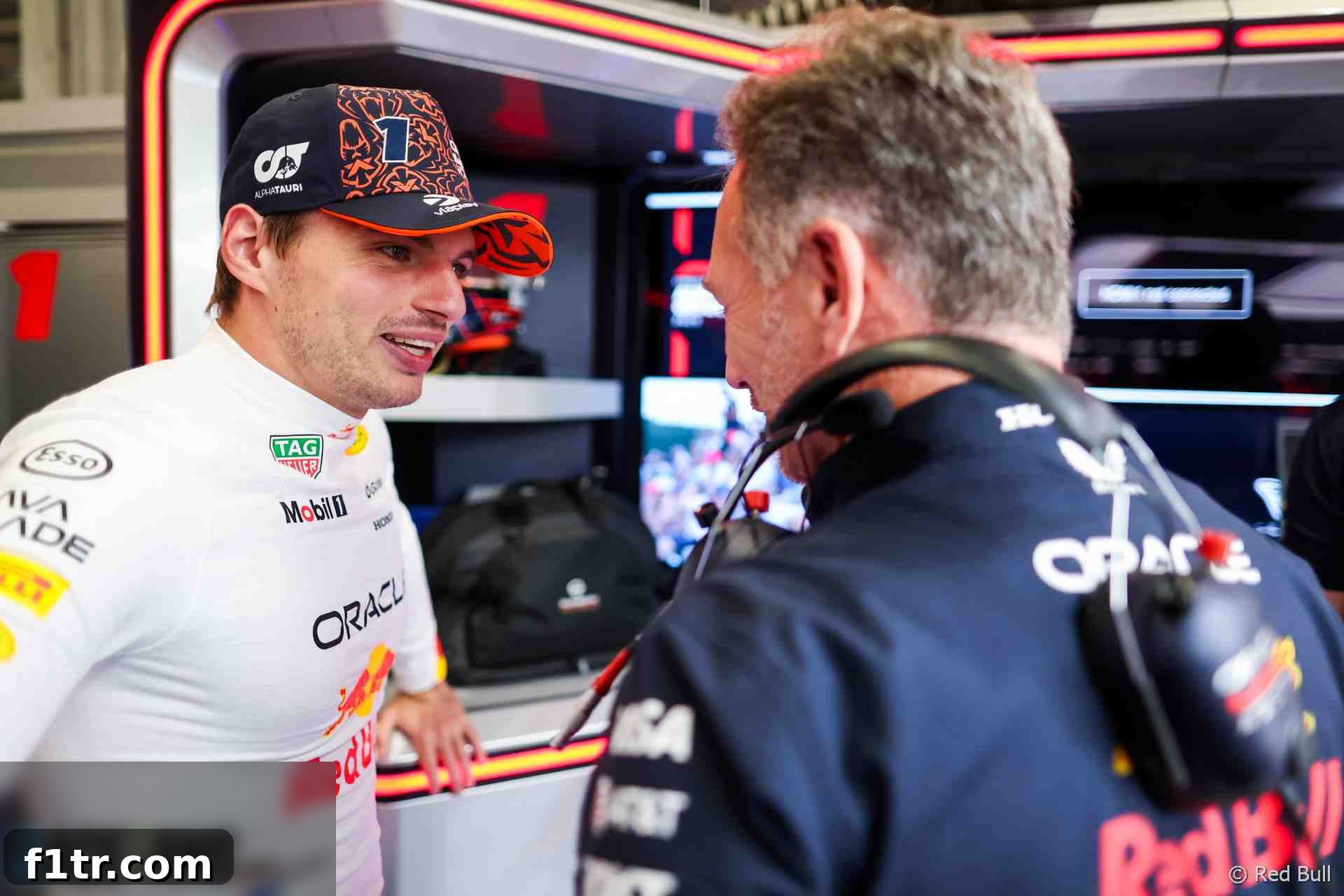
In the high-stakes world of Formula 1, driver contracts are often shrouded in mystery, yet they remain a frequent source of intense speculation. Recently, Red Bull Racing’s Team Principal, Christian Horner, confirmed the existence of a performance clause within superstar driver Max Verstappen’s contract. While acknowledging this contractual nuance, Horner vehemently reiterated the team’s unwavering commitment to retaining the Dutchman, dispelling any immediate notions of a potential departure.
Advert | Become a Supporter & go ad-free
The swirling rumors surrounding Verstappen’s future have gained significant traction, largely fueled, according to Horner, by Mercedes driver George Russell’s own ongoing contract negotiations. Russell, whose current deal with Mercedes is set to expire, is reportedly yet to finalize an agreement for the upcoming seasons, particularly beyond 2025. Horner remarked on the “remarkable” situation of Russell still being “on the market” for 2026, implying that Russell’s situation has inadvertently amplified the existing speculation around other top drivers, including Verstappen.
Unpacking Verstappen’s Performance Clause: What We Know (And Don’t)
Earlier this year, reports surfaced claiming that Verstappen possesses an option to leave Red Bull if he falls outside the top three positions in the drivers’ championship by the summer break, a critical juncture typically three rounds away from the point of these discussions. While these specific details have not been officially confirmed by Red Bull, such performance-based clauses are not uncommon in elite sports contracts, designed to protect both the driver’s ambitions and the team’s competitive standing. Currently, Verstappen holds third place in the championship standings, a precarious nine points ahead of Russell, who has notably outscored him over the past three races, adding another layer of intrigue to the situation.
Speaking during the FIA press conference at Silverstone, Horner maintained a cautious stance regarding definitive statements about Verstappen’s future beyond the current contract cycle. He emphasized the confidential nature of driver contracts, stating, “The contracts between the drivers and the teams are always going to remain confidential.” However, he openly admitted, “And with any driver’s contract, there is an element of a performance mechanism. And of course, that existed within Max’s contract.”
Despite the contractual intricacies, Horner’s resolve to keep Verstappen was unequivocal. “The absolute intention is that he will be there and driving for us in 2026,” he asserted. This strong declaration underscores Red Bull’s commitment to their star driver, recognizing his immense value and the significant interest he commands across the Formula 1 grid. Indeed, it is “inevitable that he’s of huge interest to any other team in the pit lane,” a sentiment that only heightens the anticipation surrounding the driver market.
George Russell: The Unintended Catalyst for Speculation
Mercedes, keen on securing top talent, is widely understood to be courting Verstappen as a potential long-term replacement, especially as they navigate a new era following Lewis Hamilton’s departure. However, Horner believes the recent surge in speculation regarding Verstappen’s future was, ironically, sparked by George Russell’s contractual limbo. “I think actually probably George triggered all this speculation,” Horner suggested, speculating that Russell was “trying to leverage his own situation and force clarity, which you can understand because he’s driven a very good season as well this year.”
Advert | Become a RaceFans supporter andgo ad-free
This perspective highlights the interconnectedness of the driver market, where one driver’s contractual status can create a ripple effect across the paddock. Despite the external noise, Horner stressed the foundational trust and clarity within Red Bull. “But inevitably there will always be speculation about it. I think most importantly is the clarity that exists between Max and the team and that’s very clear.” He also clarified that Red Bull has “haven’t engaged in any discussion with George, so he’s obviously pretty confident that he’s going to get to remain where he is,” effectively closing the door on any notion of Russell joining Red Bull for the foreseeable future.
The Transformative 2026 Regulations and the Future Landscape
Adding another layer of complexity to these driver market discussions are the extensive overhauls to Formula 1’s regulations set to take effect in 2026. These changes, encompassing significant modifications to power units and aerodynamics, represent a seismic shift that could fundamentally alter the competitive hierarchy of the sport. While some commentators have suggested these regulations might play into Mercedes’ strengths, potentially offering them a pathway back to championship contention, Christian Horner remains pragmatic.
“Nobody, with hand on heart, can know what the pecking order is going to be,” Horner stated emphatically. He elaborated on the inherent uncertainty, explaining, “I think there’s an awful lot of subjectiveness to 2026 and it’ll only be really this time next year that you’ll have a clear indication of what that pecking order is.” This candid assessment underscores the significant risk involved for any driver contemplating a move before the true impact of the new rules becomes apparent. The notion that “there are no guarantees that jumping into a Mercedes car will automatically be a better proposition” serves as a crucial counterpoint to the allure of a potential switch.
For a driver of Max Verstappen’s caliber, making such a career-defining decision necessitates a careful balancing act between immediate performance, contractual obligations, and the unpredictable nature of future regulations. Red Bull, with its ambitious Red Bull Powertrains project gearing up for 2026, views Verstappen as an indispensable asset, not just for his on-track prowess but also for his integral role in the development and marketing of their bespoke engine. Retaining him is paramount to ensuring stability and confidence as they embark on this challenging new chapter.
The F1 Driver Market: A Chess Game of Talent and Strategy
The situation surrounding Max Verstappen’s contract and the broader F1 driver market is a testament to the intricate strategic dance that unfolds behind the scenes. Every team principal must weigh the talent of their drivers against future regulatory changes, team development trajectories, and the financial implications of high-profile contracts. Performance clauses, while seemingly restrictive, serve as a vital mechanism to align driver and team ambitions, ensuring both parties remain committed to peak performance.
The saga involving Verstappen, Red Bull, and the lingering presence of Mercedes’ interest, compounded by George Russell’s own contractual situation, is a perfect illustration of how quickly the landscape can shift. As the 2026 regulations draw nearer, every statement, every rumor, and every on-track performance will be scrutinized, influencing not only driver decisions but also the very fabric of team strategies. The next year promises to be a captivating period in Formula 1, as teams and drivers alike position themselves for what they hope will be a successful future in a fundamentally transformed sport.
Miss nothing from RaceFans
Get a daily email with all our latest stories – and nothing else. No marketing, no ads. Sign up here:
2025 British Grand Prix
- Tsunoda says the stewards have “not been nice to me” as penalty points mount up
- ‘I’ve considered Hulkenberg an exceptional talent for a very long time’ – Wheatley
- Alpine is now F1’s highest scoring last-placed team of all time: British GP stats
- Ferrari had no GPS data from Hamilton’s car throughout British Grand Prix
- “The risk for us is a Safety Car”: Why Norris’s win was in danger for six laps
Browse all 2025 British Grand Prix articles