Motorsport Pulse: Hamilton’s Evolving Activism, Circuit Transformations, and Racing Chronicles
In the ever-dynamic world of motorsport, champions and circuits are constantly evolving. This week, we delve into Lewis Hamilton’s refined approach to diversity advocacy, significant upgrades at a renowned Formula 1 track, and a host of other captivating stories from across the racing spectrum, from the pinnacle of F1 to the thrilling battles in feeder series and IndyCar.
Lewis Hamilton Shifts Focus: Diplomacy Over Confrontation in Diversity Push
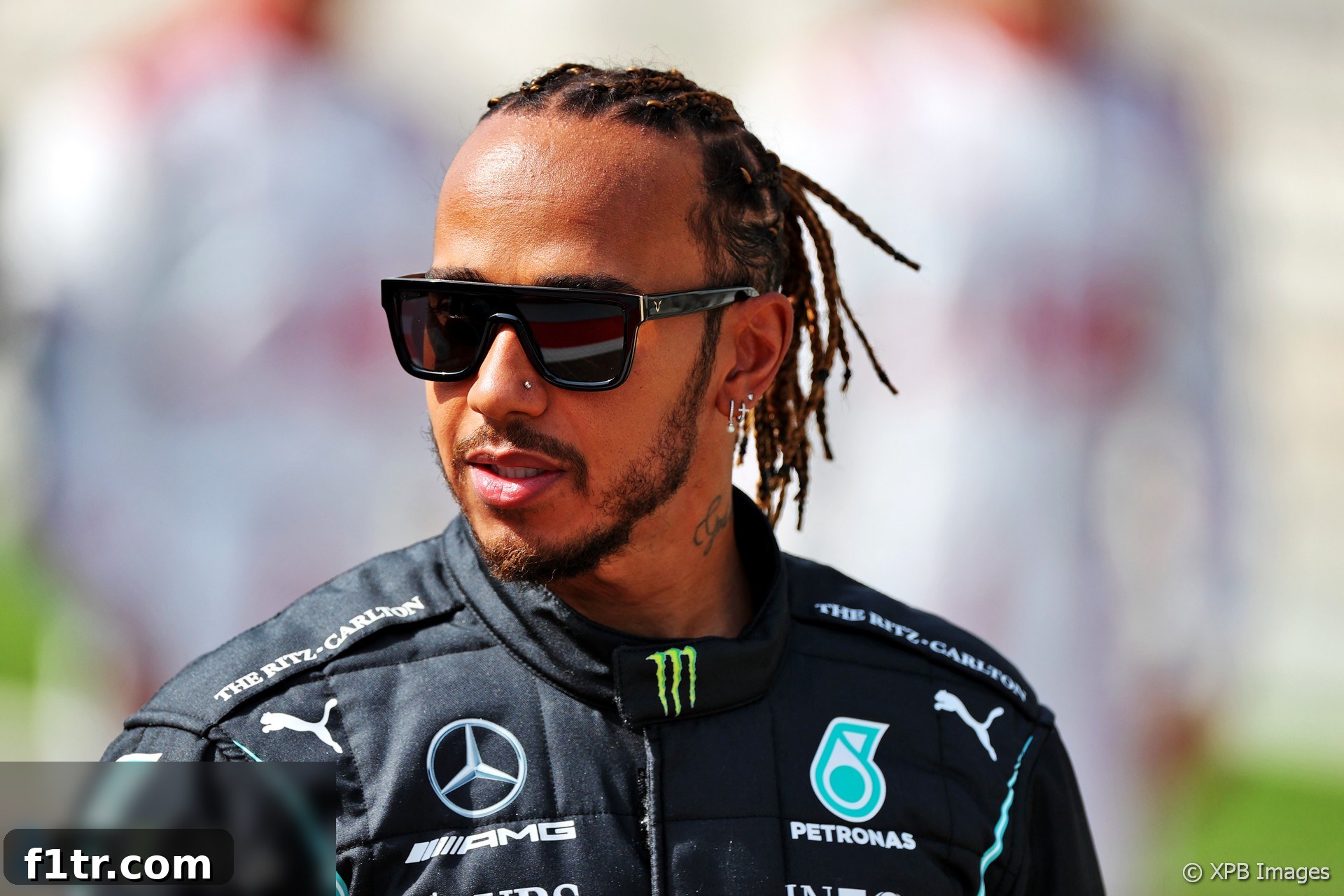
Following a period of outspoken activism, including directly challenging teams like Ferrari last year to enhance their commitment to diversity, and later addressing a controversial, albeit false, quote attributed to Red Bull’s Helmut Marko, Lewis Hamilton has announced a strategic shift in his advocacy. The seven-time world champion indicates he will now favor a more diplomatic, less confrontational methodology in his ongoing efforts to champion diversity and inclusion within Formula 1 and beyond. This evolution reflects a deeper understanding of how to effect meaningful, lasting change, suggesting that significant progress can often be achieved through collaborative discussions behind the scenes rather than public critiques.
Hamilton’s journey as an activist has seen him emerge as one of sport’s most prominent voices for social justice. His past actions, while impactful in raising awareness and sparking crucial conversations, have sometimes met with resistance. His decision to adopt a more nuanced approach underscores a matured perspective, recognizing that while public statements are vital, sustained progress often requires sustained dialogue and building consensus among key stakeholders. This new strategy aims to foster a more inclusive environment by engaging directly with teams, governing bodies, and industry leaders, working together to dismantle barriers and create opportunities for underrepresented groups within motorsport.
Motorsport Links of Interest: Deep Dives and Developments
Advert | Become a Supporter & Go Ad-Free
Hamilton Opens Up About Activism and Life Beyond F1 (Wired)
“At the beginning of the year I was very outspoken and calling out the sport. At the time that was the right thing for me, but I discovered that there’s times where you have to be very diplomatic, where there’s more you can do by discussions in the background, rather than embarrassing people.” This candid reflection from Lewis Hamilton highlights his strategic pivot in advocating for diversity. His comments suggest a deliberate move towards leveraging influence through private conversations and negotiations, believing that this approach can often yield more profound and sustainable results than public shaming. This signifies a pragmatic evolution of his role as a sporting icon and a powerful voice for change, aiming to integrate diversity initiatives more deeply within the sport’s culture.
AUD $20 Million Upgrade for Australian Grand Prix Track (Auto Action)
“In round figures, it’s a (AUS) $20 million (£11m) project. If you look at it overall, it’s very good value. Normal suburban roads are resurfaced every 10-15 years. This track, which is also a public road, will have lasted 26 years.” The Albert Park Circuit, home to the Australian Grand Prix, is undergoing a substantial AUD $20 million renovation, a testament to its dual role as a premier racing venue and a public thoroughfare. This significant investment aims to enhance the circuit’s racing characteristics and safety standards, promising a faster and more exciting spectacle for future Formula 1 events. The project is particularly noteworthy given the track’s longevity since its last major overhaul, highlighting the commitment to maintaining its world-class status and ensuring thrilling competition for years to come. The upgrades are designed to create more overtaking opportunities and challenge drivers in new ways, potentially shaving seconds off lap times.
- Removal of Turn Nine Chicane to Cut F1 Lap Times by Five Seconds at Albert Park. This specific alteration is a key component of the extensive AUD $20 million upgrade at the Albert Park Circuit. By eliminating the tight and slow Turn 9 chicane, organizers anticipate a drastic reduction in F1 lap times, potentially by as much as five seconds. This change is poised to transform the flow of the circuit, creating a longer, faster section that could foster more slipstreaming opportunities and enhance the overall spectacle of the Australian Grand Prix. It represents a bold move to modernize the track and improve the racing dynamics, offering drivers a fresh challenge and fans a more thrilling experience.
Remembering Tony Brise, Kent’s Formula 1 Hope Killed in Plane Crash with Graham Hill (Kent Online)
“I do look at Frank Williams’ team and I think my dad’s could well have been a Williams-type operation and been as successful as that, but that’s how life is – you can’t be sure what the future holds.” This poignant reflection from Tony Brise’s family underscores the profound loss felt in British motorsport following his tragic death in a plane crash alongside Graham Hill in 1975. Brise, a prodigious talent from Kent, was widely regarded as a future Formula 1 champion, possessing the speed, skill, and temperament to reach the very pinnacle of the sport. His brief but impactful F1 career showcased immense potential, leaving many to wonder about the dynasty he and Hill might have built together. His story remains a powerful ‘what if’ in motorsport history, a reminder of the fragility of life and the immense talent that was taken too soon.
Lawson’s Guest Column: We Didn’t Expect to Win So Early On (F2)
“We did get taken out, but looking back at it, I maybe shouldn’t have fought for the position. I didn’t quite have the tyres anyway and I think that maybe conceding the place may have been the better option, so that was the bad point of the weekend.” Liam Lawson’s insightful guest column provides a candid look into the demanding world of Formula 2. His self-analysis of a race incident, reflecting on whether to fight for a position or concede for a better long-term outcome, showcases the tactical maturity emerging in young drivers. Despite an early season victory exceeding expectations, this honest appraisal of his performance underscores the continuous learning curve in junior single-seater categories. It highlights the fine margins in F2 where strategic decisions, tyre management, and racecraft are as crucial as outright speed, shaping a driver’s journey towards Formula 1.
Formula E Returns to BBC Two on April 10 for the Rome EPrix (FE)
“The first race of the Rome EPrix double-header will be shown live on BBC Two in the UK, from 2.45pm BST on Saturday, April 10.” The return of Formula E to BBC Two signifies the growing mainstream appeal and importance of electric single-seater racing. This high-profile broadcast deal provides a significant platform for the championship in the UK, making the cutting-edge technology and intense urban racing of the Rome EPrix accessible to a broad audience. The live coverage on a major national broadcaster further cements Formula E’s status as a top-tier global motorsport series, showcasing its commitment to innovation, sustainability, and thrilling competition.
Road to Indy ‘Spring Training’ Set to Go in Alabama (Indy Lights)
“The 2021 season will be especially significant for Indy Lights, the top rung on the ladder, which returns following a one-year hiatus caused by effects of the Covid-19 global pandemic. In addition, a new halo-type driver protection device will make its debut this weekend on the Indy Lights Dallara IL-15.” The highly anticipated return of Indy Lights, the crucial final step on the Road to Indy ladder, marks a significant moment for aspiring open-wheel drivers. After a year-long absence due to the global pandemic, the series is back with renewed vigor, offering a vital pathway to the NTT IndyCar Series. This season’s ‘Spring Training’ in Alabama will also feature the debut of a new halo-type driver protection device on the Dallara IL-15 chassis. This introduction underscores Indy Lights’ commitment to driver safety, aligning with contemporary standards seen in Formula 1 and IndyCar, ensuring that young talents develop their skills in the safest possible environment as they chase their dreams.
Strategy Debrief (McLaren)
“The team told Daniel not to worry about the Spaniard – who had to take a huge amount out of his tyres on his out-lap to make up ground – and Daniel duly took the place back and set about chasing down Leclerc, though the Monegasque driver seemed able to maintain a five-second gap through most of the stint.” McLaren’s post-race strategy debrief provides a fascinating glimpse into the intricate world of Formula 1 decision-making during a Grand Prix. This particular snippet, likely from the Bahrain Grand Prix, highlights the dynamic interplay between driver communication, tyre management, and competitive positioning. It illustrates how the team guided Daniel Ricciardo, allowing him to focus on his own race pace rather than an immediate battle, understanding that the competitor ahead had compromised his tyre life. Such strategic acumen is crucial in maximizing performance and securing valuable points in the fiercely competitive F1 championship, where every second and every tyre compound choice can make a decisive difference.
We always endeavour to credit original sources. If you have a tip for a link relating to single-seater motorsport to feature in the next RaceFans round-up please send it in via the contact form.
Advert | Become a RaceFans supporter andGo Ad-Free
Snapshot: Sebastien Bourdais’ New Livery
Sebastien Bourdais’s Foyt IndyCar was recently seen in its striking new livery during testing at Texas Motor Speedway. The visual refresh of a racing car is always a significant moment, symbolizing renewed ambition for the season and highlighting key partnerships. For a seasoned competitor like Bourdais, who boasts an impressive career spanning Formula 1, IndyCar, and endurance racing, the unveiling of a new paint scheme often signals a fresh chapter with his team, A.J. Foyt Enterprises. Testing sessions like these are crucial for fine-tuning the car ahead of competitive action, and a new livery ensures the team makes a visually impactful statement as they prepare to battle for victories in the highly competitive NTT IndyCar Series.
Advert | Become a RaceFans supporter andGo Ad-Free
Social Media Pulse: Key Moments from Twitter, Instagram, and More
Notable posts from across the social media landscape:
#Fit4F1 18-inch tyre test update at @BAH_Int_Circuit:
64 laps completed this morning by @alo_oficial driving for @AlpineF1Team! Now we’re back on track for the afternoon session. Stay tuned for more updates! #F1 pic.twitter.com/HFLpMKa5uP— Pirelli Motorsport (@pirellisport) April 1, 2021
Pirelli Motorsport provided an update on the ongoing 18-inch tyre testing at the Bahrain International Circuit, a critical development for the future of Formula 1. Fernando Alonso, driving for Alpine F1 Team, completed an impressive 64 laps during the morning session. This rigorous testing program is essential for Pirelli to gather crucial data and fine-tune the new tyre specifications, which are set to become standard in F1. Alonso’s extensive mileage highlights the importance of driver feedback in adapting to the dramatically different characteristics of the larger wheels, ensuring that the sport continues to push technological boundaries while maintaining thrilling competition.
When Guenther asks you to create a fake South Tyrol Grand Prix logo for an April Fools joke in his hometown newspaper 😂 #f1 #AprilFools pic.twitter.com/ZkVHhtu3UO
— Ryan Long (@ryan_long_01) April 1, 2021
Ryan Long shared a humorous behind-the-scenes look at an April Fool’s prank orchestrated by Guenther Steiner, Haas F1 Team Principal. The creation of a fake “South Tyrol Grand Prix” logo for Steiner’s hometown newspaper perfectly encapsulates the lighter side of Formula 1. Steiner, known for his charismatic and often blunt personality, clearly has a playful streak, demonstrating how even in the high-stakes world of F1, there’s always room for a bit of fun and local community engagement. This tweet offers a refreshing contrast to the usual seriousness of motorsport news, reminding fans of the human element behind the racing spectacle.
One year ago we decided to make a difference. The UCL-Ventura is now helping patients in over 15 countries worldwide. 👊 pic.twitter.com/3WABRS9h8a
— Mercedes-AMG PETRONAS F1 Team (@MercedesAMGF1) April 1, 2021
The Mercedes-AMG Petronas F1 Team commemorated the one-year anniversary of their impactful contribution to the fight against the pandemic. Their tweet highlighted the success of the UCL-Ventura device, a continuous positive airway pressure (CPAP) breathing aid, which they helped develop and manufacture at rapid scale. This initiative showcased Formula 1’s incredible engineering capabilities and rapid prototyping skills, repurposing them for humanitarian efforts. The fact that the UCL-Ventura is now assisting patients in over 15 countries globally is a powerful testament to F1’s positive societal impact beyond the race track, demonstrating how advanced motorsport technology can be leveraged for the greater good in times of crisis.
- Find more official F1 accounts to follow in the F1 Twitter Directory
Fan Voice: Comment of the Day on Albert Park’s Transformation
The track changes at Albert Park have generated considerable discussion among fans, with LB offering a particularly insightful perspective:
I understand the logic of the changes. They clearly believe that the reason there is no overtaking is because the straights aren’t long enough, so by running from turn six down to turn 11 in a slipstream will give a chance to get close. I worry that turn 11 hasn’t got enough of a braking zone however, that it will be highway DRS passes or nothing.
There also seems to be a weird connection with “curved straights” and cars being able to get close, thinking Blanchimont at Spa / After Luffield at Silverstone / 130R at Suzuka. Its seems like there is always overtaking at these corners so having a curved straight with turn eight then the new nine-ten corner might work well.
LB (@burden93)
LB’s comment brilliantly dissects the strategic thinking behind the Albert Park circuit modifications, particularly the removal of the Turn 9 chicane. He acknowledges the intent to lengthen sections for slipstreaming, a crucial element for creating overtaking opportunities in modern F1. However, his concern about Turn 11’s braking zone being insufficient raises a valid point about the potential for either ‘easy’ DRS overtakes or none at all, bypassing genuine wheel-to-wheel racing. Furthermore, his observation about “curved straights” like Blanchimont, Luffield, and 130R fostering close racing is astute. The unique aerodynamic characteristics and driver commitment required through such sections often lead to exciting battles. His analysis suggests that the new Turn 8 into the reconfigured Turn 9-10 complex at Albert Park could, if designed effectively, leverage this “curved straight” dynamic to enhance the racing spectacle, moving beyond simple straight-line speed differentials to more complex overtaking maneuvers.
Happy Birthday! Celebrating Motorsport Enthusiasts
A very happy birthday to our dedicated readers: Majormilou, Nico Savidge, Ripping Silk, Christopher, and Nic Morley! We hope you have a fantastic day filled with all things motorsport.
If you’d like a birthday shout-out in a future round-up, please let us know when yours is via the contact form or by adding your details to our dedicated list here. Your passion fuels the racing community!
On This Day in F1: A Look Back at Racing History
- 15 years ago today, Fernando Alonso secured a memorable victory for Renault at the Australian Grand Prix in Melbourne. This race, held on April 2, 2006, was particularly dramatic, marked by the crushing disappointment for Jenson Button. After starting from a brilliant pole position for Honda, Button endured a spectacular and heartbreaking engine failure on the very last corner of the race, just meters from securing a podium finish, or potentially even a victory. This event encapsulated the unpredictable nature of Formula 1, where fortunes can swing in an instant. Alonso’s triumph further solidified his burgeoning reputation as a world champion, while Button’s agony became one of the most memorable moments of that season, a stark reminder of the highs and lows inherent in top-tier motorsport.