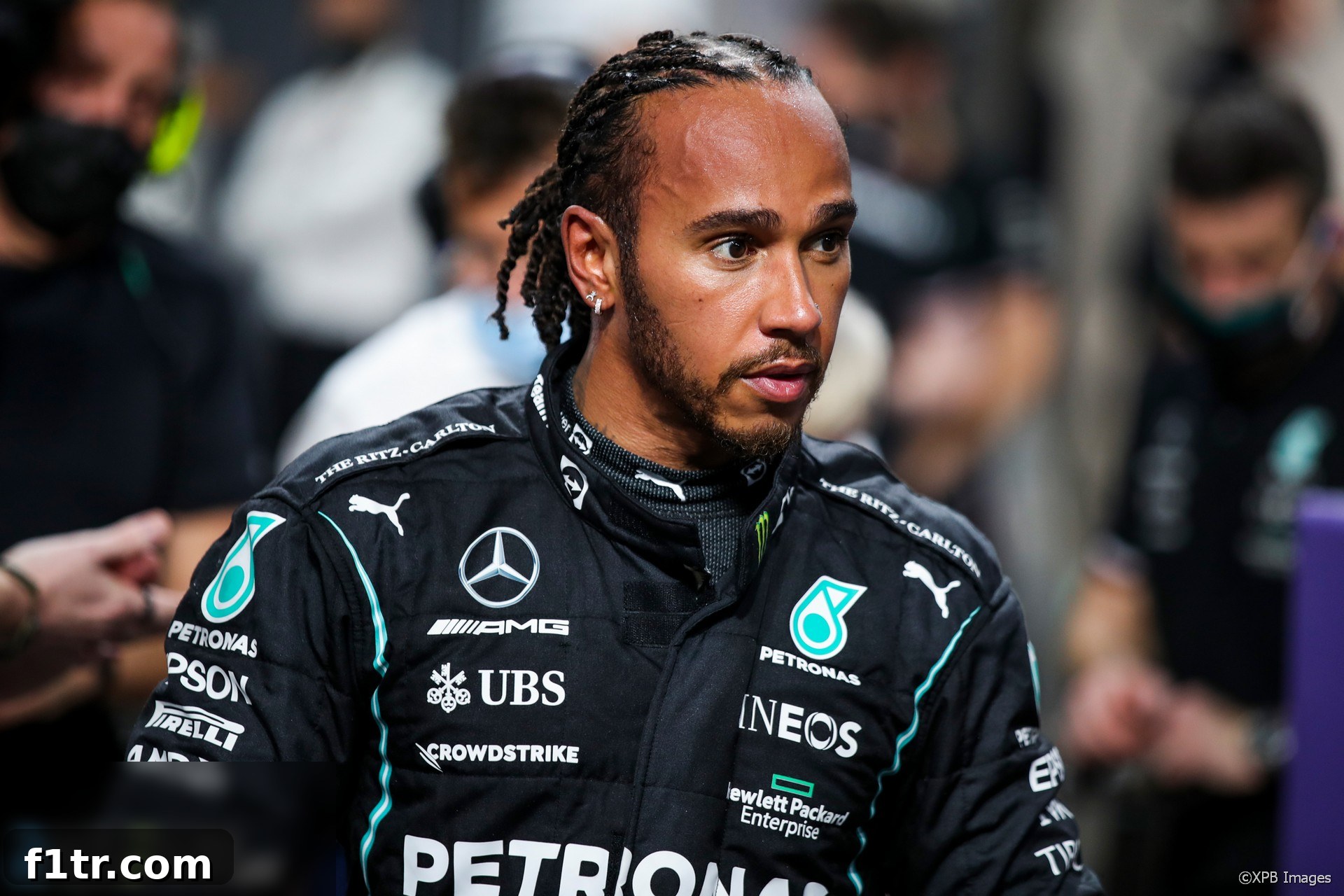
In a significant turn of events shaking the world of Formula 1, seven-time world champion Lewis Hamilton has publicly addressed the controversy surrounding Mercedes-AMG Petronas F1 Team’s new sponsorship deal with building materials giant Kingspan. Following widespread criticism, Hamilton indicated that the team might remove Kingspan’s branding from its cars, signaling a potential reversal in a partnership that has drawn immense scrutiny.
The Controversial Partnership and Immediate Backlash
The announcement of Kingspan as a new Mercedes F1 sponsor on Wednesday sent ripples through both the motorsport community and beyond. Kingspan, a company whose K15 insulation was used in a small part of the Grenfell Tower’s cladding system, became embroiled in a public inquiry following the devastating 2017 fire. This tragedy claimed the lives of 72 people and left an indelible mark on the United Kingdom, raising critical questions about building safety and corporate responsibility.
The immediate reaction to the sponsorship deal was one of outrage. Grenfell United, a group representing the survivors and bereaved family members of the Grenfell Tower disaster, swiftly condemned the partnership. Their powerful voice highlighted the insensitivity of associating a global sporting icon like Mercedes with a company linked, however peripherally, to such a profound national tragedy. Mercedes-AMG Petronas F1 Team was quick to issue an apology to Grenfell United, acknowledging the pain and distress the partnership had caused. However, this initial apology did little to quell the rising tide of disapproval.
Government Pressure and Potential Legislative Changes
The controversy escalated further when the UK government intervened, expressing profound concern over the deal. Ministers indicated that the government might revise legislation governing sports sponsorship, a move that underscores the severity of the backlash and the potential for far-reaching consequences across the sports industry. This governmental pressure adds a new layer of complexity to the situation, pushing Mercedes beyond mere public relations management into the realm of potential policy impact.
The prospect of new laws being introduced specifically to address ethical considerations in sponsorship deals could set a precedent not just for Formula 1 but for all major sports. It highlights a growing expectation from the public and government bodies for corporations to not only achieve commercial success but also to uphold stringent ethical standards and social responsibility. The Grenfell Tower inquiry is ongoing, and any company associated with materials used in the tower faces intense public scrutiny. For a globally recognized brand like Mercedes, aligning with such a company, even inadvertently, creates a significant reputational risk.
Lewis Hamilton’s Detachment and Empathy
Lewis Hamilton, whose name and image are intrinsically linked to the Mercedes F1 team, found himself inadvertently at the center of this storm. He was quick to clarify his position, stating emphatically that he had no involvement in negotiating the sponsorship deal with Kingspan. “I had nothing to do with the team signing any of the sponsors, apart from probably Tommy [Hilfiger] was the only one that I brought to the team,” Hamilton revealed. “It was news to me when I heard the things that happened this week.”
This statement underscores the typical division of labor within large sports organizations, where commercial partnerships are often handled by dedicated teams, separate from the athletes themselves. However, as the face of the team, Hamilton inevitably bears some association with its sponsors, a reality he acknowledged with a degree of resignation. “Unfortunately my name is associated with it because it’s put on my car, but whether that remains the same, we shall see,” he added, hinting at the potential removal of the logos.
Hamilton’s response was not just about professional detachment; it was deeply personal and empathetic. He stated he was “very much aware” of the tragic consequences of the Grenfell fire, expressing that he was “watching very closely all the families that were affected by what happened there. We know there’s been a huge outcry and an amazing amount of support from people in the community around there.”
This is not the first time Hamilton has expressed his solidarity with the victims of Grenfell. In 2020, he marked the third anniversary of the fire with a poignant social media post, writing: “Today marks three years since the horrific Grenfell Tower fire in London. Remembering the 72 souls we lost and their loved ones, and everyone affected by this tragedy. #Justiceforgrenfell.” His consistent stance on social justice issues, including his vocal support for Black Lives Matter and other humanitarian causes, lends significant weight to his comments and makes the association with Kingspan particularly uncomfortable for him.
Mercedes’ Internal Review and Future Steps
Hamilton indicated that Mercedes team principal Toto Wolff “is sorting it.” This suggests that the team is actively reviewing the situation and considering its options, which may include terminating the sponsorship or, at the very least, removing the Kingspan branding from its vehicles. The speed with which Mercedes issued an apology and Hamilton’s direct comments indicate a serious internal re-evaluation of the partnership.
The financial implications of such a decision would be substantial. F1 sponsorships are multimillion-dollar deals, and prematurely ending one could lead to contractual disputes and financial penalties. However, the reputational damage from continuing the partnership, especially under governmental scrutiny and public outcry, could be far more costly in the long run. For a brand like Mercedes, which prides itself on innovation, excellence, and a progressive image, the association with such a sensitive issue poses a severe threat to its brand equity and public trust.
The Broader Ethical Landscape of Sports Sponsorship
This incident serves as a powerful reminder of the complex ethical landscape in which modern sports sponsorships operate. As sports teams and athletes become increasingly influential global figures, their partnerships are subjected to unprecedented levels of scrutiny. Companies seeking to leverage the immense reach and appeal of F1 must now contend not only with commercial metrics but also with rigorous ethical due diligence and an awareness of social and political sensitivities.
The Grenfell disaster has become a symbol of corporate negligence and regulatory failure for many. Any company perceived to have contributed to the tragedy, or even to benefit from its aftermath without adequately addressing its role, will face immense public pressure. This case highlights the evolving role of athletes as not just performers but also as moral compasses and public advocates. Hamilton’s willingness to speak out, even indirectly, against a team sponsor reflects a broader trend of athletes using their platforms to champion causes they believe in, challenging the traditional passive role often expected of them in commercial relationships.
Conclusion: A Defining Moment for Mercedes and F1
The Kingspan sponsorship controversy is more than just a fleeting PR crisis for Mercedes; it is a defining moment. It forces the team, and potentially the entire Formula 1 ecosystem, to re-evaluate the ethical boundaries of commercial partnerships. The potential removal of Kingspan logos, while a significant financial decision, would represent a clear prioritization of moral responsibility and public sentiment over commercial gain. It would also reaffirm Lewis Hamilton’s personal brand as an athlete committed to social justice, even when it puts him at odds with his team’s commercial interests.
As Toto Wolff and the Mercedes management navigate this delicate situation, the world will be watching to see how a leading F1 team balances the demands of corporate finance with the profound ethical implications of its associations. The outcome could set a new benchmark for corporate social responsibility in the high-stakes world of international sports.
Related Articles: Exploring the 2021 Saudi Arabian Grand Prix and Beyond
- Mercedes seal record eighth consecutive constructors title as Hamilton misses driver’s crown
- Analysis: Is Jeddah circuit’s layout fit for F1 or a “recipe for disaster”?
- Hamilton closes on another Schumacher record with first ‘hat-trick’ of 2021
- How Hamilton and Verstappen’s roughest scrap yet played out on the radio
- Brawn defends Masi following criticism of Saudi Arabian GP decisions
Browse all 2021 Saudi Arabian Grand Prix articles