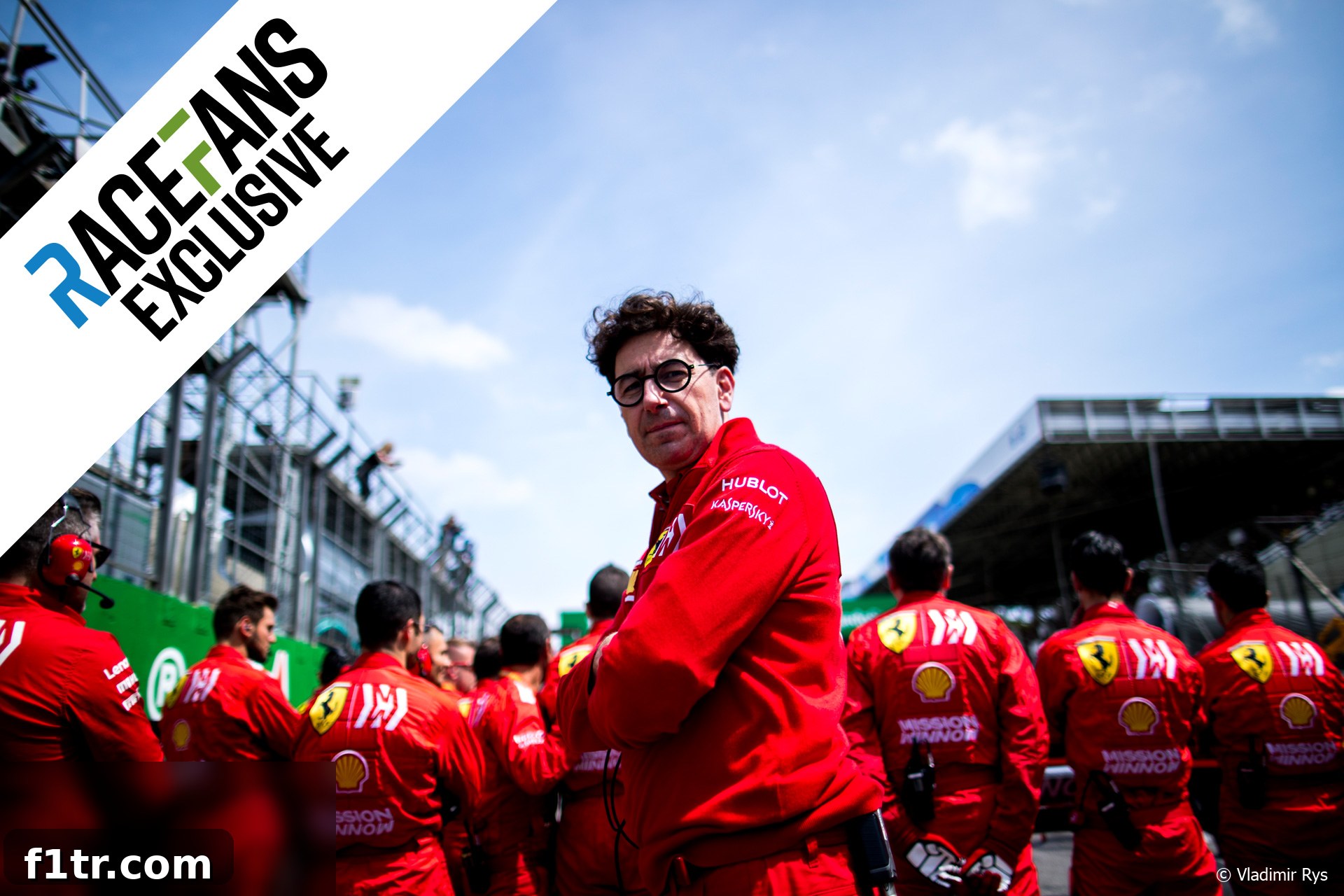
Ferrari’s Evolving Legacy: Navigating the Future of Formula 1 with Mattia Binotto
For decades, Ferrari has been more than just a racing team; it is the very heart and soul of Formula 1, a sentiment passionately echoed by its global legion of ‘tifosi’. The ingrained belief, often asserted with fervent conviction, is that the sport’s unparalleled heritage and continued existence are intrinsically tied to the Scuderia. The mere thought of Ferrari withdrawing or, unfathomably, racing elsewhere, has historically been considered a catastrophic scenario that would fundamentally undermine Formula 1’s prestige and structure.
A Symbiotic Relationship: Ferrari and the Fabric of F1
This long-standing perception of Ferrari’s indispensable role in Formula 1 has never truly been put to the test. While the Maranello outfit has frequently leveraged its immense influence in negotiations, it has always remained committed to the sport. Conversely, Formula 1 itself has repeatedly faced and overcome various challenges, a trend that has, at times, inadvertently emboldened its most powerful and historically significant team. Ultimately, both parties acknowledge the profoundly symbiotic nature of their relationship. Any action to sever these deep-seated bonds over minor disputes would undoubtedly represent an act of profound strategic folly, detrimental to all involved.
Moreover, Ferrari’s competitors paradoxically rely on its presence. The Scuderia offers a compelling benchmark, both on and off the track. Imagine telling a potential sponsor: “We outperformed Ferrari in the last Grand Prix.” Such a statement immediately elevates the perceived value of an achievement, often prompting a quicker and more enthusiastic commitment than if the legendary name of Ferrari were absent from the narrative. Indeed, some sponsors have even entered Formula 1 through other teams, solely to be indirectly associated with the Ferrari brand, a testament to the enduring allure and prestige of the Prancing Horse, the ‘Cavallino Rampante’.
For seventy years, a substantial period by any measure, especially in the dynamic world of professional sports, Ferrari has often faced accusations of prioritizing its own commercial interests. The widespread belief was that the team strategically placed itself above the collective spirit of the sport, relentlessly pursuing an objective: to cost-effectively enhance its globally recognized brand. This strategy was designed to bolster the sales of its exclusive, high-priced objects of desire by leveraging the unparalleled global platform that Formula 1 provides. For seven decades, this approach proved exceptionally successful, making any deviation from it seem counterintuitive. However, times are changing, and with them, Ferrari’s approach to the sport.
The New Era Under Mattia Binotto: Embracing Collaboration and Responsibility
To gain deeper insight into this significant cultural and strategic shift, RaceFans conducted an exclusive interview with team principal Mattia Binotto. Since his appointment in place of Maurizio Arrivabene in 2019, Binotto, who spent 25 years in various technical roles within the team, has steadily grown into his overarching managerial responsibilities. His tenure has marked a striking evolution in Ferrari’s internal culture and its engagement with the wider Formula 1 community.
A prime example of this evolving mindset is the team’s initial acceptance of a $175 million budget cap. Given Ferrari’s traditionally high spending and extensive resources, this cap arguably presented a greater challenge to them than to any other team on the grid. This initial acceptance was significant, but the transformation didn’t stop there. Ferrari subsequently consented to further, more stringent reductions, agreeing to a $145 million cap for the following year, with additional $5 million drops in each of the subsequent two seasons. This willingness to adapt, to contribute to the collective good of the sport, represents a monumental shift for a team that historically held considerable sway.
This willingness to compromise, particularly given its historical prerogative, represents just the tip of a rapidly evolving iceberg. Ferrari famously possesses a notorious veto power, enabling it to block any non-safety-related regulatory changes. Yet, in this crucial budget cap debate, they chose not to exercise it. This begs a fundamental question: was this change a voluntary embrace of a new philosophy, or was it imposed upon the team by external circumstances? Considering Ferrari remains one of the most profitable automotive companies globally, with extensive customer waiting lists even amidst the global disruptions caused by Covid-19, it’s clear that this wasn’t simply a matter of enforced economics. The decision stemmed from a deeper, more strategic perspective.
The core inquiry then shifts: is this newfound magnanimity driven by a longer-term vision, a commitment to the bigger picture of Formula 1’s health? Or might Ferrari revert to its historically self-serving tendencies once the immediate threats posed by global crises like the pandemic recede? This was one of the first critical subjects discussed with Binotto.
“To truly answer that, I believe it’s fundamentally about the approach—having open, collaborative discussions,” Binotto explained. “Utilizing the veto, in many instances, simply isn’t the most effective way to address the challenges we face. Engaging in dialogue and striving to discover the right compromise is, in my view, the most constructive path forward. That, I believe, is the operational philosophy we have adopted now.”
Navigating the Budget Cap: A Paradigm Shift for Scuderia Ferrari
The concept of Ferrari making compromises is a notable departure from what Formula 1 enthusiasts and pundits have traditionally expected. Yet, during the intense discussions surrounding potential budget cap reductions—with figures as low as $120 million initially proposed—Ferrari was widely perceived as the primary obstacle, seemingly unwilling to concede ground. Binotto acknowledges this initial stance, stating, “The decision to reduce the budget cap to $120 million was meant to be finalized within a week. However, it took significantly longer because Ferrari insisted on a more thorough, detailed analysis of the numbers. Our objective was to proactively contribute to the discussion, ensuring the conclusion we ultimately reached was robust and well-considered.”
Despite this initial firmness, there’s no denying that Ferrari possessed the leverage to deploy its veto power, which, as previously noted, allowed it to block any regulatory changes unrelated to safety. Binotto, however, chose not to invoke it. “I believe that open and collaborative discussion should always be our primary approach,” the Swiss-born engineer elaborated. “The veto, in my view, should only ever be a last resort, something utilized only when you are completely and fundamentally opposed to a particular outcome. My second point, as I emphasized earlier, is a matter of profound responsibility. The well-being of Formula 1 is intricately linked to the well-being of Ferrari, and vice-versa. We are not engaged in a battle; we are not positioned as adversaries. Our imperative is to collaborate effectively to identify and implement the right solutions for the sport.”
One undeniable consequence of this “good for Ferrari, good for F1” philosophy is the substantial price Ferrari is currently paying, and will continue to pay. The team anticipates needing to reduce its F1 team workforce—excluding engine division staff—by approximately 350 personnel, roughly a third of its total, by 2023. This raises a crucial question: why did Binotto seemingly agree so readily to such a significant human cost? “Let’s approach this step by step,” he explained. “The initial $175 million budget cap was a financial regulation agreed upon last year. Even that figure represented a monumental, challenging exercise for the top three teams, and particularly for Ferrari. But crucially, it was an agreement from the previous year for which we had already prepared and planned.”
Then, the Covid-19 pandemic swept across the globe, fundamentally altering every aspect of life and, by extension, profoundly impacting Formula 1. This unprecedented crisis exerted immense financial pressure on teams, leading some to advocate for a drastic reduction to a $120 million cap. Binotto clarified that Ferrari could not simply agree to such a substantial cut without rigorous analysis. Indeed, according to an insider, Ferrari embarked on the most exhaustive cost analysis in its storied history to meticulously identify areas where savings could be genuinely made. “It was never a decision based simply on a number,” Binotto continued. “The foremost implication for us was our workforce, our employees in terms of their employment. We feel a profound sense of social responsibility as Ferrari, and our primary objective throughout this process was to protect our employees.”
Following what Binotto described as proactive and extensive discussions, “the right compromise or solution” was ultimately forged: a $145 million cap with certain agreed exclusions. This, he concluded, represented “a good compromise.” “Therefore, this was not an emotionally driven final conclusion; it was a conclusion that genuinely suited the teams, and certainly ourselves, precisely because we dedicated ample time to discussion and analysis. While I cannot claim to be entirely satisfied with the solution, as the exercise ahead is undoubtedly very difficult, I am content considering the challenging starting point of the discussion.”
Strategic Redeployment: WEC, IndyCar, and Beyond
In terms of redeploying its highly skilled workforce affected by the budget cap, Ferrari is actively exploring various strategic options. These include potential projects in endurance racing, such as the World Endurance Championship (WEC), and/or ventures into the North American IndyCar series. These indications also suggest that Formula 1 budget caps are likely to be further reduced in the future, prompting a need for diversified motorsport engagement to retain expertise and maintain strategic relevance. This evolving landscape brings two critical questions to the forefront: should the budget cap eventually be lowered even further, perhaps to the $120 million threshold initially targeted by some teams? And, in a sport fundamentally driven by technological innovation, should stringent regulatory restrictions be applied under a cap, or should teams retain the freedom to strategically direct their spending?
“Let’s begin by evaluating the $145 million cap,” Binotto thoughtfully responded, “let’s closely observe its implementation, determine if it is truly sustainable for all teams, and only then can we realistically consider subsequent figures. I believe the decision of $145 million today accurately reflects the technical regulations slated for the future, and their broader impact. For me, the number isn’t merely a reduction; it’s a direct reflection of the regulatory framework currently in place.”
Binotto concedes that “smaller teams will inevitably advocate for lower figures” to enhance competitive parity. However, he adamantly insists that Formula 1 must unequivocally retain its status as the pinnacle of global motorsport technology—what he frequently refers to as a “platform of innovation, a competition of technology.” He further asserts that, “F1 cannot simply transform into a future iteration of F2 or even Formula E. The fundamental fact remains: F1 is F1. The drive for manufacturer teams to relentlessly push technological boundaries is absolutely crucial to its identity and appeal.”
Preserving F1’s Technological Apex Amidst Restrictions
This brings us seamlessly to the second crucial question: the delicate balance between expenditure and regulatory restrictions, particularly initiatives like parts homologation and component freezes. Is such a balance truly compatible with the vision of F1 as a leading technological platform? “It’s an excellent point,” remarked Binotto, whose meticulous approach reflects his true-blue engineering background, despite the iconic bright red uniform. “One could always argue for completely free regulations, allowing teams to design any car they wish—even a six-wheeled machine reminiscent of Tyrrell’s P34—provided it stays within a budget cap, simply by granting absolute freedom.”
However, Binotto emphasizes, “I believe that implementing a budget cap serves as a highly effective mechanism to control overall expenses and, crucially, to assist teams in converging towards a more equitable level of performance. Formula 1 is, above all, a magnificent spectacle. If excessive freedom were granted on either the technical or sporting fronts, there’s a genuine risk that we wouldn’t maintain sufficient competitive intensity among the teams. Therefore, I firmly believe regulations exist to cultivate a great show, and these regulations themselves become our ultimate challenge: to innovate and discover the optimal solutions within their framework.”
While this perspective is logical and well-reasoned, it prompts another critical inquiry: does Binotto not view the freezing of components, and even chassis for the upcoming season, as fundamentally antithetical to Formula 1’s core values of relentless development and competition? “Is it anti-Formula 1?” he began rhetorically. “I concede that freezing components and chassis for the next year is, in a sense, ‘anti-competition.’ However, the decision was made out of a profound sense of responsibility towards the sport. We are undoubtedly facing an extremely difficult global situation due to Covid-19.”
“This is precisely where I believe the F1 community must act as a united entity. The decisions that have been made, including the postponement of the 2021 regulations to 2022, were driven by a collective sense of responsibility to confront what is undeniably a challenging economic climate. Therefore, the measures you mentioned must be interpreted within this broader context.” Binotto then highlighted a softer, more collaborative side of the new Ferrari ethos: “These actions and decisions were specifically taken to support the smaller teams, many of whom are currently facing genuinely dire circumstances.”
The Horizon of Formula 1: Power Units, Fuels, and Agreements
In our concluding discussions, we looked towards the longer-term future of Formula 1, specifically addressing plans for revised power units and the introduction of bio- and synthetic fuels once the current regulations expire at the end of 2025. “I believe postponing the new regulations to 2022 was absolutely the correct choice,” Binotto stated, “primarily because of the Covid-19 pandemic and the inevitable delays it caused to our development plans. However, the 2022 regulations were voted through last year because we all collectively believe they represent the right framework for Formula 1’s future – addressing cost implications, enhancing overtaking opportunities, and ultimately creating a more compelling spectacle. So, 2022 is the target date, and I am convinced we must exert every effort to ensure that happens.”
This final comment subtly alludes to teams like Red Bull, who had expressed a desire to delay the significant regulatory overhaul by an additional year. While that proposal was ultimately voted down, it remains a sentiment that could resurface. This discussion addresses the commencement of new regulations, but when should the current power unit era conclude? The prevailing question is whether this should be 2025 or 2026. “The current power unit regulations are slated to expire in 2026, coinciding with the next Concorde Agreement, which is due at the end of 2025 but has yet to be formally signed. Therefore, we anticipate concluding with the current hybrid power unit format in 2025.”
So, what lies beyond 2025? “That is a topic we are just beginning to discuss, but as yet, there are no definitive conclusions. We are truly at a very early stage of these conversations. What we do know is that for the duration of the new Concorde Agreement, the current hybrid power unit format is decided. Any opportunity for a different powertrain configuration for 2026 and beyond would necessitate new agreements and regulations.” The evolving perspectives of Ferrari—and indeed those of the FIA and Formula 1 management—on the new Concorde Agreement promise to make for fascinating future analysis on RaceFans, offering a deeper dive into the strategic shifts underway.
Mattia Binotto: The Architect of Ferrari’s Pragmatic Future
It is abundantly clear that Mattia Binotto, who transitioned from his role as technical director to team principal in January 2019, has rapidly adapted to the demanding pressures of Formula 1’s highest leadership position. The top job at Ferrari is notoriously challenging, often described as a poisoned chalice due to the immense expectations and scrutiny it entails. Yet, Binotto has remarkably introduced a distinct touch of humility and a more collaborative, rounded approach to arguably the toughest team principal role in F1. This new leadership style, however, should not be mistaken for weakness. Throughout our engaging 30-minute conversation, the lingering impression was one of a ‘newly wrought iron fist in a red velvet glove’—a blend of strategic pragmatism and unyielding resolve that defines Ferrari’s evolving trajectory in Formula 1.
RacingLines
- The year of sprints, ‘the show’ – and rising stock: A political review of the 2021 F1 season
- The problems of perception the FIA must address after the Abu Dhabi row
- Why the budget cap could be F1’s next battleground between Mercedes and Red Bull
- Todt defied expectations as president – now he plans to “disappear” from FIA
- Sir Frank Williams: A personal appreciation of a true racer
Browse all RacingLines columns