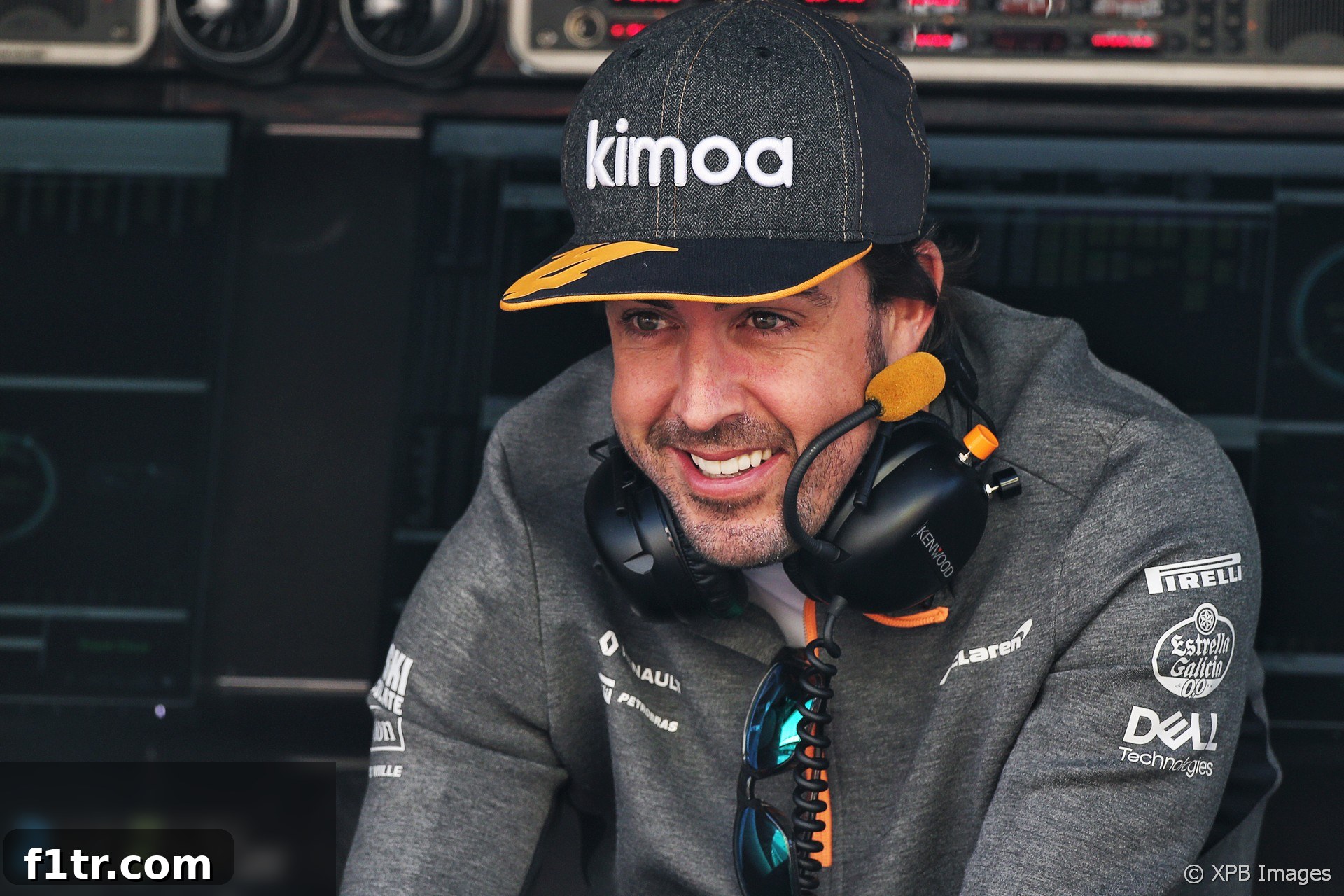
The motorsport world buzzed with excitement as Fernando Alonso, one of Formula 1’s most revered figures, agreed to participate in a Pirelli tyre test for McLaren in Bahrain. This news instantly ignited speculation about a potential full-time return to the sport he left at the end of the previous season. However, the two-time world champion has been quick to temper expectations, affirming that while the opportunity to drive an F1 car again was welcomed, it does not signal a full-fledged comeback to the fiercely competitive grid.
Alonso’s re-entry into an F1 cockpit, even for a testing session, marked his first time behind the wheel of a Grand Prix machine since his departure. Since bidding farewell to Formula 1, the Spanish maestro has embarked on a series of ambitious and diverse racing challenges, including conquering the World Endurance Championship (WEC) and recently testing Toyota’s formidable Dakar Rally-winning Hilux. These ventures underscore his unyielding passion for motorsport and his pursuit of new frontiers, a stark contrast to the singular focus required by Formula 1.
Fernando Alonso’s Recent F1 Appearance: A Test, Not a Comeback (Yet)
Addressing the media in Bahrain, Alonso candidly shared his current perspective on his life post-Formula 1. “Honestly, I’m not missing too much at the moment because I’ve been very busy,” he told reporters, including RaceFans. “Maybe if I’d been relaxing at home, it would be different, but I’ve been testing different things so not much time to miss anything.” This statement succinctly captures the essence of his current professional life – a whirlwind of diverse motorsport activities that keep him fully engaged and satisfied, leaving little room for nostalgia or regret over his F1 departure.
The opportunity for the Pirelli test emerged due to McLaren having a second car available, a common provision for such development sessions. Alonso explained the genesis of his involvement: “It was this opportunity with the Pirelli test, we have a second car. We talked with the team in winter testing as well if there was any point or any benefit to the team if I was testing the car at one point in the season. And the team decided this was the best moment, not taking time to the race drivers to develop the car.” This strategic decision by McLaren highlights the immense value they still place on Alonso’s vast experience and technical feedback, even after his official retirement. His understanding of tyre dynamics and car setup, honed over nearly two decades in F1, remains unparalleled.
The Significance of the Pirelli Tyre Test in Bahrain
Pirelli tyre tests are a crucial component of Formula 1’s ongoing development cycle. These sessions allow the official tyre supplier to gather vital data on new compounds, constructions, and specifications that will ultimately shape the future of the sport. For McLaren, having a driver of Alonso’s calibre contribute to this process is an invaluable asset. His meticulous approach and exceptional sensitivity to vehicle behaviour mean he can provide highly precise and actionable feedback to both Pirelli engineers and the McLaren technical team. The data collected from such tests informs tyre design for upcoming seasons, impacting everything from grip levels and degradation rates to overall race strategy. Alonso’s unique perspective, unburdened by current championship pressures, allowed him to focus purely on the technical aspects of the tyres, offering a fresh, objective viewpoint that might differ slightly from a race driver solely focused on optimizing their current package.
The test in Bahrain was not merely a ceremonial drive; it was a serious technical undertaking. Alonso was tasked with evaluating experimental Pirelli compounds designed for future seasons, pushing the limits of grip and durability in the challenging desert conditions. His deep understanding of the car-tyre interaction, cultivated through years of high-stakes racing, made him the ideal candidate for this precise work. For McLaren, the benefit extended beyond tyre data; Alonso’s insights into the car’s general handling and balance, even in a test-spec vehicle, could indirectly contribute to the development path of their current and future challenger. His presence alone, back in the familiar papaya orange, served as a powerful reminder of his enduring connection to the team and the sport.
From Grand Prix Circuits to Global Adventures: Alonso’s Life Post-F1
Since his departure from Formula 1, Fernando Alonso has embraced a diverse portfolio of racing disciplines, showcasing his remarkable adaptability and an insatiable appetite for competition. His most significant achievement post-F1 has been in the World Endurance Championship, where he secured the overall title and famously clinched two victories at the prestigious 24 Hours of Le Mans. These triumphs were not just personal milestones but also critical steps towards his ambition of achieving the Triple Crown of Motorsport – winning the Monaco Grand Prix (which he has done twice), the 24 Hours of Le Mans, and the Indianapolis 500. His participation in the Dakar Rally, testing the robust Toyota Hilux, further exemplifies his willingness to step far outside his comfort zone and tackle entirely new challenges, demanding different skill sets and mental fortitude.
Alonso’s pursuit of the Triple Crown and his ventures into rally raid represent a deliberate shift from the highly structured and often repetitive nature of an F1 season. He has consistently spoken about seeking “unprecedented opportunities” and experiences that offer new learning curves and different types of adrenaline. This multifaceted approach to his career highlights a professional maturity and a desire to prove his mettle across the broadest spectrum of motorsport. It’s a testament to his status as a true racer, driven by the pure joy of competition rather than the confines of a single championship.
Why Fernando Alonso Isn’t Planning a Full-Time F1 Return
Despite the persistent whispers and hopeful speculation, Fernando Alonso remains resolute in his stance regarding a full-time return to Formula 1. His decision to retire at the end of the 2018 season was a deeply considered one, rooted in a feeling of completeness regarding his F1 journey. “As I said last year, my idea is not to come back. I said last year bye-bye, it was because I felt this chapter was already complete and I achieved in Formula 1 a lot more than what I dreamed of,” Alonso reiterated. This sentiment underscores his satisfaction with a career that yielded two world championships, 32 Grand Prix victories, and an enduring reputation as one of the sport’s fiercest competitors and most tactically astute drivers.
The rigorous demands of Formula 1, both on and off the track, are immense. The relentless travel, intense media scrutiny, and the constant pressure to perform at the absolute peak can be draining, even for the most passionate drivers. For Alonso, having experienced this for nearly two decades, the allure of fresh challenges and a more varied racing calendar outside F1 clearly outweighs the perceived benefits of a full-time return. He has spoken openly about the desire to regain control over his schedule and explore other forms of racing without the strictures imposed by a Formula 1 contract. His retirement was not a sign of waning ambition, but rather a redirection of that ambition towards broader horizons in motorsport.
Keeping the Door Ajar: What Would It Take for an F1 Comeback?
While his current focus lies elsewhere, Fernando Alonso, ever the pragmatist, has wisely refrained from completely shutting the door on a hypothetical return. “Coming back is not in the plan. But if something happens and a great opportunity arrives, I probably will consider. I don’t close doors one hundred percent to anything in the future.” This nuanced position leaves a tantalizing glimmer of hope for fans and pundits alike. But what would constitute a “great opportunity” for a driver of Alonso’s stature? It’s highly unlikely he would return for a midfield team, or merely to make up the numbers. Such an opportunity would almost certainly need to involve a competitive package – a car capable of fighting for wins and championships, or at the very least, a clear path to such competitiveness in the near future.
Factors that could trigger a potential reconsideration might include significant regulatory changes that level the playing field, a sudden vacancy at a top-tier team (Mercedes, Ferrari, Red Bull), or a groundbreaking project with a manufacturer offering a long-term vision and resources to compete at the very front. The lure of a new technical era, perhaps with entirely new car designs or power units, could also rekindle his interest. However, for now, his conditions for return seem extremely high, reflecting his desire to only come back if he can truly contend for glory, rather than simply participating. The “great opportunity” would have to be exceptional, offering a compelling narrative and a clear path to adding another significant chapter to his illustrious career.
Alonso’s Enduring Legacy and Impact on Formula 1
Fernando Alonso’s impact on Formula 1 is indelible. His two world championships with Renault in 2005 and 2006 broke Michael Schumacher’s dominant streak and ushered in a new era of competitiveness. Throughout his career, he has been lauded for his aggressive yet precise driving style, his tactical brilliance, and his ability to extract every ounce of performance from any car he drives, often outperforming the machinery at his disposal. His relentless fighting spirit, even in uncompetitive cars, earned him the respect of rivals and an unwavering loyalty from his fans.
Beyond the statistics, Alonso has shaped the narrative of Formula 1 with his outspoken personality and his unwavering pursuit of success. He is often cited as one of the greatest drivers of his generation, if not of all time, due to his consistent ability to challenge for wins and championships across different eras and with various teams. Even in retirement, his name continues to resonate, symbolizing a benchmark of driving excellence and an adventurous spirit that transcends the conventional boundaries of motorsport. This enduring legacy is precisely why any sighting of him near an F1 car immediately sparks a flurry of excitement and speculation, underscoring his iconic status within the sport.
A Racing Legend’s Future: Defined by Challenge, Not Just F1
In conclusion, Fernando Alonso’s participation in the Pirelli tyre test for McLaren was a significant moment, a fleeting reunion with the sport he once dominated. While it provided a nostalgic glimpse of a champion back in his element, Alonso’s clear statements confirm that his current trajectory is firmly set on new challenges and diverse motorsport adventures. He finds fulfillment and excitement in the World Endurance Championship, the Dakar Rally, and other pursuits, deliberately charting a course that allows him to explore the full breadth of his racing talent.
His decision to keep the door “not 100 percent closed” is more a reflection of his open-mindedness and strategic thinking than an active plan for an F1 return. Should an truly extraordinary opportunity arise – one that promises genuine championship contention and a compelling new chapter – he might consider it. For now, the legend of Fernando Alonso continues to be written across various global circuits and terrains, a testament to a racer whose drive for competition remains as fierce as ever, even if it no longer exclusively resides within the confines of Formula 1. His journey exemplifies a profound dedication to motorsport, prioritizing the thrill of the challenge above all else, ensuring his enduring relevance and intrigue for fans worldwide.