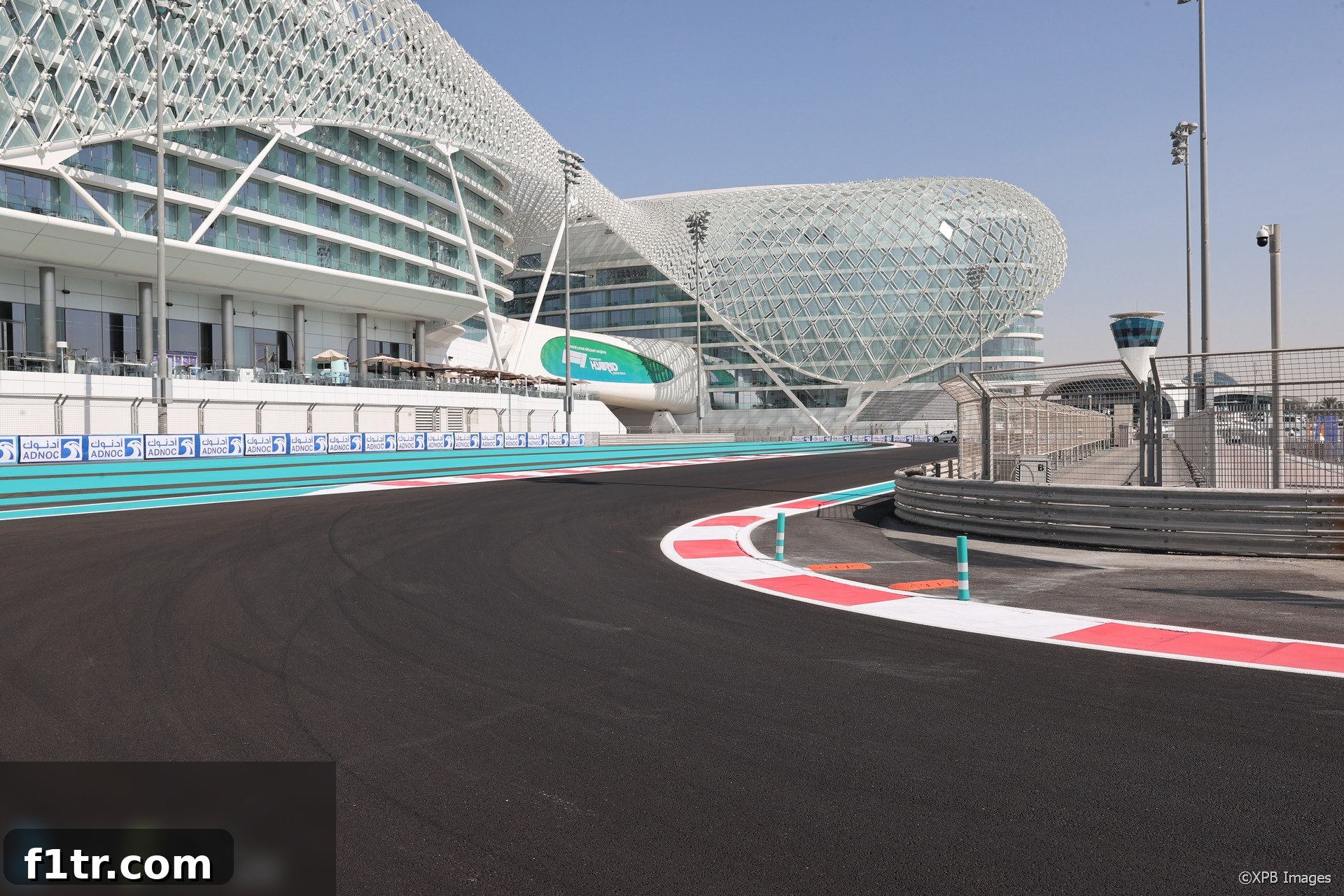
Formula 1 drivers expressed considerable optimism regarding the significant revisions to the Yas Marina Circuit, anticipating a dramatic improvement in overtaking opportunities for the Abu Dhabi Grand Prix. These strategic modifications were implemented with the explicit goal of transforming what was often criticized as a procession into a genuine spectacle of wheel-to-wheel racing, especially pertinent for a season-ending championship decider.
The Abu Dhabi Grand Prix has long been a visually stunning event, held under the captivating lights of Yas Island. However, since its debut in 2009, the circuit has frequently faced criticism for its challenging nature when it comes to close racing and daring overtakes. Its tight, twisty sections and lack of conventional heavy braking zones often meant drivers struggled to pass, even with a significant pace advantage. This historical context underscores the importance of the changes introduced for this weekend’s race – the first to take place on the significantly revised track layout, with a series of targeted alterations at key points designed to address these long-standing issues and fundamentally improve the racing dynamic.
Advert | Become a Supporter & go ad-free
Transforming Yas Marina: A New Era for Overtaking
Re-imagining the North Hairpin: Turns 5-6 Redesign
One of the most prominent changes involves the elimination of the old chicane at turns five and six, which previously led into an acute hairpin. This complex sequence was notorious for disrupting a car’s flow and making it exceedingly difficult for drivers to follow closely, let alone attempt an overtake. In its place, the circuit now features a single, wider hairpin. This new design introduces just one major braking zone, allowing drivers to carry considerably more speed through the corner. The wider entry and exit points are engineered to provide multiple racing lines, giving drivers greater flexibility to attack or defend, and crucially, to maintain momentum for a potential run down the subsequent straight. This modification is expected to create a prime overtaking spot, fundamentally altering the race craft required in this section.
The Dynamic New Turn 9: Replacing Turns 11-14
At the opposite end of the circuit, another significant transformation has occurred. The previous sequence of turns 11, 12, 13, and 14 – a series of tight, technical corners that often saw cars bunch up without much scope for passing – has been streamlined. These have now been combined into a single, constant-radius corner, officially designated as Turn 9. This isn’t just a simple widening; the corner has been meticulously installed with positive camber. This engineering detail is critical, as it encourages better mid-corner grip, allowing drivers to carry higher speeds and explore more aggressive lines. The positive camber effectively “banks” the corner, providing a more forgiving and grippy surface that can support closer side-by-side action and promote various lines of attack, thus increasing the likelihood of overtakes into and out of this section.
Faster Flow in the Final Sector: The Hotel Section Overhaul
Furthermore, almost every corner in the final sector, which famously winds around the track’s iconic hotel landmark, has undergone a significant facelift. In direct response to persistent criticism of this sequence ever since the circuit’s debut in 2009, these corners have been made shallower, wider, and notably faster. The original design, characterized by tight, slow chicanes, often hampered racing flow and created dirty air issues that made following another car incredibly challenging. The revamped layout aims to improve the overall speed and rhythm of this sector, reducing the detrimental impact of dirty air and allowing drivers to maintain closer proximity. This increased flow and wider track width are designed to facilitate more dynamic racing and potentially open up additional overtaking opportunities in what was previously one of the most processional parts of the circuit.
Driver Reactions: Optimism and Strategic Implications
Valtteri Bottas Welcomes Necessary Changes
Valtteri Bottas, known for his analytical approach to circuits, expressed clear satisfaction with the new-look Yas Marina, believing that the track changes were not just beneficial but absolutely essential for producing better racing. “I feel like they’ve done good changes to the track – at least that’s how it looks like,” stated the Mercedes driver, reflecting a common sentiment among his peers. “In theory it should be better for racing. I think the changes were needed, so I’m happy that they reacted and they’ve done those.” Bottas’s remarks highlight the general consensus that the circuit, in its previous configuration, had become somewhat of an anomaly on the F1 calendar for its lack of overtakes, making the modifications a welcome development for drivers seeking more competitive on-track action.
Sebastian Vettel’s Cautious Optimism
The Yas Marina Circuit holds particular significance for Sebastian Vettel, who famously secured his first championship title here in 2010. That race is often remembered for rival Fernando Alonso’s frustrating inability to pass Renault driver Vitaly Petrov in a faster Ferrari, a moment frequently cited as a prime example of the track’s notoriously difficult overtaking characteristics. Reflecting on the circuit’s past, Vettel mused, “It’s never been an easy place to overtake. It’s never been straightforward, you need to be a fair amount quicker.” His experience underscores the challenge drivers faced. While acknowledging the past, Vettel remained hopeful about the future: “There was some races where it was really good, and others where it wasn’t. With the changes, I think it makes the track faster, hopefully more exciting for us to drive. I don’t know if it helps overtaking. I think we will have to wait and see on Sunday.” His comments perfectly encapsulate the anticipation and slight uncertainty surrounding the true impact of the changes until the racing unfolds.
Advert | Become a RaceFans supporter andgo ad-free
Antonio Giovinazzi’s Simulation Insights
Alfa Romeo driver Antonio Giovinazzi offered valuable insights gleaned from simulator work, suggesting that the modifications, particularly to the final sector, are far more profound than they might appear on paper or from a casual glance at the new layout. “I did some [simulation driving] before Qatar and actually it’s not only two corners that are different. It’s also the last sector is faster, it’s wider, just in the hotel section,” Giovinazzi explained. His detailed assessment included a fascinating prediction: “Also the second-last corner will look quite easy flat this time.” This revelation indicates a dramatic shift in the character of this section, transforming what was once a series of challenging, momentum-killing corners into a high-speed, flowing sequence that could open up new strategic possibilities and genuinely enhance the spectacle for both drivers and fans.
Sergio Perez on Unpredictability and Raceability
As the season-ending race where both world championships were set to be determined, the revised layout carried immense strategic weight. Max Verstappen’s Red Bull teammate, Sergio Perez, acknowledged the inherent unpredictability of the new track, stating that it was “hard to say at the moment” whether the adjustments would definitively benefit either Red Bull or their Mercedes rivals. However, he echoed a general sentiment of optimism for the racing itself. “Red Bull was strong here last year, so we will see what the new track’s like. Certainly I would expect the racing to be a lot better,” Perez commented, adding, “On paper, the track looks more raceable, so that that should be a good thing.” His use of the term “raceable” encapsulates the hope that the new layout will offer more opportunities for battling, closer following, and ultimately, a more engaging and less processional Grand Prix.
The Championship Decider: A New Canvas for History
The timing of these significant circuit changes couldn’t have been more dramatic. With the FIA Formula 1 World Championship title hanging in the balance, a revised Yas Marina Circuit provided a fresh, unknown canvas for the epic showdown between Max Verstappen and Lewis Hamilton. A track historically challenging for overtaking now promised more opportunities, adding an extra layer of intrigue and unpredictability to an already intense rivalry. Every strategic decision, every pit stop, and every on-track maneuver would be magnified by the unknown characteristics of the new layout. Teams faced the challenge of rapidly understanding the new optimal lines, braking points, and tyre degradation patterns, potentially leveling the playing field and putting even greater emphasis on driver skill and adaptability.
The changes were not merely about aesthetics or minor adjustments; they represented a fundamental shift in how the Abu Dhabi Grand Prix could unfold. For the championship contenders, this meant that prior track data and traditional strategies might be less reliable, forcing a more reactive and dynamic approach to the race weekend. The prospect of more genuine overtaking battles was precisely what the sport, and this climactic championship fight, needed to deliver a truly unforgettable season finale. The revised circuit held the promise of an unscripted drama, where the characteristics of the asphalt itself could play a pivotal role in crowning a world champion, making the build-up to Sunday’s race even more charged with anticipation.
Conclusion: A Brighter Future for Yas Marina
The comprehensive modifications to the Yas Marina Circuit represent a bold and welcome move by the circuit management and Formula 1 to address long-standing criticisms and inject new life into the Abu Dhabi Grand Prix. The focus on enhancing overtaking opportunities through meticulously planned alterations to key corners – from the wider hairpin at Turns 5-6 to the constant-radius Turn 9 and the flowing final sector – signifies a commitment to improving the racing spectacle. This initiative aligns with a broader trend in Formula 1 circuit design, where historical tracks are often adapted to better suit modern cars and the demands of thrilling, close-quarters racing.
While the ultimate success of these changes in generating more overtakes would only become fully apparent during the race itself, the overwhelmingly positive initial feedback from drivers like Bottas, Vettel, Giovinazzi, and Perez signals a promising outlook. The collective hope is that the revised Yas Marina will offer a more dynamic and less predictable racing environment, delighting fans and providing a fitting stage for high-stakes championship battles for years to come. By prioritizing raceability and driver challenge, the Abu Dhabi Grand Prix aims to solidify its position not just as a luxurious season finale, but as a truly compelling event on the Formula 1 calendar.
Advert | Become a RaceFans supporter andgo ad-free
2021 Abu Dhabi Grand Prix
- Masi ‘basically gifted the championship’ to Verstappen says 2021 FIA steward Sullivan
- Norris called out F1 over its farcical 2021 finale. Will it get it right this time?
- Why Mercedes put ‘a reminder of joy and pain’ on display in their factory lobby
- Hamilton would be an eight-time champion if Whiting was still alive – Steiner
- Verdict on error in GT race suggests Mercedes would have lost 2021 Abu Dhabi GP appeal
Browse all 2021 Abu Dhabi Grand Prix articles