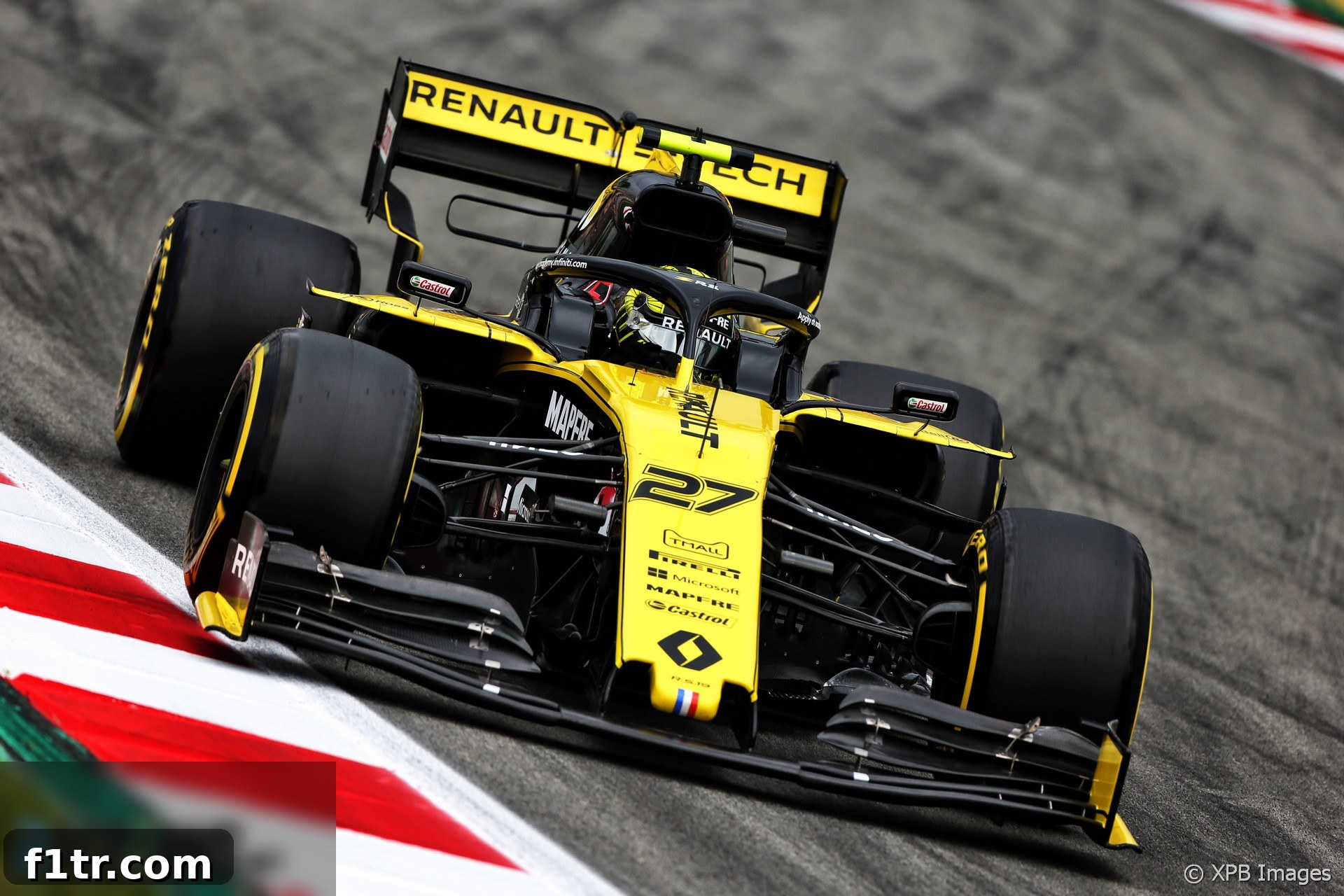
In a dramatic turn of events ahead of the 2019 Spanish Grand Prix, Renault driver Nico Hulkenberg found himself embroiled in controversy, potentially facing a significant grid penalty. The experienced German racer’s participation in the race from his provisional 16th starting position hung in the balance after his team, Renault F1, failed to properly notify the sport’s governing body, the FIA, about a crucial change to his car’s front wing specification following an incident in Saturday’s qualifying session.
The incident unfolded during the initial phase of qualifying, Q1, at the Circuit de Catalunya-Barcelona. Hulkenberg, pushing the limits in pursuit of a strong lap time, unfortunately made contact with a barrier. This minor but impactful error resulted in damage to his Renault R.S.19, particularly affecting the front wing. Such incidents are not uncommon in the cutthroat environment of Formula 1 qualifying, where drivers extract every ounce of performance from their machines, often at the very edge of control.
Following the shunt, the Renault pit crew worked diligently to repair the car, ensuring Hulkenberg could return to the track to attempt another qualifying lap. In their haste, or perhaps due to an oversight, the team fitted a replacement front wing to his car. Crucially, this replacement front wing featured a different specification of the main plane compared to the one originally on the car. This seemingly minor detail would soon escalate into a major regulatory headache for the team and its driver, casting a shadow over their preparations for Sunday’s race.
The core of the issue lies deeply embedded in Formula 1’s stringent technical regulations, particularly those governing car modifications once qualifying sessions commence. Article 34.2 of the Sporting Regulations states unequivocally that after a car leaves the pits for the first time in Q1, its “aerodynamic set up of the front wing may be adjusted using the existing parts.” However, it strictly prohibits that “no parts may be added, removed or replaced” unless they are identical replacements and proper procedure for notification is followed. The spirit of this rule is to maintain a level playing field, prevent teams from making significant performance upgrades under the guise of repairs, and to uphold the parc fermé conditions that effectively freeze car specifications once qualifying begins.
The discrepancy came to light when FIA technical delegate Jo Bauer, a pivotal figure in ensuring compliance with F1 regulations, issued a report referring the matter to the race stewards. Bauer’s official statement highlighted the team’s actions: “The part has been replaced during qualifying session 1, with a retrospective written request of the Renault F1 team received at 19:33.” While Renault did eventually submit a request, it was the specifics of that request, or rather the lack thereof, that raised the red flag. Bauer further clarified, stating, “The team did not mention in their request that the front wing main plane is one of a different specification. I am referring this matter to the stewards for their consideration.” This omission was critical. It suggested either a lack of transparency or a fundamental misunderstanding of the rules by the team regarding the nature of the replacement part.
For Nico Hulkenberg and Renault, this referral to the stewards meant an anxious wait. The potential ramifications were severe, ranging from a reprimand to a grid penalty, typically five or ten places, which would further demote him from his already challenging 16th starting position. A grid penalty in Formula 1 is a significant setback, particularly at a circuit like Barcelona, which is notoriously difficult for overtaking. Starting even further down the order would severely compromise his chances of scoring valuable championship points, a crucial objective for Renault in the competitive 2019 season.
Hulkenberg himself acknowledged his role in the initial incident, expressing his disappointment with his own mistake. “I made a mistake on the first run, touched the wall slightly and we had to change the front wing and we also suffered bargeboard damage,” he explained. “If you make mistakes, you pay for them. We could have made Q2 at a minimum today.” His candid admission underscored the immediate frustration of missing out on a better qualifying position due to a self-inflicted error. However, the subsequent regulatory breach by his team compounded the problem, shifting the focus from a simple driving mistake to a complex compliance issue.
The strictness of F1 regulations, particularly concerning aerodynamic parts, is a cornerstone of the sport’s integrity. Front wings are incredibly complex, highly aerodynamic components that are absolutely critical to a car’s performance, stability, and balance. Even subtle changes in their design, curvature, or anhedral angles can have a profound impact on airflow, downforce generation, and overall car handling. Allowing teams to freely swap out different specifications of such vital parts during a qualifying session, even under the guise of repair, would open a Pandora’s Box, potentially leading to unfair advantages and circumventing the spirit of competition. This is precisely why technical delegates like Jo Bauer are vigilant in scrutinizing every change and ensuring adherence to the letter of the law.
The parc fermé regulations are designed to ensure that once qualifying starts, the cars competing in the race are essentially the same as those that qualified, minimizing any scope for performance gains between Saturday and Sunday. Any deviation from this, especially one involving a key aerodynamic component like the front wing main plane, must be justified, meticulously documented, and approved by the FIA. Renault’s failure to adequately declare the “different specification” of the replacement wing demonstrated a lapse in this crucial procedural requirement, putting them squarely in the crosshairs of the stewards.
Such incidents serve as a stark reminder of the intense scrutiny under which Formula 1 teams operate. Every component, every procedure, and every notification is subject to rigorous oversight. In a sport where fractions of a second can dictate outcomes, and where millions are invested, the integrity of the rules is paramount. For Nico Hulkenberg, who was already facing the uphill battle of starting 16th, the added uncertainty of a potential grid drop further complicated his prospects for the Spanish Grand Prix. The stewards’ decision would ultimately determine the full extent of the penalty, but the incident highlighted the razor-thin margins and the absolute necessity for meticulous adherence to regulations in the pinnacle of motorsport.
Discover More from the World of Formula 1
Stay connected with the latest news, analyses, and exclusive content from the exciting world of Formula 1. Don’t miss a beat!
- Join RaceFans on Facebook for daily updates
- Follow RaceFans on Twitter for real-time news and discussions
- Get daily email updates directly to your inbox
Explore More About the 2019 F1 Season
- Ocon recalls 2019 Melbourne Grand Prix as his career low
- McLaren Racing reports significant £71 million loss in 2019
- Kvyat reflects on Hockenheim podium as a career highlight
- FIA’s encrypted fuel flow meter targets Ferrari’s ‘aliasing’ trick
- Unforgettable moments from ‘Drive to Survive’ Season Two
Browse all articles related to the 2019 F1 season