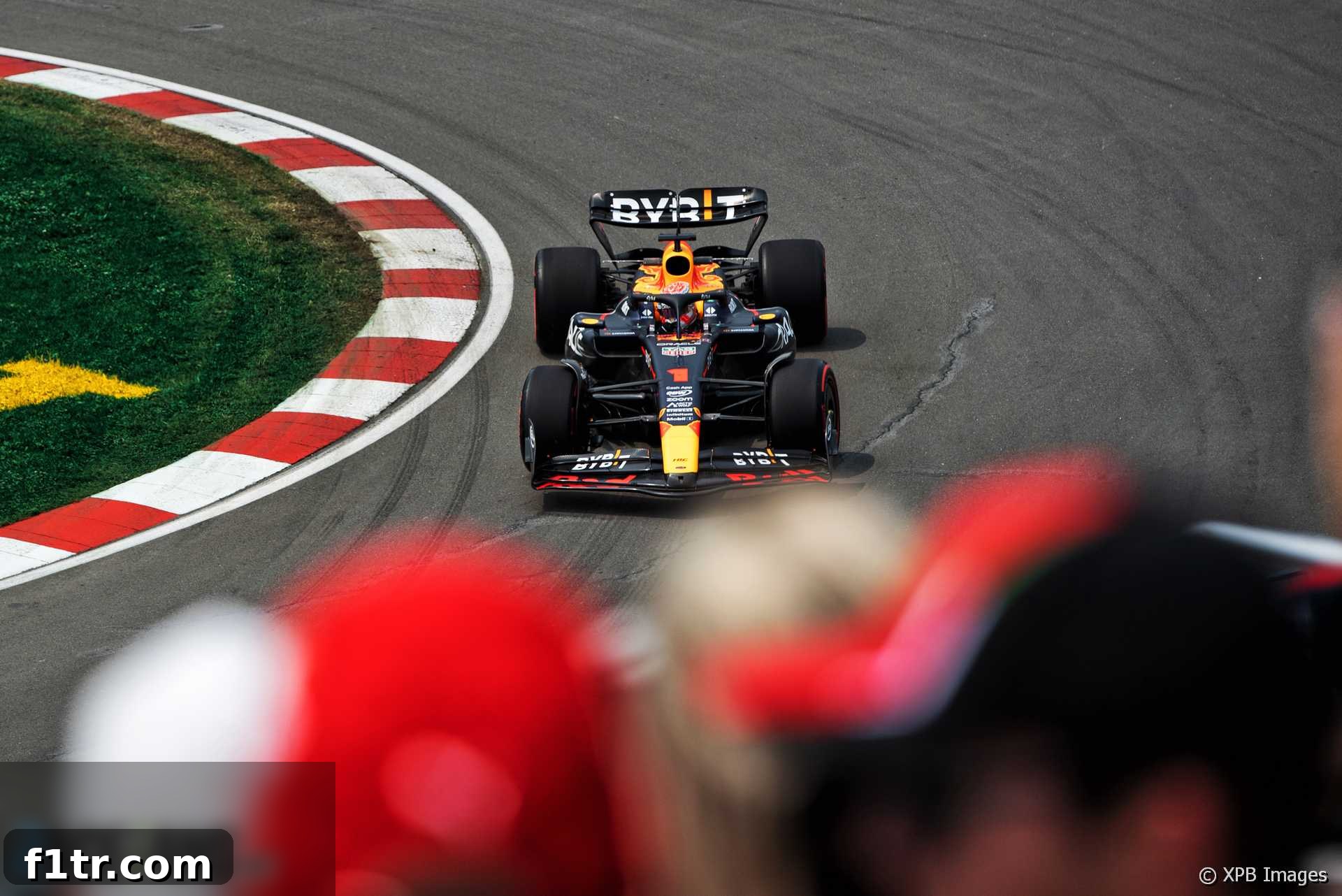
Formula 1 is poised for a significant auditory transformation, generating excitement across the paddock and among its global fanbase. The sport’s decision to increase the noise produced by its engines under the forthcoming 2026 regulations has been met with widespread approval from drivers, though some, like Max Verstappen, express a degree of skepticism regarding the ultimate extent of the possible change. This eagerly anticipated evolution aims to rekindle a fundamental aspect of F1’s identity, reconnecting with the visceral excitement that has captivated fans for decades.
Advert | Become a Supporter & go ad-free
The Return of the Roar: F1 Targets Louder Engines for 2026
According to Formula 1 CEO Stefano Domenicali, the new engine rules set to be introduced in 2026 will usher in an era where the iconic sound of F1 cars becomes significantly more pronounced. This development seeks to address a long-standing criticism following the introduction of the current V6 hybrid turbo engines in 2014, which, while technologically groundbreaking, undeniably muted the sport’s auditory spectacle. The new power units will retain combustion engines similar to the current generation but are designed to generate more power from kinetic energy, critically doing away with the controversial MGU-H (Motor Generator Unit – Heat). This technical shift is expected to be a key factor in enhancing the overall volume and character of the engine sound, promising a more engaging experience for both trackside spectators and television audiences.
For many, the distinct roar of a Formula 1 car is synonymous with the sport itself. It’s an aural signature that signifies speed, power, and cutting-edge engineering. When the V6 hybrid era began, while impressive in terms of efficiency and performance, the diminished soundscape left a void that even technological advancements couldn’t fully fill for some purists and long-time fans. The anticipation surrounding the 2026 changes highlights F1’s commitment to balancing innovation with tradition, ensuring the fan experience remains at the forefront.
Driver Perspectives: A Chorus for More Volume on the Track
Max Verstappen’s Cautious Optimism for Engine Noise
Despite his inherent enthusiasm for louder F1 engines, three-time world champion Max Verstappen voiced a pragmatic reservation, acknowledging the inherent complexities of modern hybrid technology. “I wonder, of course, how much can be done,” he admitted, alluding to the practical limitations and regulatory frameworks governing engine design. However, his desire for the return of the sport’s iconic sound is unequivocal. Verstappen fondly recalled the bygone era: “But for sure back in the day if you would walk into the paddock and there was a free practice session going on, from a far distance, you were like, ‘wow, this is incredible’.” He emphasized that even with slower straight-line speeds compared to today, the sheer auditory impact created an unparalleled sense of awe and excitement. “So the sound definitely has a big influence on that. I would definitely welcome it.” Verstappen’s comments underscore the idea that while raw speed is important, the perception of speed, heavily influenced by a potent engine sound, is equally crucial for the sport’s spectacle and appeal.
Nico Hulkenberg: Nostalgia for Goosebumps from F1 Cars
Other drivers expressed an even stronger, more unreserved desire for Formula 1 to reclaim its auditory might. Nico Hulkenberg, who unlike Verstappen, had the invaluable experience of witnessing Formula 1 before the current hybrid engines took over, vividly recounted the emotional power of the louder era. “Back in the day when I came to what was approaching the track, before my time in F1, you could hear the cars miles and miles away and that was part of the excitement,” he explained. “You’d get goose bumps. It’s an emotion and I think we’ve had definitely less of that.” Hulkenberg’s sentiment perfectly encapsulates the emotional connection many fans and drivers have with the sound of a racing car. It’s not just noise; it’s a feeling, an intrinsic part of the motorsport experience that triggers a primal response and builds palpable anticipation long before the cars even appear in sight.
Hulkenberg also acknowledged that F1 has previously attempted to mitigate the sound reduction in the hybrid era. “It’s much better now than I think initially in 2014 and ’15, it was not so great,” he noted, referring to various exhaust modifications and other adjustments made over the years. “But I think it’s definitely positive news.” This indicates that while improvements have been made, the upcoming 2026 regulations represent a more fundamental and impactful shift towards restoring the sport’s sonic identity, moving beyond incremental changes.
George Russell: The Perception of Speed and Track Buzz
George Russell, another prominent driver whose entire F1 career has unfolded within the V6 hybrid turbo era, echoed the collective desire for louder engines. He firmly believes that drivers “would all welcome” a return to the more potent sound of yesteryear. Russell eloquently articulated the relationship between sound and speed perception: “I think the perception of speed with sound sort of goes together.” He drew a relatable analogy to illustrate his point: “It’s like in the UK there used to be a car that was a Citroen Saxo and people used to put this massive exhaust on it and you’d hear it coming from miles away and you think it’d be a Ferrari, and it turned out to be this Saxo.” While humorous, the anecdote highlights a profound truth about how sound influences our perception and enhances the thrill. “But I think there’s something to be said that you want that noise, that buzz around the track. We’d welcome it, definitely.” Russell’s insights emphasize that the auditory experience is not merely an accessory but a core component of F1’s allure, contributing significantly to the spectacle both at the circuit and for viewers watching from home, creating an atmosphere that is uniquely Formula 1.
The Evolution of F1 Engine Sound: From Screaming V10s to Modern Hybrids
To fully appreciate the significance of the 2026 engine noise initiative, it’s essential to understand the historical journey of Formula 1’s soundscape. For decades, the sport was renowned for its ear-splitting, high-revving engines that were as much a part of the spectacle as the racing itself. The V10 era (1995-2005) is often cited as the pinnacle of F1 engine acoustics, producing a truly deafening, spine-tingling shriek that resonated through every grandstand and was instantly recognizable worldwide. These engines, operating at upwards of 19,000 RPM, created an unmistakable sonic signature that was deeply ingrained in the sport’s identity. Even the subsequent V8 era (2006-2013), though slightly less potent audibly, still delivered a powerful and exhilarating sound that was uniquely Formula 1, capable of sending shivers down the spine of any motorsport enthusiast.
The introduction of the 1.6-liter V6 turbocharged hybrid power units in 2014 marked a dramatic departure. While these engines were engineering marvels, boasting unparalleled thermal efficiency and cutting-edge energy recovery systems, they came at a cost to the sport’s traditional sound. The smaller engine capacity, the turbocharger’s inherent muffling effect on exhaust notes, and particularly the MGU-H (Motor Generator Unit – Heat) recuperating energy from the exhaust gases, collectively led to a significantly quieter F1. For many fans, the sudden reduction in volume diminished the spectacle, making the cars feel less potent and less exciting, despite being incredibly fast and technologically advanced. This shift ignited a widespread debate about the balance between technological progress and the core entertainment value of the sport.
Formula 1’s leadership has long been aware of this fan feedback and the perceived disconnect. Initial attempts were made to amplify the sound through exhaust modifications and other minor adjustments, as acknowledged by Hulkenberg. While these efforts yielded some marginal improvements, a fundamental shift in engine design was needed to truly address the issue at its root. The 2026 regulations are thus a culmination of years of technical analysis, stakeholder collaboration, and a renewed commitment to enhancing the fan experience by bringing back a more engaging auditory presence.
Unpacking the 2026 F1 Engine Regulations: Technical Changes for More Noise
The new generation of F1 power units, set to debut in 2026, represents a careful balance between technological innovation, environmental sustainability, and the desire to improve the racing spectacle, with engine noise being a significant component. The core architecture will remain a 1.6-liter V6 internal combustion engine, but the emphasis shifts dramatically towards electrical power. The electrical component of the power unit will increase substantially, from around 120 kW to 350 kW, providing a significant boost in electric output and creating new challenges and opportunities for hybrid management.
Crucially, one of the most complex and costly components, the MGU-H (Motor Generator Unit – Heat), will be eliminated. The MGU-H was responsible for harvesting energy from the turbocharger’s exhaust gases, a process that inherently quieted the exhaust note by reducing energy exiting through the tailpipe. Its removal is widely expected to free up more of the raw engine sound, allowing the combustion engine’s inherent characteristics to shine through more clearly. Furthermore, the combustion engine itself will be designed to run on 100% sustainable fuels, aligning with F1’s ambitious commitment to achieving net-zero carbon by 2030. While sustainability is a key driver, the technical specifications are also being tuned to allow for a more aggressive and audible exhaust note, ensuring that the passion ignited by the engine sound returns and enhances the live experience.
This revised engine formula also aims to attract new manufacturers into the sport, such as Audi, and retain existing ones by making the technology more relevant to road car development and more cost-effective to produce and maintain. The increased reliance on kinetic energy recovery (MGU-K) and the removal of the MGU-H means the combustion engine will likely be working harder in certain phases, especially under acceleration, potentially leading to a more consistent and impactful sound profile throughout a lap. While it’s unlikely to reach the ear-splitting, unadulterated levels of the V10 era due to turbocharging and hybrid elements still being present, a noticeable and significant increase in volume and character is the clear objective, aiming to strike a new balance between cutting-edge engineering and exhilarating sensory appeal.
The Indispensable Role of Sound in the Formula 1 Experience
The widespread calls for louder F1 engines are not merely about nostalgia; they stem from a deep understanding of how sound contributes to the overall immersive experience of motorsport. For spectators at the track, the raw, unadulterated roar of an F1 car is a physical sensation that vibrates through the chest. It creates an undeniable, visceral connection to the power and speed on display, transforming a visual spectacle into a truly multi-sensory event. The absence of this powerful auditory element has, for many, made the live experience feel less intense and less unique, lacking that signature element that defines Formula 1.
Beyond the track, sound plays a critical role in broadcasting and public perception. A car that sounds fast often *feels* faster, even if the lap times are identical. The distinct engine note serves as a crucial identifier for the sport, differentiating it from other racing series and creating an immediate, recognizable brand. It builds anticipation at the start of a session, signals critical moments in a race, and heightens the drama of overtakes and battles. When Hulkenberg speaks of hearing cars “miles and miles away,” he touches upon the idea of F1’s omnipresence – a sound that announces its arrival long before the visual appears, creating a powerful sense of excitement and event, drawing people in from beyond the immediate circuit.
The planned increase in engine noise for 2026 is a strategic move by Formula 1 to address fan feedback, enhance the sport’s entertainment value, and solidify its unique position in the global sporting landscape. It demonstrates a commitment to preserving the core elements that make F1 so captivating, while continuing to push the boundaries of technology and sustainability. The consensus among drivers highlights that this isn’t just a fan desire, but a professional appreciation for the impact such an enhancement will have on the overall thrill of driving these incredible machines, making the pinnacle of motorsport even more electrifying.
Advert | Become a RaceFans supporter andgo ad-free
2023 Austrian Grand Prix
- Mercedes left scratching heads by lack of performance at Austrian GP
- Verstappen’s determination to grab every point makes him a record-breaker
- Austrian GP track limits farce was avoidable like ‘IndyGate’ and Spa 2021 – Brown
- Alpine now “definitely beatable” for McLaren after upgrade – Brown
- Paddock Diary: 2023 Austrian Grand Prix
Browse all 2023 Austrian Grand Prix articles