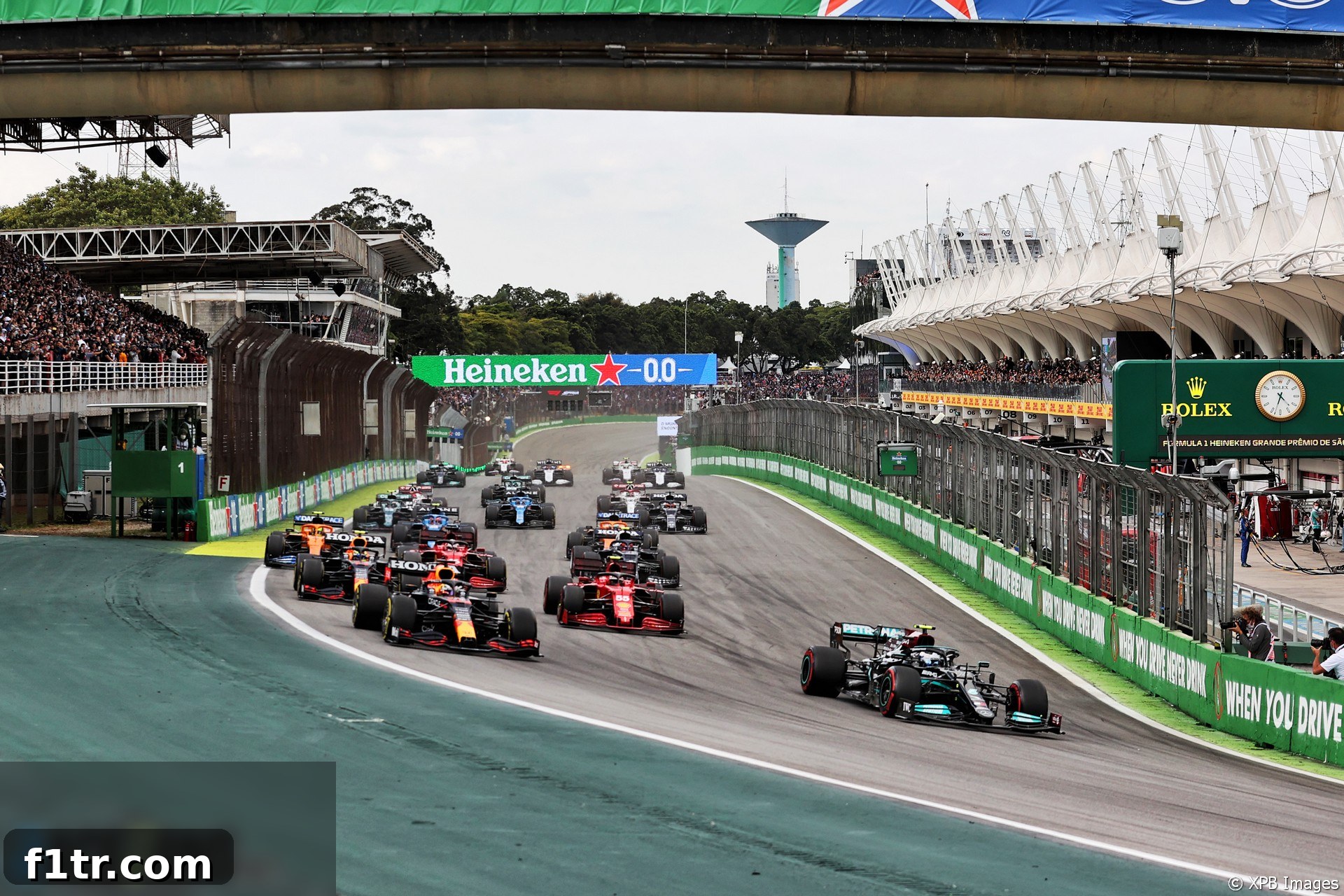
Formula 1’s motorsport director, Ross Brawn, lauded the Sao Paulo sprint qualifying race as the most compelling event of its kind to date, underscoring how the controversial format significantly enhanced Lewis Hamilton’s prospects despite a pre-race penalty. The drama unfolded across a thrilling weekend, showcasing the unpredictable nature of top-tier motorsport and giving fans a glimpse into the potential evolution of Grand Prix weekends.
Lewis Hamilton’s Epic Comeback: From Last to Fifth
The Sao Paulo Grand Prix weekend was fraught with tension and controversy, primarily centered around seven-time world champion Lewis Hamilton. Following Friday’s qualifying session, where he initially secured pole position for the Saturday sprint race, Hamilton was controversially disqualified due to a technical infringement concerning his car’s Drag Reduction System (DRS). This meant the Mercedes driver was relegated to the very back of the grid for the short Saturday race, transforming what should have been a straightforward sprint into a monumental challenge.
What followed was a masterful display of racing prowess. Hamilton, starting from 20th position, carved his way through the field with an astonishing series of overtakes. Each pass was met with thunderous applause from the passionate Brazilian crowd, who witnessed a true champion’s drive. By the checkered flag, Hamilton had climbed an incredible 15 positions to finish fifth. This heroic performance was not just for show; it had critical implications for the main Grand Prix.
Despite incurring a five-place grid penalty for Sunday’s Grand Prix due to exceeding his season’s engine allocation – a strategic move by Mercedes to introduce a new power unit – Hamilton’s sprint race heroics meant he would still start the main race from a respectable tenth position, rather than from the very back of the grid, which would have been the case without the sprint. Ross Brawn highlighted this remarkable recovery as the undeniable standout moment of the third and final sprint qualifying event of the year.
Brawn’s Praise for Hamilton’s Resilient Drive
Reflecting on the spectacle, Brawn stated, “This sprint was the best one so far with plenty of action and a great crowd to witness it all. The drama off the track created something fixating on it, with Lewis overtaking car after car. It was an absolutely sensational drive, demonstrating why he is a multiple world champion and a true legend of the sport.”
He continued, emphasizing the sprint’s impact: “Without the sprint, he would be facing an almost insurmountable challenge starting from the very back for tomorrow’s race. Instead, thanks to his incredible performance, he has a real chance to fight for strong points, starting from 10th. This outcome truly highlights the dynamic possibilities the sprint format can introduce, especially when unexpected circumstances shake up the grid.” Brawn’s comments underscored a belief that the sprint races, despite initial mixed reactions, can inject vital excitement and provide redemption arcs for drivers facing penalties.
Valtteri Bottas Triumphs in the Sprint, Strategic Tyre Choices Play Key Role
While much of the focus was on Hamilton’s charge, it was his Mercedes teammate, Valtteri Bottas, who ultimately secured victory in the Sao Paulo sprint qualifying race. Bottas executed a brilliant start, immediately seizing the lead from Max Verstappen, who had inherited pole position after Hamilton’s disqualification. Verstappen, initially P2, found himself under pressure from Bottas’s aggressive getaway, a move that proved decisive.
A crucial factor in Bottas’s success was his tyre strategy. The Mercedes driver opted for softer compound tyres for the sprint race, a choice that contrasted with Verstappen’s medium tyres. This strategic gamble paid off handsomely, granting Bottas superior grip and acceleration off the line, allowing him to establish an early lead which he maintained throughout the 24-lap dash. Ferrari’s Carlos Sainz also made an aggressive tyre choice, starting on softs and making strong progress early on, further demonstrating the impact of compound selection in the sprint format.
Tyre Freedom: A Game Changer in Sprint Racing
Ross Brawn acknowledged the significant role of tyre choice in the sprint’s outcome. “The freedom of choice for tyres, which is one of the specific rules for the sprint format, played a significant part today,” Brawn explained. “Both Bottas and Sainz brilliantly utilized the softer compounds to get away quickly, allowing them to dramatically change the top three positions by the end of the sprint, and crucially, for the starting grid of tomorrow’s main race. This element of tactical flexibility adds another layer of intrigue and strategy, rewarding bold decisions and creating more dynamic racing.” The ability for teams to differentiate their strategies for the short sprint, independent of the main race’s parc fermé rules, added an exciting tactical dimension that fans and pundits appreciated.
The Future of F1 Sprint Events: Evolution and Expansion
The Sao Paulo sprint was the third and final trial of the format in the 2021 season, following events at Silverstone and Monza. While the initial reception to sprint qualifying was mixed, with some criticizing the lack of genuine overtaking or its impact on the sanctity of the Grand Prix, the Brazilian edition garnered widespread praise, largely thanks to Hamilton’s heroics and the close racing at the front.
Formula 1 has ambitious plans to expand the sprint format, intending to hold six such events in the upcoming 2022 season. However, Brawn confirmed that the regulations governing these sprints are expected to undergo revisions before their broader implementation, aimed at addressing various criticisms and enhancing the overall spectacle. Discussions are actively underway between F1, the FIA, and the participating teams to refine the format and ensure it adds genuine value to the race weekend.
Addressing Criticisms and Refining the Format for 2022
Initial criticisms of the sprint format included concerns over its impact on the traditional qualifying session, the limited points awarded for the sprint, and the restrictive parc fermé rules that came into effect after Friday’s qualifying. Many felt the sprint lacked the high stakes of a full Grand Prix and often resulted in processional racing, particularly when drivers were hesitant to take risks that could jeopardize their main race performance. There was also debate about whether it truly added to the weekend or merely served as a glorified practice session with limited competitive consequence.
Potential tweaks being considered for 2022 include revising the points system to offer more substantial rewards for sprint performance, which could encourage more aggressive racing. Another area of focus is the parc fermé rules, with discussions about granting teams greater flexibility for car adjustments between Friday qualifying and the sprint race. Some proposals even suggest making the sprint a completely standalone event, disconnected from the main Grand Prix grid, though this remains a subject of considerable debate.
Brawn’s Optimism for the Enhanced F1 Weekend
“We firmly believe that the foundations for the sprint format are very strong, and Brazil truly showcased its immense potential,” Brawn asserted. “We will be presenting more detailed plans for the six events in 2022 in the coming weeks, following constructive discussions with the FIA and all the teams. There are certainly aspects we need to refine and tweak to optimize the format, but the Sao Paulo sprint unequivocally demonstrated that it can be a phenomenal addition to the weekend. It has the power to transform Friday, Saturday, and Sunday into monumental, thrilling moments that capture the imagination of fans and participants alike, bringing a new level of excitement to the entire Grand Prix experience.” The success in Brazil has evidently emboldened F1’s leadership to push forward with its vision for an expanded sprint calendar, promising an even more dynamic and unpredictable future for the sport.
2021 Sao Paulo Grand Prix Related Articles
- Red Bull and Mercedes summoned to FIA hearing on review of Sao Paulo incident
- McLaren must “get back to scoring the results that are on the table” – Seidl
- Hamilton makes his second-biggest climb to victory from 10th on the grid
- F1 releases missing video footage from Verstappen’s car of Hamilton incident
- How Alonso and Ocon “pushed team tactics to the ultimate limit” to delay Gasly
Browse all 2021 Sao Paulo Grand Prix articles