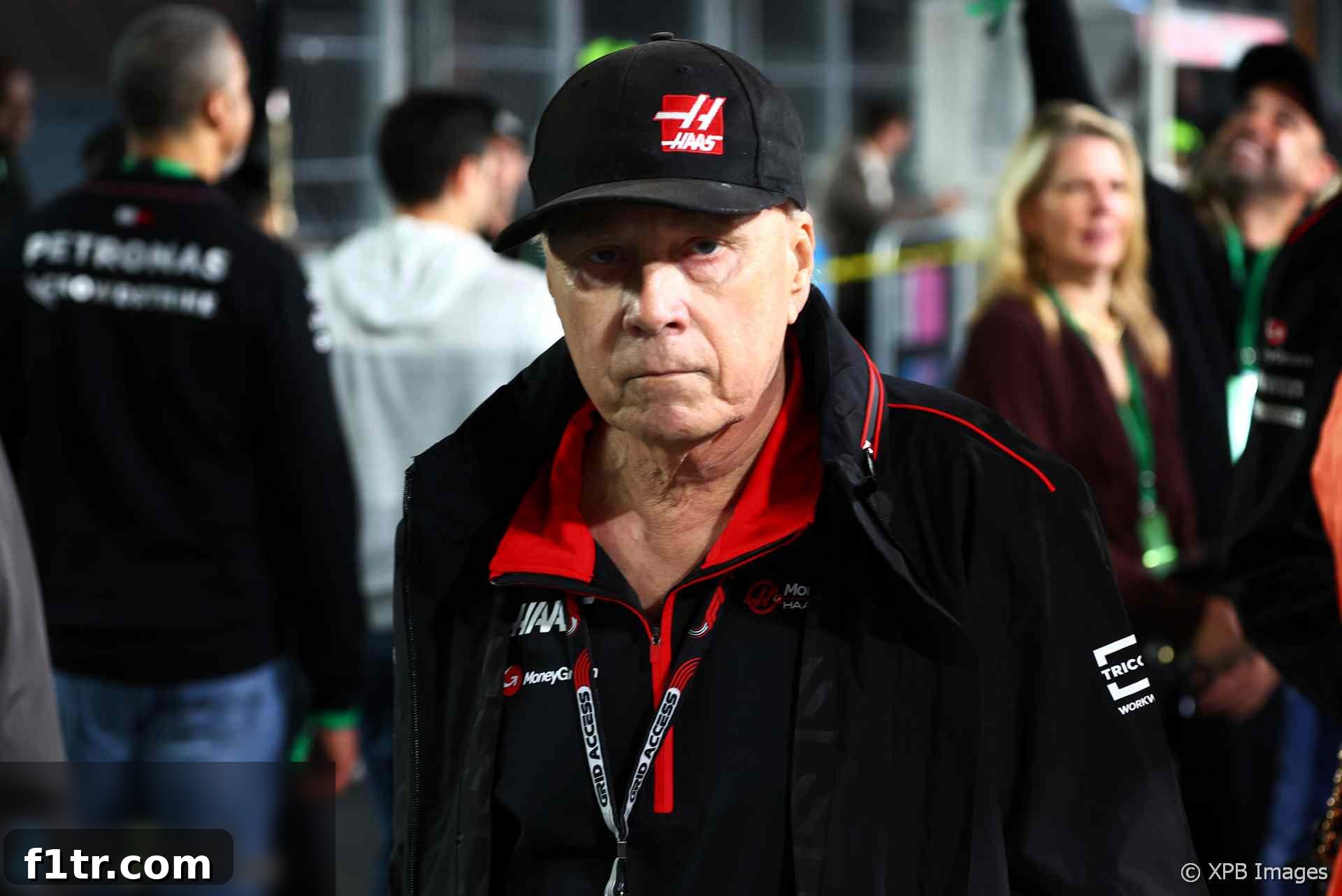
Haas F1 Enters a New Era: Gene Haas Explains Guenther Steiner’s Departure and the Quest for Performance
In a move that has sent ripples through the Formula 1 paddock, Gene Haas, owner of the Haas F1 Team, has finally shed light on the recent high-profile split with long-serving team principal Guenther Steiner. The decision, driven by an palpable frustration over the team’s persistent slump to the bottom of the championship standings, marks a pivotal moment for the American outfit as it grapples with its identity and future in the fiercely competitive world of Grand Prix racing. Haas’s candid remarks underscore a desperate desire for improved performance and a strategic shift in leadership philosophy, signaling a new chapter for the team.
The departure of Guenther Steiner, a charismatic and often outspoken figure who had been at the helm since Haas F1’s inception eight years ago, was announced just yesterday. Gene Haas articulated the rationale behind this significant change with uncompromising clarity: “It came down to performance.” This blunt assessment highlights the fundamental metric by which all teams in Formula 1 are ultimately judged, and for Haas, the consistent lack of results had become untenable.
The Performance Conundrum: A Team in Decline
Haas F1’s journey since joining the grid in 2016 has been a rollercoaster of initial promise followed by a worrying decline. After a respectable debut season and a standout 2018 campaign where they finished fifth in the constructors’ championship, the team’s fortunes began to wane. The past few seasons, in particular, have been a stark reminder of the challenges faced by independent teams operating with a leaner budget compared to their manufacturer-backed rivals.
The struggles became acutely apparent in 2021 when the team consciously chose to focus its limited resources on developing a car for the sweeping new technical regulations introduced in 2022. This bold gamble meant effectively sacrificing the 2021 season, during which they finished a distant 10th with zero points. While this strategic decision appeared to pay off initially, with Haas climbing to an encouraging eighth place in the 2022 championship, the momentum proved short-lived. The subsequent 2023 season saw the team regress significantly, once again falling back to the dreaded 10th and last position in the standings. This pattern of fleeting improvement followed by a swift return to the back of the grid solidified Gene Haas’s conviction that a radical change was necessary.
Haas’s frustration is palpable. “Here we are in our eighth year, over 160 races – we have never had a podium,” he told the official F1 website, a statement that underscores the enduring ambition that remains unfulfilled. “The last couple of years, we’ve been 10th or ninth.” These statistics paint a grim picture for any team owner, especially one who invests millions into the sport with the expectation of competitive returns. While quick to deflect personal blame, Haas emphasized that the collective output was simply not good enough. “I’m not sitting here saying it’s Guenther’s fault, or anything like that, but it just seems like this was an appropriate time to make a change and try a different direction, because it doesn’t seem like continuing with what we had is really going to work,” he explained. The message is clear: the status quo was no longer an option.
The ultimate motivator for this seismic shift in leadership is unequivocally performance-driven. “At the end of the day, it’s about performance,” Haas reiterated. “I have no interest in being 10th anymore.” This statement is a powerful declaration of intent, signifying that complacency has no place in his vision for the team. For an owner committed to the sport, merely participating is insufficient; the desire to genuinely compete and achieve meaningful results is paramount.
A New Direction: Ayao Komatsu and a Technical Focus
The vacuum left by Steiner’s departure will be filled by long-serving engineer Ayao Komatsu, who steps into the team principal role. This appointment represents a significant philosophical shift for Haas F1. While Steiner was known for his highly personable approach, his direct communication style, and his ability to motivate through a blend of charm and blunt honesty, Komatsu brings a distinctly different skillset to the forefront.
Gene Haas himself highlighted this contrast, stating, “I think Guenther had more of a human-type approach to everything with people and the way he interacted with people, he was very good at that.” He then contrasted this with Komatsu’s analytical prowess: “Ayao is very technical, he looks at things based on statistics – ‘this is what we’re doing bad, where can we do better’. It’s a different approach.” This pivot towards a more data-driven, engineering-centric leadership is a direct response to the perceived stagnation in performance. The hope is that a granular, systematic analysis of the team’s operations and car development will uncover the root causes of their struggles and lead to sustainable improvements.
To further bolster this new structure and allow Komatsu to focus squarely on the technical and sporting aspects, the team also plans to appoint a chief operating officer. This COO will handle the array of non-sporting matters, from logistics and administration to commercial agreements, thereby creating a more specialized and efficient management framework. This move suggests a recognition that the demands of modern F1 require distributed leadership and a clear division of responsibilities, allowing key personnel to optimize their impact in their respective areas of expertise. The rationale is simple yet profound: “We really do need something different because we weren’t really doing that well. Like I said, it all comes down to eight years in, dead last. Nothing more I can say on that.”
Commitment Amidst Speculation: Haas Stays the Course
The news of Steiner’s exit inevitably triggered widespread speculation regarding the future of the Haas F1 team, with many wondering if Gene Haas might be preparing to sell the operation. Rumors of a potential takeover by Andretti Global, who received approval from the FIA for an F1 entry but are still negotiating commercial terms with Formula One Management, quickly gained traction. However, Gene Haas unequivocally dismissed these suggestions, reaffirming his long-term commitment to the sport.
“I didn’t get into F1 to sell,” he stated firmly. “I did it because I wanted to race. Guenther had the same perspective. We’re not here to cash out, we want to race and be competitive.” This resolute declaration should put to rest any immediate concerns about the team’s ownership or its presence on the grid. Haas’s passion for motorsport, rooted in his highly successful NASCAR ventures, remains the driving force behind his F1 involvement. His aim is not merely to be a participant, but a serious competitor striving for excellence.
The Commercial Imperative: Performance, Sponsors, and Prize Money
Beyond the sporting ambition, Gene Haas is acutely aware of the crucial link between on-track performance and the commercial viability of his team. Consistent poor results make it incredibly difficult to attract and retain sponsors, which are the lifeblood of any F1 outfit. “We need to do better,” Haas emphasized. “It’s easier to keep sponsors and attract sponsors if we’re a mid-pack team and not a dead last team.” This pragmatic assessment underscores the financial pressures faced by smaller teams, where every position in the Constructors’ Championship directly impacts their revenue streams.
Furthermore, improved performance translates directly into greater financial rewards from Formula One Management (FOM) in the form of prize money. “At the same time, if we can run a little faster, we’ll get more FOM money, which will make life a bit easier,” Haas noted. This additional income is vital for funding development, attracting talent, and generally operating within the budget cap, which imposes strict spending limits on all teams. For Haas, the quest for speed and competitive standing is not just about glory; it’s about ensuring the team’s sustainable financial health and growth.
The Road Ahead: Challenges and Optimism
Despite the past struggles, Gene Haas maintains a degree of optimism about the team’s potential, believing the ingredients for success are already in place. “It’s really all about winning. We have a great team, we have great engines, we have really great drivers. There’s no reason why we are 10th. I can’t understand how we can be with all the equipment and people we have.” This statement reflects a core belief that the problem lies not in a lack of resources or talent, but in how those elements have been managed and utilized. The challenge for Ayao Komatsu and the restructured leadership team will be to unlock that latent potential, to streamline operations, and to extract every ounce of performance from their existing assets.
The new era for Haas F1 under Ayao Komatsu promises a fresh perspective and a renewed emphasis on technical precision and efficiency. With Gene Haas firmly committed to the team’s future and an unwavering demand for improved results, the pressure is on for the American squad to finally turn the corner. The upcoming season will be a critical test, demonstrating whether this strategic shift in leadership can indeed propel Haas F1 from the back of the grid towards the competitive midfield it so desperately craves. The stakes are high, and the journey will be closely watched by fans and rivals alike.