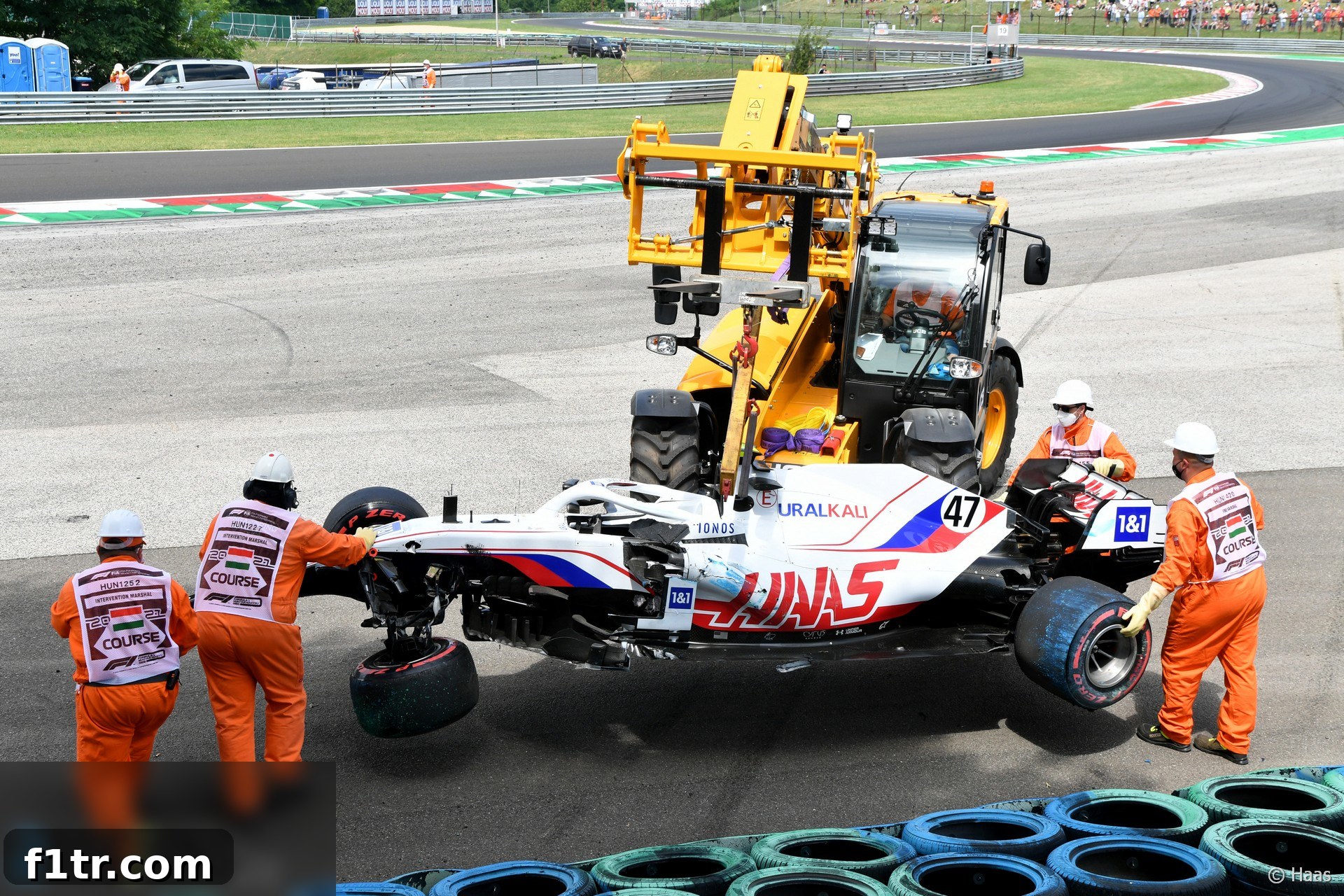
In the latest Formula 1 news round-up, Haas team principal Guenther Steiner has taken a resolute stance against proposals to modify the sport’s pivotal budget cap rules, specifically concerning financial compensation for crash damage. Steiner believes that managing the economic fallout of on-track incidents is an inherent responsibility of team management and an essential consideration within the existing financial framework established for Formula 1.
F1 Budget Cap Under Intense Scrutiny: Steiner Firmly Rejects Crash Compensation Plea
Guenther Steiner Emphasizes Proactive Budgeting for Inevitable Formula 1 Racing Incidents
Advert | Become a Supporter & go ad-free
The ongoing debate surrounding Formula 1’s cost-cutting budget cap has recently gained significant traction after Scuderia Ferrari disclosed a staggering £2.1 million in crash damage expenses incurred over the initial 11 races of the season. This substantial financial impact prompted Ferrari team principal Mattia Binotto to advocate for teams receiving exemptions from the sport’s rigorous budget cap to cover the costs associated with crash damage, particularly when such incidents are not directly attributable to their own drivers. Binotto’s argument posits that unexpected expenditures, often resulting from collisions caused by rivals or other external factors beyond a team’s control, should not unfairly penalize teams striving to adhere to the financial regulations.
However, this proposition has met with strong and unequivocal opposition from Guenther Steiner, the candid team principal of the Haas F1 Team. Steiner, whose own team has also endured several costly accidents this year, notably with their rookie driver lineup, firmly maintains that crash damage is an intrinsic and unavoidable aspect of motor racing. He insists it should be meticulously factored into a team’s overall financial strategy and allocated budget from the very beginning of the season.
“We need to live with that; we need to budget for this,” Steiner asserted, underscoring the vital need for adaptability and astute financial foresight within the competitive world of F1. “We need to be flexible enough; that’s good management.” His comments emphatically highlight a core belief that effective and responsible team leadership necessitates anticipating and preparing for the financial realities and inherent unpredictability of elite motorsport, rather than seeking special dispensations when unforeseen challenges inevitably arise.
Steiner further questioned the logistical feasibility and fundamental fairness of dynamically adjusting the budget cap based on the frequency, severity, or perceived ‘fault’ of racing incidents. “Because then all of a sudden, if we have less crashes, do we bring it down again, the budget cap? So we adjust it for how many crashes you’ve got?” he mused, vividly illustrating the potential administrative complexities and the arbitrary, inconsistent nature such a fluctuating financial system would introduce. He argued that introducing variables directly linked to crash frequency would fundamentally undermine the stability, predictability, and long-term planning certainty that the budget cap was specifically designed to provide across the grid.
The Haas boss firmly believes that the risk of crashes is not merely an unfortunate consequence but an integral component of racing itself, influencing strategic decisions, driver aggression levels, and overall racecraft. “I think it’s part of racing and will be part of how much risk you take in a race and whatever you do. It’s part of racing, the crashes,” Steiner stated with unwavering conviction. For him, the acceptance and diligent management of crash-related costs are not simply a financial burden but a fundamental element of the sport’s overarching challenge and competitive spirit. He concluded his argument with a clear dismissal: “You cannot adjust the budget regulation [based] on how many crashes you’ve got. For me, no change is needed on this one.”
This contrasting viewpoint illuminates a significant philosophical divergence within the Formula 1 paddock concerning the budget cap’s practical implementation and its underlying principles. While Binotto’s appeal stems from the immediate and substantial financial pressures experienced by a large, established team like Ferrari, especially when incidents are seemingly beyond a team’s direct control (e.g., multi-car collisions initiated by other drivers), Steiner’s perspective champions the principle of financial self-reliance and acknowledges the inherent, unavoidable unpredictability of motor racing. Granting exemptions, he contends, could potentially lead to a problematic ‘Pandora’s Box’ of complex definitions and contentious interpretations. How, for instance, would F1 objectively and consistently determine if a crash was truly “not caused by their own drivers” without leading to endless, resource-intensive investigations and disputes, thereby further complicating an already intricate regulatory landscape?
The budget cap, initially conceived and introduced to foster a more level playing field, enhance competition, and ensure the long-term financial sustainability of all participating teams, aims to achieve these goals by imposing strict limits on overall spending. Allowing significant exemptions for crash damage, even under seemingly specific conditions, could be perceived by some as undermining the very spirit and foundational intent of this groundbreaking regulation. Smaller teams, who typically operate on considerably tighter budgets and are perhaps less likely to incur multi-million-pound damage bills in single incidents (due to less track time or lower-risk strategies), might view such exemptions as inadvertently favoring larger, more affluent teams who could theoretically absorb more “exempt” damage while still spending at the cap limit. The heart of this critical debate ultimately lies in finding a delicate balance between alleviating genuine financial hardship faced by teams and rigorously maintaining the integrity, simplicity, and equitable application of Formula 1’s revolutionary financial rules across the entire grid.
Advert | Become a RaceFans supporter andgo ad-free
Social Media Buzz: F1 Driver Updates & Fan Engagement
Keeping up with the incredibly fast-paced world of Formula 1 often means following drivers, teams, and key figures across various social media platforms for the latest updates and behind-the-scenes glimpses. Here’s a notable update from the digital sphere:
First session back, 3 out of 4 limbs operational. I’ll take it. pic.twitter.com/GoRZqcqfzo
— Jack Aitken – 한세용 (@JaitkenRacer) August 12, 2021
Williams reserve driver Jack Aitken recently shared a remarkably positive and characteristically humorous update regarding his ongoing recovery. He candidly noted that “3 out of 4 limbs operational” after completing his first session back, hinting at a strong return to form. Aitken had sustained a broken collarbone and a fractured vertebra in a terrifying multi-car crash during the Spa 24 Hours race in July. His light-hearted yet determined update provides a poignant glimpse into the arduous physical and mental recovery process that F1 drivers sometimes face, powerfully demonstrating their incredible resilience, unwavering dedication, and relentless drive to return to peak physical condition and competitive racing. Such personal insights offer fans a deeper connection to the athletes beyond the track.
- For more official F1 accounts and immediate driver updates, we encourage you to explore our comprehensive F1 Twitter Directory, a valuable resource for staying connected to the pulse of Formula 1.
Essential Motorsport Links of Interest: F1, IndyCar, and Beyond
For those eager to delve deeper into the intricate and exciting world of motorsport, we’ve curated a selection of compelling articles, insightful interviews, and significant discussions from across the web. These links offer diverse perspectives on the current challenges, historical moments, and future directions of Formula 1, IndyCar, and other racing disciplines:
F1’s off-track drama heats up as Covid threatens to scupper busy schedule (The Guardian)
This insightful report from The Guardian meticulously details the significant and ongoing challenges Formula 1 continues to face in its efforts to maintain an ambitious and tightly packed race calendar amidst the persistent global pandemic. The article brings to light how various iconic venues, including the Circuit of the Americas in Texas, were actively considered as potential double-header locations to compensate for inevitable cancellations or postponements elsewhere. However, these contingency plans encountered severe obstacles as Austin, the prospective host city for the United States Grand Prix, issued a dire warning of a “catastrophe” due to overwhelmed local hospitals and a dramatic surge in COVID-19 infections, with Texas experiencing an alarming 134% increase in cases over just two weeks. This precarious situation vividly underscores the fragile nature of planning major international sporting events in uncertain times and highlights the constant threat of disruption that motorsport organizers, teams, and fans continue to navigate with vigilance.
Rick Ware Racing targeting longer-term IndyCar program (Racer)
Racer.com brings forth compelling news from Rick Ware Racing, signaling their strategic ambition to establish a more sustained and formidable presence within the competitive NTT IndyCar Series. The team expressed profound satisfaction with their current roster of sponsors and lauded Romain Grosjean as a truly “fantastic driver,” openly conveying their strong desire to retain his services for future seasons. Crucially, the team explicitly emphasized that their comprehensive sponsorship strategy is meticulously designed not to be inextricably tied to any single driver. This pragmatic and forward-thinking approach reflects a profound understanding of the dynamic and often unpredictable motorsport landscape, where driver changes are frequent occurrences. Building a resilient and enduring program, as they recognize, necessitates a broader and more stable commercial foundation beyond individual driver contracts. Their articulated long-term vision clearly signals a strategic shift towards cultivating team stability and growth that transcends the tenure of any single athlete, a progressively common and wise approach in the upper echelons of open-wheel racing.
Alonso reflects on iconic F1 career and explains ‘intense’ Hamilton rivalry at McLaren (Sky)
Sky Sports features an exceptionally insightful interview with two-time Formula 1 world champion Fernando Alonso, where he offers a profound reflection on his illustrious and often tumultuous career. He provides a particularly unique and candid perspective on his highly publicized and incredibly intense rivalry with Lewis Hamilton during their fiercely competitive season as teammates at McLaren in 2007. Alonso openly discusses the complex dynamics of that season, stating with a degree of wistfulness, “I don’t want to blame Ron (Dennis), I don’t want to blame any particular name, but as a team and management we were too young, we were too ambitious and nobody guided us in a way.” This powerful quote offers a fascinating, almost unprecedented glimpse into the internal pressures, miscommunications, and a perceived lack of experienced guidance that significantly contributed to the challenging and often explosive environment for two fiercely competitive drivers, both vying for the ultimate world championship title within the confines of the same team. It strikingly highlights how psychological factors, interpersonal dynamics, and overarching team management played a pivotal and perhaps underappreciated role in shaping one of Formula 1’s most memorable and controversial rivalries.
Q&A: Formula 1 driver Bottas on why he’s racing gravel (Velo News)
Velo News presents an engaging and revealing Q&A session with current Formula 1 driver Valtteri Bottas, delving into his burgeoning passion for gravel cycling. Bottas explains that outside of the tightly regulated official pre-season testing and the intensity of actual race weekends, F1 drivers have surprisingly limited opportunities for extensive on-track practice. He acknowledges the remarkable advancements and increasing sophistication of racing simulators in recent years but also shares his personal, seasoned perspective: “Once you’ve been in the sport for quite some time, I feel that you don’t need extra practice because we’re racing so much.” This intriguing viewpoint offers valuable insight into how elite athletes meticulously manage their training regimens and precious downtime, often engaging in complementary sports that provide substantial physical and mental benefits without directly replicating the high-stakes demands of their primary discipline. Gravel cycling, for Bottas, offers a distinctly different kind of physical challenge, a sense of adventure, and a highly effective way to maintain peak fitness and mental acuity far away from the relentless pressure cooker of the F1 circuit, beautifully showcasing the diverse interests and holistic training approaches adopted by top-tier racing drivers.
Stewart on his biggest win, his first Rolex and the return of Monterey Car Week (Robb Report)
Robb Report features a truly insightful and wide-ranging interview with the legendary three-time Formula 1 world champion, Sir Jackie Stewart, covering an array of fascinating topics. From his most significant and cherished career victories to his deep personal connection with iconic Rolex timepieces and the palpable anticipation surrounding the return of Monterey Car Week, Stewart’s reflections are rich with history and perspective. Furthermore, the revered motorsport elder statesman delves into broader, more pressing discussions about the critical future of global energy, remarking with thoughtful foresight, “Of course, we’ve got to move for not only the current generation but future generations with regard to energy. There’s only going to be maybe two or three forms of energy, not electric by the way, other forms of energy, which could include even nuclear energy.” This thought-provoking quote provides a remarkable perspective from a true motorsport icon on global energy challenges, reflecting a profound engagement with cutting-edge technological and environmental issues that extend far beyond the confines of the race track. His visionary views powerfully highlight the long-term strategic vision necessary for both the continued evolution of racing and broader societal progress, daring to challenge conventional ideas about future sustainable energy sources.
AI ridiculously fast in high speed corners (Codemasters)
From the dynamic and rapidly evolving world of virtual racing, Codemasters, the renowned developers behind the immensely popular official F1 game series, are actively and commendably seeking invaluable community input to directly address a prevalent and widely reported issue by dedicated players of F1 2021. The concern revolves around the artificial intelligence (AI) controlled cars, which players claim demonstrate unrealistic and excessively fast speeds through crucial high-speed corners. This proactive call for detailed data and feedback from the player base vividly highlights the intricate and delicate balance game developers must continuously strive to achieve between delivering profound realism and ensuring genuinely competitive and fair gameplay. Player feedback, in this context, is absolutely crucial for meticulously fine-tuning the AI’s performance parameters to guarantee a challenging yet ultimately equitable racing experience for all. This ongoing, transparent dialogue between developers and their passionate gaming community powerfully showcases the unwavering dedication to significantly enhancing the authenticity, immersion, and overall enjoyment of the F1 gaming experience, ensuring that the virtual world meticulously mirrors the nuanced complexities and thrills of real-world Formula 1 racing as closely and accurately as possible.
We always endeavour to credit original sources. If you have a tip for a link relating to single-seater motorsport to feature in the next RaceFans round-up please send it in via the contact form.
Advert | Become a RaceFans supporter andgo ad-free
Comment of the Day: Aston Martin’s Stance on Vettel Disqualification Appeal
The aftermath of Sebastian Vettel’s disqualification from the Hungarian Grand Prix continued to generate significant and passionate discussion across the Formula 1 community, particularly following Aston Martin’s subsequent decision not to appeal the stewards’ ruling. Keith Campbell (@Keithedin) shared a particularly incisive and critical perspective on the team’s public statement, which he found to be less than convincing and somewhat disingenuous:
The PR spin on this statement is nauseating. The full verdict of the FIA was that although there was evidence of a fuel system failure, that it was irrelevant as they still failed to comply with the regulation of providing a one litre fuel sample post race, regardless of the cause. They are trying to make it sound like they proved their case but have decided against appealing further, when in fact the FIA showed that they never had grounds to appeal in the first place.
It’s unfortunate for them but no more unfortunate than a small technical issue that results in a ‘DNF’. But I would have a lot more sympathy for them as a team if they took it on the chin and stopped trying to make themselves out to be the victims, as they did with the floor regulation change earlier in the year too.
Keith Campbell (@Keithedin)
Keith’s comment eloquently and succinctly captures the profound frustration felt by many dedicated fans and astute observers regarding Aston Martin’s handling of this high-profile situation. The core issue at hand, as unequivocally highlighted by the FIA’s detailed verdict, was the team’s undeniable failure to provide the mandatory one-litre fuel sample post-race. This constituted a clear and unambiguous breach of technical regulations, irrespective of any underlying mechanical fault or fuel system failure that the team may have experienced or argued. The team’s subsequent communication, widely perceived as a calculated attempt to reframe the narrative and mitigate public perception, was heavily criticized for portraying them as unfortunate victims of circumstance rather than forthrightly acknowledging a clear regulatory oversight. This sentiment further echoes previous fan reactions to the team’s public response concerning the controversial floor regulation changes introduced earlier in the season, suggesting a recurring pattern of externalizing blame or seeking sympathy rather than fully accepting responsibility for stringent technical compliance. Such instances powerfully underscore the critical importance of transparent communication, unwavering accountability, and an honest assessment of self-inflicted errors within the highly scrutinized world of Formula 1, both on and off the competitive track.
Happy Birthday to Our Valued Motorsport Community Members!
A very happy birthday goes out today to our cherished community members: Chris Monk, Ciaran, Jonathan, Camo8723, David Knutson, Sevrige, and Omarr-Pepper! We sincerely hope you all have a truly fantastic day filled with joyous celebration, memorable moments, and perhaps some thrilling motorsport content to enjoy. Your active participation and engagement make our vibrant community truly special and we appreciate each one of you.
If you’d like to receive a special birthday shout-out in a future round-up, please don’t hesitate to let us know your special day via our convenient contact form or by simply adding your name to our growing list here. Your contributions and enthusiasm are what make our community thrive!
On This Day in Motorsport History: Allmendinger’s Memorable Denver Triumph in Champ Car
- Exactly 15 years ago today, on the memorable date of August 12, 2006, the exhilarating street circuit of Denver bore witness to a thrilling and unforgettable Champ Car IndyCar round. The coveted victory that day ultimately went to the talented American driver AJ Allmendinger, marking a significant highlight in his open-wheel career. In a race characterized by fierce competition and strategic maneuvers, where eventual title rival Sebastien Bourdais initially dominated the sprint to the very first corner, a crucial and intense battle unfolded. This saw Allmendinger masterfully navigate the challenging urban track to ultimately cross the finish line in first place, securing a hard-fought win. This particular victory was a profoundly significant moment in Allmendinger’s professional journey, powerfully showcasing his raw talent and strategic prowess in what was a highly competitive and exciting era of open-wheel racing. The Champ Car series, widely celebrated for its robust competition, diverse array of circuits, and passionate fanbase, consistently provided a thrilling spectacle for motorsport enthusiasts. Allmendinger’s triumphant win in Denver stands as a distinct highlight from that period, vividly underscoring the intense rivalries, daring overtakes, and sophisticated strategic racing that were the hallmarks of the gripping 2006 season.