Haas F1 Team Challenges Rivals Red Bull and Alpine with Post-US Grand Prix Protests
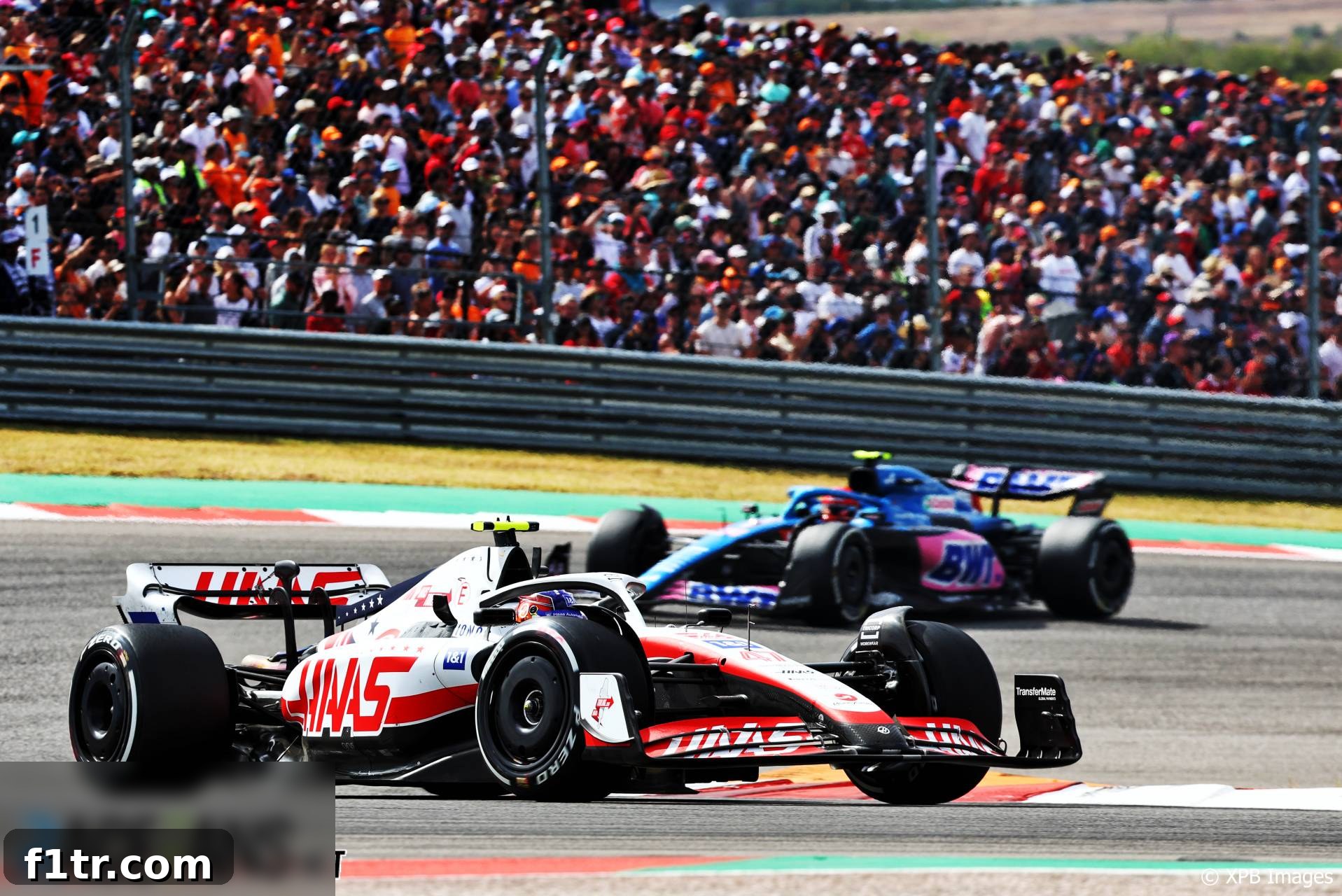
The aftermath of a thrilling United States Grand Prix at the Circuit of the Americas (COTA) saw an unexpected twist as the Haas F1 Team officially lodged two separate protests. Their grievances were directed at championship contenders Red Bull Racing, specifically regarding Sergio Perez’s car, and Alpine F1 Team, concerning Fernando Alonso’s vehicle. These protests, filed in the immediate hours following the checkered flag, have cast a shadow over the race results and ignited a crucial debate about the consistent application of Formula 1’s technical regulations and sporting directives.
Advert | Become a Supporter & go ad-free
Representatives from Haas met with the FIA stewards to present their case, following which the protests were formally deemed admissible. This critical first step means that the stewards recognized the validity of Haas’s concerns, allowing for a thorough investigation into the alleged infringements. The outcome could potentially alter the final standings of the race, impacting valuable championship points for both drivers and their respective constructors.
The Core of the Complaint: Technical Infringements and Lost Parts
While the initial documentation from the FIA only vaguely referred to a “technical infringement” on the cars in question, further details swiftly emerged, pointing to a specific issue: both Sergio Perez’s Red Bull and Fernando Alonso’s Alpine experienced part detachments during the high-speed, demanding race at COTA. Perez, who impressively secured a fourth-place finish, was observed losing a section of his right-hand front wing end plate. Shortly after, Fernando Alonso’s Alpine, which crossed the line in a commendable seventh position, shed its right-hand mirror.
These incidents, while seemingly minor in isolation, form the crux of Haas’s protest. The American team contends that the safety and structural integrity of a Formula 1 car are paramount, and any components detaching from a car during a race could pose a significant hazard to other competitors and track marshals. More pointedly, Haas believes that the failure to address these issues during the race through mandated pit stops highlights an inconsistency in officiating that has directly affected their own racing efforts throughout the season.
The Black-and-Orange Flag Controversy: A Matter of Consistency
The central pillar of Haas’s argument revolves around the contentious “black-and-orange flag.” This specific flag, rarely seen but highly significant, is issued by race control to a driver when their car is deemed to have a mechanical issue that could be unsafe or lead to further component failure. When displayed, the driver is immediately required to pit for repairs. Failure to comply can result in severe penalties, including disqualification.
Haas’s Frustration: A Season of Inconsistent Penalties?
Haas team principal Guenther Steiner has been vocally critical of the perceived inconsistency in the application of this rule throughout the 2022 season. His primary concern stems from the fact that his own driver, Kevin Magnussen, has been shown the black-and-orange flag on three separate occasions this year, forcing him into pit stops that have severely compromised his race performance and point-scoring opportunities. These instances, which often involved minor damage to end plates or other aerodynamic elements, led to mandatory repairs, costing Magnussen valuable track position and time.
Steiner’s frustration boiled over after the US Grand Prix when he witnessed Perez and Alonso continue their races despite visibly shedding parts, without any intervention from race control. “I’m not really happy about what happened out there with the other cars that are losing bits and pieces and don’t get called in like we normally do, so we will follow-up on that one,” Steiner declared, signaling his team’s intent to formally challenge what they view as a clear double standard. This protest is a direct consequence of Haas’s desire for fair and equitable treatment under the sport’s regulations, demanding that the rules be applied uniformly to all teams, regardless of their standing in the championship or the profile of their drivers.
The Implications for Championship Standings and Future Officiating
The protests primarily concern the fourth-place finish of Sergio Perez and the seventh-place finish of Fernando Alonso. Haas drivers Kevin Magnussen and Mick Schumacher finished ninth and fifteenth respectively. If the stewards uphold Haas’s protest, there are several potential outcomes:
- Time Penalties: The most common outcome for technical infringements, which could demote Perez and Alonso in the final classification.
- Disqualification: In more severe cases, or if the infringement is deemed to have provided a significant performance advantage or safety risk, a full disqualification from the race could occur.
- Reprimand/Fine: Less likely for a post-race technical protest of this nature, but still a possibility in some contexts.
While a change in the results for Perez or Alonso would significantly impact their individual drivers’ championship points, it’s important to note that Haas’s protest does not jeopardize Red Bull’s monumental achievement of clinching the Constructors’ Championship at COTA. Red Bull had amassed an insurmountable points lead even without the points scored by Perez in this race, securing their first constructors’ title since 2013. However, any adjustment to points could affect the battle for the remaining positions in both the drivers’ and constructors’ championships, especially the tight fight in the mid-field where Alpine and Haas are strong competitors.
Setting a Precedent for Consistency
Beyond the immediate points implications, the outcome of these protests holds broader significance for Formula 1. A ruling in favor of Haas would send a clear message to all teams and, critically, to the FIA and race control, that consistency in applying technical and sporting regulations is paramount. It would reinforce the principle that safety rules and mandates for repairs must be applied equally across the grid. Conversely, if the protests are dismissed, it could exacerbate concerns about subjective officiating and potentially embolden teams to push the boundaries of technical compliance, knowing that minor infringements might go unpunished.
Advert | Become a RaceFans supporter andgo ad-free
The Stewards’ Decision and the Future of Fair Play in F1
Representatives from Alpine and Red Bull were summoned to meet with the stewards at 6:15 PM and 6:45 PM local time, respectively, to present their defense against Haas’s allegations. The stewards’ decision will be eagerly anticipated by all stakeholders in Formula 1. It will not only determine the final results of the United States Grand Prix for the involved drivers but also serve as a crucial benchmark for how safety and technical compliance rules are interpreted and enforced moving forward.
For Haas, a team that often operates with fewer resources than its front-running rivals, every point earned is hard-fought and critically important. Their decision to protest highlights their commitment to fair competition and their frustration with what they perceive as an uneven playing field. This incident underscores the intricate balance between high-speed racing, stringent technical regulations, and the challenging task of consistent officiating that defines the pinnacle of motorsport.
The outcome will undoubtedly fuel further discussions among teams, drivers, and fans alike, about the standards of officiating and the integrity of the sport. As Formula 1 continues to grow in popularity, ensuring transparent and consistent application of its rules remains vital for maintaining its credibility and the spirit of fair competition that draws millions of fans worldwide.
2022 United States Grand Prix News & Analysis
- Steiner annoyed by lack of apology from race director over COTA protest error
- How many victory chances did Hamilton have in his first winless F1 season?
- Income from new title sponsor will bring Haas up to cost cap level – Steiner
- Mexico’s first home win or Verstappen’s record 14th? Six Mexican GP talking points
- Mercedes doubt tyre strategy cost Hamilton chance to beat Verstappen to win
Browse all 2022 United States Grand Prix articles