Haas’s New Sponsor Rich Energy Aims to Eclipse Red Bull Off the Track
The dawn of the 2019 Formula 1 season ushered in a wave of anticipation and change, not least for the Haas F1 Team. With a bold new title sponsor, Rich Energy, the American outfit unveiled a striking new livery and, perhaps more significantly, a set of highly ambitious declarations that immediately captured the attention of the motorsport world. While the team itself maintained a pragmatic outlook regarding its immediate on-track prospects against established giants, Rich Energy, through its charismatic CEO William Storey, set its sights firmly on a different kind of victory: triumphing over Red Bull in the competitive energy drink market.
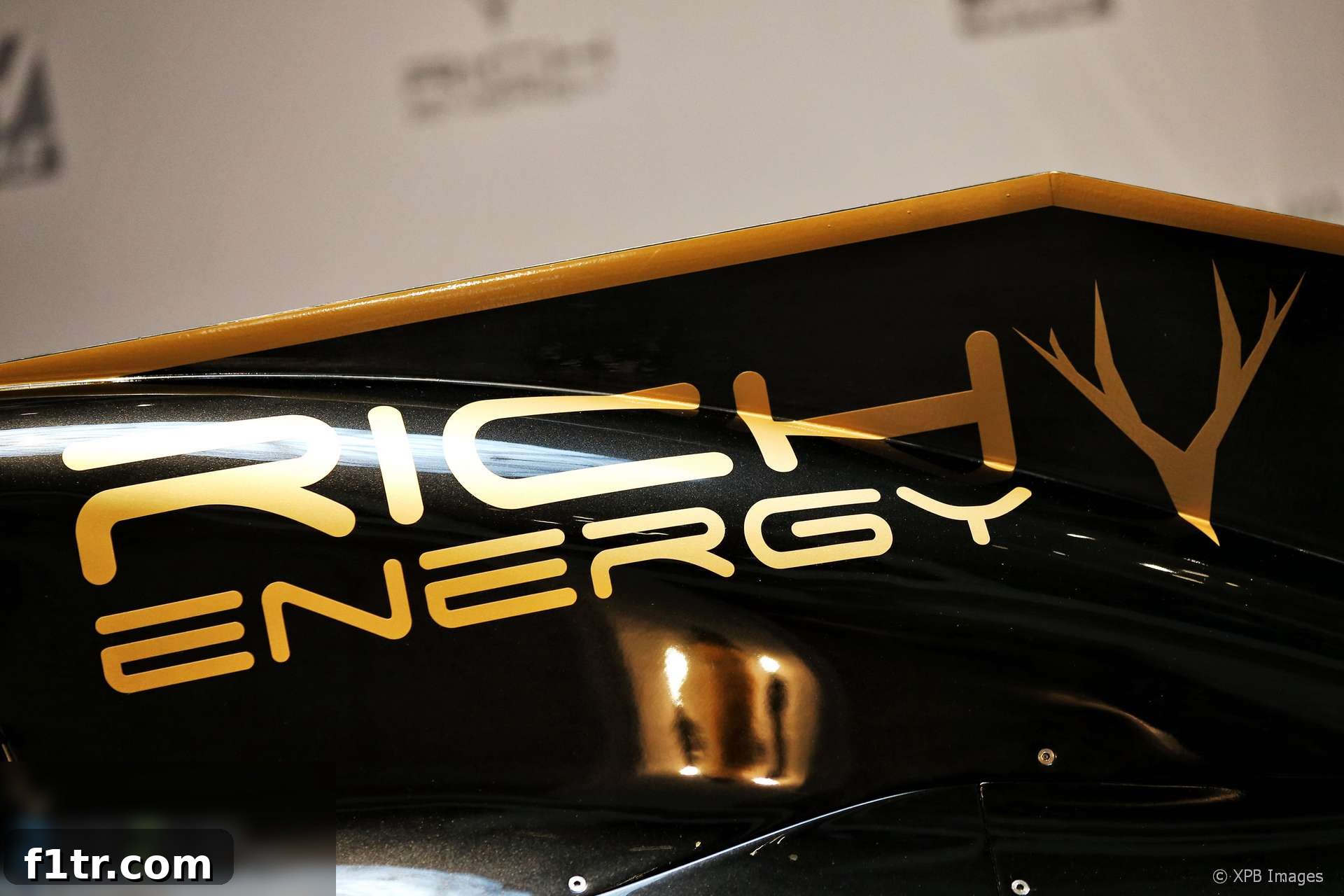
The partnership, announced with considerable fanfare, positioned Rich Energy at the forefront of Haas’s visual identity, painting the team’s car in their distinctive black and gold colours. This significant sponsorship deal was more than just a financial injection; it represented a strategic move for Rich Energy to leverage the global platform of Formula 1 to challenge one of the sport’s most iconic and successful brand integrations: Red Bull. The stage for this intriguing off-track rivalry was set during the official livery reveal event at the prestigious Royal Automobile Club in London, where Storey’s confident remarks ignited the discussion.
Rich Energy’s Audacious Challenge: A Market Domination Strategy
Speaking to the media, including RaceFans, William Storey initially hinted at challenging Red Bull “on and off the track,” a statement that naturally raised eyebrows given Red Bull’s formidable four-time constructors’ championship record. However, Storey swiftly clarified his primary focus, emphasizing that Rich Energy’s immediate battleground was beyond the asphalt. “We think we’ve got a real opportunity to beat them – off the track,” he asserted, laying bare his company’s commercial ambitions.
Storey’s confidence extended to aesthetics, provocatively stating, “I think we’ve already beaten them [in that] we’ve got a better-looking car.” While subjective, this comment underscored Rich Energy’s intent to establish a distinct and appealing brand presence in a market heavily influenced by image. Beyond the visual appeal, Storey detailed more concrete aspects of their strategy for market disruption. He claimed significant growth, stating, “We’re expanding very quickly, we’re taking a huge amount of business from them. Some of the biggest drinks distributors in Europe are de-listing Red Bull now.” These bold assertions painted a picture of a dynamic newcomer aggressively chipping away at the market share of the entrenched leader.
For Rich Energy, Formula 1 is not merely a marketing expense but a vital strategic asset. Storey articulated this clearly: “And I think our results will start to speak for themselves. Formula 1’s a wonderful platform for us. We’re with the best team, the best-run team, in my opinion, and equally importantly lovely people, so we’re delighted to work with Haas, we want to do it for a very long-term basis.” This statement highlights the perceived value of an F1 partnership for brand visibility, global reach, and aligning with perceived excellence, all crucial elements in the fiercely competitive energy drink industry.
The Legacy and Challenge of Red Bull’s Dominance
Storey acknowledged the formidable nature of his rival, recognizing Red Bull’s prowess as a business and a brand. “I think Red Bull are a brilliantly-run business. I think Dietrich Mateschitz is a very clever guy. I think he created a category in 1987,” he conceded. Indeed, Red Bull’s pioneering efforts not only established the energy drink category but also redefined sports marketing through its deep integration with extreme sports and, critically, its ownership and success in Formula 1. Their F1 team, entering its 15th season in 2019, has become synonymous with high performance, daring exploits, and a youthful, energetic image – precisely the brand space Rich Energy aimed to contest.
However, despite acknowledging Red Bull’s achievements, Storey firmly believed in Rich Energy’s superior product and brand proposition. “We just feel we’ve got a better product and a better brand and we feel that there’s a little bit of apathy and, dare I say, hubris in the marketplace,” he explained. This belief in a superior offering and a perceived vulnerability in the market leader’s position forms the core of Rich Energy’s challenge. It suggests an attempt to capitalize on consumer desire for novelty and a potential shift away from a brand that has been dominant for decades.
Haas F1 Team’s Realistic On-Track Aspirations for 2019
While Rich Energy’s CEO focused on market battles, Haas F1 Team Principal Guenther Steiner maintained a more grounded perspective on the racing front. Steiner’s ambition was clear: to continue the team’s upward trajectory in Formula 1. Reflecting on the previous season, he noted, “Last year I think we had the fourth-fastest car, we finished fifth, I know about that. But the next one up was Red Bull.” This assessment highlighted the tangible gap that Haas needed to bridge to truly challenge Red Bull on the circuit.
Despite the significant performance chasm, the team’s spirit remained undaunted. Beating Red Bull on the track, though a distant prospect, remained an “ambition” for Haas. Steiner’s philosophy echoed the very essence of competitive sport: “We can try, if we achieve it or not I don’t know but if you don’t try for sure you don’t achieve it.” This statement encapsulates the relentless pursuit of improvement and the inherent optimism required to succeed in Formula 1, even when facing titans of the sport.
The 2019 F1 season presented a fresh opportunity for Haas to build upon its strongest season to date. The arrival of Rich Energy as a title sponsor brought not only financial stability but also a renewed sense of purpose and increased visibility. The challenge for Haas was to translate this off-track momentum into improved on-track performance, pushing closer to the established front-runners while navigating the intense development race characteristic of Formula 1.
Supporting independent motorsport journalism allows us to bring you in-depth analysis and exclusive insights. Consider becoming a RaceFans supporter and enjoy an ad-free experience.
The Dual Battle: Business and Racing in Formula 1
The narrative emerging from the Haas-Rich Energy partnership for the 2019 season was a fascinating blend of commercial ambition and sporting reality. Rich Energy’s bold claims against Red Bull underscored the critical role of brand rivalry and market share battles that often run parallel to the on-track competition. For an energy drink company, the association with a high-performance sport like F1 is invaluable, and challenging the benchmark brand on this global stage is a high-stakes play.
Meanwhile, for the Haas F1 Team, the focus remained squarely on maximizing their car’s potential, optimizing race strategy, and extracting every ounce of performance from their drivers and machinery. While their sponsor aimed for market dethronement, Haas diligently pursued incremental gains and podium finishes, understanding that sustained on-track success is the ultimate validator in Formula 1. The 2019 season promised to be a compelling watch, not just for the racing itself, but for the captivating drama unfolding both on and off the track as Rich Energy and Haas aimed to disrupt the established order.
The unfolding of Rich Energy’s ambitious commercial strategy against the backdrop of Haas’s sporting journey would provide one of the season’s most intriguing subplots. It was a testament to the dynamic nature of Formula 1, where sponsorships are not merely logos on a car but integral parts of broader corporate strategies, often leading to compelling narratives of challenge and aspiration.
Related 2019 F1 Season Articles
- Crying in the Melbourne car park at 2019 grand prix was my career low – Ocon
- McLaren Racing reports reduced £71 million loss in 2019
- Kvyat: Hockenheim podium last year was “my biggest achievement” so far
- How the FIA’s new encrypted fuel flow meter targets Ferrari’s suspected ‘aliasing’ trick
- “He smashed my office door”: 23 must-see moments from ‘Drive to Survive’ season two
Browse all 2019 F1 season articles