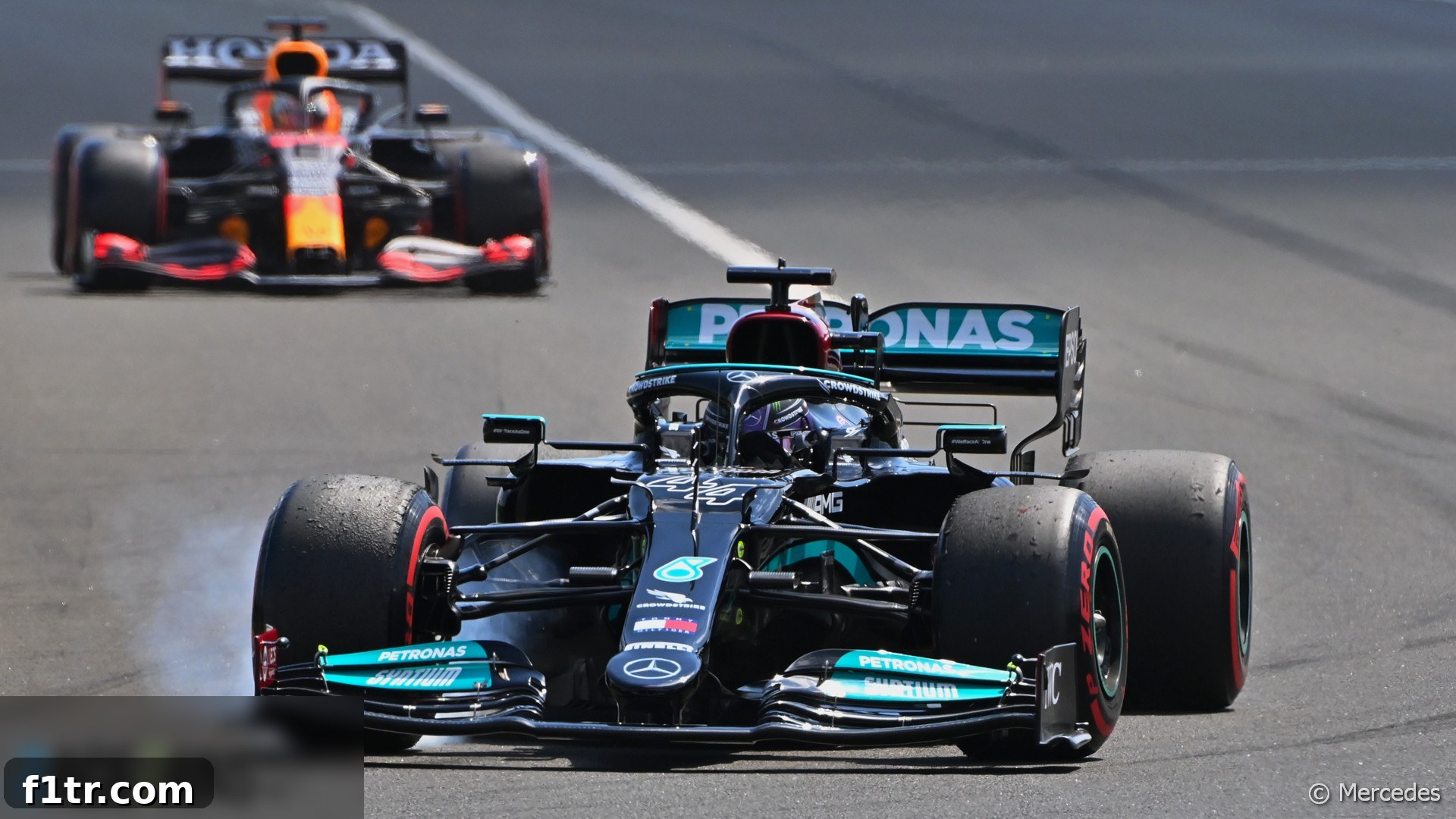
Following the intense events at Silverstone two weeks prior, the contrasting strategic approaches adopted by Formula 1 giants Mercedes and Red Bull set the stage for what promised to be an explosive start at the Hungarian Grand Prix. The Hungaroring, notorious for its tight, twisting layout and limited overtaking opportunities, magnifies the importance of grid position and early race strategy, making the opening laps particularly critical in this championship-defining season.
Clash of Tyre Strategies: Medium vs. Soft
A key strategic divergence emerged during Saturday’s qualifying session, immediately establishing the central tactical battle for Sunday’s race. Mercedes, with both Lewis Hamilton and Valtteri Bottas, successfully navigated the challenging Q2 segment on the medium compound tyres. This calculated decision means both Mercedes drivers will commence the Hungarian Grand Prix from the front row on the more durable yellow-walled Pirelli rubber. Directly behind them, championship leader Max Verstappen and his Red Bull teammate Sergio Perez opted for the softer, red-walled compound for their starting tyres. This fundamental difference in tyre choice instantly highlighted the strategic conundrum ahead, promising a fascinating opening stint.
On paper, Mercedes’ choice of medium tyres appears to offer a distinct advantage. The medium compound is generally more robust, provides a wider operating window, and is known for its greater longevity compared to the softs. This could enable Hamilton and Bottas to extend their first stint significantly, potentially allowing them to build a crucial gap before their initial pit stops. Such a scenario would offer them more strategic flexibility later in the race, particularly on a circuit where track position is king. However, this theoretical advantage hinges entirely on their ability to maintain track position in the crucial opening phase of the race, a task made considerably harder by Red Bull’s tyre choice.
The softer compound, while offering superior initial grip and faster lap times over a short duration, is known for its quicker degradation, especially in hot conditions. This means Verstappen and Perez will possess a significant grip advantage off the line, crucial for accelerating away from the grid. As Lewis Hamilton himself observed, the soft tyre is worth “around five metres” on the approach to Turn 1 from a standing start. This translates to a considerable traction boost that Red Bull will undoubtedly aim to leverage, particularly given the short run to the first corner at the Hungaroring. With two Red Bulls immediately behind the Mercedes, Verstappen and Perez will be keenly eyeing the slipstream opportunity from their rivals, hoping to challenge for the lead before the circuit’s tight corners come into play.
Mercedes Team Principal Toto Wolff openly acknowledged the potential deficit his drivers would face at the start. “We have a disadvantage off the line, so we need to be clever with the start,” he stated, underscoring the team’s awareness of Red Bull’s early race threat. Historically, Max Verstappen has often demonstrated exceptional starts, frequently gaining positions in the opening metres of a race. While the Silverstone clash was an exception, where Hamilton had a strong getaway, Verstappen’s general prowess off the line – such as in the Silverstone sprint qualifying – has been a consistent factor this season. This dynamic makes the run to Turn 1 at the Hungarian Grand Prix one of the most anticipated and potentially race-defining moments.
The Critical Hungaroring Start and Midfield Mayhem
The start in Budapest is always paramount due to the Hungaroring’s tight and technical nature, which offers notoriously few opportunities for overtakes once cars settle into a rhythm. Gaining positions early is often the only realistic chance for significant progress. This intense pressure often leads to dramatic moments at Turn 1. Max Verstappen, still bristling from previous race incidents and media scrutiny, made his feelings clear about further speculation regarding his racing conduct with Hamilton. His focus, and that of his team, remained squarely on performance. “For me tomorrow is a race that I look forward to having the best start of the year and then try to get as many places as possible and do my own race,” his teammate Sergio Perez commented, emphasizing his determination to deliver a strong personal performance rather than getting embroiled in the championship leaders’ rivalry.
Beyond the top two teams, the midfield promised its own brand of drama, with several drivers anticipating a chaotic opening lap. Fernando Alonso, a two-time world champion and veteran of countless F1 starts, would begin his race from ninth position. He ominously predicted “first-lap fireworks ahead of him,” understanding the aggressive nature of the midfield pack. He specifically highlighted Pierre Gasly’s impressive qualifying in fifth position, immediately followed by the fast-starting Lando Norris and Charles Leclerc. Gasly, acutely aware of the threat from behind, vowed to go “elbows out” to defend his hard-earned grid slot. For AlphaTauri, maintaining track position in the clean air is absolutely vital for their race strategy to unfold effectively, as getting stuck in a DRS train can severely compromise tyre management and overall pace.
“We know on pure pace the two top teams should pull away and we should have some free air,” Gasly explained, outlining his team’s strategic hope. “So the start will be extremely important for us. We usually manage the tyre better, it’s not always the case. For sure, if we have the clean air, that’s going to be a big difference.” This sentiment reflects a common theme in Formula 1: for midfield teams, a strong start and clean air are often more valuable than outright raw pace. They allow drivers to manage tyres more efficiently, prevent being held up by slower cars, and reduce aerodynamic turbulence, all of which can severely compromise a carefully planned race strategy and cost valuable championship points.
Weather Uncertainty and Strategic Pit Stop Dilemmas
Adding another layer of complexity to the race strategy was the unpredictable Hungarian weather. Despite earlier forecasts predicting cooler conditions for the race, Friday’s very hot conditions unexpectedly persisted into Saturday’s qualifying sessions. The official FIA weather forecast for Sunday, however, indicated a significant 60% chance of thunderstorms. This fluctuating forecast created a considerable headache for strategists up and down the pit lane. If the thunderstorms failed to materialize, another punishingly hot afternoon at the Hungaroring was likely, placing immense stress on tyres, engines, and drivers alike, pushing the limits of endurance and machinery.
Such extreme heat and potential for rain could significantly impact tyre degradation, potentially pushing teams away from the conventional one-stop strategy, which is often the fastest route around the Hungaroring, and into two-stop territory. The decision would boil down to how effectively drivers could manage their tyre degradation over long stints. High track temperatures accelerate tyre wear, making it challenging to keep the rubber alive and performing optimally for an extended period. Teams would then face a crucial dilemma: succumb to the temptation of an early pit stop in an attempt to undercut a rival and gain track position, or risk leaving their drivers out longer, hoping to benefit from an overcut or a clearer track later on as rivals pit. The timing of safety cars or virtual safety cars could also play a decisive role, offering opportune moments for “cheap” pit stops.
Assuming the top four starters (Mercedes’ Hamilton and Bottas, and Red Bull’s Verstappen and Perez) managed to retain their positions at the end of Lap 1, both teams would then confront strikingly similar strategic choices, regardless of their initial starting compounds. “If it is a two-stop then it doesn’t make a great difference whether you start on the soft or on the medium,” Toto Wolff stated, highlighting how a multi-stop race could effectively neutralize any initial tyre advantage. He also acknowledged Red Bull’s strength in having both drivers positioned at the sharp end of the grid: “Red Bull have two drivers that are right there too, so it isn’t an advantage of ours to have Valtteri and Lewis in the top four, because they have too.” This parity in top-tier driver positions intensified the strategic chess match, making execution and adaptability paramount.
Esteban Ocon, starting eighth on soft tyres, echoed the sentiments about the critical nature of tyre management: “It’s all going to depend on who keeps the tyres alive the longest, and who makes the less damage on them with the track temperature how it’s going to be.” His insight perfectly encapsulated the race’s core challenge – understanding and minimizing degradation. Just two rows behind Ocon, Lance Stroll, who qualified twelfth, and Daniel Ricciardo, in eleventh, held a unique strategic advantage: free choice of starting tyre. This flexibility could allow them to diverge significantly from the strategies of the top ten, potentially opting for a longer initial stint on harder compounds like the hard or medium. Aston Martin, in particular, has utilized this tactic with Stroll previously when he’s started further down the grid, aiming for a long first stint and later gains. The risk for such a bold move, however, would be the initial tyre warm-up on the first lap, which could leave them vulnerable to losing positions. If they could survive this early phase, the reward would be the ability to run significantly longer than rivals starting on softer compounds, potentially gaining track position through an extended first stint and a well-timed pit stop.
Pirelli, the official tyre supplier, indicated that a medium-hard one-stop strategy would be “completely possible” under expected conditions. They also acknowledged the feasibility of a soft-hard strategy, though likely slower overall due to the soft’s higher degradation rate. Intriguingly, Pierre Gasly demonstrated exceptional tyre preservation during Friday practice, completing a remarkable 22-lap stint on soft tyres – the longest of any driver on that compound. This impressive performance might embolden Red Bull to consider a more aggressive one-stop strategy for their drivers, even on the softs, should track conditions allow for it, adding another layer of unpredictability to what was already shaping up to be a fascinating strategic battle.
Qualifying Times in Full
| Driver | Car | Q1 | Q2 (vs Q1) | Q3 (vs Q2) | |
| 1 | Lewis Hamilton | Mercedes | 1’16.424 | 1’16.553 (+0.129) | 1’15.419 (-1.134) |
| 2 | Valtteri Bottas | Mercedes | 1’16.569 | 1’16.702 (+0.133) | 1’15.734 (-0.968) |
| 3 | Max Verstappen | Red Bull | 1’16.214 | 1’15.650 (-0.564) | 1’15.840 (+0.190) |
| 4 | Sergio Perez | Red Bull | 1’17.233 | 1’16.443 (-0.790) | 1’16.421 (-0.022) |
| 5 | Pierre Gasly | AlphaTauri | 1’16.874 | 1’16.394 (-0.480) | 1’16.483 (+0.089) |
| 6 | Lando Norris | McLaren | 1’17.081 | 1’16.385 (-0.696) | 1’16.489 (+0.104) |
| 7 | Charles Leclerc | Ferrari | 1’17.084 | 1’16.574 (-0.510) | 1’16.496 (-0.078) |
| 8 | Esteban Ocon | Alpine | 1’17.367 | 1’16.766 (-0.601) | 1’16.653 (-0.113) |
| 9 | Fernando Alonso | Alpine | 1’17.123 | 1’16.541 (-0.582) | 1’16.715 (+0.174) |
| 10 | Sebastian Vettel | Aston Martin | 1’17.105 | 1’16.794 (-0.311) | 1’16.750 (-0.044) |
| 11 | Daniel Ricciardo | McLaren | 1’17.664 | 1’16.871 (-0.793) | |
| 12 | Lance Stroll | Aston Martin | 1’17.038 | 1’16.893 (-0.145) | |
| 13 | Kimi Raikkonen | Alfa Romeo | 1’17.553 | 1’17.564 (+0.011) | |
| 14 | Antonio Giovinazzi | Alfa Romeo | 1’17.776 | 1’17.583 (-0.193) | |
| 15 | Carlos Sainz Jnr | Ferrari | 1’16.649 | ||
| 16 | Yuki Tsunoda | AlphaTauri | 1’17.919 | ||
| 17 | George Russell | Williams | 1’17.944 | ||
| 18 | Nicholas Latifi | Williams | 1’18.036 | ||
| 19 | Nikita Mazepin | Haas | 1’18.922 | ||
| 20 | Mick Schumacher | Haas |
Sector Times
| Driver | Sector 1 | Sector 2 | Sector 3 |
|---|---|---|---|
| Lewis Hamilton | 27.355 (1) | 26.702 (1) | 21.362 (1) |
| Valtteri Bottas | 27.369 (2) | 26.882 (3) | 21.369 (2) |
| Max Verstappen | 27.430 (3) | 26.825 (2) | 21.382 (3) |
| Sergio Perez | 27.604 (4) | 27.290 (10) | 21.456 (4) |
| Pierre Gasly | 27.681 (6) | 27.070 (6) | 21.540 (5) |
| Lando Norris | 27.667 (5) | 26.980 (4) | 21.724 (11) |
| Charles Leclerc | 27.697 (8) | 27.028 (5) | 21.655 (9) |
| Esteban Ocon | 27.800 (13) | 27.129 (9) | 21.622 (8) |
| Fernando Alonso | 27.746 (11) | 27.103 (8) | 21.601 (6) |
| Sebastian Vettel | 27.729 (10) | 27.382 (12) | 21.605 (7) |
| Daniel Ricciardo | 27.756 (12) | 27.336 (11) | 21.779 (12) |
| Lance Stroll | 27.703 (9) | 27.430 (13) | 21.685 (10) |
| Kimi Raikkonen | 27.830 (14) | 27.597 (14) | 22.056 (16) |
| Antonio Giovinazzi | 27.975 (15) | 27.606 (15) | 21.899 (14) |
| Carlos Sainz Jnr | 27.684 (7) | 27.080 (7) | 21.885 (13) |
| Yuki Tsunoda | 28.118 (17) | 27.787 (17) | 22.014 (15) |
| George Russell | 28.124 (18) | 27.673 (16) | 22.147 (17) |
| Nicholas Latifi | 27.976 (16) | 27.845 (18) | 22.166 (18) |
| Nikita Mazepin | 28.238 (19) | 28.037 (19) | 22.472 (19) |
Speed Trap
| Pos | Driver | Car | Engine | Speed (kph/mph) | Gap |
|---|---|---|---|---|---|
| 1 | Kimi Raikkonen | Alfa Romeo | Ferrari | 309.4 (192.3) | |
| 2 | Antonio Giovinazzi | Alfa Romeo | Ferrari | 309.1 (192.1) | -0.3 |
| 3 | Lance Stroll | Aston Martin | Mercedes | 307.4 (191.0) | -2.0 |
| 4 | Nikita Mazepin | Haas | Ferrari | 307.2 (190.9) | -2.2 |
| 5 | Sergio Perez | Red Bull | Honda | 306.6 (190.5) | -2.8 |
| 6 | Lewis Hamilton | Mercedes | Mercedes | 305.3 (189.7) | -4.1 |
| 7 | Daniel Ricciardo | McLaren | Mercedes | 305.2 (189.6) | -4.2 |
| 8 | Sebastian Vettel | Aston Martin | Mercedes | 304.3 (189.1) | -5.1 |
| 9 | Nicholas Latifi | Williams | Mercedes | 304.3 (189.1) | -5.1 |
| 10 | Lando Norris | McLaren | Mercedes | 304.2 (189.0) | -5.2 |
| 11 | George Russell | Williams | Mercedes | 303.8 (188.8) | -5.6 |
| 12 | Max Verstappen | Red Bull | Honda | 303.8 (188.8) | -5.6 |
| 13 | Carlos Sainz Jnr”>Carlos Sainz Jnr | Ferrari | Ferrari | 303.2 (188.4) | -6.2 |
| 14 | Valtteri Bottas | Mercedes | Mercedes | 303.1 (188.3) | -6.3 |
| 15 | Charles Leclerc | Ferrari | Ferrari | 302.2 (187.8) | -7.2 |
| 16 | Pierre Gasly | AlphaTauri | Honda | 300.0 (186.4) | -9.4 |
| 17 | Fernando Alonso | Alpine | Renault | 299.4 (186.0) | -10.0 |
| 18 | Esteban Ocon | Alpine | Renault | 298.9 (185.7) | -10.5 |
| 19 | Yuki Tsunoda | AlphaTauri | Honda | 297.2 (184.7) | -12.2 |
Quotes: Dieter Rencken
Over to You: Predictions for the Final Race Before the Summer Break
As the grid prepares for the final race before the summer break, all eyes are firmly fixed on the Hungaroring. Will Mercedes’ calculated medium-tyre gamble pay off, allowing them to control the race from the front and extend their stints efficiently? Or will Red Bull’s aggressive soft-tyre strategy, coupled with Max Verstappen’s fierce starts, propel them into an early lead, setting up a thrilling cat-and-mouse game of strategy and raw pace? And what about the highly competitive midfield, where drivers like Pierre Gasly, Lando Norris, and Charles Leclerc are poised for an intense battle for crucial points, potentially leading to overtakes and position swaps?
The ever-present threat of thunderstorms and the demanding track conditions promise to keep strategists on their toes, potentially leading to unforeseen twists and turns in a race that is already brimming with strategic intrigue. The 2021 Hungarian Grand Prix has all the ingredients for another classic encounter in this fiercely contested championship battle. Who do you think will emerge victorious, and which strategic gambit will ultimately prove to be the most effective?
Share your views and predictions on the Hungarian Grand Prix in the comments section below.
2021 Hungarian Grand Prix
- Ocon congratulated by past French F1 aces after breakthrough win
- Alpine doubt first win signals a performance breakthrough
- Vettel disqualification hearing to take place on Monday
- Why no one received a Grosjean-style race ban for the Hungarian GP pile-up
- Ocon’s “beautiful” late-stint pace was other key to Alpine’s breakthrough win
Browse all 2021 Hungarian Grand Prix articles