Ferrari’s Long Road to Redemption: John Elkann on a Decade of Challenges and the Path Ahead
Ferrari Chairman John Elkann has candidly acknowledged that the esteemed Italian outfit’s Formula 1 cars have suffered from deep-seated, fundamental weaknesses over the past decade. These persistent issues have severely hampered the team’s competitiveness, leading to a prolonged drought in championship titles. Elkann revealed that the Scuderia is now rigorously working to address these structural problems, signaling a long-term commitment to revitalizing Ferrari’s racing prowess.
Following a disappointing start to the 2020 Formula 1 season, Elkann publicly reiterated his unwavering confidence in team principal Mattia Binotto. He affirmed that Binotto is the right leader to guide Ferrari through what he termed a “long path” of rebuilding, ultimately aiming to restore the team to its former competitive glory.
Acknowledging Deep-Rooted Weaknesses: A Decade Without a Title
Elkann did not shy away from the stark reality of Ferrari’s performance deficit. Speaking to La Gazzetta dello Sport, he described Ferrari’s sporting division as “undoubtedly going through a difficult period that starts from afar.” This candid assessment highlights a sobering fact: the iconic Maranello team has not clinched a Constructors’ World Championship since 2008, nor a Drivers’ Championship since Kimi Räikkönen’s triumph in 2007. This lengthy period without a title stands in stark contrast to Ferrari’s illustrious history in Formula 1.
Throughout this challenging era, other teams have risen to dominate. Elkann specifically pointed to “Red Bull’s winning cycles for aerodynamic capacity and Mercedes for their great ability in hybrid engine technologies.” These rival teams successfully identified and exploited key performance areas, leaving Ferrari to grapple with its own deficiencies.
The Ferrari chairman elaborated on the nature of these long-standing issues, stating, “We have had a series of structural weaknesses that have existed for some time in the aerodynamics and dynamics of the vehicle. We have also lost in engine power.” This comprehensive list of shortcomings paints a clear picture of a team struggling across multiple crucial technical domains, leading to an overall lack of pace and consistency on track.
The 2020 Season: A Harsh Reality Check for the SF1000
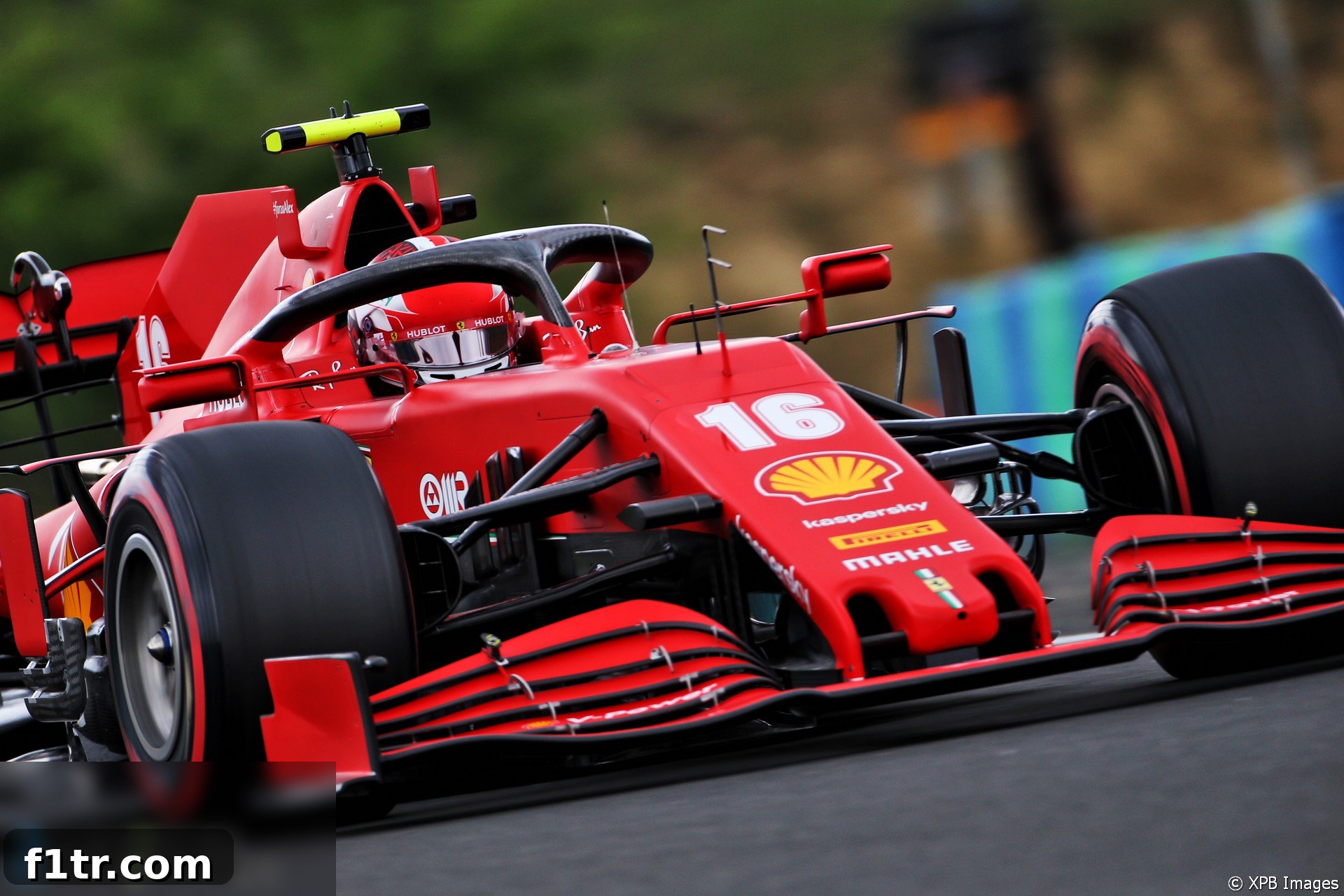
The 2020 campaign served as a particularly painful illustration of Ferrari’s deep-rooted problems. Elkann attributed the team’s poor start to “machine setting errors,” a direct reference to the significant correlation problems discovered during the testing phase of their SF1000 challenger. These issues meant that the car’s performance on track did not match simulations and wind tunnel data, creating a significant handicap from the outset.
Elkann’s assessment of the SF1000 was blunt and unequivocal: “The reality is that our car is not competitive. You saw it on the track and you will see it again.” This admission underscored the severity of the situation and the immediate need for fundamental change. However, he also offered a beacon of hope, asserting, “Today we are laying the foundations for being competitive and returning to winning when the rules change in 2022. I am convinced of it.” This statement firmly set the sights on future regulatory shifts as a crucial opportunity for a fresh start.
Leadership and Vision: Unwavering Trust in Mattia Binotto
Despite the immense pressure and criticism facing the team, Elkann expressed his “total trust” in Mattia Binotto to steer Ferrari back to the top. Binotto, who assumed the role of team principal just a year prior to these comments, is seen by Elkann as possessing the necessary acumen and characteristics to initiate a new winning cycle for the Scuderia. His belief stems from Binotto’s extensive history with the Maranello team, particularly his involvement during one of its most successful periods.
Elkann highlighted Binotto’s pedigree, noting, “He was in Ferrari with [Jean] Todt and Schumi [Michael Schumacher], he knows how to win.” This reference to the legendary Todt-Schumacher era is a powerful endorsement, suggesting that Binotto understands the culture, dedication, and strategic approach required for championship success. Furthermore, Elkann emphasized the future, stating, “from next year he will work with two young and ambitious drivers,” signaling a fresh direction for the team’s human capital.
Shaping the Future: A New Era with Leclerc and Sainz
The strategic overhaul extends beyond leadership to the driver lineup. Ferrari’s commitment to a long-term vision was underscored by the multi-year deal signed with Charles Leclerc in December. This commitment to a young, prodigious talent was followed by the significant decision to replace four-time world champion Sebastian Vettel with Carlos Sainz Jnr for the 2021 season. Elkann explained that this pivotal decision was made after the team fully grasped the profound extent of the changes required in the upcoming seasons.
Elkann elaborated on the philosophy behind opting for a younger, hungrier driver pairing during a rebuilding phase. He reflected on past experiences, noting, “In the past 10 years we have had champions such as Fernando Alonso and Vettel.” While acknowledging their immense talent and contributions, he added, “But it is undoubtedly more difficult to rebuild a cycle and ask patience from those who have already won compared to those who have the future ahead of them.” This insight suggests that highly decorated drivers, accustomed to immediate success, might find the arduous process of a multi-year rebuild more challenging than those eagerly looking to make their mark.
The synergy between the drivers and the team’s engineering efforts is also a crucial aspect of this new strategy. Elkann emphasized, “We are laying the foundations for building something important and lasting, and the contract we signed with Charles proves it: Five years, never so long in Ferrari’s history.” This long-term commitment to Leclerc signals a deep belief in his potential as a cornerstone for Ferrari’s future. Furthermore, he outlined the integral role both Leclerc and Sainz will play: “Leclerc and Sainz will take home in Maranello, will be close to our engineers. The new machine will be born with them.” This signifies a holistic approach, embedding the drivers directly into the development process, fostering a collaborative environment aimed at producing a truly competitive car.
The 2022 Regulations: A Pivotal Opportunity for Transformation
While Ferrari faced limitations on significant car changes for 2021 due to cost-controlling restrictions introduced by Formula 1, the sweeping new technical regulations set to arrive in 2022 represent a monumental opportunity for the Scuderia. Elkann sees this regulatory reset as a critical juncture for the team to overcome its decade-long structural weaknesses.
He articulated this perspective: “We started off poorly and must be realistic and aware of the structural weaknesses of the machine with which we have been living for a decade and which the transition to hybrid has underlined.” The hybrid era, in particular, exposed Ferrari’s difficulties in keeping pace with engine development. However, the upcoming regulatory overhaul provides a chance to rectify these issues and start on a more level playing field.
Ferrari’s proactive stance on the new rules is evident: “We have given the ‘okay’ to the new rules starting from 2022, because we believe it is right that there is greater competitiveness within F1.” Beyond fostering competition, Elkann views the introduction of budget caps not as a constraint but as a stimulating challenge. “We do not see the limitation of budget caps as a constraint on our ability to win, we take it as a challenge,” he declared. This mindset reflects a determination to innovate and succeed within new parameters, leveraging the team’s ingenuity rather than simply outspending rivals.
Elkann expressed immense faith in Ferrari’s personnel to rise to this challenge. “Our engineers, our mechanics and our drivers will find in those constraints the strength and creativity to bring Ferrari back to the top,” he stated confidently. This commitment to the human element of the team is bolstered by a sense of unity: “Personally I have never seen in the last 10 years such a cohesive and strong spirit.” Such cohesion will be vital in navigating the complexities of developing a championship-contending car under new regulations.
The Path Ahead: Patience, Cohesion, and Lessons from History
Understanding the magnitude of the task at hand, Elkann cautioned Ferrari’s legions of passionate fans that it will likely take several seasons for the team to once again emerge as championship contenders. He acknowledged the shared pain, stating, “The fans are suffering as much as we suffer, but we know they are close to us. This is why it is important to be clear and honest with them. A long path awaits us.” This message of transparency is crucial for managing expectations and maintaining fan support during what promises to be a challenging but ultimately rewarding journey.
To further contextualize the rebuilding process, Elkann drew parallels to a previous era of Ferrari’s history, one that ultimately led to unprecedented success. “When Todt opened that historic cycle in 2000, we came from a fast that lasted for more than 20 years, from 1979,” he recalled. “It took time from when he arrived in 1993 to when he brought Ferrari back to victory.” The lesson from the Jean Todt/Michael Schumacher era is clear: sustainable success requires significant time, strategic vision, and unwavering commitment, not instant gratification.
The key to achieving this, Elkann concluded, lies in a concerted and unified effort. “The important thing then is to work on and off the track, bringing cohesion and stability, building the Ferrari we want, step by step.” This comprehensive approach, focusing on internal unity, strategic stability, and relentless development, is what Ferrari believes will ultimately pave its return to the pinnacle of Formula 1. The journey will be arduous, but the resolve to restore the Scuderia’s legendary status remains absolute.