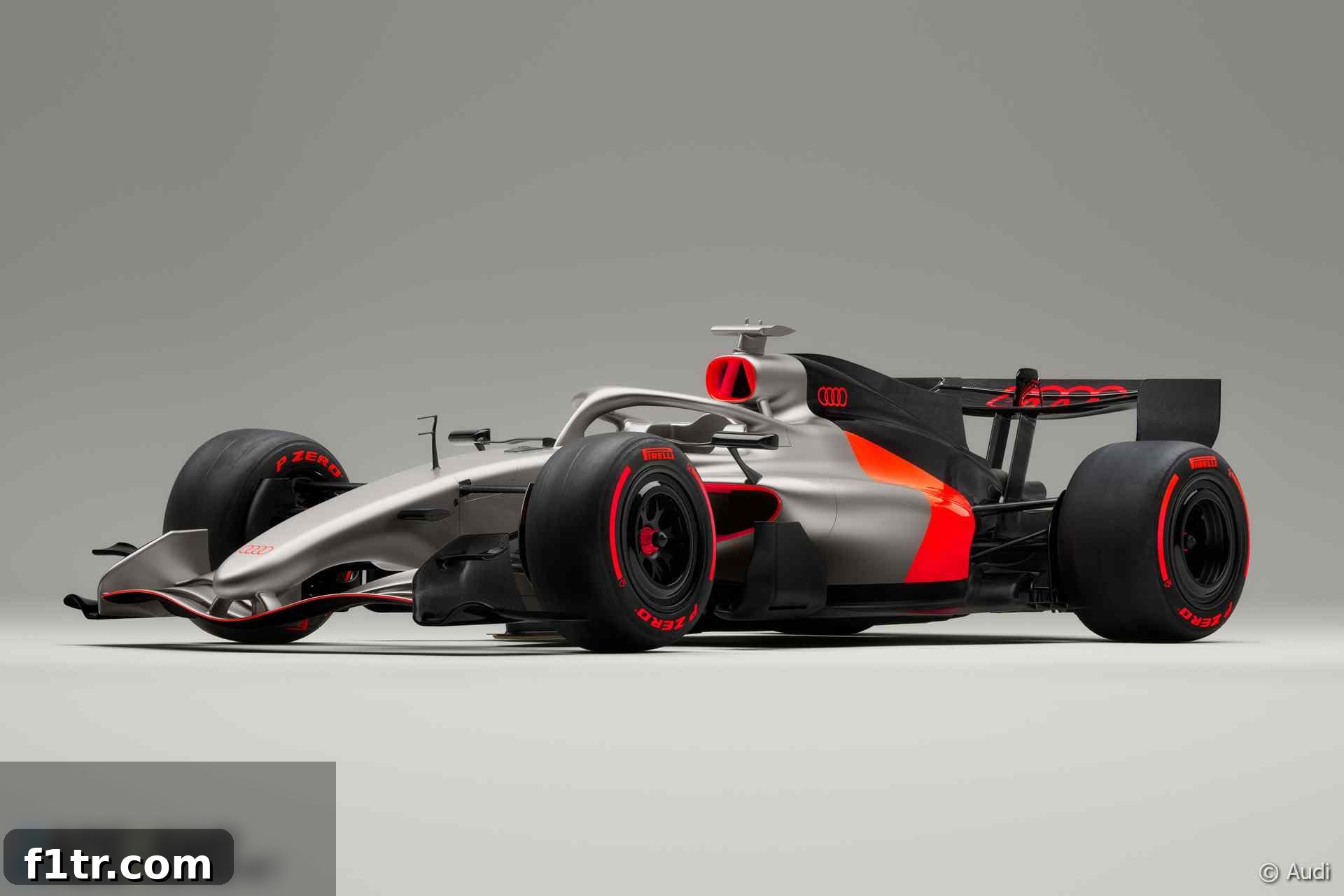
Audi has unveiled a captivating concept design for its 2026 Formula 1 car, signalling its highly anticipated entry into the pinnacle of motorsport. This reveal marks a significant milestone as the German automotive giant prepares to make its debut in F1, taking over the Sauber team for the upcoming season. The meticulously crafted ‘R26 Concept’ offers a compelling glimpse into Audi’s vision for the future, showcasing how its contender could appear under the radical new technical regulations set to reshape Formula 1 starting next year.
The design ethos behind the R26 Concept is rooted in Audi’s recently introduced design philosophy, reflecting a fusion of cutting-edge aesthetics and functional innovation tailored for the demands of modern F1 racing. This strategic preview underscores Audi’s deep commitment not just to participate, but to leave an indelible mark on the sport. The unveiled images have ignited enthusiasm among fans and pundits alike, offering a tangible representation of Audi’s ambitions and engineering prowess.
Audi’s Strategic Foray into Formula 1: More Than Just Racing
Audi AG CEO Juergen Rittersberger eloquently articulated the profound strategic value of Formula 1 for the brand. He emphasized that F1 transcends mere motorsport, positioning it as a powerful platform encompassing “entertainment, emotion, technology – and also a challenge.” For Audi, this multifaceted appeal is precisely what drives its entry, aiming to inspire new customer groups and solidify its global brand presence.
Rittersberger highlighted F1’s immense global reach as an unparalleled opportunity to engage with a vast and diverse audience. He specifically pointed to the younger demographic, where Formula 1 has experienced an explosion in popularity and engagement in recent years. This burgeoning youth following represents a critical target for Audi, allowing the brand to cultivate loyalty and aspirational connections with the next generation of potential buyers. The synergy between F1’s high-tech, performance-driven image and Audi’s brand identity as a purveyor of advanced, premium automobiles is undeniable, creating a compelling narrative for marketing and brand positioning.
Indeed, Audi’s decision to enter Formula 1 for the first time in its illustrious history is a testament to the sport’s evolving landscape. Rittersberger pinpointed a pivotal factor that made this audacious move possible: the introduction of the budget cap in 2021. This financial regulation has been instrumental in creating a more level playing field and fostering greater economic sustainability within the sport, directly addressing concerns that historically deterred new manufacturers.
The Economic Imperative: How the Budget Cap Fueled Audi’s Ambition
The budget cap, implemented to control spiraling costs and promote competitive balance, has fundamentally altered the economic attractiveness of Formula 1. Prior to its introduction, the financial barriers to entry and sustained competitiveness were astronomical, often limiting participation to a select few well-established entities. Rittersberger underscored how this crucial regulation transformed F1 into a financially viable and appealing prospect for Audi.
“Thanks to the cost cap, Formula 1 is also more financially sustainable than ever before,” he stated, providing a clear rationale for Audi’s commitment. He elaborated on the comprehensive benefits, noting, “When we look at the development of sponsorship opportunities, team evaluations, and the overall revenue potential in Formula 1, one thing becomes clear: This path makes perfect sense for Audi – also economically.” This perspective highlights a calculated business decision, where the significant investment required for F1 participation is now justified by a healthier economic environment and a stronger return on investment potential. The ability to compete without endlessly escalating budgets makes the sport a more predictable and attractive commercial venture.
Audi’s long-term planning for its F1 entry began nearly three years ago, culminating in the current intensive development phase. The manufacturer’s first F1 car is slated for its inaugural run during the series’ private pre-season test sessions. These crucial tests are scheduled to commence on January 26th at the iconic Circuit de Catalunya, a venue renowned for its challenging layout and comprehensive testing capabilities. This initial track time will provide invaluable data and insights as Audi fine-tunes its machinery ahead of its official debut.
Ambition and Vision: Chasing the World Championship
Gernot Doellner, CEO of Audi, conveyed the brand’s uncompromising ambition, making it unequivocally clear that their entry into Formula 1 is not merely for participation, but for victory. “We are not entering Formula 1 just to be there,” Doellner asserted with conviction. “We want to win.” This bold declaration sets a high bar for the team and signals Audi’s serious intent to challenge the established order.
However, Doellner also tempered this ambition with a healthy dose of realism, acknowledging the formidable challenge ahead. “At the same time, we know that you don’t become a top team in Formula 1 overnight. It takes time, perseverance and tireless questioning of the status quo.” This recognition of the monumental task ahead speaks to a well-thought-out strategy, emphasizing incremental progress and continuous improvement. Audi has set an ambitious yet realistic timeline, aiming to become a championship contender within five years of its debut. Their ultimate goal is even grander: “By 2030, we want to fight for the world championship title.”
This long-term vision demonstrates Audi’s commitment to building a sustainable and successful F1 program. It involves not only significant financial investment but also the meticulous recruitment of top talent, the development of cutting-edge technology, and the cultivation of a winning culture within the team, integrating the strengths of both Audi Sport and the Sauber organization.
The 2026 Regulations: A New Era for Formula 1 and Audi
The 2026 Formula 1 technical regulations are set to herald a transformative period for the sport, aligning perfectly with Audi’s expertise and strategic objectives. These regulations are designed to introduce a new generation of power units, characterized by an increased electrical component and the exclusive use of 100% sustainable fuels. This shift places a greater emphasis on electrical power, with the MGU-H (Motor Generator Unit – Heat) being removed, simplifying the hybrid system while increasing the overall power output from the electrical side.
Furthermore, the aerodynamic regulations are expected to promote more agile cars and potentially closer racing, moving away from overly complex downforce generation. This regulatory overhaul is specifically aimed at attracting new manufacturers like Audi, offering a fresh slate for engine development and car design where innovation and efficiency will be paramount. Audi, with its extensive background in hybrid technology and advanced engineering from various motorsport disciplines and road car development, is exceptionally well-positioned to capitalize on these changes. The focus on sustainable fuels also aligns seamlessly with Audi’s broader corporate commitment to environmental responsibility and future mobility solutions, making its F1 entry not just a sporting endeavor but a powerful statement of its technological leadership.
Pictures: Audi R26 Concept – A Vision of the Future
The following gallery presents a series of images showcasing the Audi R26 Concept, providing an exciting visual representation of what Audi envisions for its 2026 Formula 1 challenger. These designs embody the manufacturer’s forward-thinking approach, blending aggressive aerodynamics with distinctive Audi styling cues, all crafted within the anticipated framework of the new F1 technical regulations. Each image offers a detailed look at the concept’s sleek lines, innovative features, and overall presence, giving fans a taste of the future of Formula 1 as seen through Audi’s eyes.
Further Insights into Formula 1
- One of F1’s greatest races happened 15 years ago today. Or did it?
- “Overtaking is overtaking”: Domenicali denies F1’s yo-yo racing is “artificial”
- The crashes F1 is trying to prevent may be rare – but the danger is obvious
- F1 returning to India soon after 2027 sounds like wishful thinking
- Verstappen loathes F1’s new generation of cars – but what do his rivals reckon?
Browse all Formula 1 articles