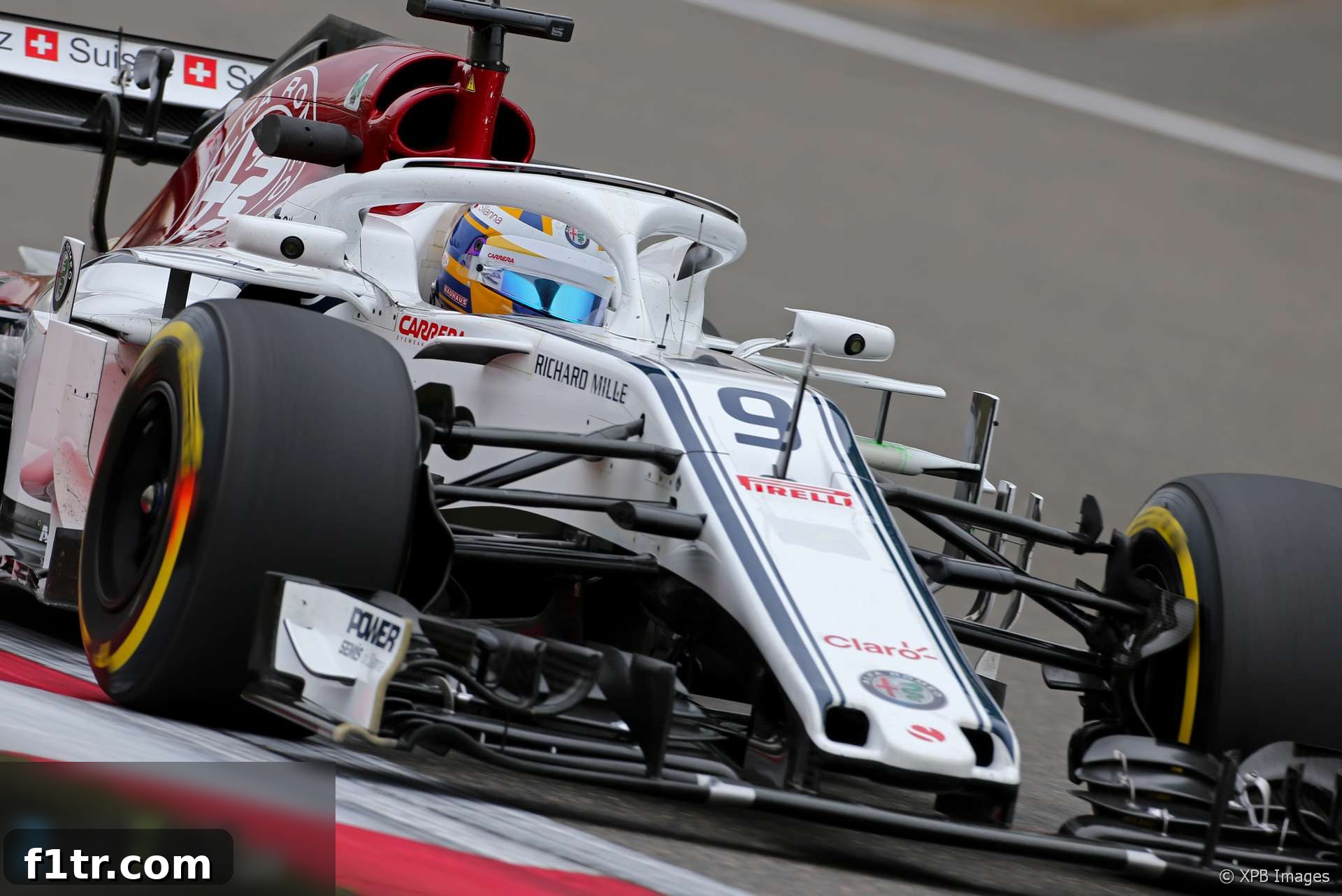
Marcus Ericsson, the Sauber driver, found himself facing a grid penalty ahead of the 2018 Chinese Grand Prix qualifying session. While the sanction itself, a five-place grid drop, ultimately did not alter his starting position as he had already qualified last, the incident served as a stark reminder of Formula 1’s stringent safety regulations and the critical importance of adhering to them. This particular penalty stemmed from a serious breach during qualifying: a failure to adequately slow down under double waved yellow flags, an infringement that race stewards treat with utmost gravity.
The circumstances surrounding the penalty highlight the meticulous oversight exercised by the FIA and the event stewards in ensuring driver safety. Ericsson’s infraction was not merely a minor oversight but a violation that carried both a sporting penalty and an endorsement of his driving license with three penalty points. Such points accumulate over a 12-month period, and reaching a total of 12 points results in an automatic race ban, underscoring the severity with which the governing body views safety breaches.
Advert | Become a Supporter & go ad-free
Understanding Double Waved Yellow Flags and Their Significance
To fully grasp the nature of Ericsson’s penalty, it’s essential to understand the implications of double waved yellow flags in Formula 1. These signals are among the most critical communication tools between race control, track marshals, and drivers. A single waved yellow flag indicates a hazard on or near the track, requiring drivers to slow down, be prepared to change direction, and avoid overtaking. A double waved yellow flag, however, signifies a much more severe and immediate danger. It means there is a significant hazard completely or partially blocking the track, or marshals are working on or beside the track.
Under double waved yellow flag conditions, drivers are not only required to reduce their speed significantly but also to be prepared to stop. Crucially, they are absolutely forbidden from attempting to set a meaningful lap time in the affected sector. The primary objective is to ensure the safety of other drivers, marshals, and trackside personnel. Any perceived attempt to gain an advantage or even maintain pace in such a zone is considered a severe breach of safety protocols.
The Stewards’ Indictment: A Clear Violation
The stewards’ official notes on the incident left little room for ambiguity regarding Marcus Ericsson’s actions. Their investigation, bolstered by comprehensive video evidence, unequivocally demonstrated that the Sauber driver “clearly showed that the driver attempted to set a meaningful lap time after passing through a double waved yellow marshalling sector, contrary to the requirements set out in the Race Director’s Event Notes (10.1) in breach of Article 12.1.1 i.” This statement alone highlights a deliberate disregard for the rules designed to protect everyone involved.
Furthermore, the stewards emphasized another crucial aspect of the violation: “The Stewards also took into consideration the fact that the driver made no attempt to significantly reduce his speed in the area of a double waved yellow flag in breach of Appendix H, Article 2.4.5.1 b).” This second point underscores the dual nature of the infraction. It wasn’t just about attempting a quick lap, but a fundamental failure to respond appropriately to a clear and present danger signal. The combination of these two elements painted a picture of serious non-compliance, necessitating the imposed penalties.
The Implication of Grid Penalties in Formula 1
Grid penalties are a common disciplinary measure in Formula 1, imposed for a variety of infringements ranging from gearbox changes and power unit component limits to unsafe releases in the pit lane and, as in this case, on-track safety violations. Their purpose is to enforce sporting regulations and deter drivers and teams from breaking rules that could compromise fairness or, more importantly, safety.
While a five-place grid penalty might sound substantial, its practical impact on Marcus Ericsson’s Chinese Grand Prix weekend was minimal because he had already qualified in the last position. This scenario, where a penalty doesn’t functionally alter a driver’s starting spot, is somewhat unusual but doesn’t diminish the gravity of the offense. The penalty still stands as a formal recognition of the breach, and the accompanying penalty points carry long-term implications for the driver’s license. For drivers vying for pole position or points-scoring positions, such a penalty can be devastating, forcing them to start further down the grid and necessitating a more challenging race strategy.
The Unyielding Focus on Safety in Modern F1
Formula 1 has come a long way in terms of safety, especially since the tragic incidents of previous decades. Today, safety is paramount, woven into every aspect of the sport, from car design and track layouts to the meticulous implementation of race procedures and marshalling systems. The strict enforcement of rules surrounding yellow flags, Virtual Safety Cars (VSC), and Safety Cars (SC) is a testament to this unwavering commitment.
Drivers are extensively briefed on these procedures, and their responses are constantly monitored by race control. The use of advanced telemetry and video analysis tools allows stewards to review incidents with incredible precision, ensuring that decisions are fair, consistent, and reflective of the established regulations. This rigorous approach is crucial because even a momentary lapse in judgment or an attempt to exploit a safety zone can have catastrophic consequences, not only for the driver involved but also for marshals who might be attending to a hazard or other competitors.
Marcus Ericsson and the 2018 F1 Season Context
The 2018 Formula 1 season was a significant one for Sauber, as the team embarked on a rebuilding phase with a new partnership with Alfa Romeo. Marcus Ericsson, in his fourth season with the Swiss team, was often battling at the rear of the grid, a testament to the challenges Sauber faced in a highly competitive era. Qualifying last in China, therefore, was unfortunately not an uncommon occurrence for the team at that stage of their development.
However, even when fighting at the back, adherence to all regulations, particularly safety-related ones, remains non-negotiable. Every driver, regardless of their position on the grid, is expected to maintain the highest standards of safety awareness and compliance. This incident, while having no immediate impact on his starting position, served as a personal reminder for Ericsson and a broader message to the paddock about the consistent application of rules.
The season itself saw intense battles at the front and ongoing development struggles for teams like Sauber. Ericsson’s performance throughout 2018 showed glimpses of improvement, but incidents like the one in China highlighted the pressures and strict environment of elite motorsport.
A Look Back: 2018 F1 Season Insights
The 2018 season was filled with compelling narratives, technological advancements, and intense competition. From the ongoing evolution of power units to team dynamics, every race contributed to the rich tapestry of Formula 1 history. The challenges faced by smaller teams, the strategic decisions made by constructors, and the relentless pursuit of performance define each season. The following related articles offer further insights into this particular period in F1:
- F1 feared “death knell” for Drive to Survive after Ferrari and Mercedes snub
- McLaren staff told us we were “totally crazy” to take Honda engines in 2018 – Tost
- ‘It doesn’t matter if we start last’: How Red Bull’s junior team aided Honda’s leap forward
- Honda’s jet division helped F1 engineers solve power unit problem
- McLaren Racing losses rise after Honda split
Browse all 2018 F1 season articles
Conclusion: Upholding the Standards of F1 Safety
Marcus Ericsson’s grid penalty at the 2018 Chinese Grand Prix, though seemingly inconsequential for his immediate starting position, was a powerful reinforcement of Formula 1’s unwavering commitment to safety. It underscored the absolute necessity for drivers to respect trackside signals, especially critical warnings like double waved yellow flags. The stewards’ clear articulation of the breach – attempting to set a meaningful lap time and failing to significantly reduce speed – serves as a vital lesson for all participants.
In a sport where fractions of a second can define success or failure, the temptation to push boundaries is ever-present. However, certain boundaries, particularly those related to safety, are sacrosanct. The incident with Ericsson highlights that no driver, regardless of their position on the grid or their team’s performance, is exempt from the stringent safety regulations that underpin modern Formula 1. These rules are in place to protect not only the drivers themselves but also the dedicated marshals and personnel who work tirelessly to make the spectacle of Grand Prix racing possible and as safe as it can be.